Gjør som tusenvis av andre bokelskere
Abonner på vårt nyhetsbrev og få rabatter og inspirasjon til din neste leseopplevelse.
Ved å abonnere godtar du vår personvernerklæring.Du kan når som helst melde deg av våre nyhetsbrev.

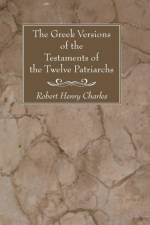
R. H. Charles (1855-1931) was Professor of Biblical Greek at Trinity College Dublin (1898-1906), He was elected a fellow of the British Academy in 1906, and a fellow of Merton College, Oxford in 1910. In 1925 he was the first recipient of the British Academy Medal for Biblical Studies. Charles also received honorary degrees from the Universities of Belfast in 1923 and Oxford in 1928. His publications include: 'The Apocalypse of Baruch,' 'The Testaments of the Twelve Patriarchs,' and 'The Apocrypha and Pseudepigrapha of the Old Testament in English' (2 vols.).
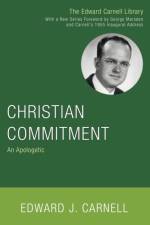
Introducing the Edward Carnell Library (Nine Titles Listed Inside)Rather than mounting a rational proof for God's existence, the author advocates here a ""spiritual approach to God."" This calls for an exercise not only of one's rational faculties, but also of the spiritual. The four parts of this book, originally published in 1957, treat the development and application of ""knowledge by moral acceptance,"" the process of becoming acquainted with the person of God, and concluding inferences and problems.
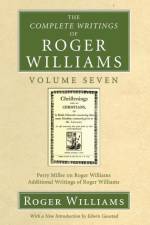
Ten years after the U. S. Civil War, a group of men in Rhode Island made a conserted effort to rescue the widely scattered writings of Roger Williams. Few sets were printed though, and under the guidance of Perry Miller, The Complete Writings of Roger Williams were brought back in 1963, but still in short numbers. The present collection now makes these volumes available to readers in their original orthography.The theme of religious liberty is dominant in these volumes, running through Williams's correspondence with John Cotton and on through his famous pair of works on The Bloudy Tenent of Persecution. All of the extant shorter writings and letters of Roger Williams are included in this set, along with two significant works resulting from his engagement with Native Americans: his seminal Key into the Language of America and Christenings Make Not Christians.""Roger Williams was one of those rare individuals who took the accepted ideas of his time and followed them to conclusions that challenged his contemporaries and still challenge us. To have his complete writings once again available is a great service to all who would understand American religion and political institutions at the deepest level.""Edmund S. MorganSterling Professor of History Emeritus Yale University""It has been America's great good fortune that Roger Williams's career stood at the beginning of its history. Just as some experience in the youth of a person is ever afterward a determinant of his personality, so the American character has inevitably been molded by the fact that in the first years of colonization there arose this prophet of religious liberty. Later generations could not forget him or deny him. The image of him in conflict with the founders of New England could not be obliterated; all later righteous men would be tormented by it until they learned to accept his basic thesis, that freedom is a condition of the spirit.""Perry Miller (1963)Roger Williams (1603-1683) grew up in Puritan circles in London, sailed to Massachusetts in 1630, and, having been banished for his controversial views on the separation of church and state, founded Rhode Island on the basis of his new principles of religious liberty.
Ten years after the U. S. Civil War, a group of men in Rhode Island made a conserted effort to rescue the widely scattered writings of Roger Williams. Few sets were printed though, and under the guidance of Perry Miller, The Complete Writings of Roger Williams were brought back in 1963, but still in short numbers. The present collection now makes these volumes available to readers in their original orthography.The theme of religious liberty is dominant in these volumes, running through Williams's correspondence with John Cotton and on through his famous pair of works on The Bloudy Tenent of Persecution. All of the extant shorter writings and letters of Roger Williams are included in this set, along with two significant works resulting from his engagement with Native Americans: his seminal Key into the Language of America and Christenings Make Not Christians.""Roger Williams was one of those rare individuals who took the accepted ideas of his time and followed them to conclusions that challenged his contemporaries and still challenge us. To have his complete writings once again available is a great service to all who would understand American religion and political institutions at the deepest level.""Edmund S. MorganSterling Professor of History Emeritus Yale University""It has been America's great good fortune that Roger Williams's career stood at the beginning of its history. Just as some experience in the youth of a person is ever afterward a determinant of his personality, so the American character has inevitably been molded by the fact that in the first years of colonization there arose this prophet of religious liberty. Later generations could not forget him or deny him. The image of him in conflict with the founders of New England could not be obliterated; all later righteous men would be tormented by it until they learned to accept his basic thesis, that freedom is a condition of the spirit.""Perry Miller (1963)Roger Williams (1603-1683) grew up in Puritan circles in London, sailed to Massachusetts in 1630, and, having been banished for his controversial views on the separation of church and state, founded Rhode Island on the basis of his new principles of religious liberty.
Ten years after the U. S. Civil War, a group of men in Rhode Island made a conserted effort to rescue the widely scattered writings of Roger Williams. Few sets were printed though, and under the guidance of Perry Miller, The Complete Writings of Roger Williams were brought back in 1963, but still in short numbers. The present collection now makes these volumes available to readers in their original orthography.The theme of religious liberty is dominant in these volumes, running through Williams's correspondence with John Cotton and on through his famous pair of works on The Bloudy Tenent of Persecution. All of the extant shorter writings and letters of Roger Williams are included in this set, along with two significant works resulting from his engagement with Native Americans: his seminal Key into the Language of America and Christenings Make Not Christians.""Roger Williams was one of those rare individuals who took the accepted ideas of his time and followed them to conclusions that challenged his contemporaries and still challenge us. To have his complete writings once again available is a great service to all who would understand American religion and political institutions at the deepest level.""Edmund S. MorganSterling Professor of History Emeritus Yale University""It has been America's great good fortune that Roger Williams's career stood at the beginning of its history. Just as some experience in the youth of a person is ever afterward a determinant of his personality, so the American character has inevitably been molded by the fact that in the first years of colonization there arose this prophet of religious liberty. Later generations could not forget him or deny him. The image of him in conflict with the founders of New England could not be obliterated; all later righteous men would be tormented by it until they learned to accept his basic thesis, that freedom is a condition of the spirit.""Perry Miller (1963)Roger Williams (1603-1683) grew up in Puritan circles in London, sailed to Massachusetts in 1630, and, having been banished for his controversial views on the separation of church and state, founded Rhode Island on the basis of his new principles of religious liberty.
Ten years after the U. S. Civil War, a group of men in Rhode Island made a conserted effort to rescue the widely scattered writings of Roger Williams. Few sets were printed though, and under the guidance of Perry Miller, The Complete Writings of Roger Williams were brought back in 1963, but still in short numbers. The present collection now makes these volumes available to readers in their original orthography.The theme of religious liberty is dominant in these volumes, running through Williams's correspondence with John Cotton and on through his famous pair of works on The Bloudy Tenent of Persecution. All of the extant shorter writings and letters of Roger Williams are included in this set, along with two significant works resulting from his engagement with Native Americans: his seminal Key into the Language of America and Christenings Make Not Christians.""Roger Williams was one of those rare individuals who took the accepted ideas of his time and followed them to conclusions that challenged his contemporaries and still challenge us. To have his complete writings once again available is a great service to all who would understand American religion and political institutions at the deepest level.""Edmund S. MorganSterling Professor of History Emeritus Yale University""It has been America's great good fortune that Roger Williams's career stood at the beginning of its history. Just as some experience in the youth of a person is ever afterward a determinant of his personality, so the American character has inevitably been molded by the fact that in the first years of colonization there arose this prophet of religious liberty. Later generations could not forget him or deny him. The image of him in conflict with the founders of New England could not be obliterated; all later righteous men would be tormented by it until they learned to accept his basic thesis, that freedom is a condition of the spirit.""Perry Miller (1963)Roger Williams (1603-1683) grew up in Puritan circles in London, sailed to Massachusetts in 1630, and, having been banished for his controversial views on the separation of church and state, founded Rhode Island on the basis of his new principles of religious liberty.
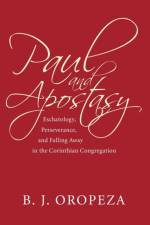
This groundbreaking work presents the concepts of apostasy and perseverance in light of recent interpretative and intertextual methods. Oropeza argues that the Pauline letters include warnings to congregation members who are in danger of falling away, and Paul often considers these members to be authentic converts to the early Christian message. A prime example of this is presented in the apostle's use of the Exodus-wilderness traditions in 1 Corinthians 10:1-13. In an effort to persuade congregation members against apostasy, Paul echoes examples from the Hebrew Scriptures and Jewish traditions regarding Israel's divine election and punishments. The Corinthians are exhorted against conducting themselves in a manner that parallels the ancient Israelites who, after crossing the Red Sea, were rejected by God in the wilderness because they murmured and committed vices such as idolatry and sexual immorality. Paul cautions the Corinthians that if they commit such vices in their own spiritual journey, they will suffer divine judgment before the culmination of the eschaton. These warnings are located within larger rhetorical arguments related to the problems of meat sacrificed to idols, congregational factions, and misperceptions about the end times.Oropeza also interprets passages on apostasy and perseverance in Paul's other letters, and he interacts with theological perspectives associated with the perseverance of the saints, including Calvinist and Arminian traditions. His work provides a fresh alternative to this theological controversy.B. J. Oropeza is Professor of Biblical Studies in the Division of Religion and Philosophy at Azusa Pacific University. Among his many publications are 'Ninety-Nine Answers to Questions About Angels, Demons, and Spiritual Warfare'; 'A Time to Laugh: The Holy Laughter Phenomenon Examined'; and 'Ninety-Nine Reasons Why No One Knows When Christ Will Return.' Oropeza has been invited to speak on various radio and television talk shows about his areas of expertise including pop culture, eschatology, Jesus and Paul, and cults.
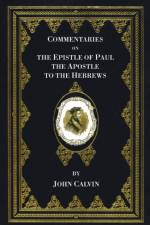
John Calvin (1509 - 1564) was a French reformer and theologian. His theological insight, exegetical skill, knowledge of languages, and his clear style made him the most influential writer among the reformers. His Institutes of the Christian Religion remains an important source of theological study and reflection.
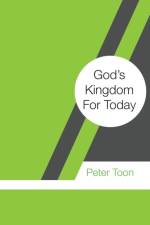
What is the kingdom of God? When will it (or did it) come? What does it have to do with the Old Testament Israel? With the Christian Church? With present-day society? These and many other questions are brilliantly addressed in God's Kingdom for Today.As in his other books, Peter Toon uses an extensive knowledge of the Scriptures to construct a thoroughly biblical approach, which is then applied to daily life. The result is a truly significant study.Among the topics discussed are the kingdom of God in the Old Testament, with special emphasis on God as King of Israel, and Jesus' teaching on the subject, pointing out that He not only taught about the kingdom, He personified it. Toon also focuses upon the practical implications of the kingdom, especially as it bears upon the related topics of the church, personal ethics, and social responsibility. A proper understanding of God's kingdom is central to the Christian faith. God's Kingdom for Today brings much-needed clarity to this often misunderstood subject.Reverend Dr. Peter Toon (1939-2009) received his DPhil from Oxford. He was ordained a priest in the Church of England. He taught theology in both England and America, and was also a visiting professor and guest lecturer at a variety of seminaries and universities in Asia, Europe, and Australia. Dr. Toon was a parish priest and a recent past-president of the Prayer Book Society of the USA.
What is the true nature of the church? What should it be doing? Are God's intentions for it today any different than they were 500--or 1900--years ago?In this highly readable, yet scholarly book, Peter Toon looks at these vital questions from a solidly biblical perspective, with careful discussion of more than twenty-five New Testament images of the church.Throughout the book, Toon focuses on four basic actions of the church--looking back (church history), looking up (worship), looking forward (to our eternal home), and looking around (mission). God's Church for Today paints a convincing--and convicting--portrait of the church. It will enable believers to gain a fuller understanding of what it means to belong to that glorious company, God's church.""Dr. Toon does a fine job of demonstrating that discipleship means churchmanship, and that belonging to God's church is a great and glorious thing. His enthusiasm in infectious.""J.I. Packer, author of Knowing GodReverend Dr. Peter Toon (1939-2009) received his DPhil from Oxford. He was ordained a priest in the Church of England. He taught theology in both England and America, and was also a visiting professor and guest lecturer at a variety of seminaries and universities in Asia, Europe, and Australia. Dr. Toon was a parish priest and a recent past-president of the Prayer Book Society of the USA.
""For too long the Holy Spirit has tended to be either disregarded or the object of fanatical exclamation in the life of the church, especially in western Christianity,"" writes general editor Robert Boak Slocum in his introduction to this stimulating collection of eighteen essays from a broad spectrum of noted authors. ""The essays in this collection give attention to many ways of the Spirit's life and activity--for salvation and healing, for making Christ present in our lives and in the church, for empowering our prayers and liturgies, for our inspiration and gifting, for transformation of the way we live, for the redemption of the world and the ultimate coming of God's kingdom, for the unity of our relationships with each other and God. . . . As we recognize the Spirit's activity in our traditions and doctrines, our prayers and liturgies, and in all aspects of the life we live, we may be better attuned to the leading of the Spirit into the future of faith and our life in God."" Engaging the Spirit was first published as a special Summer 2001 edition of the Anglican Theological Review, and is dedicated to the late Charles P. Price, theologian and professor at Virginia Seminary. A posthumously published essay by Dr. Price is a fitting and unique addition to the collection. Robert Boak Slocum is the author, editor, or co-editor of thirteen books. He received his Doctorate in Theology at Marquette University, and taught as a lecturer and visiting assistant professor in the Theology Department at Marquette. He later served at St. Catharine College in Kentucky as dean of the School of Arts & Sciences. He taught courses in religious studies and ethics as a professor at St. Catharine College. He was the president of the Society of Anglican and Lutheran Theologians, and the co-convenor of the Society for the Study of Anglicanism. He served on the board of the Anglican Theological Review. He is an Episcopal priest, and he served congregations in the dioceses of Louisiana, Milwaukee, and Lexington. He was ecumenical officer for the Diocese of Lexington. He lives in Danville, Kentucky, with his wife, Victoria. He has three grown children, Claire, Rebecca, and Jacob.
That the man who has been called ""the greatest British theologian of all time"" should have no adequately researched biography of his life and times would be incredible if it were not a fact.But as Dr. Toon, an able historian who specializes in the Puritan era, shows in this book, John Owen was even more than just a great theologian. He exercised a profound influence on youth as Dean of Christ Church, and Vice Chancellor in the University of Oxford; he was also a statesman of no mean order, whose wisdom often prevented excesses into which his contemporaries would have fallen in their untampered zeal; but above all, he was a spiritual shepherd with a true pastor's heart who delighted in nothing so much as to feed the flock of God. Dr. Toon, who has been engaged for over four years on almost continuous research, has produced a volume full of new information as well as an assessment of the tremendous influence of this outstanding leader. The current worldwide interest in the Puritan period underlines the timeliness and importance of this new work. John Owen achieved national recognition when at the comparatively early age of thirty he preached before the House of Commons at St. Margaret's, Westminster. Yet his achievements would eventually be recorded in higher archives than any mere earthly ones, for he was to become a revered and redoubtable servant of the King of kings. Like many other renowned servants of God, John Owen cared little for personal aggrandizement and by his own command not one of his diaries has been preserved; and since the extant letters in which he lays bare his soul are very few, his biographer is hard put to find those personal touches which have helped to establish biography as an important part of English literature. Nevertheless this carefully researched study has been produced to help meet the need for a fuller life of this remarkable man.Reverend Dr. Peter Toon (1939-2009) received his DPhil from Oxford. He was ordained a priest in the Church of England. He taught theology in both England and America, and was also a visiting professor and guest lecturer at a variety of seminaries and universities in Asia, Europe, and Australia. Dr. Toon was a parish priest and a recent past-president of the Prayer Book Society of the USA.
""A word of explanation is due for what may seem the temerity of reprinting and publishing in a connected form matters so diverse and incongruous as have been brought together in this little volume. ""The 'Points of Church Law' appeared, in answer to clerical correspondents, in the Guardian for the years 1900--1903. They deal, for the most part, with points of law in connection with parochial administration, which are continually arising, and causing doubt and difficulty to the clergy, churchwardens, and others in the performance of their duties. It is hoped that, collected under headings of the points that most frequently arise, they may be found serviceable to the clergy, and even to lawyers. They claim no higher merit than that of bringing together in a convenient form the principal authorities on each subject treated. The references to cases have been given in a more extended form than is usual, as the book is designed to meet the needs of persons who are unfamiliar with the abbreviations in use among lawyers.""The summary of the arguments in Dr. Gore's case in 1903 is also a reprint from the Guardian. The case will, of course, be found more fully reported in the pages of the Law Reports, and the columns of the Times. But it was thought that, in a case so complicated and certain to become historical, there might be room for a more popular account compiled at the time with considerable care from an official copy of the shorthand notes. The arguments have been closely followed, but for references to the authorities cited in the case the reader is referred to the reports above mentioned.""--From the PrefaceClement Y. Sturge was a barrister-at-law at the Inner Temple, one of the four Inns of Court in London.
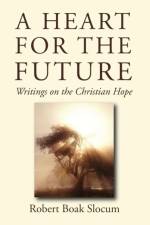
Apart from impressive liturgical expressions every year in Advent and one stirring statement called ""The Christian Hope,"" which concludes the Prayer Book Catechism, the Episcopal Church is not known for its formation and application of eschatology--the doctrine of last things. A Heart for the Future: Writings on the Christian Hope may change that. The distinguished and diverse contributing authors--including Robert M. Cooper, Robert D. Hughes, Harold T. Lewis, Fredrica Harris Thompsett, Paul F. M. Zahl, and Robert Boak Slocum (who is also the general editor)--differ widely in method, meaning, and approach. They are very much alike, however, in the rigor with which they profess their faith in the Christian future, avoiding the simplistic eschatology that would cleave the Body of Christ in two by creating a false dichotomy between walking with God in this world and walking toward God in the next. The choice Christians must make is not between the now and the external; it is between being forward-looking and being backward-looking. Unless we look with eagerness and longing toward the future, we will stay stranded in the past. To live the Christian life today, we need A Heart for the Future.Robert Boak Slocum is the author, editor, or co-editor of thirteen books. He received his doctorate in theology at Marquette University, and taught as a lecturer and visiting assistant professor in the Theology Department at Marquette. He later served at St. Catharine College in Kentucky as dean of the School of Arts & Sciences. He taught courses in religious studies and ethics as a professor at St. Catharine College. He was the president of the Society of Anglican and Lutheran Theologians, and the co-convenor of the Society for the Study of Anglicanism. He served on the board of the Anglican Theological Review. He is an Episcopal priest, and he served congregations in the dioceses of Louisiana, Milwaukee, and Lexington. He was ecumenical officer for the Diocese of Lexington. He lives in Danville, Kentucky, with his wife, Victoria. He has three grown children, Claire, Rebecca, and Jacob.
""Reconciliation is a term of wide scope and various application, and it is hardly possible to conceive a life or a religion which should dispense with it. There is always some kind of strain or tension between man and his environment, and man has always an interest in overcoming the strain, in resolving the discord in his situation into a harmony, in getting the environment to be his ally rather than his adversary. The process by which his end is attained may be described as one of reconciliation, but whether the reconciliation is adequate depends on whether his conception of the environment is equal to the truth. Men may be very dimly and imperfectly conscious of the nature of the strain which disquiets their life, and may seek to overcome it in blind and insufficient ways. They may interpret it as physical in its origin when it is really ethical, or as the misapprehension of a moral order when it is really antagonism to a personal God, and in either case the reconciliation they seek will fail to give the peace of which they are in quest. Nevertheless, reconciliation and nothing else is what they want, and its place in religion is central and vital.""--From Chapter 1: The Experimental Basis of the DoctrineJames Denney (1856-1917) was a Scottish theologian and preacher. He is probably best known today for his defense of the doctrine of Penal Substitution. Denney was appointed Professor of Systematic Theology at his old alma mater, Free Church College Glasgow, in 1897, and spent the rest of his life teaching there. In 1900 he transferred to Professor Bruce's old Chair of New Testament Language and Literature, which he held until his death in 1917.
The purpose of this dissertation is to present the story of the Catholic Church in the Oregon territory from the foundation of the first missions in 1838 until the formal organization of the country into the ecclesiastical province of Oregon City, which was completed ten years later when the first provincial council was held at St. Paul, Oregon, in February 1848. The pioneer priests, Francis Norbert Blanchet and Modeste Demers, had been but a few months in the Pacific Northwest when they realized the advantages that might result to their work from the presence of a bishop in Oregon. They sent, in 1839, the first of a series of petitions to the bishop of Quebec, asking that steps be taken thus to assist them but it was not until 1842, when Father De Smet, the Jesuit missionary, added his pleadings to theirs, that the project was given serious consideration. The following year, after recommendations from Quebec and Baltimore, the Holy See established the vicariate apostolic of Oregon and appointed Father Blanchet, first vicar apostolic. Three years later, in 1846, due to representations which Blanchet made at Rome, the province of Oregon City was erected. The Holy See elevated Blanchet to the metropolitan see and named as his suffragans, his brother, Augustine Magloire Blanchet, Bishop of Walla Walla, and Modeste Demers, Bishop of Vancouver Island. Archbishop Blanchet returned to Oregon in 1847 and several months later convened the first provincial council, which studied and legislated for the needs of the new province. It is this period of early foundations and development which is discussed in these pages.¿From the PrefaceSister Letitia Mary Lyons (1904-2001) entered the Holy Names novitiate in 1928 at Marylhurst, OR, and pronounced vows in 1930. Her bachelor's, master's, and doctoral degrees in history and sociology were from Marylhurst College, the University of Washington, and The Catholic University of America.She taught in Holy Names high schools in Oregon and Washington, and at Holy Names (later Fort Wright) College, where she served variously as housemother, dean of students, and professor. She later pioneered a workshop for religious education on human sexuality.
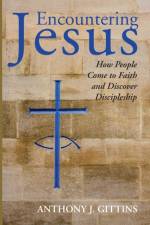
In sixteen short but perceptive commentaries, Anthony J. Gittins recounts the experiences of various women and men from the New Testament--insiders and outsiders, people of substance and people regarded as sinners--whose lives were changed by an encounter with Jesus. Based on solid biblical scholarship but retold in language accessible to all and illuminated by the author's fresh perspective, these stories emphasize the way in which people come to faith and discover discipleship. Encountering Jesus presents New Testament figures in a new light and is perfect for both group study and personal reflection. Among the discipleship stories included are the healing of the paralytic from the Gospel of Mark, the healing of the Canaanite woman's daughter from Matthew, the conversion of Zacchaeus the tax collector from Luke, and the healing of the man born blind from John.Anthony J. Gittins writes: ""Typically, the stories demonstrate that there are often a number of stages or steps involved. The easiest way to identify them is to notice exactly what each person says, and in what sequence, during his or her encounter with Jesus. With the rare exception of someone immediately identifying Jesus with God... most people are a little slower.... Readers may look out for a three-step or four-step approach to faith, as a person moves to an even more specific identification of Jesus. It is an interesting, englightening, and sometimes surprising exercise.""Anthony J. Gittins, CSSp, is emeritus professor of theology and culture at the Catholic Theological Union in Chicago. Born in Manchester, England, he earned an MA and PhD from the University of Edinburgh, Scotland. He was ordained a priest in 1967 and is an internationally recognized lecturer and retreat master. Father Gittins is the author of 18 books, including two previous works on the theology of discipleship: Encountering Jesus: How People Come to Faith and Discover Discipleship and A Presence That Disturbs: A Call to Radical Discipleship.
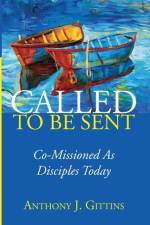
The gospel tells us to look into other people's eyes as we search for an image of God to help us work for healing justice amid the rubble and the memories that litter our lives, to rebuild a human world on the debris of broken dreams, and to commit ourselves--as God does--to restoring communities, so that there will be no more estrangement, no more strangers, and no more aliens. It is only a little less than impossible, and the only way we can do it is to learn to love the world as God already does. It's simply not possible to love in theory; we must go further than that. We must love in practice. We must practice in love. That is the disciple's call.Called to Be Sent develops and completes the theology of discipleship introduced in the author's previous books. This new volume focuses on ""sending forth,"" the phase that follows our radical encounter with humanity. Here we find the hope and strength to move from an understanding of mission to actually being commissioned by Jesus. In short, as Christians we are ""gathered for scattering"" and ""called to be sent,"" and this book provides much direction.Anthony J. Gittins, CSSp, is professor of mission and culture at the Catholic Theological Union in Chicago. Born in Manchester, England, he earned an MA and PhD from the University of Edinburgh, Scotland. He was ordained a priest in 1967 and is an internationally recognized lecturer and retreat master. Father Gittins is the author of fifteen books, including two previous works on the theology of discipleship: Encountering Jesus: How People Come to Faith and Discover Discipleship and A Presence That Disturbs: A Call to Radical Discipleship.
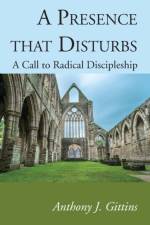
This powerful, moving, and ""disturbing"" book looks at the contemporary issues that block the attainment of a revitalized church--a church united rather than fragmented, a church tuned to justice for all rather than to provincial myopia. A Presence that Disturbs will engage the general reader and the specialist alike with a fresh perspective on what it means to follow Christ.Three themes garnered from Holocaust survivor Viktor Frankl underpin the message of this book. To live you must choose: you must not let life ""just happen."" To love you must encounter: you must know that human encounter is the only authentic way to know and love. To grow you must suffer: you must know that suffering can be a vehicle of growth, a chance for redemption, a way to turn ourselves to the outside.Gittins discusses these themes in the context of the search for meaning. The new lease on life endowed by the Holy Spirit, the function of imaginative ministry, the communitas of true discipleship, and the radical actions of Jesus' ministry are just a few of the ideas explored in the quest for a new understanding of discipleship. ""Authentic Christianity,"" says Gittins, ""is outreaching and encountering; it communicates and ministers. Christianity, like its sibling, Judaism, does not produce complacency, but complicity or participation with others. Theses pages are an invitation to renewed discipleship and an appeal to radical Christianity in the footsteps and in the Spirit of Jesus, who prayed that his followers be one in him.""Anthony J. Gittins, CSSp, is professor of mission and culture at the Catholic Theological Union in Chicago. Born in Manchester, England, he earned an MA and PhD from the University of Edinburgh, Scotland. He was ordained a priest in 1967 and is an internationally recognized lecturer and retreat master. Father Gittins is the author of fifteen books, including two previous works on the theology of discipleship: Encountering Jesus: How People Come to Faith and Discover Discipleship and A Presence That Disturbs: A Call to Radical Discipleship.
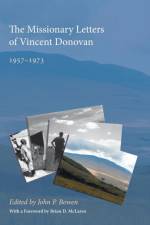
Vincent Donovan is best known as the author of the influential bestseller, Christianity Rediscovered (1978). This new book contains the monthly letters he wrote home from Tanzania between 1957 and 1973. These letters give us previously unknown stories: how Donovan met Julius Nyerere, first prime minister of Tanzania; how a group of Protestants attempted to kill him; of his early disastrous attempt to hear confession in Swahili; of the relationship between Donovan's work and Vatican II; and much about the mysterious Sonjo tribe, among whom Donovan spent his last years in Tanzania. They also give insights, from the hilarious to the poignant, into Donovan the man in relationship to his family, his missionary colleagues, and the Maasai. Copies of original photographs are also included.Most significantly, the letters show Donovan's evolution over the years from a young missionary who was passionate about acquiring land for church buildings, into a mature visionary convinced that the only job of the missionary is to preach the gospel.A concluding essay looks at the legacy of Donovan, thirty-five years later, with contributions from three Spiritan missionaries who continue to live out his legacy in Tanzania and elsewhere today. Finally, the essay looks at Donovan's continuing influence on contemporary renewal movements in North America and in Britain. Those who have been inspired by Christianity Rediscovered--missiologists, church renewal leaders, and students of Gospel and culture--will find much here to delight and to challenge.
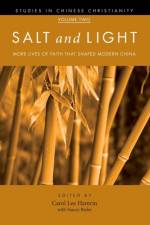
The hidden seeds of the Christian renewal in China today include the outstanding Chinese Christians in Salt and Light 2, a dozen new life stories with lively anecdotes and photographs. These reformers made lasting contributions that shaped modern China. Working out of the limelight in their professions, they had quiet but powerful influence on early twentieth-century civil society. Motivated by their faith, they modeled essential virtues. This series helps recover a lost Christian heritage linked closely to a legacy of East-West cooperation in an earlier global era.
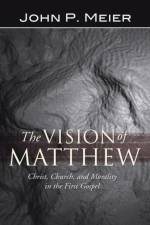
In this volume Father Meier explores how Matthew remodeled the form, the Christological message, and the moral demand of the gospel. Part I shows Matthew's church in crisis. It was experiencing a shift in its Christian existence: from a narrow Jewish-Christian past to a universal Gentile future. To preserve yet reinterpret the particularistic traditions of that Jewish-Christian past, Matthew drew up a model of salvation history and then reshaped the gospel message to fit it. Part II offers a mini-commentary on the whole gospel to illustrate this reshaping of the message. Pericope by pericope, Matthew presents Jesus as Son of God and Son of Man, and therefore as 'the' definitive teacher of his Church. Indeed, the nexus between Christ and his Church emerges as the outstanding characteristic of Matthew's gospel. Part III studies Matthew's construction of a unified moral vision on the basis of this connection between Christ and Church. The basic stance of Jesus and his disciples towards the Mosaic Law is one of fulfillment - a 'prophetic' fulfillment which involves at times a deepening of, at times the abrogation of, the letter of the Law.
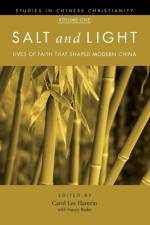
Salt and Light presents the life stories of outstanding Chinese Christians who, as early modernizers, promoted China's nation building and moral progress in the early twentieth century. Lively anecdotes and photographs highlight the strong character of ten pioneers in the modern professions of education, medicine, journalism, and diplomacy. These professionals were motivated by faith to introduce practical social reforms and build up China's civil society. They modeled and promoted virtues essential to social progress during the "golden age" of Chinese Protestantism. Their stories touch on themes important in today's global era: patterns of cooperation between foreign and Chinese partners, the contributions to China of Western-educated professionals, Christianity's role in furthering East-West understanding and exchanges, and the transnational nature of modern Chinese Christianity. The editors and authors articulate the importance of recovering China's Christian heritage as part of world Christianity.
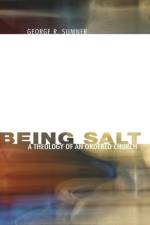
Being Salt addresses both ordination and leadership by taking as its point of departure the most distinctive yet often overlooked feature of ordination: indelibility--being ordained for life. Sumner wholeheartedly agrees with the Reformation emphasis on the ministry of the whole people of God. Still, he argues that we can only understand priesthood if we understand what one is ordained for. Indelibility--lifetime ordination--provides an entree to the question of what sets the ordained apart. In sum, Being Salt offers an evangelical argument for a catholic practice and so goes to the heart of what Anglicanism understands itself to be.
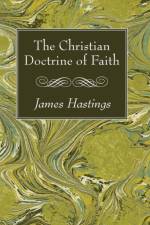
"This is not a theological trestise on the one hand, nor on the other is it a volume of sermons. Like its predecessor, the volume on Prayer, it has a distinct office to fulfill, an office that in the judgment of the editor is of immense importance. For between and the professor's lecture-room and the preacher's study there is a great gulf fixed. In the lecture-room the lectures on systematic theology are laboriously entered into notebooks, which are useful for the exit examinations. But when the active work of the ministry begins and so many sermons have to be prepared every week, the cupboard into which those notebooks have been stowed away is left undisturbed. The preacher begins to spin his sermons out of his own brains, with the assistance of such popular books as happen to be at his hand." -- From the Preface
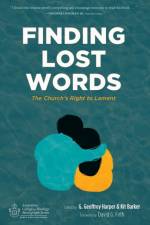
The brokenness of this world inevitably invades our lives. But how do you maintain faith when overwhelmed by grief? When prayer goes unanswered? When all you have are questions, not answers? What do you say to God when you know he is in control but the suffering continues unabated? Is there any alternative to remaining speechless in the midst of pain and heartbreak? This book is about finding words to use when life is hard. These words are not new. They are modes of expression that the church has drawn on in times of grief throughout most of its history. Yet, the church in the West has largely abandoned these words--the psalms of lament. The result is that believers often struggle to know what to do or say when faced with distress, anxiety, and loss. Whether you are in Christian leadership, training for ministry, or simply struggling to reconcile experience with biblical convictions, Finding Lost Words will help you consider how these ancient words can become your own.""As the contributors to Finding Lost Words so insightfully point out, the Psalms offer us a robust invitation to express our honest feelings before God. I found this volume utterly compelling and encourage everyone to read this book and let the laments of the Psalms teach you how to pray."" --Tremper Longman III, Westmont College""This book is a work the church needs. Lament is a missing practice in the praying life of too many Christians in a broken world. It needs to be recovered. After all we find it in psalm after psalm. . . . Scripture not only gives us a language for our joys, it also gives us a language for our confusions, disappointments, and even anger towards God. In this work, a constellation of careful thinkers and practitioners serve us so very well. I commend it without reservation."" --Graham A. Cole, Trinity Evangelical Divinity School""There is a level of superficiality in the spiritual experience of today's church that needs to be challenged. . . . Finding Lost Words is an excellent set of readable essays dealing with the theology and practice of lament from an exegetical, historical, and pastoral perspective. I don't want to overstate things but, if we really hear the message of this book, it will change the way we do church.""--Jamie A. Grant, Highland Theological College UHI""Like a well-cut diamond, this collection of essays radiates light in many directions, helping readers to see the biblical concept of lament from different perspectives with greater clarity. . . . This timely volume offers a much needed rebalance to Christian theology that often appears to have lost sight of the pain and suffering caused by the reality of evil in our broken world.""--T. Desmond Alexander, Union Theological College, BelfastG. Geoffrey Harper is Lecturer in Old Testament at Sydney Missionary and Bible College. He has written several essays and articles on intertextuality in the Old Testament.Kit Barker is Lecturer in Old Testament at Sydney Missionary and Bible College. He is the author of Imprecation as Divine Discourse (2016).
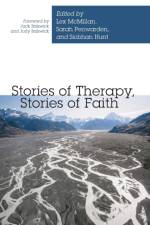
Stories of Therapy, Stories of Faith is a collection of stories from therapists who have amplified the theology already present in their work. In particular, these authors, a group of counseling practitioners and educators, bring forward a dialogue between their practices and a social Trinitarian theology that emphasizes the relational nature of God and humans. The resulting stories of practice give voice to the ethical hope that counseling practice is participation in the redemptive story of the Gospel. The authors write about their motivations for practice in initiatives as diverse as parenting, trauma work, opposing bullying in schools, reengaging orphaned African children with their heritage, providing hospitality for difference, and counselor education.Stories of Therapy, Stories of Faith will be of interest to counselors and counselor educators, particularly those drawn to developing their ethical and theological commitments within their therapeutic practices.""This is a fascinating, well-written, and imaginative book; remarkable because its various authors have such distinct and interesting stories to tell. It is richly informed by Trinitarian theology, but also by the diverse philosophical, psychological, and literary conversation partners of its authors, from Volf, Pohl, Bakhtin, and Foucault to Coleridge and Dr. Seuss. The authors are compassionate practitioners, open to and informed by their clients' stories and life-worlds, as well as reflecting deeply on the meaning of personhood. --Nicola Hoggard Creegan, St John's College, Auckland; author of Animal Suffering and the Problem of Evil""Stories of Therapy, Stories of Faith is essential reading for anyone with a serious interest in integrative counseling practice. The Laidlaw group weaves together various practice, ethical, and theological threads to produce a beautiful therapeutic tapestry. Without exception, the thinking is sophisticated and profound, and at the same time, accessible and grounded.""--Neil Pembroke, University of Queensland; author of Foundations of Pastoral Counselling: Integrating Philosophy, Theology, and Psychotherapy ""From the first chapter exploring the implications for counseling practice of a social Trinitarian understanding of God, through to the final chapters focusing on justice, care, and personal formation, these authors have written honestly, thoughtfully, and vulnerably about their own questions and experimentation, with a deeply held theological understanding alongside professional expression in the counseling relationship and the classroom.""--Irene Alexander, Counseling educator, spiritual direction formator, Christian Heritage College, Brisbane""Inspiration for counselors wanting to develop the theological basis of their work and a resource for those who educate them. A cohesive collection of perspectives full of thoughtful and inspirational links between the practices of counseling and the relationality of the Trinity.""--Richard Cook, editor/author of Interweavings: Conversations between Narrative Therapy and Christian FaithDr. Lex McMillan is a private counseling practitioner and a lecturer in the School of Social Practice at Laidlaw College, Auckland, New Zealand. Sarah Penwarden is a counselor and supervisor, and a lecturer and practicum co-ordinator in the School of Social Practice at Laidlaw College, Auckland, New Zealand.Siobhan Hunt is a research assistant in the School of Social Practice at Laidlaw College, Auckland, New Zealand.
Abonner på vårt nyhetsbrev og få rabatter og inspirasjon til din neste leseopplevelse.
Ved å abonnere godtar du vår personvernerklæring.