Gjør som tusenvis av andre bokelskere
Abonner på vårt nyhetsbrev og få rabatter og inspirasjon til din neste leseopplevelse.
Ved å abonnere godtar du vår personvernerklæring.Du kan når som helst melde deg av våre nyhetsbrev.

""It is difficult to conjecture how much George Herbert''s return to the spiritual life was due to the sudden failure of royal patronage, and how much to his own devotion ; but it is vain to pretend that it was at first an easy or a palatable change of front for him. ''In this time of retirement'' [in London and Kent], says Walton, ''he had many conflicts with himself, whether he should return to the painted pleasures of a court life, or betake himself to a study of divinity, and enter into sacred orders, to which his mother had often persuaded him. These were such conflicts as they only can know that have endured them; for ambitious desires, and the outward glory of this world, are not easily laid aside; but at last God inclined him to put on a resolution to serve at His altar.''""--From the Introduction by Arthur WaughGeorge Herbert (1593-1633) was a Welsh-born poet, orator and Anglican priest. Herbert''s poetry is associated with the writings of the metaphysical poets. He attended Trinity College in Cambridge, became the University''s Public Orator, and attracted the attention of King James I. From 1624-1625, he served in the Parliament of England. After King James died, Herbert''s interest in ordination was renewed. In his mid-thirties he took holy orders in the Church of England, and spent the rest of his life as the rector of St. Andrews Church in Lower Bemerton, Salisbury.
Harry Emerson Fosdick (1878-1969) was one of the most influential preachers in the twentieth century. He believed every sermon ought ask and answer some question that genuinely troubles individuals or the societies of which they are a part. Answers to Real Problems gathers several significant sermons from Fosdick's long ministry. The selection is rooted in current needs. This collection presents him asking and answering questions that still weigh--or ought to weigh--on the minds of people today. Here is one of America's finest preachers talking about war, nationalism, the relationship between liberals and conservatives, the plight of the church, public ethics, private morality, and more.Mark E. Yurs is Pastor of Salem United Church of Christ in Verona, Wisconsin. He is the author of Being a First Church: What a Pastor's First Congregation Should Know (Wipf and Stock, 2003).
In a globalized world, networks are key, whether they are networks of people, ideas, or interests. In this volume of essays on the texts and teachings of Jonathan Edwards, contributors from each continent ask questions about how the world of Edwards explains or illuminates the world of today, whether in the area of systematics, missions, historiography, politics, church-planting, or biblical studies. Such diverse discourses enrich the networks of scholarship that the contributors represent, and provide a global snapshot of contemporary research in Edwards studies. These papers were presented in August 2015 at the Jonathan Edwards Congress held at Ridley College in Melbourne, Australia, where personal engagement with the topics at hand made the worldwide network of Edwards aficionados and scholars not merely a virtual aspiration but an experience in time and space. This book will not only inform its readers but surprise them as well, as they track the power of eighteenth century theological ideas in the late modern world.
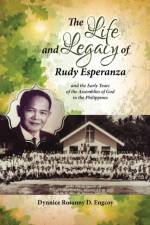
From the ForewordRose Engcoy's insightful study of the life and ministry of Rodrigo (""Rudy"") Esperanza is important for two reasons. The first is that all of us have much to learn from Rev. Esperanza's example. After all, he was one of the pioneers of Pentecostalism in the Philippines. His work as a church planter, pastor, educator, and long-time senior administrator of the Philippines General Council of the Assemblies of God (PGCAG) was vitally important to that denomination's early success which has situated it in the front ranks of the community of Spirit-filled believers in his beloved homeland. ...Rev. Esperanza, a veteran ecclesiastical firefighter who doused the flames of many a conflict that threatened to disrupt the PGCAG's unity, not only helped to pilot the United Pentecostal Fellowship but also led his fellow Pentecostals in collaboration with non-Pentecostal evangelicals in a range of evangelistic and ministry activities that went a long way toward allaying suspicions on both sides. Growing churches are always the most vulnerable to conflict and schism, so Christians who long for unity in the body of Christ can learn a lot from Rev. Esperanza. This book will help with that. But Dr. Engcoy's study is important for another reason as well. Today the Christian community is growing rapidly in Asia, especially East Asia, rivaling the explosive growth of the church in Africa. Riding the crest of the wave are Pentecostal denominations like the PGCAG....This study of Rudy Esperanza and the early years of the PGCAG gives us a very good idea of what lies ahead for Philippine Protestantism. I find that enormously encouraging.George W. Harper, Ph.DAsia Graduate School of TheologyQuezon City, PhilippinesRose Engcoy earned her Ph.D. in Church History fromAsia Graduate School of Theology. She is currentlya Church History faculty at Asia Pacific TheologicalSeminary, archivist of Asia Pacific Research Center atAPTS, and Registrar of ICI Global University Philippines.She does oral history research on the beginnings ofPentecostal groups in the Philippines.
In Clergy Retirement: Every Ending a New Beginning for Clergy, Their Families, and Congregants, retirement is likened to a death experience, but much more. Besides saying goodbye to congregants, colleagues, and a career, it is equally important, as in any other loss, to take time to grieve aernd then to discover new meaning in life through which to reinvent oneself and grow to new heights. This book is a manual for transition into a new world as one approaches retirement. It not only encourages the retiree to think through the process of making new meaning, but offers practical suggestions of how to do so.IN PRAISE Warning! Do not wait until retirement to read this indispensable book. At last, this is the groundbreaking volume that will offer understanding and support to those transitioning from the active ministry. Assembled are contributions from experts offering unique recommendations for complex problems that may arise. Thoroughly researched, with compelling wisdom and guidance, this is a book to be read and reread years before retirement, not only by the clergy but by their families as well. My only regret--I wish I had discovered it before I retired.-- Rabbi Earl A. Grollman, D.H.L., D.D.Author, Living When A Loved One Has Died Coauthors Rabbi Daniel Roberts and Michael Freidman look at the many dimensions of retirement and aging: the purposes and concerns, the struggles and surprises, the potential and joys. The book reflects on the temptation to isolate oneself from the changes taking place and on the need to stay involved. It talks about the fear of tomorrow and the mystery of forever--and how to cope with it all. It is a panoply of the central issues that emerge with retirement and aging to bring us to the fullness of life, to make us new again.-- The Most Reverend Anthony M. PillaBishop Emeritus of ClevelandDan Roberts and Michael Freidman have written something that should be read and considered by every member of the clergy in every faith tradition, as well as by the lay leaders that work alongside them. The transition from a long career in ministry to the ranks of the retired is unsettling at best and, for some, is a cause for despair and even depression. For the clergy, the questions might be: Who am I now that my career is effectively over? How do I relate to my former congregation, and they to me, now that I am no longer the spiritual leader? How do I spend my time now that I have no full-time responsibilities at the synagogue, the church, or the mosque? For lay leaders, trustees or deacons, the question is: How does the retirement of the clergy leader affect the role of lay leadership, both in saying farewell to the retiring rabbi, pastor, or imam and in aiding in the selection and welcome of his or her replacement? All of these questions and many more are helpfully addressed in this timely book. I recommend it not only to those clergy that are already retired but also to those still working that are worrying and wondering what will happen when retirement brings their ministry to an end.-- Rev. Marvin A. McMickle, Ph.D.President, Colgate Rochester Crozer Divinity SchoolRochester, New York
What happens inside the church doors is its liturgy. It is there that life and fulfillment should be found, but too often today liturgy seems stale and lacking in vitality. The problem is not a lack of faith so much as it is a lack of life in the liturgy itself. In our liturgies we have let our emphasis on preserving traditional forms and expressions overrule attempts to give vital expression to the life and faith of contemporary participants. This is especially true with that part of the liturgy that is known as the Lord's Supper or eucharist. Though the practice of this sacrament is still central to the piety of most Christians today, here especially there is often a lifelessness and lack of connection with life as it is now lived. This need not be, however. The tradition is alive with meaning that we have too often overlooked. And liturgy can more effectively address the contemporary situation if we can learn better how to apply it to the aesthetic and symbolic language of today's culture. --from chapter 1
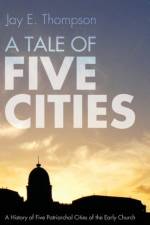
The worship and organization of the Christian church must be defined by the Hellenistic world in which it took root and emerged victorious over Roman Imperial paganism. The struggle of the early church to maintain a testimony and doctrine that would be faithful to the ""Rule of Faith""--which was established by the authority of certain Apostles who had the biggest impact in setting up the missional churches of the first century--and would conform to Jesus Christ''s earthly ministry. Eusebia (piety) marks the Hellenistic understanding of all worship based on the relationships that are changed as a result of an encounter with a supreme being. This opens the door to explore all the aspects of Church History as a product of corporate worship. Five cities emerge in the apologetic and concilar church ages (150-850 CE) that have the greatest impact on the world of Christianity for all time. Those churches are called the Patristic churches because their bishops became the power holders of all the churches (for good or for bad). This book provides insight into the contribution of the five patriarchal cities (Jerusalem, Antioch, Alexandria, Rome, and Constantinople) to the worship, polity, doctrine, and traditions of the church. The account begins with the exegetical back-drop of the Hebrew and Greek words for worship and the impact of these in the milieu of a Jewish church and a gentile church. The study of the patriarchal leadership in the apostolic, apologetic, and concilar ages of the church marks a clear direction of the church to the beginnings of the medieval era. It clearly delineates the differences in the East and West and the struggles within the Empire to gain unity through preeminence of polity. A unique approach was taken to combine the historical events and activities of the leaders of each of the churches with motive and intent toward good or bad. It was written from a Protestant and Orthodox perspective, which adds insight to set up the spiritual and theological reasons for the Reformation that begun under Wycliffe, Huss, and later Luther.Dr. Thompson is Professor of Church History and Exegesis at Faith Evangelical Seminary, Tacoma, Washington where he has been teaching since 1996.
The Austin Dogmatics brought the theology of Karl Barth to the United States in an accessible and forceful statement of the most exciting theology of the day. In addition, the yearlong course of lectures proposed a radical theology of Christian mission and ministry to the American churches that grew from the author''s three years of working in the inner city. While at times hammering home a single point, the lectures often flower into a passionate homiletical style that is still captivating half a century later.Publication of the Austin Dogmatics fills a gap in American theological history. In 1963, the author published The Secular Meaning of the Gospel, which the press identified with the death of God movement. While the author denied the association, the Austin Dogmatics explains how he moved from the strict Barthianism of his early period to the linguistic analysis of his middle period. His late and perhaps most important work that lay ahead was yet in another direction entirely, making van Buren one of the most versatile and adventuresome American theologians of the second half of the twentieth century.The current publication includes personal reminiscences by friends and colleagues after the author''s passing.""This hitherto unpublished cycle of early career lectures makes absorbing reading for those interested in the reception of Barth''s theology as well as for those concerned with constructive doctrinal work . . . Here we catch a glimpse of how [a] deep admiration for Barth''s theological achievement inspired [van Buren] to a vigorous practical dogmatics.""--John Webster, Professor at University of AberdeenPaul van Buren was Assistant Professor of Theology at the Episcopal Seminary of the Southwest (1957-1960) when he wrote the Austin Dogmatics and Associate Professor there (1960-1964) when he wrote The Secular Meaning of the Gospel. He was later Professor of Religion at Temple University (1964-1986) when he wrote the trilogy A Theology of the Jewish-Christian Reality.Ellen Charry is the Margaret W. Harmon Professor of Theology at Princeton Theological Seminary. Her most recent book is God and the Art of Happiness (2010).
M.F. Sadler was an Anglican priest. He served as rector of Honiton, England, and wrote several other commentaries, including volumes on each of the four Gospels. SADLER, MICHAEL FERREBEE (1819-1895), theologian, eldest son of Michael Thomas Sadler [q. v.], was born at Leeds in 1819. Educated at Sherborne school, he entered St. John's College, Cambridge, after a short interval of business life. He was elected Tyrwhitt's Hebrew scholar in 1846, and graduated B.A. 1847. He was vicar of Bridgwater from 1857 to 1864 (during which time he was appointed to the prebend of Combe, 13th in Wells Cathedral), and of St. Paul's, Bedford, from 1864 to 1869; he was rector of Honiton from 1869 till his death. In 1869 he received an offer of the bishopric of Montreal, carrying with it the dignity of metropolitan of Canada, but refused it on medical advice. He was a voluminous writer on theological subjects, and a strong high churchman. His works, which had a large circulation, did much to popularise the tractarian doctrines.
The Latino/a community continues to grow at a faster pace than any other racial or ethnic group in the country. In part because of this growth, Latino/as have begun to be recognized as bona fide contributors to American society, whether through sports, music, literary work, theology, or ministry. Largely missing from this, however, has been attention to the creative and indeed prophetic expression coming from the Latino/a pulpit--that is, the sermons being developed and preached from the Latino/a churches. This books fills that void.Eli Valentin has gathered some of the top US Latino/a theologians and religious practitioners to contribute actual sermons that have been constructed out of the rough and tumble of the Latino/a reality. The sermons in this book approach nitty-gritty issues that directly impact Latinos/as in the United States. What we find as a result is a message of hope that continues to emanate from the Latino/a pulpit, a hope placed in a God who promises a restored cosmos.
Desiderius Erasmus (1466-1536) was the most important literary figure of the late fifteenth and early sixteenth century. The first truly international author of the Renaissance, his influence upon his immediate contemporaries and following generations can hardly be overestimated. He was the arbiter of letters of his day, the first name in classical scholarship, the finest biblical scholar, the best satirist, and first, or nearly first in a score of other fields of intellectual endeavor. He was also a remarkable personality, perhaps the only important man in Europe who was able to keep his head through the incredible ferment of ideas and beliefs that permeated the age; he never yielded to extremes. He was the great stabilizer of his day. This present work, written by one of America's foremost historians, is the standard English-language work on Erasmus. Extremely readable and fluent, it is also very thorough and very profound in its insights. It makes use of every known source of information on Erasmus to accomplish its threefold purpose: to present the known facts of Erasmus's life, to exhibit his literary genius, and to examine his intricate relations with the important figures of the Reformation and the Renaissance. It makes clear his almost unbelievable virtuosity in letters, analyzes his subtle personality, and explains how this unassuming, quiet, modest man really controlled the ideological destiny of Europe for decades. For many years the study of Erasmus has been somewhat neglected, since we were still too close to the controversies and biases that had come down to us from his time. Now, however, it is being recognized more and more surely that he was a remarkable example in both achievements and orientation, and that our present culture owes much more to him than we had admitted. No student of philosophy, literature, European history, history of religions, theology, or of cultural history can afford to be without this book.Preserved Smith (July 22, 1880 - May 15, 1941) was an American historian of the Protestant Reformation. He was the son of Henry Preserved Smith, a noted scholar of the Old Testament, and inherited his name from a line of Puritan ancestors stretching back to the seventeenth century. He attended Amherst College and Columbia University, where he received his PhD in 1907, and continued studies at the Sorbonne and the University of Berlin. Like his mentor James Harvey Robinson at Columbia, he had a high respect for science and a belief that knowledge of history was a way to improve human prospects for the future. He taught at Cornell University as a member of the Department of History from 1923 to 1941.
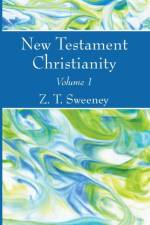
""The contents are made up largely of sermons comprising the collection of the late Z. T. Sweeney, who originated and planned the series and edited the volumes already distributed. The purpose of New Testament Christianity, as our friends may already know, is twofold; as Mr. Sweeney announced: 1. To let our preachers--especially our young preachers--get a clear insight into the aims of the Restoration movement. 2. To arm them for the defense of the movement."" --From the Foreword by Mrs. Z. T. SweeneyZ. T. Sweeney (1849-1926) was a well-respected preacher and scholar. He had his longest period of service at his congregation in Columbus, Indiana from 1876-1889. Aside from his spiritual endeavors, Sweeney was a conservationist who, from 1897-1911, spoke on the protection of game and fish in every part of the state. His other titles include: The Spirit and the Word, New Testament Christianity, Vol. 1, and New Testament Christianity, Vol. 2.
""It was while completing the present volume that my husband died suddenly at his home in Columbus, Ind. During the latter days of his life he organized and incorporated the New Testament Christianity Book Fund as a means of carrying on the work he had undertaken, and other volumes will be issued as planned by Mr. Sweeney. The first volume was given a most cordial reception, and the interest so enthusiastically expressed by recipients was a great inspiration, not only to Mr. Sweeney, but to his associates in the Book Fund."" --From the Foreword by Mrs. Z. T. SweeneyZ. T. Sweeney (1849-1926) was a well-respected preacher and scholar. He had his longest period of service at his congregation in Columbus, Indiana from 1876-1889. Aside from his spiritual endeavors, Sweeney was a conservationist who, from 1897-1911, spoke on the protection of game and fish in every part of the state. His other titles include: The Spirit and the Word, New Testament Christianity, Vol. 1, and New Testament Christianity, Vol. 3.
""When I was a young preacher I had a great horror of plagiarism. This led me to fail to use many a good book's contents, for fear that some of my members should have a copy of it. This book and its contents can be freely drawn upon without any such fear. The articles in this book have, most of them, been out of print for half a century. There are only a few of this generation that have ever seen them. Besides, they are not private property, but the legacy of us all.""--From To the Recipient by Z. T. SweeneyZ. T. Sweeney (1849-1926) was a well-respected preacher and scholar. He had his longest period of service at his congregation in Columbus, Indiana from 1876-1889. Aside from his spiritual endeavors, Sweeney was a conservationist who, from 1897-1911, spoke on the protection of game and fish in every part of the state. His other titles include: The Spirit and the Word, New Testament Christianity, Vol. 2, and New Testament Christianity, Vol. 3.
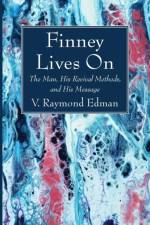
""It is necessary for us as human beings to establish patterns of principles and methods to understand intelligently our social, moral, and spiritual processes for purposes of accurate continuity in all good things. It may have been the divine recognition of this need which provided through Moses 'the pattern of the things in the heavens' (Hebrews 9:23). Providence from time to time, throughout the Christian age, has raised up exemplary men who by their teachings and methods have given to posterity an enlightened process by which a wayward generation may find its way back to God. One of these, and by no means the least, was Charles G. Finney, who embodied in ministry and literature principles and methods which are certain to produce, anywhere, a genuine spiritual revival of Christian zeal and devotion."" --From the ForewordV. Raymond Edman (1900-1967) was an American minister and author. He served as the fourth President of Wheaton College in Illinois from 1941 to 1965. His other titles include In Step With God, Storms and Starlight, and They Found the Secret: Twenty Transformed Lives That Reveal a Touch of Eternity.
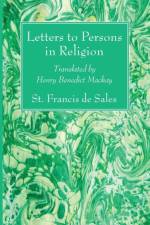
""Ah! how happy are these well-beloved hearts of my daughters, in having given up some years of the false liberty of the world, in order to enjoy eternally that desirable slavery in which no liberty is taken away save that which hinders us from being truly free."" - Francis de SalesSt. Francis de Sales (1567 -1622) was a Bishop of Geneva. He is honored as a saint in the Catholic Church. He is known for his writings on the topics of spiritual direction and spiritual formation--most notably, the Introduction to the Devout Life and the Treatise on the Love of God.
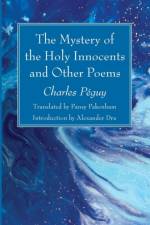
""CHARLES PEGUY is the only poet of consequence during the last fifty years in France whose work has failed to arouse the smallest critical interest in this country. Compared with Claudel or Valery, to mention two of his contemporaries, he has simply fallen flat. It almost seems as though the term 'poetry' were out of place, or as though, and this is perhaps nearer the truth, the conception of poetry his work implied placed it outside the pale of contemporary criticism. There seems to be nothing for criticism to get its teeth into. Everything is plain sailing. There is no shell to crack, no secret to explore, no difficulty of language, no impenetrable thought, no interplay of images to be unraveled. In whatever direction the critic looks, whether at the technique, the ideas, the images of the psychological sphere, there is nothing to be done, or at any rate nothing worth doing."" --From the IntroductionCharles Peguy (1873-1914) was a noted French poet, essayist, and editor. His two main philosophies were socialism and nationalism, but by 1908 at the latest, after years of uneasy agnosticism, he had become a believing but nonpracticing Roman Catholic. From that time on, Catholicism strongly influenced his works.
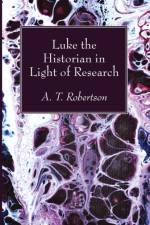
""The work of the last fifteen years has created new interest in the writings of Luke. The relation of Luke's Gospel to Mark's Gospel and the Logia of Jesus has sharply defined his own critical methods and processes. The researches of Harnack, Hobart, and Ramsay have restored the credit of Luke with many critics who had been carried away by the criticism of Baur, and who looked askance upon the value of Luke as the historian of early Christianity. It has been like mining--digging now here, now there. The items in Luke's books that were attacked have been taken up one by one. The work has been slow and piecemeal, of necessity. But it is now possible to gather together into a fairly complete picture the results. It is a positively amazing vindication of Luke. The force of the argument is cumulative and tremendous. One needs to have the patience to work through the details with candor and a willingness to see all the facts with no prejudice against Luke or against the supernatural origin of Christianity.""--From the PrefaceArchibald Thomas Robertson (November 6, 1863-September 24, 1934) was a Southern Baptist preacher and biblical scholar whose work focused on the New Testament and Koine Greek. He is the author of several other books including: The Minister and His Greek New Testament, The Pharisees and Jesus, and Passing on the Torch and Other Sermons.
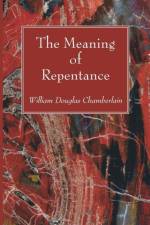
""The contents of this volume consist largely of the Smyth Lectures delivered at Columbia Theological Seminary, 1941. Chapters III and VI have been completely rewritten and there has been some revision in each of the other four. The conclusions stated in these chapters have grown out of firsthand investigation of the materials lying in the twenty-seven 'canonical books' of the New Testament. The method pursued has been to study the New Testament directly, rather than to read what others say about it. It is an increasingly strong conviction with me that we as ministers have not done enough of this kind of study. Reference to the various theories of authorship, date, and provenance of the 'books' has been studiously avoided, for the simple reason that I wanted to examine the New Testament as a body of writings expressing the convictions and faith of the Early Church.""--From the PrefaceWilliam Douglas Chamberlain (1890-1958) was Professor of New Testament Exegesis at Louisville Presbyterian Seminary. He was also the author of An Exegetical Grammar of The Greek New Testament.
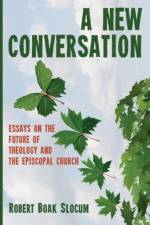
In these twenty-nine essays, Episcopalians consider the tradition and the future of their church--its theology, its polity, its missiology. These ""new conversations"" come from ministers of every order (bishop, priest, deacon, laity) and from practiced hands at many ministries (education, theology, music, chaplaincy, and spiritual direction). Several essayists write urgently that the Episcopal Church must change if it is to survive. Others contend--with equal fervor--that American Anglicanism can work if Episcopalians will reclaim and reaffirm their liturgical, spiritual, and theological heritage. Between these views are other writers who suggest that points of supposed opposition might indeed coexist in the church of the future--taking vibrant, and perhaps paradoxical, new forms.Robert Boak Slocum is the author, editor, or co-editor of thirteen books. He received his Doctorate in Theology at Marquette University, and taught as a lecturer and visiting assistant professor in the Theology Department at Marquette. He later served at St. Catharine College in Kentucky as dean of the School of Arts & Sciences. He taught courses in religious studies and ethics as a professor at St. Catharine College. He was the president of the Society of Anglican and Lutheran Theologians, and the co-convenor of the Society for the Study of Anglicanism. He served on the board of the Anglican Theological Review. He is an Episcopal priest, and he served congregations in the dioceses of Louisiana, Milwaukee, and Lexington. He was ecumenical officer for the Diocese of Lexington. He lives in Danville, Kentucky, with his wife, Victoria. He has three grown children, Claire, Rebecca, and Jacob.
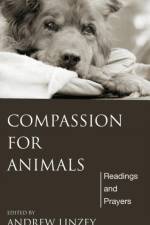
Comprising a rich variety of quotations from some of the greatest thinkers in the Christian tradition, this new anthology will encourage a more sensitive and compassionate regard for the animal creation. Suitable for use by groups or individuals, Compassion for Animals will become a valuable resource for discussion and worship--whether in church, in school, or in the home.Andrew Linzey has been described as ""the greatest living writer on theology and animals"" by Bishop John Austin Baker. He is the director of the Oxford Centre for Animal Ethics and a member of the Faculty of Theology at the University of Oxford. He has written or edited more than twenty books, including Animal Theology, Creatures of the Same God, and Why Animal Suffering Matters. He is also the author of Animal Rites: Liturgies of Animal Care and the coeditor of Animals and Christianity: A Book of Readings, both published by Wipf and Stock.
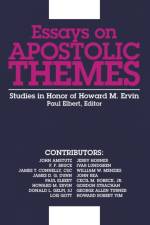
This collection of studies, prepared in honor of one of the church's distinguished teachers and pastoral servants, Dr. Howard M. Ervin, attempts to address some of the pressing theological issues of our day. Important matters of biblical interpretation in the evangelical and charismatic scenes are treated by three of the contributors, including one by the honoree himself. The role of the Holy Spirit in interpretation is critiqued by professor Horner, while professors F. F. Bruce and J. D. G. Dunn offer some penetrating insights into the work of the Spirit in Paul's churches and into the nature of the New Testament believer as understood by the great apostle. Professor Rea gives us his timely observations on the nature of spiritual experience in the lives of Old Testament believers, drawing out appropriate lessons for today. We trust further that 'Essays on Apostolic Themes' may have something to offer to the discipline of historical theology with five essays, ranging from prophetic-type phenomena in Iranaeus's church and charismatic motifs in Calvin's thoughts to critical assessments of Lewi Pethrus and Donald Gee, who are, within their own cultures, appraised as being dynamic figures of leadership in the pentecostal tradition. Similarly, based on his earlier book of the eighteenth century pioneer of pentecost, Dr. Strachan presents a stimulating piece on the development of Edward Irving's thought. The early reception in America of the charismatic movement is sagaciously surveyed by Dr. Connelly and productive ideas on the mystical presence of Christ in our Lord's supper are advanced by professor Gelpi. 'Essays' concludes with a contribution to the much discussed issues of church growth, wherein practical suggestions are tabled based on the potential implied by Luke's text of the book of Acts.Overall, the editor and respective authors submit this anniversary volume to their colleague and friend, Dr. Howard M. Ervin, and to its readers everywhere in the hope that these fourteen studies may make a useful international contribution to scholarship and that 'Essays' may be found helpful to preachers, teachers, and students of God's word.These essays comprise a work of scholarship that makes a valuable contribution to charismatic literature. I am convinced that in addition to giving some deserved recognition to Dr. Ervin the work will contribute significantly to our understanding of the biblical and historical roots of the charismatic movement. The volume has been carefully edited and reflects contact with current literature. Happily the essayists represent a variety of theological traditions and enlist among their number biblical scholars of international stature.-- French L. Arrington, Church of God Theological SeminaryDr. Ervin's contribution not only as a scholar but as a speaker, teacher, and interpreter in the charismatic renewal has been highly esteemed and gratefully received by Catholics. I look forward to the appearance of this promising volume of essays written in his honor on the occasion of his 65th birthday. The editor has assembled an impressive array of scholars and I join these contributors to his anniversary volume in expressing my appreciation for his ministry.-- George T. Montague, S.M., St. Mary's UniversityAn extraordinary collection of essays representing a wide range of scholarly studies in the area of the Holy Spirit and related evangelical, pentecostal, and charismatic themes. This book should prove of great value to all who are interested in biblical, historical, and contemporary reflection on the activity of the Holy Spirit.-- J. Rodman Williams, Regent University School of DivinityThe editor, Paul Elbert, is a physicist-theologian with interests in New Testament studies and the Charismatic Renewal. He teaches at the Church of God Theological Seminary.Contributors: John Amstutz; F. F. Bruce;James T. Connelly, CSC; James D. G. Dunn; Paul Elbert; Howard M. Ervin; Donald L. Gel
A detailed history of the most ancient Patriarchate of Antioch by a leading scholar of the Eastern Church, published posthumously. Covering the Byzantine right of the Patriarchate, the book also includes The Memoirs of the Patriarchs of Antioch.
Abonner på vårt nyhetsbrev og få rabatter og inspirasjon til din neste leseopplevelse.
Ved å abonnere godtar du vår personvernerklæring.