Gjør som tusenvis av andre bokelskere
Abonner på vårt nyhetsbrev og få rabatter og inspirasjon til din neste leseopplevelse.
Ved å abonnere godtar du vår personvernerklæring.Du kan når som helst melde deg av våre nyhetsbrev.

The principles upon which the Tables of Paradigms have been constructed, are the following: I. To avoid needless repetition; II. To give the forms just as they appear upon the Greek page, that is, without abbreviation and without hyphens; III. To represent the language according to its actual use, and not according to the theories or fancies of the Alexandrine and Byzantine grammarians; IV. To distinguish between regular and irregular usage. --from the PrefaceContents I. Tables of Orthography and Orthoepy II. Tables of Etymology III. Principal Rules of Syntax IV. Forms of Analysis and ParsingAlpheus Crosby (1810-1874) was Professor of Greek Language and Literature at Dartmouth College. Among his numerous publications are: ''A Grammar of the Greek Language,'' ''A Lexicon to Xenophon''s Anabasis,'' and ''The Anabasis of Xenophon.''
During the relatively short history of American Protestantism countless pastors, theologians, and pastor-theologians have addressed a variety of pragmatic issues facing Christian congregations. No one has done so with greater theological precision and passion than the Reformed theologian John Williamson Nevin (1803-1886). Nevin made his mark in American Protestantism with the publication of The Anxious Bench and The Mystical Presence. In this volume, Sam Hamstra brings to light Nevin's previously unpublished "Lectures on Pastoral Theology," a work that provides students with a more comprehensive portrait of one of the nineteenth century's leading Reformed theologians in America. Hamstra's introduction provides an important companion to Nevin's "Lectures," one that includes application for twenty-first-century pastors, as well as a surprise for those familiar with Nevin's critique of New Measures.
Overview The early church leaders were prolific in their writing and historical documentation. While some of this work has been canonized, much has been forgotten. The Text and Studies: Contributions to Biblical and Patristic Literature collection resurrects these documents in a renewed and focused study, attempting to glean the wisdom and insight of the ancients. These volumes dig deep into apocryphal literature with critical analyses, close readings, and examinations of the original manuscripts.
""As Matt Hyam chronicles the transformation of his faith community, his personal honesty about bewildering questions is a fresh reprieve from those who would spin their journey as an act of pastoral genius. He allows us a glimpse of the uncontainable wind of the Spirit in the life of a congregation and its minister."" Dr. Bradley Jersak, Author, Editor-in-Chief, CWR Magazine ""If you are wondering what is going on with young Christian leaders and value honest reflection over ''spin'' or self-promotion--euphemistically called ''marketing''--then I Still Have More Questions Than Answers is spot on. Herein Matt candidly displays the scrapbook of his journey to follow Jesus and ''do church'' in ways that make sense for current culture. It is an enjoyable and enlightening read.""Rt. Rev Todd Hunter, Bishop, Diocese of Churches for the Sake of Others; Former president of Alpha (USA) ""How refreshing to find someone willing to shine a light on the subtle shadow that lingers behind many of the practices we do in ministry and church life. Matt''s tone is not condemning nor accusatory, but honest and inviting. Through sharing his story he invites us all to look a little deeper into the ''why''s'' and ''how''s'' of our faith journey.""Dr. Eric Sandras, Author, Lead Pastor of Sanctuary Church, Colorado SpringsMatt Hyam is the senior pastor of the Southampton Vineyard. Over recent years his journey has involved a process of rethinking many of his basic assumptions about the Christian life that he previously took for granted. His new understanding has had a significant impact on his lifestyle and the way he leads the congregation.
Original essays demonstrate that sociology, history, anthropology, and psychology all leave their mark on theology and open new paths to understanding, and that theology in turn provides significant questions and perspectives for the social sciences.By providing archeological data, sociological theory, demographics and economic data, psychological insights, and new methods of historical interpretation, the social sciences can open the way for a more sophisticated understanding of the social nature of human existence. Theology challenges the social sciences through moral and transcendental questions as well as informs the social sciences through its larger and deeper perspectives.The symbiotic nature of this relationship is described in the lead-off essays by John Coleman and Gregory Baum. The rich conversation between theologians and sociologists that follows moves from Von Balthasar''s use of the social sciences and Rahner''s approach to ecumenism to the roles of psychology and neuropsychology in understanding religious events.Michael Barnes holds the Alumni Chair in the Humanities and is a professor of religious studies at the University of Dayton. He is the author of In the Presence of Mystery: An Introduction to the Story of Human Religiousness (XXIII, 1990) and Stages of Thought: the Co-Evolution of Religious Thought and Science (Oxford, 2000).
Theology and the New Histories explores how Christianity, as an historical religion, is responding to the challenge of multiple readings of history--women''s history, history written from the perspective of minority groups, new sources of history, including those that are non-Western, and deconstructionist history. These new histories pose challenges to the assumptions of traditional theology. They also affect our understanding of the history of Christianity and of the development of Christian doctrine. Contributors include: Terrence W. Tilley, Justo L. Gonzalez, Michael Horace Barnes, Vincent J. Miller, Elizabeth A. Clark, Barbara Green, O.P., Ann R. Riggs, Donna Teevan, James T. Fisher, Pamela Kirk, Ann Coble, Franklin H. Littell, Brian F. Linnane, and Margaret R. Pfeil.""In many respects this volume raises more questions than it even purports to solve. But that, perhaps, is the point. We don''t know how future histories will look (in other words, what our past will become); we don''t know how these histories will affect future theology...This very uncertainty, frightening as it is, surely is also equally liberating. We may be tied to the past, but we are not bound to it. The very multiplicity of the Christian past can be an ally in freeing us to choose from any number of possible Christian futures."" --from the Preface by Gary MacyDr. Gary Macy, John Nobili, S.J. Professor of Theology at Santa Clara University received his Bachelor''s and Master''s degrees from Marquette University and his doctoral degree from Cambridge University in 1978. He has published ten books and over twenty articles on the history of the Christian history and ritual. He is currently Director of the Graduate Program in Pastoral Ministries.
What is Catholic spirituality for the contemporary man? A Man''s Guide to Being Catholic addresses this question with a direct yet open-minded viewpoint to the spiritual and sociological issues that face the sexes in our society, both in the world and in the church. With a no-nonsense approach, this book guides you on a journey of insight into what it means to be a Catholic man and how to maintain stability amid ongoing cultural evolution. You will discover that there are unchanging ways of finding God, and that there is still a place for maleness and a male point of view... and the model for such a point of view is Jesus Christ.Mitch Finley is the author of more than 30 books on themes of interest to Catholic readers, including: It''s Not the Same Without You: Coming Home to the Catholic Church, The Rosary Handbook, and Key Moments in Church History. He earned a B.A. in Religious Studies from Santa Clara University and an M.A. in Theology from Marquette University. To learn more visit www.mitchandkathyfinley.com.
Taking on the Gods explores a clinical theological approach to the treatment of individuals, couples, and families suffering from neurotic styles of life. Merle Jordan exposes the origins of neuroses in idolatry: the substitution of false psychological gods for the true God as the center of ultimate reality. In attempting to earn the approval of these false gods and to escape their harsh judgment, one enters into a second idolatry: becoming one's own Messiah, parts of the self are sacrificed to placate the false gods. The resulting personality distortions are the source of many emotional difficulties. Jordan discusses not only the role of pastoral counselors in helping clients confront their idols, but also the counselors responsibility to recognize their own false gods. Topics covered include: Pastoral Counseling as the Encounter Between Gods, The Implicit Religious Drama in Marital and Family Counseling, The Operational Theology of the Common Cold - Depression, and Self-justification Versus Justification by Faith Through Grace. According to Jordan, helping people to 'take on their gods, to free themselves to experience the loving God, is the heart of the pastoral counselor's task.
""No one can read the New Testament with any care and attention without being struck by the prominence givin therein to faith or belief. Our Lord''s ministry began with the call to '' repent and believe the Gospel.'' Faith was the demand which He habitually made from those who sought His help; and as the reward of faith His mighty works were wrought."" -From Chapter I--Of Creeds in General: The Grounds on which the Requirement of Faith is MadeEdgar Charles Sumner Gibson (1848-1924) was the thirty-first Bishop of Gloucester. He was born into a clerical family and educated at Charterhouse and Trinity College, Oxford. Ordained in 1872, his first post was as Chaplain at Wells Theological College, rising to Vice Principal in 1875. His next post was as principal of Leeds Clergy School and he later became Rural Dean of the area and Vicar of Leeds Parish Church.
George Herbert has for centuries been admired by the religious for his piety and by lovers of poetry for his language and his wit. In the present volume, Professor Summers seeks to abolish this dualism of approach: he is concerned throughout to demonstrate Herbert''s religion as it is expressed in his poems, and to interpret the poems in the light of his religion, for they are a ""picture"" of meticulously observed spiritual experience. He gives us a scholarly, lucid, and integrated study of a much-loved poet, who was at once a good man, a profound Christian thinker, and a most daring experimentalist in the craft of verse. Professor Summers charts the many currents and cross-currents of early seventeenth century religious thought that affected Herbert, traces the stages of the poet''s life, and then proceeds to a thorough examination of the form and content of his work. There are interesting chapters on his metrical ""counterpoint,"" his dramatic-colloquial style, and the influence of music upon his poetry. This is not only an authoritative study of the poet himself but a notable contribution to the problem, so keenly discussed today, of religious belief in relation to poetry.Joseph H. Summers, Sr. (1920-2003) was the Roswell S. Burrows Professor Emeritus of English at the University of Rochester and an internationally respected authority on Renaissance literature. He was especially known for his work on seventeenth-century poet George Herbert and for his critical studies of John Milton. Summers also wrote significantly on Shakespeare, John Donne, and other writers in the sixteenth and seventeenth centuries.His other publications include: Muse''s Method: An Introduction of Paradise Lost; The Heirs of Donne and Jonson; Dreams of Love and Power: On Shakespeare''s Plays; The Lyric and Dramatic Milton; Selected Poems of Marvell; and Selected Poems of George Herbert.
This collection of legal documents affecting the Christian Church in the Roman Empire is the first its kind in any language. In time the monuments here translated cover the period from the foundation of the Church to the deposition of Romulus Augustulus, the last emperor in the West (476), and to the publication of the second (and only extant) edition of the Code of Justinian I, the most conspicuous champion of Caesaropapism in the East (534)--each terminus ad quem being an arbitrary, but a natural, limit. The character of the originals, which are mostly in either Greek or Latin, is strictly secular, that is, the documents emanate from the State''s officials, ordinarily the emperors, and thus expose the State''s attitude toward the Church. --From the IntroductionP.R. Coleman-Norton (1898-1971) was an associate professor emeritus of classics at Princeton University and an authority on Roman law. He wrote more than 400 articles in encyclopedias and in classical and theological periodicals, and published several volumes on Roman law. During World War II, he served with Army intelligence in Egypt, French North Africa and Italy.
This collection of legal documents affecting the Christian Church in the Roman Empire is the first its kind in any language. In time the monuments here translated cover the period from the foundation of the Church to the deposition of Romulus Augustulus, the last emperor in the West (476), and to the publication of the second (and only extant) edition of the Code of Justinian I, the most conspicuous champion of Caesaropapism in the East (534)--each terminus ad quem being an arbitrary, but a natural, limit. The character of the originals, which are mostly in either Greek or Latin, is strictly secular, that is, the documents emanate from the State''s officials, ordinarily the emperors, and thus expose the State''s attitude toward the Church. --From the IntroductionP.R. Coleman-Norton (1898-1971) was an associate professor emeritus of classics at Princeton University and an authority on Roman law. He wrote more than 400 articles in encyclopedias and in classical and theological periodicals, and published several volumes on Roman law. During World War II, he served with Army intelligence in Egypt, French North Africa and Italy.
This collection of legal documents affecting the Christian Church in the Roman Empire is the first its kind in any language. In time the monuments here translated cover the period from the foundation of the Church to the deposition of Romulus Augustulus, the last emperor in the West (476), and to the publication of the second (and only extant) edition of the Code of Justinian I, the most conspicuous champion of Caesaropapism in the East (534)--each terminus ad quem being an arbitrary, but a natural, limit. The character of the originals, which are mostly in either Greek or Latin, is strictly secular, that is, the documents emanate from the State''s officials, ordinarily the emperors, and thus expose the State''s attitude toward the Church. --From the IntroductionP.R. Coleman-Norton (1898-1971) was an associate professor emeritus of classics at Princeton University and an authority on Roman law. He wrote more than 400 articles in encyclopedias and in classical and theological periodicals, and published several volumes on Roman law. During World War II, he served with Army intelligence in Egypt, French North Africa and Italy.
""A Christian who truly walks the radical way of the cross. Phil Berrigan overturns the tables of injustice and summons us to love our enemies and worship the God of peace. Like Thoreau, Ghandi, King, and Dorothy Day, Phil Berrigan exemplifies courage. He is both an inspiration and a challenge to me and countless others. Here is a true hero of our turbulent times."" --Martin Sheen""Few nations in history have had a prophet of Phil Berrigan''s stature. With iron intransigency he has stood in the breach leading to nuclear omnicide. The state has tried to quash his witness time after time; arrests, lockups, long sentences, all the paraphernalia of intimidation. Why doesn''t it work? What enable this jack-in-the-box prophet to pop up, again and again? Find out. Read this book."" --Walter Wink, author, Engaging the Powers""How important it is for our children to know this history of courage, risk, and commitment that they won''t find in history books."" --Grace Paley""I have been waiting for Phil Berrigan''s autobiography and it is a pleasure to read. His words have the direct, simple eloquence of his actions. He provokes and inspires, and dares to be critical of himself even as he recounts a life committed to peace, justice, and community."" --Howard Zinn""One of the best books I have ever read. I loved its honest probing of the thoughts, feelings, and actions of an unusually sensitive, occasionally wrong-headed, but clearly not self-righteous pioneer in the struggle for a better world. Its acute analyses of the periods in which Phil had lived, from before World War II to the present, are invaluable contributions to real history.""--David Dellinger, author, From Yale to Jail""It is difficult to be dispassionate about the Berrigans. No one who knows them can doubt that they are heroic individuals, willing to do what many realize should be done, regardless of the personal cost. . . . There are not too many people of whom this can honestly be said."" --Noam Chomsky Philip Berrigan was a World War II veteran, a Catholic priest and a pacifist. He was also a writer and a visionary who inspired people to ""speak truth to power.""Fred A. Wilcox is an honors graduate of the University of Iowa Writer''s Workshop. He is the author of Waiting for an Army to Die: The Tragedy of Agent Orange.
""For many years, biblical commentators have been calling for the incorporation of what the French call ''the human sciences'' into New Testament interpretation. This book responds to that call. A global statement of what is at stake is found in the article on the need by Pierre Grelot in the June 1976 issue of Nouvelle Revue Theologique. Actually, much of the groundwork for this effort is available in the writings of Eugene A. Nida, many of which were composed in connection with his preparation of transcultural aids for translators of the Bible."" --From the IntroductionJames M. Reese, O.S.F.S. was an associate professor of theology at St. John''s University in New York City. He was a member of the editorial staff of The Bible Today and Biblical Theology Bulletin, and worked with continuing education programs for clergy and religious. His books include: Jesus, His Word and Work, a study-guide to the Synoptic Gospels; 1 and 2 Thessalonians, Volume 16 of the New Testament Message series; and The Books of Wisdom, Song of Songs, Volume 20 of the Old Testament Message series.
The general object of this book is to show how internal evidence furnished by MSS. can be utilized to cast light upon the filiation of codices, and in some cases upon the archetype from which they are derived; also to apply such knowledge to the criticism and emendation of the text. The argument rests mainly upon two principles, viz.:(1) the regularity of writing in ancient MSS., which, as a rule, contain a similar, or even the same, number of letters to a line.(2) the frequency of line-omissions in MSS. --from the PrefaceA. C. Clark (1859-1937) was Corpus Professor of Latin at Oxford University. In addition to editing numerous classical texts, he is also the author of 'The Cursus in Medieval and Vulgar Latin,' 'Recent Developments in Textual Criticism,' and 'The Primitive Text of the Gospels and Acts.'
The Aramaic papyri found on the island of Elephantine, Egypt (ancient Yeb, opposite Syene) come from the fifth century BC. They include letters, personal archives, public archives, the 'Words of Ahikar,' the Behistun inscription, accounts, and lists. Cowley provides here the Aramaic transcriptions and English translations for all the texts available to him. In this edition, an updated bibliography is provided.Some hundred years after the discovery of the first Aramaic papyri almost all the published pieces were brought together in a small volume by one of the main contributors to the decipherment and publication of these texts, A. E. Cowley. For thirty years, until publication of the Brooklyn Museum Aramaic papyri the name of Cowley was virtually synonymous with Aramaic papyri. -Bezalel Porten author of Archives of ElephantineA. E. Cowley (1861-1931) was a Fellow of Magdalen College, Oxford University, and Sub-librarian of the Bodleian Library. Among his other publications is 'The Samaritan Liturgy'; he also edited the English edition of 'Gesenius' Hebrew Grammar.'
What Is Truth? Pilate asked this monumental question a long time ago, but it didn't start or end with him. It has been the penetrating question in the thinking of thousands almost from day one. It reverberates in cloisters and classrooms alike. It mystifies youth and eludes the aged. It tease the philosopher and haunts the skeptic. Fortunately, there is an answer. Dr. Robert P. Lightner of Dallas Theological Seminary points to the truth and shows how it opens the door to life at its best - The Good Life.Robert P. Lightner (Th.B., Baptist Bible Seminary; Th.D., Dallas Theological Seminary; M.L.A., Souther Methodist University) is Professor of Systematic Theology Emeritus at DTS. He has taught courses in biblical studies and theology at Baptist Bible Seminary and Dallas Theological Seminary for almost 50 years.
James Denney (1856-1917) served as Professor of New Testament Language, Literature, and Theology at Glasgow Free Church College. His primary works include 'The Atonement and the Modern Mind' (1903) and 'The Christian Doctrine of Reconciliation' (1917).
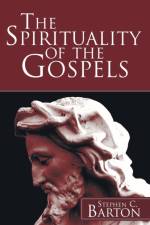
Probably no other works of ancient literature have had a greater influence on religious life and thought than the Four Gospels. Certainly no other works have been the subject of such intense study by those determined to learn more about the Gospels' central, often enigmatic, figure. And yet, despite the bewildering variety of scholarly approaches, few have sought to interpret the Gospels in terms of the distinctive spirituality that each contains and seeks to evoke in its readers. That is the aim of this important new book -- to help today's readers explore what each Gospel has to offer when viewed by its own right as a classic of Western spirituality. Written in a clear, non-technical style, the fresh perspectives this work presents will open new vistas on the familiar stories about the life, teaching, and ultimate significance of Jesus.Stephen C. Barton is a native of Sydney, Australia, and is currently Reader in the Department of Theology and Religion at Durham University, Durham, England. He is the author of 'Life Together: Family, Sexuality and Community in the New Testament and Today' (2001) and 'Discipleship and Family Ties in Mark and Matthew '(2003) and editor of 'The Cambridge Companion to the Gospels' (2006).
Men and women throughout history have learned to shape their lives around Christian ideas, attitudes, and values in many different ways. They have been helped by liturgies, sermons, visual imagery, religious drama, and hymns. But perhaps the most important sources were the classic devotional manuals, like The Imitation of Christ and The Pilgrim's Progress, many of which are still in use today.In this book, Margaret Miles subjects these devotional manuals to a detailed critique. Miles speaks as a scholar, as a Christian living in the modern world, and as a woman, and she ends by discussing the relevance of her findings to Christian life today.Dr. Miles rightly highlights the importance of manuals in the spiritual formation of lay people down the ages. Her 'active and disobedient' reading of historical texts which were written for the 'care and cultivation of an interior life' engages the reader in a serious and fascinating study. In fact she has succeeded in fulfilling every literary critic's dream. She has written a book which sends us straight back to her primary sources by providing richly documented insights into the relevance of the imagery to our contemporary search for God.--Lavinia Byrne, IBVMMargart R. Miles was formerly Bussey Professor of Historical Theology at the Harvard University Divinity School. She is the author of 'Augustine on the Body', 'Image as Insight', and 'Carnal Knowing'.
ContentsIntroductionThe Protoevangelium of JamesThe Gospel of Pseudo-MatthewThe Gospel of the Nativity of MaryThe History of Joseph the CarpenterThe [Infancy] Gospel of ThomasThe Arabic Gospel of the InfancyThe Letter of Abgar to JesusThe Letter of Jesus to AbgarThe Letter of LentulusPrayer of Jesus, Son of MaryThe Story of VeronicaThe Gospel of Nicodemus, or Acts of PilateThe Latin Gospel of Nicodemus (I), or Acts of PilateThe Latin Gospel of Nicodemus (II), or Descent of Christ to the UnderwoldThe Letter of Pilate to TiberiusThe Letters of Herod and PilateThe Epistle of Pilate to CaesarThe Report of Pilate the GovernorThe Trial and Condemnation of PilateThe Death of PilateThe Story of Joseph of ArimatheaThe Revenging of the SaviourThe Syriac Gospel of the Boyhood of our Lord JesusB. Harris Cowper is the author of 'Syriac Miscellanies.' He is also the translator and editor of 'Principles of Syriac Grammar,' 'Analecta Nicaena,' and John Chrysostom's 'On the Priesthood'.
In this helpful and artfully done work, one of great academicians of the nineteenth century provides the student with a path toward developing competency in Hebrew vocabulary. The work is organized by parts of speech and by frequency. This provides a handy tool for memorization as well as parts of speech and derivations.William Rainey Harper (1856-1906) was the first President of the University of Chicago. Among his publications are 'Introductory Hebrew,' 'The Elements of Hebrew Syntax,' and 'The Prophetic Element in the Old Testament.'
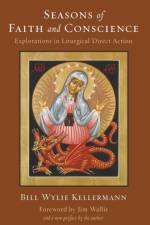
Seasons of Faith and Conscience challenges religious activists and the wider church with an answer to the question: What is the connection between faith and politics? ""Every act of worship,"" Kellermann says, ""every occasion where the sovereignty of the word of God is acknowledged, is always and everywhere expressly political.""In a profound biblical and theological reflection, Kellermann begins by investigating the political implications of worship and liturgy, both in the Hebrew Bible and in the New Testament. He goes on to review the history of ""confessional politics,"" those situations in which Christians have felt their historical situation to be so grave as to call into question the very identity of the church. Recent examples include the Confessing Church in Nazi Germany and the Kairos document from South Africa. Kellermann explores analogies in our own situation--the continuing arms buildup, the international debt system, and the ""war against the poor"" in the Third World.Seasons of Faith and Conscience concludes with a series of moving meditations on the key seasons and events of the liturgical calendar: Advent, Christmas, Epiphany, Lent, Easter, and Pentecost.
Ecumenical & Interreligious Perspectives: Globalization in Theological Education is a collection of articles on the wide-ranging effects of ecumenism on theological education. Fifteen eminent historians, theologians, missiologists, Christian educators, and ecumenists in the United Methodist Church and other denominations have addressed such topics as the critical redefinition of ecumenism, global inclusiveness, and the cultural assumptions implicit in interreligious dialogue. These important essays show that the seminaries are responding to the new global awareness with vigor and sensitivity. Together, they give us a picture of theological education that is spiritually and intellectually prepared to face the challenges of the twenty-first century. Russell E. Richey, Dean Emeritus of Candler School of Theology and William R. Cannon Distinguished Professor of Church History Emeritus, is author or editor of twenty books, including Denominationalism (1977, 2010) and Reimagining Denominationalism (1994, 2010).
Church leaders want to know that their leadership strategies are informed by Christian teaching and made credible by the authority of Scripture. In addition, pastors have an unquenchable thirst for new and unique approaches to leadership. These needs and many more are met as Robert Dale takes the reader through four primary leadership strategies in the New Testament.Focus is a strategy that one learns through study of Jesus' mission and leadership influence.Flexibility is the strategy learned as the Church expands through the Acts of Apostles.Future-Orientation is the strategy emphasized through the pastoral Epistles.Feasibility is the Strategy developed in the Book of Revelation, when the churches are in crisis or in survival mode.Each strategy is illustrated with practical application for the life of congregations so that leaders can sharpen leadership skills with integrity and authority.Robert D. Dale is professor of pastoral leadership and church ministries, Southeastern Baptist Theological Seminary, Wake Forest, North Carolina. Dr. Dale has had a wide range of experience as a Baptist minister , consultant and supervisor in the Church Administration Department of the Baptist Sunday School Board, and seminary professor. He was educated at Southwest Baptist College (A.A.), Oklahoma Baptist University (B.A.), and Southwestern Baptist Theological Seminary (B.D.; Ph.D.).
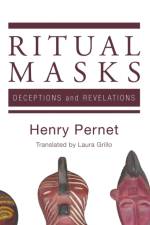
Ritual masking is an important institution in many traditional societies and has attracted much attention from Western scholars. In 'Ritual Masks', Pernet provides a thorough survey of masks and masking traditions in Africa, Oceania, and the Americas, based on a close analysis of the literature in several languages. Pernet's approach provides him with an opportunity to examine issues of importance to the history of religion and anthropology. These include the influence of theory on the interpretation of prehistoric documents; androcentrism in anthropology and the history of religions; and Western scholarship's recurrent problems in interpreting preliterate or traditional societies.FROM THE SERIES EDITOR'S PREFACE:Among the more intriguing aspects of the study of comparative religions has been the exoticism perceived in cultures that are radically other than our own. Perhaps no phenomenon has expressed this sense of otherness better than the ritual mask and its uses. In 'Ritual Masks: Deception and Revelations'...Henry Pernet examines closely actual masks and their contexts and uses, in light of which he tests major trends in Western interpretation of them. The author's findings, based on a very extensive analysis of the literature in a variety of languages, are that several of the widely accepted and perpetuated theories of masking are groundless, or at least very limited in application. The author's main conclusions are easily summarized: the mask is not universal, it has not existed in all times, it does not represent principally spirits or the dead, and the mask is not generally used to enable its wearer to become what is represented. - Frederick Mathewson Denny, University of Colorado-BoulderHenry Pernet received his Ph.D. in history of religions from the University of Chicago where his advisers were Mircea Eliade, Joseph M. Kitagawa and Frank E. Reynolds. As an historian of religions, Pernet served as the State expert overseeing examination in this field at the University of Lausanne, and as an expert for the Swiss National Foundation for Scientific Research on cultural pluralism and national identity. He sat on the committees of the Swiss Society for the Study of Folklore and of the Swiss Society for the Science of Religions. He edited a book series in history of religions and was a member of the board of the Editions Labor et Fides, Geneva.Pernet has published articles in professional journals on the subject of mask and masking and is the author of articles on this subject in The Encyclopedia of Religion. He was a member of the group charged with the translation of Carl Gustav Jung's works into French and was instrumental in the preparation of the French editions of several of Mircea Eliade's works.
There are stages we find ourselves experiencing along our way to God. Mystery, a sense of new beginning, crossroad experiences, suffering, and transcendence are stages that challenge us time and again as we search for a closer relationship with the one we seek. Our pilgrimage is not linear but more of a spiral toward God.Michael Braswell is Professor Emeritus at East Tennessee State University. His previous books include Interview with Joab, God's Scoundrels and Misfits with Clemens Bartollas, An Unholy Alliance: The Sacred and Modern Sport with Robert J. Higgs, and Morality Stories with Joycelyn Pollock and Scott Braswell.
""What is the God of the philosopher? Can the philosopher, that is to say, can human reason, unenlightened by the revealed word, come to a true and secure understanding of 'He-Who-Is'? Is it possible for mere man, without the impact of a personal experience, intimate and intuitive, to arrive by means of an objective demonstration at an absolute affirmation that the Being we call God exists, or that He is Pure Act, Existence Itself, because without him the world of our experience is unintelligible, a complete contradiction?""And even if we admit, as all Christian philosophers must, that unaided reason is able by its own power to reach an objectively true and secure assent that God exists, is there any evidence, in the recorded history of our world, that man, without the directive knowledge of revelation, ever did secure by a metaphysical effort this absolute truth that the Ipsum Esse exists? Whatever be the answer to this difficult problem--and we do not pretend to know it--it is obvious that Father Holloway, in composing his philosophical approach to God, allowed himself to be guided by the knowledge of faith. Indeed, he must have prayed often for the enlightenment which the supernatural motion of divine grace brings even to the limited and imperfect intellect of a philosopher."" --From the Foreword by Henri Renard, S.J.
Abonner på vårt nyhetsbrev og få rabatter og inspirasjon til din neste leseopplevelse.
Ved å abonnere godtar du vår personvernerklæring.