
Gjør som tusenvis av andre bokelskere
Abonner på vårt nyhetsbrev og få rabatter og inspirasjon til din neste leseopplevelse.
Ved å abonnere godtar du vår personvernerklæring.Du kan når som helst melde deg av våre nyhetsbrev.

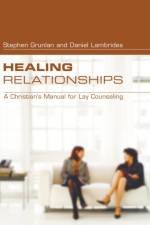
''Healing Relationships: A Christian''s Manual for Lay Counseling'' is designed to equip you, the layperson, to minister to those who are hurting. Stephan Grunlan and Daniel Lambrides, both skilled counselors, explain how you can allow Christ''s love to bring about a healing relationship. Sunday school teachers, youth workers, elders - every church member should have some training in counseling skills so they can turn their interpersonal relationships into healing relationships. In 13 informative chapters, ''Healing Relationships'' presents clear counseling procedures and illustrates a variety of counseling situations for Sunday school discussion, Bible study, or personal application. For those who wish to use the book as a group study, a Leader''s Guide is also available.Stephen Grunlan is Senior Pastor of Grace Fellowship Church in Overland Park, Kansas. He is a graduate of Moody Bible Institute and Nyack College and has earned graduate degrees at Wheaton Graduate School and the University of Illinois. He completed his doctoral studies at Luther Theological Seminary. Dr. Grunlan has taught at Moody Bible Institute, Crown College, University of Wisconsin, and the University of Missouri. He has served churches in Minnesota, Wisconsin, and California.Daniel Lambrides is a graduate of Nyack College and Colgate-Rochester Divinity School. He is an ordained minister of the Baptist General Conference. He has been in practice as a marriage and family therapist. He has served as an adjunct professor at Bethel Theological Seminary. He has been a featured speaker at counseling workshops, seminars, and marriage retreats.
There are two main premises in Roy Oswald''s book: First, be intentional - reach out to others. The myth is that support will find us, but why gamble? Roy has some good clues about how to select your support group. Second, be extradependent - name a leader. Self-selected and group guided support groups can work, but a support group with a designated leader is stronger and more satisfying. This book will help you identify and secure such a leader for your support group. The book is mandatory reading for ordained ministers and lay professionals.Dr. William C. Behrens, Director of Leadership Support, The Evangelical Lutheran Church in AmericaThis book tells why there is a morale problem among clergy. Roy Oswald offers clergy a step-by-step ''how to'' guide for developing a workable peer support system. He tells how to begin a support group and outlines the role of facilitators. The author''s insights on developing rituals, finding ''encouragers,'' and enduring crises come from firsthand experience. Clergy and denominational leaders need the wisdom and experience shared in this book.Nancy T. Foltz, Leadership ConsultantRoy Oswald begins his book on support systems for clergy with personal experience. We imagine that support systems come naturally. Through painful experiences we learn that isn''t true. Roy''s stories enrich and inform this valuable book. He adds to his personal research with support groups insights from the Oscillation Theory of the Grubb Institute and the Myers-Briggs Type Indicator. I found myself evaluating my own support system and making plans for changes.C. Leon Hopper, Senior Minister, East Shore Unitarian Church, Bellevue, Washington, President, Unitarian Universalist Ministers AssociationRoy Oswald is a Senior Consultant with The Alban Institute and the author of several publications including ''New Beginnings: a pastorate start up workbook'' and ''The Inviting Church'', which he co-authored with Speed B. Leas.
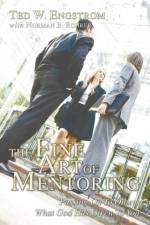
Who has been the most influential person in your life? Was it a school teacher? An uncle? A parent? A grandmother? A minister? An employer? A coach?Whoever it was, your reason for choosing this person probably had more to do with who they ''were'' and how they ''lived'', than how they looked or what they owned.What you experienced was the result of this significant person''s ability to model inspiring qualities and communicate those qualities to you. How did they do it? What were the ingredients that enabled them to teach so effectively?Down through the centuries, students have learned through careful observation from those more experienced. Apprentices have learned from craftsmen who took them by the hand. Amateurs emulated professionals. Disciples studied masters.As one who has been profoundly influenced by skilled leaders and who has, in turn, motivated many others, Ted Engstrom could be aptly described as a mentor''s mentor.In this book, Ted Engstrom will introduce to you the idea of mentoring. As a leader, you''ll learn that mentoring represents the difference between talking and doing as a student, you''ll learn from the master''s performance as well as his prose.Mentoring used to be the chief learning method in society, where an apprentice spent years at the side of the craftsman, learning not only the mechanics of a function, but the way of life which surrounded it.The good news is that more than a few are waking up to the fact that we have lost something precious in our culture because the mentoring function has been permitted to lapse into semi-obsolescence. There is a renewal of reference to mentoring in the business literature, the world of education, and in social work. And that new alertness has been in evidence, of course, in the Christ-following community also.It''s fitting for Ted Engstrom to write this book because of at least two things. First, he has done the mentoring he writes about. Men and women all over the world will gladly and thankfully attest to that. And secondly, he writes from the perspective of a generation which is in the process of handing its work over to its successors.The mentoring leader (and that is what Ted Engstrom has been) is a scarce human commodity. So I commend to you the thoughts of one of those wonderful rarities: a Christ-like man who has produced Christ-like proteges.From the foreword by Gordon MacDonaldAs a former president and chief executive officer of World Vision (and now President Emeritus) and a active on a number of evangelical boards, Ted W. Engstrom is one of the most influential leaders in American religion andsocial service. He has been the recipient of six honorary doctorates (L.H.D., Taylor University; LL.D., John Brown University, Litt.D., Seattle Pacific University, Sterling College, Bellhaven College and Azusa PacificUniversity.)Before joining World Vision, Engstrom was for six years president of Youth for Christ International. He has been a sought-after management consultant and has conducted the nationwide Managing Your Time seminars with hisformer colleague (deceased) Ed Dayton for more than fourteen years.A prolific editor and author, Engstrom has and published more than fifty books and hundreds of magazine articles. Among his best selling books are The Pursuit of Excellence (Zondervan), The Fine Art of Friendship (Nelson), and Integrity (Word).As President Emeritus of World Vision, Dr.Engstrom continues with a limited load of speaking, writing, and leadership training.
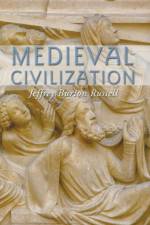
From the Preface:This book is intended as an investigation of the civilization of western Europe from the third to the fifteenth centuries. It presents not only the results, but some of the important problems, of contemporary scholarship in medieval history. It follows a topical treatment of economic, social, political, and cultural history within a chronological framework. Rather than trying to achieve consistently detailed coverage of every aspect of medieval civilization, I have concentrated upon individual or collective examples of important ideas, attitudes, institutions, or events. Discussions of the sources appear in each chapter, and the sources are quoted frequently in the body of the text in order to permit the reader to feel, as well as intellectually to grasp, the nature of medieval life. Pictures and maps are integrated with the text as illustrations of the topics discussed.Jeffrey Burton Russell is Professor Emeritus of History at the University of California, Santa Barbara. Besides UCSB, he has taught History and Religious Studies at Berkeley, Riverside, Harvard, New Mexico, and Notre Dame. He has published seventeen books and many articles, most of them in his special field, history of theology. His other books include a five-volume history of the concept of the Devil published by Cornell University Press between 1977 and 1988, ''Inventing the Flat Earth'' (1991), and ''A History of Heaven: The Singing Silence'' (1997).
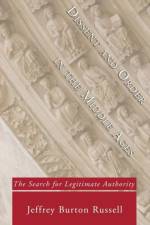
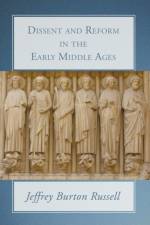
The study of the conflict between religious orthodoxy and heresy in the Middle Ages has long been a controversial field. Though the sectarian differences of the past have faded in intensity, the varieties of academic correctness that today inform historical studies are equally likely to give rise to a number of interpretations, sometimes providing more information about the sympathies of contemporary historians than the beliefs, feelings, and actions of Medieval people.In this book, Jeffrey Burton Russell provides a fresh overview of the subject from the Council of Chalcedon (451 A.D.) to the eve of the Protestant Reformation. The fruit of many years of thought and scholarship, ''Dissent and Order in the Middle Ages'' is a concise introduction to the full range of religious and social phenomena encompassed by the book''s title. While tracing the intellectual battles that raged between the champions of orthodoxy and the partisans of dissent, Russell grounds these conflicts, which often seem rather recondite to the modern reader, in the evolving social context of Medieval Europe. In addition to discussing conflicts within Christianity, Russell sheds new light on such vexing topics as the origin of anti-Semitism and the persecution of alleged witches.More than just an overview, Russell''s study is also an original interpretation of a complex subject. Russell sees the conflict between dissent and order not as a war of binary opposites, but rather as an ongoing dialectic, a creative tension that, despite the excesses it entailed on both sides, was essential to the development of Christianity. Without this creative tension, Russell argues, Christianity might well have stagnated and possibly died. Dissent and order, then, are perhaps best seen as symbiotically joined aspects of a single living, healthy organism.''Dissent and Order in the Middle Ages'' will appeal to, and challenge, all readers interested in European history, from beginning students to seasoned scholars, as well as those concerned with Christianity''s past - and future.Jeffrey Burton Russell is Professor Emeritus of History at the University of California, Santa Barbara. Besides UCSB, he has taught History and Religious Studies at Berkeley, Riverside, Harvard, New Mexico, and Notre Dame. He has published seventeen books and many articles, most of them in his special field, history of theology. His other books include a five-volume history of the concept of the Devil published by Cornell University Press between 1977 and 1988, ''Inventing the Flat Earth'' (1991), and ''A History of Heaven: The Singing Silence'' (1997).
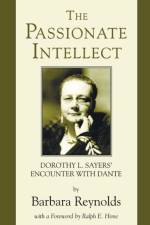
Dorothy L. Sayers, detective novelist, poet, scholar, playwright, and Christian apologist, spent the last fourteen years of her life reading and translating Dante''s ''Divine Comedy''. The first two volumes of her translation, ''Hell'' and ''Purgatory'', were published during her lifetime, but when she died in 1957 the third volume, ''Paradise'', was unfinished. It was completed by her friend Barbara Reynolds.Thirty years later Barbara Reynolds wrote this book, the first full-length study of this illuminating stage in the creative life of Dorothy Sayers. Drawing on personal reminiscences and unpublished letters, she tells a moving and compelling story. The work explores the dynamic impact of Dante upon a mature mind. New light is shed on Dorothy Sayers'' personality, her relationship with her friends, her methods of work, and her intellectual and spiritual development. Readers of Dante, no less than readers of Sayers, will find this an exciting book.Dr. Reynolds has not told us merely about Sayers'' Dante translations and lectures; she has told us about Sayers'' radio broadcasts on Dante, her proposed Dante novel, her carefully planned study on the Beatrician vision; and she has discussed the part Charles Williams played in guiding Sayers in her Dante study. This book observes a brilliant mind meeting a Great Poet and becoming continuously awed, inspired, and energized by his verse and vision.Ralph E. HoneBarbara Reynolds is an Italian scholar and translator, known for her completion of Dorothy L. Sayers'' translation of Dante''s ''Divine Comedy'' for Penguin Classics. She has also translated Dante''s ''La Vita Nuova'' of which a new edition has recently been issued. Her translation of Ariosto''s ''Orlando Furioso'', also for Penguin Classics, was distinguished by an international award.She is also the author of a highly acclaimed biography, ''Dorothy L. Sayers: Her Life and Soul'' and is the editor of ''The Letters of Dorothy L. Sayers'' in four volumes, plus a supplementary volume of childhood memoirs. She has told the story of Sayers'' commitment to Dante in ''The Passionate Intellect'', now in its second edition.The general editor of ''The Cambridge Italian Dictionary'', she has been honored by the Italian Republic for her services to Italian studies. She also holds three honorary doctorates. She is now residing in Cambridge, England.
Bo Ivar Reicke (1914-1987) was born and schooled in Stockholm, Sweden. In 1933 he matriculated in the Faculty of Arts of the University of Stockholm, transferring, however, in 1935 to the University of Uppsala, where in 1937 he received his degree in the areas of the history of religions and classical Greek and philosophy. From 1938 he continued his studies in the Faculty of Theology of the same university. Graduating in 1941, he became ordained in December of the same year as a minister of the Evangelical Lutheran Church of Sweden. He immediately continued with doctoral studies, choosing the exegesis of the Old and New Testaments as his field of research. In May 1946 he presented in print and publicly defended his dissertation, The Disobedient Spirits and Christian Baptism: A Study of 1 Pet. III.19 and Its Context, [Acta Seminarii Neotestamentici Upsaliensis Edenda Curavit A. Fridrichsen, 13] (Lund 1946).In the official statement to the university, his New Testament teacher, Professor A. Fridrichsen, describes the dissertation as a weighty contribution to the solution of an old exegetical problem and goes on to recommend the author for a position on the Uppsala Faculty. In the following years, Reicke taught New Testament exegesis as assistant professor in his home faculty. In September of 1953 he received the call of the Faculty of Theology of the University of Basel, Switzerland, to fill the chair in New Testament. Moving to Basel with his family, Reicke served there for thirty years until his retirement in 1984. In addition to lecturing around the world and training about forty doctoral students, he was the author of a number of books (see below). Still actively writing and lecturing, Bo Reicke died in Basel in May of 1987.
The book should provide a lively counterpoint to both the standard liberal and conservative treatments in courses on Paul''s view of ministry. - Theology TodayEllis'' judicious treatment and penetrating analysis of the relevant biblical material will force many of us...to think more precisely about the concept of ministry in Paul''s writings, how ministry manifested itself in the churches of his day, and what are its implications for us today. - Westminster Theological JournalEllis gives a sound critique of liberation theology and sociopolitical action as ministry. He gives a balanced view of the gifts and the fruit of the Spirit and, on biblical grounds, he defends the ordination of single and, with qualifications, married women. Challenging, but meant for the intelligent church member. -Librarian''s WorldIt''s a gem. It is a delightful summary in popular form of themes that Ellis has been at work on throughout his years of productive scholarship. It is ''copiously footnoted...with concise bibliographies on the points at hand...Hence, this short book becomes encyclopedic. - Calvin Theological JournalA splendid tour de force in the best sense. - James G. D. DunnThese essays...represent in many respects a valuable corrective to much of what passes for biblical theology in our times. - Paul J. Achtemeier
Our entering the new millennium has heightened interest in what the Bible says about the end times, but where can you go to sort out the different ways Christians understand Bible prophecy? The Last Days Handbook is your one-stop guide to understanding the main views evangelical Christians hold about the end times - and how their different methods of biblical interpretation affect their view of prophecies yet to be fulfilled. You will be accurately informed as you decide which views are most convincing, and you will be prepared to study Bible prophecy more effectively. Most importantly, you will better understand Christians who hold different prophetic views. Now updated and expanded, this classic overview of the different views of end-times Bible prophecy features: - answers to 50 Frequently Asked Questions about end-times Bible prophecy - surveys and comparisons of the major evangelical views concerning the rapture and the millennium - illustrated charts and tables, making the information more accessible than ever - a glossary to introduce you to specialized terms - easy-to-use subject and Scripture indexes to find key information quicklyAn invaluable contribution to understanding the doctrine of last things. - J. Dwight PentecostThe author''s emphases...need to be heard and heeded. - Charles C. RyrieA detailed, up-to-date, and mature treatment of prophecy....an accurate and compelling presentation. - John F. WalvoordRobert P. Lightner (Th.B., Baptist Bible Seminary; Th.D., Dallas Theological Seminary; M.L.A., Souther Methodist University) is Professor of Systematic Theology Emeritus at DTS. He has taught courses in biblical studies and theology at Baptist Bible Seminary and Dallas Theological Seminary for almost 50 years.
From the Introduction:The conceptual boundaries of this study...include all varieties of religious dissent, nonconformity, and tension. The chronological limits are from about 700 to about 1150. Before the eighth century dissent was, in the tradition of the heresy of the early Church, theological and priestly. After the middle of the twelfth century the increasing influence of Eastern dualism under the name of Catharism changed the whole emphasis and style of medieval dissent. Between 700 and the mid-twelfth century, however, dissent was typically medieval in its moral and popular emphasis without yet being adulterated by currents from the East. In this period it was closely connected with the growing intensity and diversification of movements of moral and intellectual reform. With these movements and as part of them, dissent was one of the elements shaping medieval civilization.Jeffrey Burton Russell is Professor Emeritus of History at the University of California, Santa Barbara. Besides UCSB, he has taught History and Religious Studies at Berkeley, Riverside, Harvard, New Mexico, and Notre Dame. He has published seventeen books and many articles, most of them in his special field, history of theology. His other books include a five-volume history of the concept of the Devil published by Cornell University Press between 1977 and 1988, ''Inventing the Flat Earth'' (1991), and ''A History of Heaven: The Singing Silence'' (1997).
This work examines Thomas Forsyth Torrance''s concern for the modern re-entrenchment of dualism as it has negatively affected the Christian faith and the realist knowledge of God in Christ. Additionally, an analysis is made of Torrance''s program to faithfully restore theological thinking, theological science, and true objectivity out of the Christocentric-Trinitarian self-disclosure of God via the modern return to critical realist epistemology in the physical sciences (e.g., Einstein, Polanyi). The study concludes with a critical examination of the adequacy and completeness of Torrance''s endeavor (the problem of residual dualism) in the light of his own theological and redemptive concerns.John Morrison''s book brings to light the contribution of the most important English language Protestant theologian of this century. Unlike others who have attempted to present Torrance''s oeuvre by means of one or other of his guiding principles, Morrison draws them together into a coherent whole. Morrison''s command of the ideas and spirit of Torrance is masterful. The splendid interrelations and potencies of Torrance''s writing are unfolded in this highly competent work.Kurt Richardson, Gordon-Conwell Theological SeminaryJohn Morrison has given the theological world a discerning analysis of the theology of one of the seminal thinkers of our time. T. F. Torrance''s theology is so broad and deep in its scope that it is difficult to master, but Dr. Morrison has done an outstanding job of plumbing the depths of this great Scottish theologian.... This scholarly, comprehensive study is a major contribution toward helping us understand the theology of the great Edinburgh theologian.I. John Hesselink, Albertus C. Van Raalte Professor Emeritus of Systematic Theology, Western Theological SeminaryThough Torrance has been hailed by some as ''one of the most substantial figures in recent Western intellectual history,'' he has also been called ''one of the most neglected'' (Alisdair I. C. Heron). Morrison''s new book seeks to correct this imbalance. This is a thorough examination of T. F. Torrance''s theological writings; it is an erudite work that lays bare the very core of Torrance''s thought, places it in context, traces its sources, and seeks to determine its implications for contemporary theology. Balanced as it is between homage and critical analysis, this book should prove indispensable for anyone who is interested in Torrance or in the ever-enduring and ever-changing dialectic between faith and reason.Carlos M. N. Eire, Professor of History and Religious Studies, Yale UniversityThis is a careful, accurate, thorough, and illuminating presentation of T. F. Torrance''s thought together with various positive and negative assessments of his thought. It will be useful to anyone interested in systematic theology (and philosophical theology) because serious questions are raised and analyzed. This book definitely represents competent scholarship. The author wrestles with Torrance''s position, presents his own critique of Torrance with a constructive proposal which, if he is correct, would lead in the direction Torrance has set for himself - toward a unified theology grounded in Christ and thus in the immanent Trinity. He makes his points well and does not shrink from difficult questions. All in all Dr. Morrison writes convincingly.Paul D. Molnar, Professor of Systematic Theology, St. John''s University, New YorkJohn Douglas Morrison was born in Billings, Montana. He holds a B.A. from the University of Montana, an M.Div. and a Th.M. from Western Seminary, and an M.A. and a Ph.D. from the University of Virginia (Philosophical Theology). He has published journal articles on Kierkegaard, Calvin, Barth, and Torrance. He teaches theology and philosophy at Liberty University and Liberty Baptist Theological Seminary, Lynchburg, Virginia.
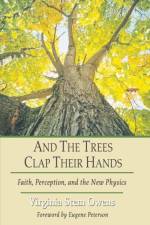
Ever since Newton, people - including Christians - have considered matter to be strictly mechanical, uninformed by any ""spirit"" and without sentience. Such a view, says Virginia Owens, ""demotes to mere metaphor"" all the natural imagery of Scripture that calls for creation to participate in the praise of its maker. Now, however, contemporary physical theory offers us an expanded view of the cosmos, which suggests that it is indeed sentient and informed with knowledge. For Christians, Virginia Owens argues in this book, the cosmos bears witness to the Incarnation itself. Owens offers a brief history and exploration of physics, interwoven with vivid and provocative perceptions of the physical world (reminiscent of the writings of Annie Dillard). The heavens really do proclaim the glory of God, Owens insists. ""The prophet''s figure of trees clapping their hands is a living reality."" ""And the Trees Clap Their Hands"" will appeal to all general readers who are interested in the relationship between faith and our understanding of the physical world.""We can no longer be satisfied with a ''religious'' truth that fails to implicate matter - and vice versa....In the last few decades, many writers, not themselves scientists, have interested themselves in the transition from classical to modern physics and its consequences - few of them with such well-considered documentation and none with such abiding verve and personally persuasive emphasis as Virginia Owens."" - Owen BarfieldVirginia Stem Owens has written over fifteen books that include three mysteries and nonfiction on a wide range of topics from media to metaphysics. Her memoir of her grandfather''s last years won the Texas Institute of Letters prize for best nonfiction book in 1990. Living Next Door to the Death House, written with her husband, David, takes readers inside the prison culture that pervades her hometown, Huntsville, Texas.She is on the editorial board of Books & Culture. She also served for seven years as Director of the Milton Center, an institute dedicated to fostering excellence in writing by Christians.
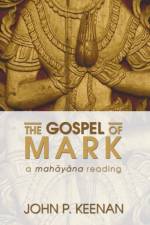
John Keenan''s ''The Gospel of Mark'' is a radically new reading of this most intriguing of the Synoptic gospels - a remarkable feat in the face of the explosion of Markan scholarship over the last twenty years. Keenan accomplishes this by approaching Mark as no other scholar has done: through the lens of Mahayana-Buddhist philosophy. This view stresses the emptying of all preconceived notions of how to begin reading as well as reclamation of such notions in terms of dependent co-arising and Jesus'' assault on the validity of conventional religiosity. ''The Gospel of Mark'' displays an alternative hermeneutical procedure, one generated by the Mahayana understanding of the function of text and doctrine, and informed by Mahayana philosophy.Part One of ''The Gospel of Mark'' provides an overview of different interpretive techniques in Markan scholarship. It describes and argues for the validity of a Buddhist approach to this charter document of the Christian Gospel. Here the author demonstrates a profound grasp not only of scriptural scholarship but of Mahayana philosophy. Keenan discusses themes such as Mark''s elliptical style and the journeying that provides the impetus for the narrative, and explores them through the lens of emptiness and dependent co-arising which are the focal points of a Mahayana reading.In Part Two Keenan gives the reader truly fresh insights into the paradoxical world of Mark''s Jesus. Through a Buddhist lens, the text offers startling and new perspectives on Jesus himself, the experience of the Kingdom, miracle stories and parables, the passion and death, the resurrection and return.Keenan has broken new ground in this study of Mark by asking what we might see when we look at the Gospel through a Buddhist lens. The results reveal to us much about Buddhism and foster new angles of vision on Mark. Keenan is at his best when he unpacks the variety of ways Mark subverts conventional thinking. His work also incorporates a wealth of recent research about Mark.David Rhoads, Lutheran School of TheologyMahayana deconstruction goes beyond post-structuralism in its radicality, and arrives at a serenity that is absent in Western deconstruction. Keenan brilliantly displays how this occurs and what it means for hermeneutics...[and] goes beyond a programmatic call for a Mahayana hermeneutic to a full-fledged commentary on Mark.John B. Cobb Jr.John P. Keenan is Professor Emeritus of Religious Studies at Middlebury College and an Episcopal priest. He is also the author of ''The Meaning of Christ: A Mahayana Theology''.
In this provocative follow-up to his enormously influential '' A Rabbi Talks with Jesus'', Jacob Neusner challenges the apostle Paul to debate the true meaning and significance of Judaism. Drawing new boundaries for Jewish-Christian dialogue, Neusner contends that Paul''s misinterpretation of Judaism - a misinterpretation perpetuated today by many Christians and Jews - has resulted in the widespread perception of Judaism as ethnic and particular, and Christianity as universal. Yet as Neusner clearly demonstrates, just as Christianity presents an option to all of God''s faithful, so too does Judaism''s mediation of the voice of God at Sinai echo across the entire world.Rabbi Neusner challenges not only St. Paul but all of those who mistakenly think that Judaism is an ethnic religion, that is to say, a religion for a specific people without any universality of concern. The Rabbi demonstrates very clearly that this assumption is incorrect. I think St. Paul would be delighted and I know Isaiah would.- Andrew M. Greeley, Professor of Social Science, University of Chicago, and coauthor of ''The Bible and Us: A Priest and a Rabbi Read Scripture Together''More than a contribution to interfaith understanding,...a powerful mediation on religion and ethnicity carried through to the present day. In an age of ethnic conflict, this is a book as timely as it is generous and profound.- Jonathan Sacks, Chief Rabbi of Great BritainJacob Neusner is Research Professor of Religion and Theology at Bard College and Senior Fellow of the Institute of Advanced Theology at Bard. He has published more than 900 books and unnumbered articles, both scholarly and academic, popular and journalistic, and is the most published humanities scholar in the world. He has been awarded nine honorary degrees, including seven US and European honorary doctorates. He received his A.B. from Harvard College in 1953, his Ph.D. from Columbia University and Union Theological Seminary in 1961, and Rabbinical Ordination and the degree of Master of Hebrew Letters from the Jewish Theological Seminary of America in 1960.Neusner is editor of the ''Encyclopedia of Judaism'' (Brill, 1999. I-III) and its Supplements; Chair of the Editorial Board of ''The Review of Rabbinic Judaism,'' and Editor in Chief of ''The Brill Reference Library of Judaism'', both published by E. J. Brill, Leiden, The Netherlands. He is editor of ''Studies in Judaism'', University Press of America.Neusner resides with his wife in Rhinebeck, New York. They have a daughter, three sons and three daughters-in-law, six granddaughters and two grandsons.
This engaging exploration of the Joseph story by trusted Bible scholar Ronald Wallace offers a fresh look at Genesis 37-50 and its continuing relevance to life in our modern world.Wallace traces the life of Joseph through his enslavement and subsequent rise to power in Egypt to the place where he would save the nascent tribe of Israel from sure starvation. Throughout these fourteen powerful and important chapters in Genesis, Joseph grapples with jealousy, selfishness, integrity, and other issues that remain pertinent to all believers today.Designing his work with personal or group Bible study in mind, Wallace divides the scriptural text into small, easily digestible sections and provides short yet deeply insightful reflections on each part of the story. In scouring the narrative for its implicit meanings, Wallace uncovers many aspects of the Joseph story, including its ongoing relevance to the development of Old Testament scripture, its significant echoes in the New Testament, and its implications for today''s church.Written and arranged to provoke discussion as it is read, Wallace''s ''Story of Joseph and the Family of Jacob'' is an ideal choice for all who seek substantive and fulfilling Bible study resources.Ronald S. Wallace is retired from teaching at Columbia Theological Seminary in Decatur, Georgia. He is the author of numerous books, including ''On the Interpretation and Use of the Bible'', ''Readings in 1 Kings'', and ''The Message of Daniel''.
Taking as his starting-point Jesus'' saying in Matt 8:22, ""Let the dead bury the dead,"" Professor Hengel subjects Jesus'' discipleship sayings to a rigorous historical scrutiny. The sharp break with contemporary Jewish mores in Matt 8:22 leads Hengel to a consideration of other contemporary forms of discipleship -- Cynic, Rabbinic, and Zealot. Rejecting the view that Jesus was some kind of rabbi, Hengel argues that there are, despite the obvious fundamental differences, closer similarities between Jesus and the charismatic-prophetic leaders of the Maccabean-Zealot tradition. Both his call to leave all and go after him and his freedom and authority over against the Law place him closer to the Zealots than to the scribes and their disciples whose relationship was foremost that of teacher and pupil. Thus Professor Hengel''s magisterial command of Jewish and Hellenistic first-century material is here brought to bear on the figure of Jesus and we are given a remarkable series of historical insights into the character of Jesus'' ministry and his work with his disciples. What emerges is a picture of Jesus fully as a man of his time but one whose authority is unique and whose call to share his fate in the service of the imminent Kingdom is without equivalent among his contemporaries.It is Professor Hengel''s belief that the way to a proper understanding of Jesus'' teaching can be only through the detailed critical study of the whole body of the synoptic sayings and pericopae. What he offers here takes its starting point in only one such pericope; yet the flood of light that this study sheds on Jesus'' teaching and life is such that this book stands as one of the most important contributions to the continuing enquiry into the historical Jesus.Martin Hengel is Professor Emeritus of New Testament and Early Judaism at the University of Tuebingen, Germany. He is the author of many books including ''Victory Over Violence & Was Jesus a Revolutionist?,'' ''Between Jesus and Paul, Judaism and Hellenism,'' ''Studies in the Gospel of Mark,'' and ''The Hellenization of Judea in the First Century After Christ.'' Hengel''s most recent books include ''Paul Between Damascus and Antioch'' (coauthored with Anna Maria Schwemer) and ''The Four Gospels and the One Gospel of Jesus Christ.''
In a world, and in churches, so often caught up in a relentless pursuit of power, Bishop Bennett Sims challenges us all to look afresh at what it means to be servants of one another. It is an invigorating, deeply enriching experience! His conclusions are sometimes radical, and we shall not agree with all of them, but they always stem from his own deep love for God and God''s people. I commend it for study, discussion, and, where appropriate, prayerful action.George Carey, former Archbishop of CanterburyWe need more books like this, those that ask us to boldly rethink our ideas about leadership and power. Bennett Sims guides us through a compelling and spirit-full journey that changes our ideas about how we lead, and how we follow.Margaret J. Wheatley, author of ''Leadership and the New Science''Bennett Sims is a man who practices what he preaches. His Institute for Servant Leadership has illumined the lives of hundreds of leaders, in fields ranging from religion to social change to business and industry. May thousands more read this book and benefit from its wisdom.Parker J. Palmer, author of ''The Active Life'' and ''A Company of Strangers''This book provides the key ingredient to an understanding of what leadership is all about.Amory Houghton, Jr., New York Congressman and former chairman of Corning Glass WorksWith the wisdom of an elder, Bennett Sims redefines servanthood and power. By the time he has explored how they function in history, science, the economy, and theology, it is easy to agree with him that the paradox of servant leadership is our best hope for the future.Barbara Brown Taylor, Professor of Religion and Philosophy, Piedmont College, Demorest, Georgia.Bennett J. Sims is Bishop Emeritus of the Episcopal Diocese of Atlanta and founder and former president of the Institute for Servant Leadership in Hendersonville, North Carolina.
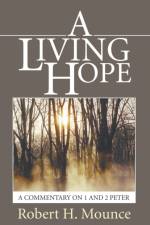
Robert Mounce, who was for 21 years a regular columnist in ''Eternity'' as well as the author of several popular articles in such publications as ''Christianity Today'', here demonstrates his scholarship, lucidity, and pastoral heart in this commentary designed to meet the needs of laypersons and pastors looking for a balanced, effective, and relevant interpretation of Peter''s epistles.Mounce sees the keynote of the letters as hope, but the main purpose as hortatory - that is, they were written ""to encourage believers in Asia Minor to expect and endure hardship as a result of their commitment to the Christian faith"" and ""to stimulate them to wholesome thinking"" vis-a-vis false teachers who had risen within the church itself.Central to Mounce''s commentary is the remarkable fact that although the letters are packed with imperatives, they do not merely offer ethical instructions or ""lessons for living,"" but move freely from doctrine to duty and back again. Thus, the purpose of doctrine is seen here as less to instruct than to provide the theological basis for a new way of living. More specifically, because Christians have been born anew to a living hope, there is a serious challenge to holy living. Mounce effectively ""updates"" this challenge, applying it to modern living - and chapter titles such as ""How to Get Along With Your Spouse,"" ""Living in an Alien Society,"" and ""How to Live in the Family of God"" reflect the author''s timely and practical application.Study questions are included to facilitate individual and group Bible study.""These epistles are indispensable antidotes to two chronic ailments which threaten the church. I Peter is a prescription to face suffering, while II Peter is medicine to stave off heresy. Robert Mounce''s expositions are so clear, concise, devout, and thoughtful that they place these healing words within the reach of every Bible student.""David Allan HubbardRobert Mounce, President Emeritus of Whitworth College, is widely known as the author of a number of New Testament commentaries. For the past forty years he has been seriously involved in Bible translation, most recently serving as Assistant New Testament Editor for the English Standard Version.
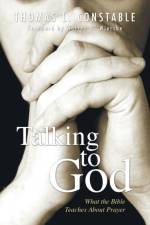
Why a theology of prayer?Because counterfeit prayer abounds, we need Scripture''s guidance, writes Thomas Constable. Praying as God desires requires considering what God has revealed about it. As we give prayer our careful attention, we gain greater understanding of what he intends it to be.Constable details the different forms of communication God invites us to use. He identifies the counterfeits that pass for prayer, discusses the conditional nature of prayer, and explains why some prayers seem to go unanswered.I could not think of a single aspect of prayer that ''Talking to God'' does not address. Thomas Constable lays out for the reader the plain message of the Bible: God has ordained that we should pray, for our own good, and for that of his kingdom.Duane Litfin, President, Wheaton College''Talking to God'' contains all you ever wanted to know about prayer. The author doesn''t hesitate to deal with the challenging issues involved in attempting communication between sinful man and a sovereign, all-knowing God.Joseph Aldrich, former President, Multnomah College and Biblical SeminaryThomas L. Constable is Senior Professor of Bible Exposition at Dallas Theological Seminary, where he has taught since 1966.
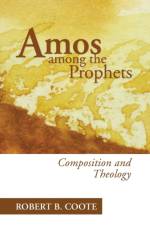
Robert Coote describes the stages of growth of the book of Amos, discussing the process of the book''s gradual formation. Chapter One introduces Coote''s approach, rationale, and method for his analysis. Chapter Two deals with the oracles of doom, basically the oral legacy of the prophet himself. Chapter Three shows how the words of Amos were reactualized and composed in their seventh century setting. Chapter Four comes to grips with the book of Amos as a theological whole, as it now stands in the biblical canon. This book also serves as a useful resource for understanding pre-exilic prophecy because of the many similarities between Amos''s message and other prophetic traditions which Coote highlights.Robert B. Coote is Professor of Old Testament at San Francisco Theological Seminary.
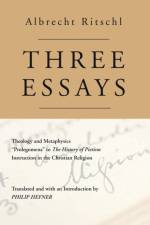
What accounts for Albrecht Ritschl''s profound effect on modern theology? Philip Hefner proposed that he so energetically brought together in his work the elements of his generation, that all theology now stands on his shoulders. Many theologians have attacked Ritschl''s ideas, others vigorously defend him, but all must confront him. The essays presented here will enable students and scholars to experience the force of Ritschl''s writing for themselves.Ritschl was born in 1822 into the intellectual, social, and ecclesiastical elite of Berlin. After finishing his studies at the University of Tuebingen, he taught at Bonn for eighteen years and at Goettingen for twenty-five. Hefner shows that Ritschl spoke a word to his own age that was so appropriate and so in resonance with his contemporaries in Germany that despite its weaknesses it became the dominant theology of his generation. Ritschl''s impact can be traced to three major factors: forceful statement of Christian faith, positive link to tradition, and scientific method. He exhibited a remarkable combination of scholarly integrity and devotion to the Christian life, as seen in his ten-year study of pietism - a movement he opposed. His theology also contributed to much that followed, including historical-critical studies and dialectical theology.These essays offer a balanced sample of Ritschl''s thinking. In the Prolegomena to ''The History of Pietism'' he establishes his method of studying different confessions on the basis of Christian lifestyle. Theology and Metaphysics offers his celebrated rejection of metaphysics in favor of a christocentric approach. Instruction in the Christian Religion, the writing that won for Ritschl his popularity among students, sets forth his specific doctrinal beliefs.Today''s students will discover that Ritschl is both an intriguing historical figure and a thinker worth grappling with. These essays, along with Philip Hefner''s extensive introduction, provide needed material for a reevaluation of Ritschl and of nineteenth century theology.Philip Hefner is Professor Emeritus of Systematic Theology at the Lutheran School of Theology at Chicago. He has written ''The Promise of Teilhard'' and a major work on Ritschl - ''Faith and the Vitalities of History''. He also edited ''The Scope of Grace'' and ''Changing Man: Threat and Promise''.
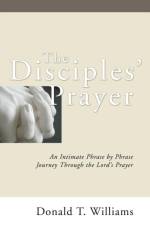
There is probably nothing in the Christian life which is more advocated and less attempted, more urged and less understood or more praised and less practiced than prayer....The prayer Jesus gave was a model payer His disciples could use....You will find it a powerful reshaper of your priorities in both praying and living....And the place to begin is to take up the position of a disciple of Jesus, praying, ''Lord, teach me to pray.'' - from the IntroductionDonald Williams is a graduate of Taylor University, Trinity Evangelical Divinity School and the University of Georgia where he earned a Ph.D. in Medieval and Renaissance Literature. An ordained minister of the Evangelical Free Church in America, Dr. Williams currently serves as Professor of English and Director of the School of Arts and Sciences at Toccoa Falls College.
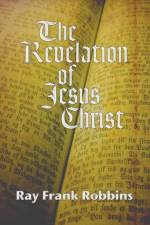
What New Testament book bewilders most Christians? Of course, the book of Revelation. Many people ignore it because it seems unreal and unrelated to Christian living. Others see it as a fascinating enigma, and they propose a variety of schemes to answer every symbolic reference.While fully aware of the various theories of interpretation, Dr. Robbins is primarily concerned in this book with clarifying what the writer was trying to say to his original readers. He provides a practical exposition with little attention given to critical problems. He feels that the basic message is timeless, full of hope and promise in every age. Here is fresh, clear light on a book that has been shrouded by extreme and sometimes fanatic interpreters.Ray F. Robbins was a professor of New Testament at Samford University (1946-1952) and at New Orleans Baptist Seminary (1952-1981). A native of Alabama and a graduate of Mississippi College (B.A.), Southern Baptist Seminary (Th.M., Th.D.), and University of Edinburgh (Ph.D.), Dr. Robbins also worked as a pastor and Bible conference leader.
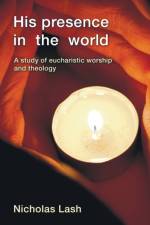
Liturgy is at the heart of Christian renewal. But what is at the heart of liturgy? The preoccupation with changing forms of worship over the past few years has tended to obscure what these forms were supposed to liberate: Christ living among us. The content of the Mass is now becoming familiar to all who participate in it. Therefore it is opportune and urgent to develop a theology of the eucharist based upon this content. ''His Presence in the World'' is a significant contribution to this vital area of theology. Dr. Lash develops his concept of a dynamic eucharist - a living, acting Christ - in a careful and scholarly manner. He builds on tradition, and in the spirit of the Vatican Council shows how new theology comes from old and fulfills and clarifies what has always been taught. The historical perspective is linked with responsible prophecy to create a relevant theology.Nicholas Lash, born in 1934, is Norris-Hulse Professor Emeritus of Divinity at the University of Cambridge, where he occupied that chair from 1978 until his retirement in 1999. He is the author of some fourteen books and four hundred essays and papers. He was, for eighteen years, a member of the central directorate of the international Roman Catholic journal, ''Concilium'', and is a founding member and past president of the Catholic Theological Association of Great Britain. A volume of his sermons is due to be published in London in 2005, by Darton Longman and Todd, who will also publish a volume of his essays in 2006. He is married, with one son, and continues to live in Cambridge.
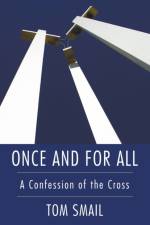
To articulate a credible doctrine of the atonement in today''s cultural situation is fraught with difficulties. How can we do justice to the central New Testament claim that the work of Christ at one point in history is decisive for God''s relationship to the whole of humanity at every other point in history?Tom Smail takes the connection between the atonement and the Trinity as the underpinning of ''Once and for All''. If we recognize that the work of the cross has to be seen to involve all three persons, and their relationships to one another, we have a structure that enables us to deal with the problems the doctrine of the atonement raises. This presentation of Christ''s atoning work in his cross and resurrection both does justice to its decisive character as a once and for all historical event, and at the same time explores the sense in which a long past historical act can be universally relevant to and effective for everyone.Tom Smail makes contemporary theological thinking on this subject accessible, and also, in investigating the spiritual and pastoral dimensions of the gospel of the cross, gives expression to his personal struggle with it throughout fifty years of ministry. It is his own confession of the cross, guided by the Scriptures and the many diverse strands of the Christian tradition that are precious to him.''Once and for All'' will help us all to understand better, and to enter into, the unique and enduring mystery at the heart of our faith.Tom Smail is now retired. He was formerly Rector of Sanderstead, South London, and previously Vice-Principal of St. John''s College, Nottingham, and a director of the Fountain Trust. He is the author of several highly acclaimed books including ''The Giving Gift'' and ''The Forgotten Father''.
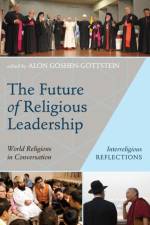
The chapters collected in this book, prepared by a think tank of the Elijah Interfaith Academy, address the subject of religious leadership. The subject is of broad relevance in the training of religious leaders and in the practice of religious leadership. As such, it is also germane to religious thought, where reflections on religious leadership occupy an important place. What does it mean to be a religious leader in today''s world? To what degree are the challenges that confront religious leadership today the same perennial challenges that have arrested the attention of the faithful and their leaders for generations, and to what degree do we encounter challenges today that are unique to our day and age? One dimension is surely unique, and that is the very ability to explore these issues from an interreligious perspective and to consider challenges, opportunities, and strategies across religious traditions. Studying the theme across six faith traditions--Christianity, Islam, Judaism, Sikhism, Hinduism, and Buddhism--The Future of Religious Leadership: World Religions in Conversation recognizes the common challenges to present-day religious leadership. Contributors: Awet Andemicael, Timothy J. Gianotti, Alon Goshen-Gottstein, Anantanand Rambachan, Maria Reis Habito, Meir Sendor, Balwant Singh Dhillon, Miroslav Volf""Few things could be more important in the twenty-first century than religious leadership that takes seriously the challenge of making space for faiths other than the leaders'' own. That is what Alon Goshen-Gottstein and his fellow contributors have created in this important and impressive book. It deserves to be widely read and to become the start of a major conversation on the challenges facing the world''s great religions in their relationships to one another and to the challenges of our time."" --Rabbi Lord Jonathan Sacks""In exploring the meaning of leadership in world religions and how it is exercised, the contributors to this volume open the door to a mutual exchange of experience and insight that makes way for shared wisdom, which transcends yet honors religious difference. In the polarized world in which we live, where religion is often portrayed as a source of division, a resource such as this is timely and urgently needed."" --Frank Griswold, former presiding bishop and primate of the Episcopal ChurchALON GOSHEN-GOTTSTEIN is founder and director of the Elijah Interfaith Institute. A noted scholar of Jewish studies, he has held academic posts at the Hebrew University of Jerusalem and Tel Aviv University and has served as director of the Center for the Study of Rabbinic Thought, Beit Morasha College, Jerusalem.
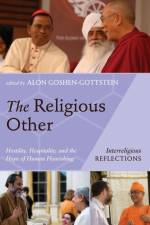
One of the biggest challenges for relations between religions is the view of the religious Other. The question touches the roots of our theological views. The Religious Other: Hostility, Hospitality, and the Hope of Human Flourishing explores the views of multiple religious traditions on how to regard otherness. How does one move from hostility to hospitality? How can hospitality be understood not simply as social hospitality but as theological hospitality, making room for the religious Other on theological grounds? What is our vision for the flourishing of the Other, while respecting his otherness? This volume is an exercise in constructive interreligious theology. By including Abrahamic and non-Abrahamic traditions, it approaches these challenges from multiple perspectives, highlighting commonalities in approach and ways in which one tradition might inspire another.Contributors: Vincent J. Cornell, Alon Goshen-Gottstein, Richard P. Hayes, Lord Rabbi Jonathan Sacks, Deepak Sarma, Stephen W. Sykes, Dharma Master Hsin Tao, Ashok Vohra""Religion has been and continues to be a factor that breeds conflict leading to violence among human beings. Can religion also provide human beings with a capacity to work creatively together toward a more humane, peaceful, and ecologically sustainable world? This book offers critical and constructive essays by scholars of five major religious traditions that examine the seeds of hostility toward religious Others and seek to highlight those elements that ground attitudes of hospitality and loving kindness toward Others in a way that would lead to harmonious coexistence and cooperation in our world today.""--Ruben L. F. Habito, Southern Methodist University""Alon Goshen-Gottstein has put together a beautiful and useful volume. The essays here offer an appreciative view into the rooms of different religious traditions and illuminate the corridors that connect them. Highly recommended for anyone seeking the theological resources to be an interfaith leader."" --Eboo Patel, Interfaith Youth CoreALON GOSHEN-GOTTSTEIN is founder and director of the Elijah Interfaith Institute. A noted scholar of Jewish studies, he has held academic posts at the Hebrew University of Jerusalem and Tel Aviv University and has served as director of the Center for the Study of Rabbinic Thought, Beit Morasha College, Jerusalem.
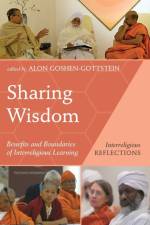
The essays collected here, prepared by a think tank of the Elijah Interfaith Academy, explore the challenges associated with sharing wisdom--learning, teachings, messages for good living. How should religions go about sharing their wisdom? These chapters, representing six faith tradition (Jewish, Christian, Muslim, Hindu, Sikh, and Buddhist), explore what wisdom means in each of these traditions; why and how it should be shared, internally and externally; and the role of love and forgiveness in sharing. This book offers a theory that can enrich ongoing encounters between members of faith traditions by suggesting a tradition-based practice of sharing wisdom, while preserving the integrity of the teaching and respecting the identity of anyone with whom wisdom is shared.Contributors: Pal Ahluwalia, Timothy Gianotti, Alon Goshen-Gottstein, Sallie B. King, Anantanand Rambachan, Meir Sendor, Miroslav Volf""Alon Goshen-Gottstein has assembled a collection of gem-like essays on the theme of ''sharing wisdom,'' with contributions from brilliant scholars on the nature of wisdom and whether it can be shared outside the traditions, in Christianity, Hinduism, Sikhism, Buddhism, Islam, and Judaism, with a fine summary essay by the editor. The authors are critically sharp about the real differences among the traditions and work hard, as the result of working together, to address one another''s concerns. Love and forgiveness seem to be common conditions for sharing, though even these are interpreted in interestingly different ways. This volume is accessible to beginners and enlighteningly fresh for scholars."" --Robert Neville, Boston University, past president of the American Academy of Religion""How can religions engage with each other in a way that not only respects each other''s integrity but also draws on their depths and brings them into fruitful conversation? Sharing Wisdom is a remarkable response to that question. The distinguished authors together tackle a series of difficult questions posed to their traditions, and they succeed in opening up a wisdom of multiple depths that resonate with each other. Goshen-Gottstein has drawn the strands together with profound sensitivity and perceptiveness."" --David F. Ford, University of CambridgeALON GOSHEN-GOTTSTEIN is founder and director of the Elijah Interfaith Institute. A noted scholar of Jewish studies, he has held academic posts at the Hebrew University of Jerusalem and Tel Aviv University and has served as director of the Center for the Study of Rabbinic Thought, Beit Morasha College, Jerusalem.
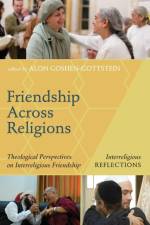
Friendship is an outcome of, as well as a condition for, advancing interfaith relations. However, for friendship to advance, there must be legitimation from within and a theory of how interreligious relations can be justified from the resources of different faith traditions. Friendship Across Religions explores these very issues, seeking to develop a robust theory of interreligious friendship from the resources of each of the participating traditions. It also features individual cases as models and precedents for such relations--in particular, the friendship of Gandhi and Charlie Andrews, his closest personal friend.Contributors:Balwant Singh Dhillon, Timothy J. Gianotti, Alon Goshen-Gottstein, Maria Reis Habito, Ruben L. F. Habito, Ryan McAnnally-Linz, Stephen Butler Murray, Eleanor Nesbitt, Anantanand Rambachan, Meir Sendor, Johann M. Vento, and Miroslav Volf""The Elijah Institute has blessed us with an in-depth exploration of interreligious friendship from the perspective of several religious traditions. These essays are both erudite and edgy. They look deeply into religious traditions in the hope of laying down a foundation for the future of interreligious relations in a world that promises to become only more complicated. The authors search out the resources within the traditions that support interreligious friendships today and are fearless in pointing out the obstacles to such friendships also found in the traditions. This book is going to be a very valuable contribution to a global discussion.""--James Fredericks, Loyola Marymount UniversityALON GOSHEN-GOTTSTEIN is founder and director of the Elijah Interfaith Institute. A noted scholar of Jewish studies, he has held academic posts at the Hebrew University of Jerusalem and Tel Aviv University and has served as director of the Center for the Study of Rabbinic Thought, Beit Morasha College, Jerusalem.
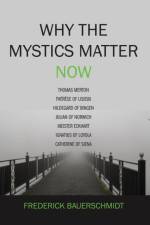
If you''ve ever wondered about the mystical writers, but found their writing inaccessible, then Why the Mystics Matter Now is for you. This inviting guidebook for contemporary readers serves as a primer to a body of wisdom that is often viewed as unapproachable, but, in fact, is still relevant to the problems we face today.Frederick Bauerschmidt starts where we are: in a disenchanted world. Then, drawing words from those particular mystics whose struggles and questions closely parallel our own, he reveals the meaning of their words in clear, practical ways. With an unconventional, engaging, and often playful style, Bauerschmidt strips away the barriers, making the mystics less intimidating and more accessible. Featuring:THOMAS MERTONTHERESE OF LISIEUXHILDEGARD OF BINGENJULIAN OF NORWICHMEISTER ECKHARTIGNATIUS OF LOYOLACATHERINE OF SIENAFrederick Bauerschmidt is a deacon of the Archdiocese of Baltimore and Professor of Theology at Loyola University Maryland. He is the author of several books, including Thomas Aquinas: Faith, Reason, and Following Christ (Oxford University Press), Catholic Theology: An Introduction (with James Buckley, Wiley Publishers), and Julian of Norwich and the Mystical Body Politic of Christ (University of Notre Dame Press). His wife, Maureen Sweeney, is an immigration lawyer and teaches as the University of Maryland School of Law. They have three young-adult children.
Abonner på vårt nyhetsbrev og få rabatter og inspirasjon til din neste leseopplevelse.
Ved å abonnere godtar du vår personvernerklæring.