




Gjør som tusenvis av andre bokelskere
Abonner på vårt nyhetsbrev og få rabatter og inspirasjon til din neste leseopplevelse.
Ved å abonnere godtar du vår personvernerklæring.Du kan når som helst melde deg av våre nyhetsbrev.

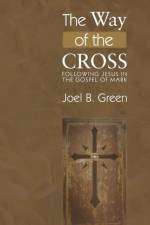
Jesus has always invited and challenged his disciples to follow him in the way of redemptive suffering, the way of the cross. This, according to Joel Green, is the very heart of Mark's gospel. It is also the heart of discipleship today. In six engaging chapters, Green shows how Mark unfolds the drama of Jesus's mission to suffer for others; how this mission was not initially understood by the first disciples, and how all this can transform our own understanding of the call to follow. Each chapter deepens our sense of the integrity of Mark and challenges us to follow Jesus in our own practice of discipleship and experience with suffering today. The Way of the Cross is for individuals and groups who are serious about Bible study and about the relevance of such study to their lives. Each chapter concludes with a set of questions for reflection and discussion.
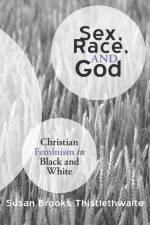
Sex, Race, and God is the impassioned manifesto of a white feminist's reckoning with the meaning of race-including her own whiteness-in doing theology. We should be discussing, and acting on many of Thistlethwaite's insights for quite some time. She has made a vital contribution to the feminist theological enterprise and to the critical relationship between back and white women in it. -Carter Heyward Sex, Race, and God is a sincere attempt to listen to and learn from African-American women. . . a serious and largely successful effort to create a method that addresses differences rather than proposing wishful commonalities. Many women of color will find it promising a basis for dialogue. -The Women's Review of Books This pivotal book illuminates a significant ongoing debate at the intersection of two fields: contemporary theology and feminist studies. -Choice Thistlethwaite does what so few white feminists have done: genuinely interact with (and learn from) the strong differences in experience and perspective between African -American women and European-American women. -The Other Side
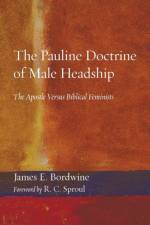
I am not aware of a comprehensive volume on the Pauline Doctrine of Male Headship authored by an active pastor who must live with the practical applications of that ancient and ever-valid teaching. Dr. Bordwine, an active pastor, thus serves the Christian community by providing a book which both interacts so well and widely with differing opinions and which also clearly states the meaning of the biblical text and its significance for the church of this age and the days that follow. I am therefore very thankful for its publication and heartily commend it. George W. Knight III President, The Council on Biblical Manhood and Womanhood
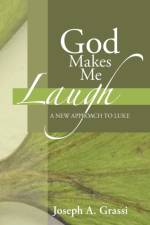
God has made me Laugh and all who hear about it will laugh at me. These are the words of Sarah after she bore a child to Abraham when both were in advanced old age. Sarah named this child Isaac which means laughter. Thus believers, as descendants of Abraham and Isaac are children of laughter. Luke takes the theme of joy and laughter through his whole gospel. The angels at Jesus's birth announce good news of great joy to all the people. Jesus presents his teaching in the form of grace and surprise which prompt joy and laughter on the part of the gospel audience. Luke has before him the image of a laughing Jesus. As a climactic story, Jesus visits Jericho near the Dead Sea. The chief tax collector for Rome, Zaccheus, a most unpopular man, small in stature and character as well, climbs a tree so he can see Jesus coming in spite of the crowds. Jesus spots him with laughter, and calls out, to the dismay of the crowd, Zaccheus, hurry up and climb down, I'm going to have dinner at your house today. Luke's gospel presents Jesus as a comic contrast to many ultra-serious religious teachers by his concern for the outcast, strangers, and marginalized of society.
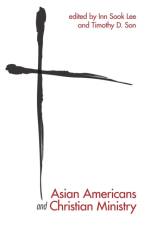
Asian American Christian churches have been serving Asian immigrants not only as their spiritual home providing nurture, comfort and uplifting of spirituality during their times of adjustment but also as a generative womb leading the alienated immigrants toward a meaningful integration into the larger society. The articles included here attempt to provide theoretical and theological foundations for understanding the Asian American predicament, and explore psychosocial experiences individually and collectively. Also included are articles, which relate theological and biblical insights to the unique experiences of the Asian American faith communities with the hope to reconstruct a better future.
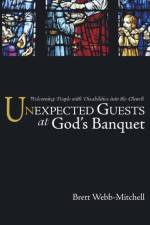
Flowing from Jesus' parable of the banquet feast, this practical and challenging call to a more inclusive church shows why disabled people - the mentally retarded, the physically impaired, and others - must be a part of congregational life, along with how, where, and what to do. Essential for parents, teachers, and the disabled themselves.
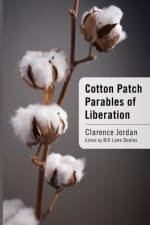
When Jesus delivered his parables, he lit a stick of dynamite, covered it with a story about everyday life, and then left it with his audience. By the time his hearers fully unwrapped the parable, Jesus and his disciples were long gone. Clarence Jordan essentially retells these powerful parables in the language of the South in order to place modern readers in that same first-century situation. Properly understood, these Cotton Patch stories can liberate us into the kingdom of God from the cultural prisons of religion, wealth, and prejudice. After Jordan's death in 1969, Bill Lane Doulos took up the task to combine these Cotton Patch Version parables with appropriate excerpts from Jordan's sermons and with his own commentary which does well to pull everything together. In the end, Doulos and Jordan call readers into true discipleship, challenging them to explore the demands of kingdom life on a whole new level.
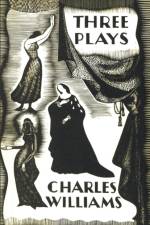
The Early Metaphysical Plays of Charles Williams (put in larger font at top of back page) Behold three plays by a major member of the Inklings, Charles Williams, none of which has been reprinted since 1930. The editor of his Collected Plays (1963) thought them unworthy of inclusion, but these works so surpass the general run of contemporary productions as to reveal how fresh an artist Williams was. We have been long deprived of these intriguing accomplishments. The Witch would hold the stage at any time, whereas The Chaste Wanton reads like a first rate radio drama of the 1930s. Rites of the Passion is an Easter liturgical choral work, first cousin to W. H. Auden's For the Time Being. With Three Plays, Williams anticipated the revival of the British religious verse drama by half a decade. These theological adventures are the forerunners of the plays of T. S. Eliot, Dorothy L. Sayers, and Christopher Fry. An excellent entry into Williams's world.
I have a sense that the times themselves, apart from more or less deliberately created crises, render strong things fragile, and fragile things mortally endangered. The times themselves are a permanent crisis. So writes Daniel Berrigan in this journal of reflections and musings from the late 1970s. First published in 1981, this book traces Berrigan's work after his release from Danbury Prison in 1972 for his part in the Catonsville Nine antiwar demonstration--from his experiences in Palestine, Northern Ireland, and France (where he lived with Thich Nhat Hanh), to his experiences as a teacher in Manitoba and Berkeley. Throughout, Berrigan ponders the commands of Christ, the struggle to be faithful to these commands, and why so few take them seriously. With wit and wisdom, Berrigan shares his faith journey and encourages us to stay faithful to that journey, to be peacemakers for the long haul.
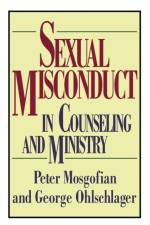
Sexual misconduct by ministers and other Christian professionals has reached epidemic proportions. One major church insurer has handled over 1,200 cases in the past eight years, many involving child sexual abuse, often with multiple victims. How should the church respond when Christian counselors cross sexual boundaries? What should be done when the healer wounds? What is the church's responsibility both to misbehaving professionals and to heir victims? Combining their extensive counseling experience and legal expertise, the authors of this volume offer a well-written, practical book loaded with the thorny issues of sexual exploitation by religious professionals. Here is tested wisdom that can help. oA recovery strategy for victims oProactive ways to safeguard against improper sexual behavior oScreening and early intervention strategies oRestoring fallen ministers and church leaders oDealing with homosexual misbehavior, seductive clients, recovered memories, and false allegations oAssessing legal consequences of your policies The wise counsel in this timely book can help us find remedies for a growing problem that threatens the Christian church.
Originally published in 1961, this study challenges the stereotype of Kierkegaard as being socially aloof and politically conservative. Bukdahl does a through job of contextualizing Kierkegaard in nineteenth-century Denmark, shedding light on his relationships with his family, various religious groups, and the leading intellectual figures of his time. At the same time, Kierkegaards fundamental interest in the plight of the common man is revealed both from his writings and his social encounters. In addition to crafting a fine translation, Bruce Kirmmse has expanded the usefulness of Bukdahl's work by including a significant biographical introduction, informative notes identifying events and figures referenced in the text, and a guide pointing readers to English translations of all of Kierkegaard's writings.
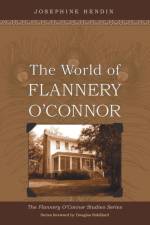
Josephine Hendin's landmark study explores the fiction that erupted from Flannery O'Connor's enigmatic contradictions: she was the dutiful daughter of a conservative Southern family, the uncompromising Roman Catholic, the stoic figure enduring a painful fatal illness, and the author of strange and violent tales that exploded all the virtues of heritage, obedience, and faith. The tension between those disparate selves drives the complexity of Flannery O'Connor's literary achievement into the center of American experience. While other critics have chosen to treat Flannery O'Connor as a traditional Southern or dogmatic Catholic writer, Hendin takes a perceptively fresh view of her work in the context of contemporary fiction. Hendin illuminates all her fiction, beginning with the early novels and ending with Everything that Rises Must Converge. Differentiating her from other Southern writers, Hendin shows how O'Connor created a unique art, remarkable for its portrait of the agony of American yearning.
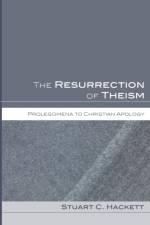
The Christian world view, contends the author, both needs and embodies a thoroughgoing, rational apologetic as a manifestation of its relevance to the contemporary mind. . . . Christian faith should be defended in terms of criteria which center in rational objectivity as the norm of truth and evaluation. The author, who stands in the tradition of Aquinas, Butler, Orr, and Tennant, deals first with the problem of epistemological approach (part 1). Then he tackles the apologetic of natural revelation, first setting forth the inadequacy of every major alternate to rational empiricism (part 2), then demonstrating the existence of the God of theism (part 3). Each chapter is well outlined, and these outlines appear together in an Analytical Table of Contents. This feature, as well as a bibliography and index, makes this a useful textbook for courses in apologetics and philosophy.
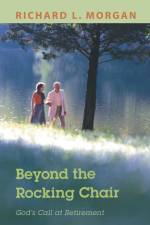
There has been, and continues to be, a great deal of important writing and discussion about the need for retirement planning for the financial health, housing, and other issues faced by persons of retirement age. However, one of the most difficult set of issues that must be addressed are emotional and spiritual issues. Beyond the Rocking Chair offers a new vision of retirement--a vision of a time in one's life that can be a time of rewarding involvement and deepening spirituality. It will be an insightful, powerful, spiritual companion to those who are recently retired, approaching retirement, or living in retirement communities as well as professionals, families, and friends who seek to support those who are entering this rewarding time in their lives.
"Previously published by Frederick Ungar Publishing Co., Inc., 1981 "--Title page verso.
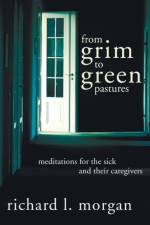
Richard L. Morgan has brought into dialogue his years of pastoral ministry with the sick and his appreciation of scripture as a valuable resource. His meditations bring both challenge (e.g. Escaping into Sickness) as well as comfort (This Too Shall Pass). They are daily thoughts for the sick and the caregiver, mutually engaged in a time of deep significance. - Frank S. Moyer Editor, Chaplaincy Today Morgan arrives at an understanding that while a catastrophic illness can take control of one's life emotionally, physically and spiritually, it can also point to divine presence and healing. This is a wise and excellent devotional for anyone involved in the land of sickness, be it as the afflicted or as the caregiver. - Publishers Weekly Richard L. Morgan's From Grim to Green Pastures writes of reflections that came to him during his time of illness. This book offers 81 two-page meditations properly sized for those who are being cared for, or those who busily care for them. His excerpts about a spirituality of illness, serve us well. - Martin E. Marty, The Christian Century For the day when I am ill again I keep a mental list of books I would take to the hospital. From Grim to Greener Pastures joins that list. As a witness to illness, Dick Morgan, tells the truth. Whether you reread this book as a pastoral guide through illness or as spiritual preparation for the day you too become ill, it can bring grace to suffering. - Arthur W. Frank, author of At the Will of the Body: Reflections on My Illness
This book contains twelve meditations on the New Testament book of Revelation, written by theologians, biblical scholars, historians, and clergy. In short, easy-to-read selections that are profound and relevant to life, the meditations--along with three or four accompanying questions--help the reader engage more deeply with the Scripture passage. Given the potential challenges of this final book of the Christian canon, these meditations help the reader find a way to enter in and experience more fully what John, the author of the Apocalypse, wanted us to hear and see.""A facile criticism of seminaries is that their abstract theologizing seems distant from our concrete problems. Behold, I Am Coming Soon belies such effectively. It confronts the off-putting sense many have of Revelation. It offers concise exegetical insights. It shows how it witnesses in its own way to doctrines like grace and justification. Its words about heaven and God''s time offer spiritual refreshment. In sum, the book embodies what the oft-used term ''integration'' was reaching for. It will be read with profit by academic and lay audiences alike.""--George R. Sumner, episcopal bishop of DallasMari Leesment is a teaching fellow at Wycliffe College, in the Toronto School of Theology at the University of Toronto. She is currently completing her PhD in New Testament.
About the Contributor(s):G. Campbell Morgan (1863-1945) was a leading Bible expositor in England and the United States. Despite a lack of substantial formal training, Morgan was a prolific writer and teacher. Ordained into the Congregational ministry, he was the pastor of Westminster Chapel, London (1904-17 and 1933-45). Morgan also conducted two very successful teaching tours in the United States, including work with D.L. Moody''s ministry.
Description:Ideals and reality collide when six college friends band together to start an ice cream store, promising ""Better Food for a Better World,"" but finding a worse world than they had expected.It seems like a great idea: six friends from college pool their money and energy to start an ice cream store. Natural High Ice Cream: Better Food for a Better World. It''s high-minded, with a wink, like the marital self-help group they all belong to. The store finds a ready clientele in its northern California college town filled with amiable ex-hippies who are happy to contribute to a better world, even if all they have to contribute is the price of an ice cream cone.But the store, like the marriage group, turns out to be work, not fun, and rifts start to appear between the friends. Nancy, who had seemed so easygoing and sweetly sexy when they started, turns stern. Cecilia, who had wanted to be a musician, is openly bored. And flighty, excitable Vivy is crawling out of her skin. She yearns for the old days, before Natural High, when she and her husband Sam traveled around the country with countercultural musicians and dancers. She''d give anything to have those days back again. And so quietly, without telling the partners, she starts to rev up the old company, contacting her old acts--the fat contortionist, the muscle-bound juggler. She''s going to save them all, and Natural High, too. But saving turns out to be harder than it looks, and Vivy isn''t the only one with secrets. Endorsements:""Erin McGraw''s latest book is a treasure. With her trademark élan and seamless storytelling, she manages to get to the very heart of the blessing and disaster that friendship, good intentions, and love can all be. Better Food for a Better World is a beautiful, funny, and haunting tale of who and where we are right now.""--Bret Lott, author of Jewel and Dead Low Tide""With soaring grace and sizzling humor, Erin McGraw fuses the piercing irony of Jane Austen with the subversive, satiric charm of Miguel de Cervantes. Here is a writer who loves her people enough to expose their outrageous flaws and celebrate their wild failings. Here is a visionary who offers delight as the first gift and hilarity as a path to transcendence.""--Melanie Rae Thon, author of First, Body and The Voice of the River""With each new book, Erin McGraw does something with her narratives I previously thought impossible. In Better Food for a Better World, she writes with great generosity about the struggle to be a good person; but, more importantly, she reveals how chaotic and hilarious the process can actually be. This is an expansive, beautiful novel that will rattle around in your heart and make it a better place.""--Kevin Wilson, author of The Family Fang""What great pleasure to find a book as full of life as this one is--its characters so marvelously charged with energy, its plot so deliciously idiosyncratic that a reader might be forgiven for failing to properly appreciate the novel''s athletic, deceptively simple prose. This is the true rarity in contemporary literature: a book overflowing with profound, authentic joy.""--Pinckney Benedict, author of Miracle Boy and Other StoriesAbout the Contributor(s):Erin McGraw is the author of five earlier books, the novels The Seamstress of Hollywood Boulevard and The Baby Tree, and the story collections The Good Life, Lies of the Saints, and Bodies at Sea. Her stories and essays have appeared in The Atlantic, Good Housekeeping, The Kenyon Review, Allure, Image, The Southern Review, STORY, The Georgia Review, and many other journals and magazines. She has taught at DePauw University and the University of Cincinnati, and currently teaches at the Ohio State University with her husband, the poet Andrew Hudgins. They divide their time between Ohio and Sewanee, Tennessee.
Description:Everyone in this world must deal with loss. The hardest loss is losing those we love. There are not many books written about a son''s love for his mother, but here in Praying With Mom, Michael Chung chronicles the journey of a son through the last years of his mother''s life. Through prayer, tears, time, and love, this book is a ""voyage of the soul"" into how a son spent the last years with his mother and how his God brought him through it all. Many people have trouble with their faith when experiencing the trials of loss, and some even abandon it, being angry at God for not doing more. In Praying With Mom, the author discusses from his heart and soul how he dealt with the suffering of losing the love of his mother.Endorsements:""In this book, Michael Chung took me along on a journey through the valley of the shadow of death. Deeply personal yet fortified with quotes from great Christian teachers, I learned better how to walk with God in the trials of life.""--Joel C. Hunter, Senior Pastor, Northland ChurchAbout the Contributor(s):Michael Chung (PhD, Nottingham) is currently an adjunct professor with Fuller Theological Seminary in Texas.
Faithfulness and the Purpose of Hebrews offers fresh answers to several unresolved questions by employing that branch of social psychology known as social identity theory. Who were the addressees? With the categories of social identity theory, this study argues that the addressees arranged the world into two groups: ""us"" and ""them."" They understood their group, the ""us,"" to be the ""faithful."" They understood ""them"" (a symbolic outgroup of ""all others"") to be the ""unfaithful."" Faithfulness, then, is the primary identity descriptor for the addressees and plays an essential role thoughout the text. How did the addressees understand the faithfulness of Jesus? The author of Hebrews describes the faithfulness of Jesus as ""prototypical."" The faithfulness of all others is described in relation to Jesus' faith, and together they are integrated into an ongoing narrative of faithfulness. What is the meaning of the promised ""rest""? Utilizing a model of present temporal orientation, the study interprets the dynamic relationship between the ""antecedent"" faithfulness of many witnesses and the ""forthcoming"" promised rest of the addressees. The addressees of Hebrews were encouraged to ""understand their futures by looking to the past.""What is the purpose of the text? Social identity theorists explain that groups with a negative social identity have two broad options: social mobility or social change. The study concludes that the author of Hebrews provides internal constraints that are meant to prevent social mobility. The author utilizes social creativity (an aspect of social change) to provide a positive social identity for the addressees.
Everett and Evelyn McKinney have been Assemblies of God Missionaries to the Asia Pacific Region since 1969.Their first assignment, as appointed missionaries on the Philippine Field, was at Immanuel Bible Institute (1969-1975) where Everett served as president, business manager and faculty. Evelyn was the Academic Dean and a faculty member. From 1977 to 1984 Everett was the president of Far East Advanced School of Theology (FEAST and now Asia Pacific Theological Seminary - APTS) from 1977-1984; he also served as a faculty member at the institution. Evelyn was a faculty member and served as the Interim Academic Dean and Dean of Students for one year during their time at FEAST. Since 1987 to the present Everett and Evelyn have served as non-resident faculty at APTS.They have been Bible school educational consultants for the Asia Pacific Education Office (APEO) since 1988. Evelyn serves as the secretary for the Teacher Development & Certification Commission (TDCC) under the Asia Pacific Theological Association (APTA). Both Everett and Evelyn have been a tremendous blessing and encouragement to the Asia Pacific Region Bible schools as well as those in other parts of the world. Their wisdom, years of educational experience and advice are greatly appreciated and applied in various Bible school contexts!The have ministered in the Asia Pacific Region for 50 years and continue to do so. Everett and Evelyn have had a traveling teaching/preaching/seminary ministry since 1988. Within this time frame, they have ministered and taught in many places around the world (Continental Theological Seminary, Brussels, Belgium; Southern Asia Bible College, Bangalore, India; Evangel Theological Seminary, Kiev, Ukraine).God's calling upon their lives has connected them with many church leaders and students. They walk in the Spirit, step out in faith and live their lives for the glory and honor of God. Students are very important to Everett and Evelyn. A few years ago they could have made the decision to retire from teaching, training and equipping students. But no! They kept going! And the continue to go around the world preparing students as laborers for the ripened harvest fields around the world. They continue to build strong relationships with their students and students love, respect, and honor Everett and Evelyn.--From the foreword by Weldyn B. HougerDave Johnson, Dmiss, is a member of the faculty at the Asia Pacific Theological Seminary in Baguio City, Philippines. He is the author of two books and is the managing editor of the Asian Journal of Pentecostal Studies (www.aptspress.org)
This collection of biblical, theological, historical, and pastoral essays celebrates the remarkable forty-year ministry of the Rev. Dr. Robert S. (""Rob"") Rayburn. A man of scholarly gifts and a shepherd's heart, Rob not only faithfully served a single congregation for his entire ministerial career, but also contributed to the wider church through his perceptive theological writings. Just as Rob embodied pastoral warmth, intellectual rigor, and an appreciation for the catholicity of the Christian tradition, so too the essays of this ""ecclesial Festschrift"" seek to bring scholarly expertise into the service of Christ's church.""What you hold in your hands is a weighty book, a treasure of knowledge, brimming with deep biblical, theological, and historical reflection. These chapters set before the reader the subtlety and richness of the reformed tradition, always rooted in the catholicity of the Christian church. To read them is to glimpse the kind of wisdom that infused the remarkable ministry of Robert Rayburn, a faithful herald of God. Rob embodied the 'pastor-theologian' long before it was trendy, and this book honors his love of learning, his love of the people of God, and above all, his love of God. A fitting tribute!""--Hans Madueme, Professor of Theology, Covenant College""These essays, written particularly from an ecclesial context, also provide perspective on Rob Rayburn's significant contribution and lasting influence as a member of the Board of Trustees of Covenant College, where Word, scholarship, celebration of God's manifold gifts and callings, and generational continuity are at the heart of the mission. How grateful to God we are for the blessing of his thirty-seven years of leadership at Covenant!""--Niel Nielson, Former President, Covenant CollegeMax Rogland is Associate Professor of Old Testament at Erskine Theological Seminary and Senior Minister of Rose Hill Presbyterian Church in Columbia, South Carolina. He is the author of Haggai and Zechariah 1-8 (2016).
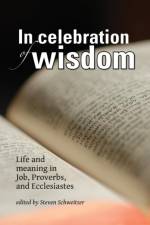
The thirteen essays in this volume engage biblical texts from the three books in the Hebrew Bible associated with the wisdom tradition in ancient Israel: Proverbs, Job, and Ecclesiastes. These three books provide deep theological reflection on everyday life and practical ethics. Often ignored in the development of theology, these books contain a richness and usefulness the North American church desperately needs to hear in our contemporary cultural contexts. These essays affirm the value of these books, not just for understanding Israel's ideas about wisdom, or even Israel's ideas about faith, but also for the continuing theological witness and development of the church.--From the Introduction, by Steven SchweitzerThis collection of textual studies is a welcome contribution to our continued learning. The focus on wisdom takes up a much neglected part of scripture and opens for us large theological affirmations and demanding ethical summonses. In a society that has majored in foolishness on a large scale, the book is a reminder that wisdom that can generate life is rooted elsewhere in a hidden governance that is nonnegotiable and cannot be outflanked. The reader will find these several studies suggestive and accessible, grounded good scholarship but addressed to a church audience that seeks practical guidance for faith. --Walter Brueggemann, Columbia Theological Seminary
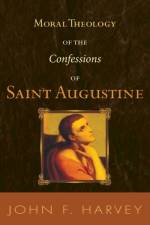
The purpose of this thesis is to explain the moral content of the Confessions of St. Augustine. Accordingly, other works of the Saint, as well as commentators on the Confessions will be used solely to clarify the main moral tenets of this work. Since moral principles, moreover, are found not merely in the expressed ideas of St. Augustine, but are also embodied in his actions, moral principles will be gleaned and illustrated from both sources. When, moreover, the Confessions consider man, they view him in the same theocentric fashion, in his relationship to God, and so reaffirm frequently that the happiness of man is inseparably linked with the knowledge and worship of God, the supreme Good and the cause of all moral good.
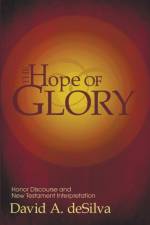
The Hope of Glory: Honor Discourse and New Testament Interpretation invites the reader to examine how the New Testament sought to shape the ambitions, behaviors, and social interactions of honor-sensitive people. How did these texts help the early Christians set their hearts on gaining honor and self-respect before God, and withstand society's pressure to return to its values? How may those who share commitment to Jesus support one another so as to offset society's erosion of their commitment? What is the source of the believer's honor, and how can he or she preserve it intact?
What do the gospels contribute to our understanding of nonviolent versus violent means of conflict resolution? Many biblical scholars contend that the gospels have little to say on this subject. Others seek answers in ethical principles found in Jesus's teachings, which may or may not be interpreted as accepting or rejecting violence. In Nonviolent Story Robert Beck proposes a new way of reading the Gospel of Mark, one that points to a challenging message of nonviolent resistance as reflected in the story of Jesus's life and ministry. According to narrative analysis, the message of the Gospel is found in the structure of the story itself. Beck contends that the narrative form of Mark's gospel portrays Jesus as a protagonist who does not avoid conflict, but enters into it without himself resorting to violence. He thus serves as a model of the nonviolent resistance that inspired Gandhi and Martin Luther King, Jr. By using literary analysis to explore Mark's gospel, Beck opens up a counter-story that challenges the prevailing American cultural myth of constructive violence. Beck uses the Western tales of Louis L'Amour as the narrative essence of this pop mythology--and the total opposite of the story told by Mark.
Abonner på vårt nyhetsbrev og få rabatter og inspirasjon til din neste leseopplevelse.
Ved å abonnere godtar du vår personvernerklæring.