



Gjør som tusenvis av andre bokelskere
Abonner på vårt nyhetsbrev og få rabatter og inspirasjon til din neste leseopplevelse.
Ved å abonnere godtar du vår personvernerklæring.Du kan når som helst melde deg av våre nyhetsbrev.

Passing by much that is of the highest importance, [the author] has attempted to point out the main movements of Christian thought from the close of the Apostolic Age to the dawn of the Reformation. . . . The writer believes firmly in the evolutionary standpoint as alone explanatory of the history of the Christian Church as the expression of the will of the Holy Spirit. He admits, therefore, the principle of development as not only an historic fact, but as part of the work of God. True Christianity is not to be found by going back to some ill-defined period of antiquity, the beliefs and practices of which it is now almost impossible to reconstruct, but by the incorporation into itself of the ever-enlarging knowledge, the ever-expanding horizons of life. It is the glory of Christianity that this can be done. --from the Preface
This edition of the New Testament in Greek follows the text of Robert Stephanus of 1550, the so-called 'Textus Receptus' (Received Text). It notes variants from the editions of Beza, Elzevir, Lachmann, Tischendorf, Tregelles, Westcott-Hort, and English versions.
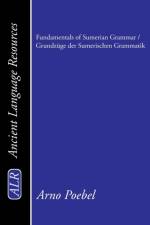
Contents Series Foreword / K. C. Hanson Select Bibliography / K. C. Hanson Preface Abbreviations I. The People and Language of Sumer II. The Script and Writing System III. Phonology IV. Word Roots V. Formation of Connections VI. Sentence Elements VII. The Substantive VIII. The Adjective IX. The Pronouns X. Numbers XI. Equivalents of Prepositions and Conjunctions XII. The Verb
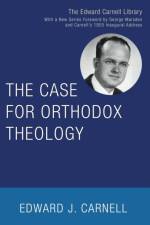
Here is a thoughtful and scholarly presentation of one type of contemporary Christian thinking. Orthodoxy, as here defined, is that branch of Christendom that limits the ground of religious authority to the Bible. It lays claim to a ""plenary"" but not necessarily a literal inspiration for the sacred books of the canon. After defining the rules that govern biblical hermeneutics, the author indicates how orthodoxy should meet the difficulties and perils that beset it. He speaks from his heart as a confirmed adherent of the position he defends.In this welcome collection of Carnell books, we are offered an inside view of a radical shift in American religious thinking -- the emergence of twentieth-century evangelicalism out of Protestant fundamentalism. While there may be room for disagreement on the relevance of Carnellian apologetics for our post-modern age, there should be no doubt about the historical importance of Carnell''s role in a period of tension and risk. Wipf and Stock deserves our thanks. Rudolph Nelson, author ofThe Making and Unmaking of an Evangelical Mind: The Case of Edward Carnell Edward John Carnell was--in my estimation--the brightest and the best of the neo-evangelical leaders. He was a courageous thinker who was not afraid to think new thoughts in the service of biblical orthodoxy. The Carnell Library is a gift to today''s evangelical movement. Richard J. MouwPresident, Fuller SeminaryEdward John Carnell was an ordained Baptist minister, born in Antigo, Wisconsin. For three years he served as Associate Professor of Philosophy of Religion at Gordon Divinity School. He was appointed as the second president of Fuller Theological Seminary from 1954 to 1959. Carnell resigned his position in 1959 to give himself fully to teaching, serving as Professor of Apologetics at Fuller for eight additional years. Dr. Carnell contributed to many religious journals and authored several books including ''An Introduction to Christian Apologetics'', ''Television: Servant or Master?'', ''The Theology of Reinhold Niebuhr'', ''A Philosophy of the Christian Religion'', and ''Christian Commitment''.
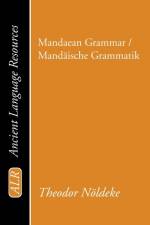
ContentsSeries Foreword / K. C. HansonForeword / K. C. HansonBibliography (1889-2005)PrefaceIntroductionPart 1: Orthography and PhoneticsI. OrthographyII. Phonetics1. Vowels2. ConsonantsPart 2: MorphologyI. Nouns1. Pronouns2. Nouns in the Strict Sense3. Numbers as Words4. ParticlesII. Verbs1. The Inflection of Verbs2. Verbs with Objective SuffixesPart 3: SyntaxI. Parts of Speech1. Nouns2. VerbsII. Sentence1. The Simple Sentence2. Connection with Additional SentencesTable of Mandaean Characters
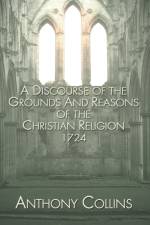
Collins'' ''Discourse of the Grounds and Reasons of the Christian Religion'' was at the center of controversies between early eighteenth-century English Deists and their orthodox Christian opponents. In 1722 William Whiston, while defending the old confessional position, admitted that most citations of the Old Testament in the New go well beyond the literal sense when they appealed to prophecies fulfilled by Jesus Christ. Whiston attempted to solve this problem by blaming it on Jews who had amended the original text of the Old Testament. In this volume Collins uses Whiston''s proposal as a foil. While Collins could easily make a mockery of Whiston''s suggestion that Jews amended the text, he seized upon Whiston''s concession that the New Testament consistently depends upon nonliteral interpretations in appeals to messianic fulfillment.Collins points out that if New Testament writers depended upon nonliteral interpretations, then their interpretative techniques contradicted the classical Christian norm of the literal sense as the only basis for arguments about doctrine and failed to make any compelling historical case for prophetic doctrine. In other words, if Old Testament prophecy is allegorical in nature, then it can''t be used to furnish any real truth of an event.This volume proved to be quite controversial, calling forth no less than thirty-five replies in two years.Anthony Collins (1676-1729) was a wealthy English free thinker, deist, and materialist who in his later years became a country squire and local government official in Essex. Along with John Toland, Collins was the most significant member of a close-knit circle of radical free thinkers that arose in England in the first three decades of the eighteenth century.
Jonathan Edwards towered over his contemporaries--a man over six feet tall and a figure of theological stature--but the reasons for his power have been a matter of dispute. Edwards on the Will offers a persuasive explanation. In 1753, after seven years of personal trials, which included dismissal from his Northampton church, Edwards submitted a treatise, Freedom of the Will, to Boston publishers. Its impact on Puritan society was profound. He had refused to be trapped either by a new Arminian scheme that seemed to make God impotent or by a Hobbesian natural determinism that made morality an illusion. He both reasserted the primacy of God''s will and sought to reconcile freedom with necessity. In the process he shifted the focus from the community of duty to the freedom of the individual. Edwards died of smallpox in 1758 soon after becoming president of Princeton; as one obituary said, he was ""a most rational . . . and exemplary Christian."" Thereafter, for a century or more, all discussion of free will and on the church as an enclave of the pure in an impure society had to begin with Edwards. His disciples, the ""New Divinity"" men--principally Samuel Hopkins of Great Barrington and Joseph Bellamy of Bethlehem, Connecticut--set out to defend his thought. Ezra Stiles, president of Yale, tried to keep his influence off the Yale Corporation, but Edwards''s ideas spread beyond New Haven and sparked the religious revivals of the next decades. In the end, old Calvinism returned to Yale in the form of Nathaniel William Taylor, the Boston Unitarians captured Harvard, and Edwards''s troublesome ghost was laid to rest. The debate on human freedom versus necessity continued, but theologians no longer controlled it. In Edwards on the Will, Guelzo presents with clarity and force the story of these fascinating maneuverings for the soul of New England and of the emerging nation.""Allen Guelzo writes with grace, charm, and even wit about a weighty subject that others have found forbidding. His scholarship is broad and his expositions lucid.""--Daniel Walker Howe, University of California at Los Angeles, Emeritus""Edwards on the Will is an important contribution to the study of Jonathan Edwards''s thought. Where earlier scholars have been largely preoccupied with Edwards''s ''modernity'' or with measuring the social effect of Edwards in the context of the American Revolution, Allen Guelzo demonstrates his intellectual ''legacy'' not only to the generation of the Revolution but also beyond. This work will stand as the definitive treatment of the legacy of Edwards''s classic treatise on Freedom of the Will.""--Harry Stout, Yale University""This book elevates the study of eighteenth-century New England theology to a new level of sophistication and insight. With a precise, fresh, and lively literary style, Guelzo makes old controversies come alive for a twentieth-century reader. This is intellectual history at its best--learned, animated, and compelling. It is one of the finest studies of theology in America ever written.""--E. Brooks Holifield, Emory University""By tracing the development of one central point of Edwards''s doctrine, Guelzo allows us to see the unfolding of the entire history of the Edwardsean school, and, by implication, of American theology, in the period between 1750-1830. This book is a major work of scholarship--thorough, enlightening, intellectually uncompromising.""--Philip F. Gura, University of North Caroline, Chapel HillAllen C. Guelzo is Henry R. Luce Professor of the Civil War Era and Professor of History at Gettysburg College. He is formerly Dean of the Templeton Honors College and the Grace F. Kea Professor of American History at Eastern University. He holds an MA and a PhD in history from the University of Pennsylvania, an MDiv from Philadelphia Theological Seminary, and an honorary doctorate in history from Lincoln College in Illinois.
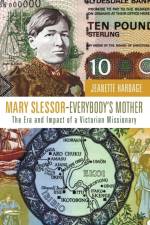
How did a petite redhead from the slums of Dundee become a role model for a hundred years? How did she come to wield influence in the land known to her compatriots as ""the white man''s grave""? Why are there statues of her holding twins in Nigeria? How did she develop her missionary fervor combined with down-to-earth common sense? How did she overcome difficult situations throughout her life in ways that set her apart from many Victorians?Her ""eccentricities"" are often cited: She climbed trees, marched barefoot and bareheaded through the forest, declined to filter her water, and shed her Victorian petticoats. On the other hand, because of her understanding of and rapport with the Africans among whom she lived, the British government appointed her their first woman magistrate anywhere in the world and later awarded her the highest honor then bestowed on a woman commoner.Mary Slessor--Everybody''s Mother examines the era and influence of this extraordinary woman, who spent thirty-eight years serving as a Presbyterian missionary in Calabar. The work answers questions about the public Mary Slessor. It also looks at her private life. The author makes use of materials not found elsewhere, including Slessor''s own writings and those of others of her era, reminiscences of her adopted Nigerian son, and assessments from contemporary sources.Slessor''s audacity in remote areas of Nigeria contrasted with her timidity in public meetings in Scotland. She shunned the limelight and wondered why anyone would want to know about her. Her fame continues, especially in Nigeria and Scotland. She was certain God called her to serve in Calabar, the home she claimed as her own, where she became eka kpukpru owo--everybody''s mother.Mary Slessor is one of the few missionaries to have become a legend in their lifetime and leave an impression on the lives of a generation after it. . . . This is undoubtedly the best biography of Slessor so far produced. . . . It presents a woman who, without pretensions to gentility or to much education, moved the bounds, not only of what was acceptable for women, but of what was conceivable.--Andrew F. WallsFounding Director, Centre for the Study of Christianity in the Non-Western World, University of Edinburgh, Scotland; formerly Guest Professor of Ecumenics and Mission at Princeton Theological Seminary and Visiting Professor of World Christianity at Harvard and Yale Universities.Mary Slessor modeled a heart for the vulnerable, poor, sick, orphaned, and marginalized. Both she and indigenes were transformed by their encounter . . . This volume shows the importance of her legacy in spite of a close relationship with the colonial enterprise.--Ogbu KaluHenry Winters Luce Professor of World Christianity and Mission, McCormick Theological Seminary, ChicagoMary Slessor would have been more famous than David Livingstone had she not been a woman. . . . This work fills the need for a good modern biography of a remarkable woman. It combines readability with high academic standard.--Jock SteinEditor, The Handsel Press; former minister of the church in Dundee where Mary Slessor was a memberJeanette Hardage develops independent writing projects. Her work has appeared in Christianity Today, the International Bulletin of Missionary Research, the Journal of Medical Biography, and other publications. At Sea with God, written with her husband, Owen Hardage, is forthcoming.
Renowned nineteenth-century textual critic Frederick Scrivener presents sixty-three manuscripts of the Greek New Testament and other like documents in this volume. Of each of these, Scrivener provides a general account and estimate of their respective critical values, and then subjoins a comparison of the text of the chief of them with that of his own edition (Editio Major 1887) of Stephens' standard New Testament of 1550.
All the world's religions are experiencing rapid change due to a confluence of social and economic global forces. Factors such as the pervasive intrusion of globalizing political and economic developments, polarized and morally equivalent presentations seen in the media, and the sense of surety demanded in and promised by a culture dominated by science are some of the factors that have placed extreme pressure on all religious traditions. This has stimulated unprecedented responses by religious groups, ranging from fundamentalism to the syncretistic search for meaning. As religion takes on new forms, the balance between individual and community is disrupted and reconfigured. Religions often lose the capacity to recall their ultimate purpose or lead their adherents toward it. This is the situation we call ""the crisis of the holy."" It is a confluence of threats, challenges, and opportunities for all religions. This volume explores the contours of pressures, changes, and transformations and reflects on how all our religions are changing. By identifying commonalities across religions as they respond to these pressures, The Crisis of the Holy recommends ways religious traditions might cope with these changes and how they might join forces in doing so. Contributors:Vincent J. Cornell, Alon Goshen-Gottstein, Sidney H. Griffith, Maria Reis Habito, B. Barry Levy, Deepak Sarma, Michael von Bruck""The Crisis of the Holy makes an important and original contribution to a field that has been well researched and written about--the impact of modernity on religion. By adopting a double perspective--that of an external, observation-based one and an internal, reflective, and theologically oriented one--the collection breaks new ground concerning the possibility of new creative and meaningful forms of religion emerging out of the modern 'crisis of the holy.'"" --Shlomo Fischer, Hebrew University of JerusalemALON GOSHEN-GOTTSTEIN is founder and director of the Elijah Interfaith Institute. A noted scholar of Jewish studies, he has held academic posts at the Hebrew University of Jerusalem and Tel Aviv University and has served as director of the Center for the Study of Rabbinic Thought, Beit Morasha College, Jerusalem.
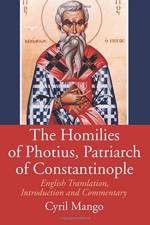
The historical role of Photius has, all too often, been viewed only as it concerned the rift between the Western and Eastern Churches. He has been regarded either as the ""Father of the Schism"" or as the staunch defender of Greek Orthodoxy against the encroachments of Rome. It is hoped that by presenting the Homilies of Photius in English translation these one-sided views may to some extent be corrected. For, surprising though it may appear, we shall not find in the Homilies a single reference to the Papacy. When they are not purely didactic, the Homilies are dominated by such topics as the suppression of the Iconoclast movement, the re-establishment of sacred painting, the propagation of the true faith among heretics, and the quelling of internal division in the Church of Constantinople. -From the IntroductionCyril Mango is a British scholar of the history, art, and architecture of the Byzantine Empire. He is a former King's College London and Oxford professor of Byzantine and Modern Greek Language and Literature.
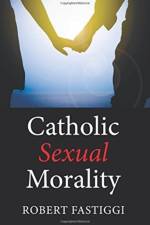
Many people today believe that the traditional Catholic view of sex is antiquated, unrealistic, and potentially harmful. In Catholic Sexual Morality, Dr. Robert Fastiggi asks whether the permissive sexual attitude of today's culture is really contributing to deeper love, better relationships, and true happiness for men, women, children, and families. He begins with the example of St. Augustine who recognized he was a slave to lust and in need of true freedom. Fastiggi then examines the foundations for Catholic sexual morality in Scripture, reason, and human experience. The hope is that people will realize that the Catholic Church is not ""against sex"" but sees sexual intimacy as something so beautiful and life-giving that it requires the stability of marriage for its true and rightful expression.Catholic Sexual Morality is grounded in the belief that the church's teachings on sex correspond to God's plan for human happiness. These teachings are challenging, and the church understands how easy it is to fail in sexual matters. God's mercy, however, is more powerful than human weakness and sin. This book explains the reasons why the Catholic Church teaches as she does on matters such as pornography, masturbation, fornication, adultery, contraception, divorce, and homosexual acts. It presents these teachings in a realistic way with full recognition of the reasons why people reject them. The ultimate desire is to help people understand that Catholic sexual morality is not a creation of church leaders but a response to what God has made known to us in Sacred Scripture and the natural law. In a world filled with infidelity, divorce, wounded children, and broken hearts, the wisdom of traditional Catholic sexual morality deserves a more sympathetic view--not just because it is Catholic but because it is true.
This volume "is a Bible history, reaching, in its present imperfect form, from Adam to the death of Saul. It has come to us only in a Latin translation (made from Greek, and that again from a Hebrew original), and by an accident the name of the great Jewish philosopher of the first century, Philo, has been attached to it. Let me say at once that the attribution of it to him is wholly unfounded, and quite ridiculous: nevertheless I shall use his name in italics (Philo) as a convenient short title. "Its importance lies in this, that it is a genuine and unadulterated Jewish book of the first century-a product of the same school as the Fourth Book of Esdras and the Apocalypse of Baruch, and written, like them, in the years which followed the destruction of Jerusalem in A.D. 70. It is thus contemporary with some of the New Testament writings, and throws light upon them as well as upon the religious thought of the Jews of its time." -from the Introduction
Why are spouse and child abuse so frighteningly common in the church? According to the findings of this book's contributors, the main reason stems from misuse and misunderstanding of the Bible's teachings on headship and submission.Based on a Christians for Biblical Equality conference, Women, Abuse, and the Bible shows that many abusers see no conflict between their behavior and their Christian beliefs. Some abusers even justify their behavior by citing biblical passages and religious principles.With input from counselors, biblical scholars, an abuser, and survivors, this eye-opening book will: --Compel Christians to recognize the existence of domestic violence.--Offer practical and creative pathways to healing.--Challenge churches to honestly address the issues of domestic, verbal, and clergy abuse, emotional cruelty, sexual harassment, and rape. This book speaks frankly of the way that the Bible can be used to hurt or to heal, to disperse God's grace or to obstruct it. It serves as a source book for all Christians courageous enough to address the problem.
Called to Believe, Teach, and Confess offers an overview of the major doctrines of Christianity in a comprehensive, but accessible way. Written from a Lutheran perspective, this book is a helpful resource to those within that tradition and to others who seek a deeper theological understanding. Firmly rooted in Scripture, this book emphasizes the interrelatedness of all Christian teaching, with its central teaching being the doctrine of justification by grace through faith in Jesus Christ. This book is ideal as a text for university students and other educated Christian adults who seek to expand their knowledge of God's revelation and its application in human lives. It introduces and uses classical theological vocabulary and terminology, while offering clear definitions and application. Key terms, study questions, glossary, and sidebars help make this a valuable resource. Suggested readings from Scripture, the Lutheran Confessions and other secondary sources guide the reader into deeper study.
""Think of what revitalizing journalism would do for the cause of Christ in America! It is the most needed sort of pre-evangelism; it is training in Christian worldview; it is an aid to sanctification, and you need to teach people how to do it.""--J. I. Packer to Marvin OlaskyTelling the Truth is Dr. Olasky's valuable response to this charge from the noted theologian. In it he emphasizes both the philosophical and the practical: detailing the need for Christian journalists to have a well developed worldview, and giving essential instruction to help them hone their writing, editing, and interviewing skills.The shortcomings of modern journalism are many. Too often evangelical publications, instead of exhibiting the journalistic excitement of the hunt, are content printing public-relations releases and carrying on their business in a joyless manner. But it doesn't have to be this way.Indeed, as Christians, it must not be this way! We are called to excellence; to do our work in such a way that it glorifies the Creator Himself. This incisive book not only urges journalists to grasp the significance of their purpose but also shows them how to more effectively accomplish it. As Olasky says, ""If even fifty new, talented, biblically directed journalists were to emerge in America during the next few years, the revitalization of Christian journalism would be well under way.""
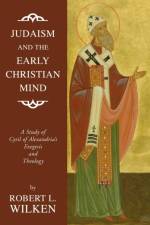
Unlike most studies of the thought of the early Church, which have concentrated on the Christian encounter with Hellenism, this investigation of the writings of Cyril of Alexandria reveals the crucial influence of the polemical conflicts with Judaism voiced by the early fathers. After tracing the relationships between Christians and Jews during the first four centuries A.D., Mr. Wilken demonstrates how Cyril's exegetical writings - two-thirds of the extant corpus - grew directly out of his polemical positions. He then discusses the influence of such thinking on Cyril's christology and on his controversy with Nestorius, the bishop of Constantinople during the early fifth century. His concluding analysis of the larger problem of Christian attitudes toward the Jews concentrates on the difficulties raised by the Christians' inability to understand Judaism as anything other than an inferior foreshadowing of Christianity.
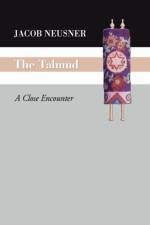
For the uninitiated - and even for seasoned scholars - the Talmud is a daunting sea of literature. Jacob Neusner in this book offers guidance in approaching the rabbinic writings, analyzing the ancient teachings, and interpreting the basis of religious authority for traditional Judaism. The result is a vivid introduction to one of the great documents of religion in society."We may compare the framers of the Talmud therefore to a weaver of a tapestry.... The weaver uses yarn that she has not made, yarn that is received from somewhere else. But the weaver uses the yarn to execute a vision of her own. The threads of the tapestry serve the artist's vision; the artist does not weave so that the threads show up one by one. The weavers of a tractate of the Bavli, as we shall see, make ample use of available yarm. But they weave their own tapestry of thought. And it is their vision, not the character of threads in hand, that dictates the proportions and message of the tapestry."From Chapter 5
Shortly after Dr. Terrien had completed his illuminating book on 'The Psalms and Their Meaning for Today', he decided to write a book about Job.This book, like its predecessor, is intended for the general reader: to give him a fuller knowledge, clearer understanding, and deeper appreciation of the religious and literary values of a truly great dramatic poem.Job, more than any other book of the Bible, belongs to the literature of the world. Yet who reads this poem in our day? Classics bear the burden of greatness. They are celebrated and unknown.Of such is Job, today unknown even to those who claim no immunity to cultural urges. Incidentally, the fact that this classic happens to belong to the Bible does not explain its quality of 'terra incognita', for it is neglected also by synagogue and church goers who daily read other portions of Scripture.The ancient Hebrew poem is modern, for it proffers a plea for pure religion. The poet of Job did not attempt to solve the problem of evil, nor did he propose a vindication of the justice of God. For him, any attempt of man "to justify God" would have been an act of arrogance. But he knew and promoted in the immediacy of faith a mode of life and in the very pangs of insecurity a sense of triumph. He transmuted the taste of sorrow into the knowledge of joy - not in the shallowness of gaiety, to be sure, but the depth of a joy brought by the presence of one who moves and warms the worlds.
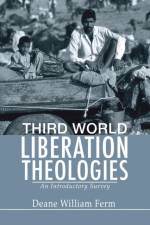
Here for the first time is a systematic survey of the principal liberation theologians from Asia, Africa, and Latin America. Exposing the rich variety of Third World liberation theologies, the author highlights points of agreement and divergence in approaches and context, and critically assesses the most often heard criticisms of liberation theology. With its companion volume, 'Third World Liberation Theologies: A Reader', this survey represents the most comprehensive introduction, in any language, to what may well be the most significant theological development of this century.
The cultures of ancient China and ancient Greece have exerted immeasurable influence on later civilizations. The texts and cultural values of classical China spread throughout East Asia and became the foundation of learning in Korea, Japan and Vietnam. Greek learning and culture receive credit for many of the intellectual paradigms of the West. Probably the one which is most distinctly Western is the tradition of logical proof and the related assumption that, as Aristotle put it in 'Metaphysics' 980, 'we all desire to know.' In contrast, the Chinese tradition, as exemplified by Laozi's 'Dao de jing,' cautions that through our desire to know we may forfeit wisdom, thus engendering a split between knowledge and wisdom. 'The Siren and the Sage' is a comparative study of what some of the most influential writers of ancient China and ancient Greece thought it meant to know and whether they distinguished knowledge from wisdom. It surveys selected works of poetry, history and philosophy from roughly the eighth through the second centuries BCE, focusing on the 'Odyssey,' the ancient Chinese 'Classic of Poetry,' Thucydides' 'History of the Peloponnesian War,' Sima Qian's 'Records of the Historian,' Plato's 'Symposium,' Laozi's 'Dao de jing' and the writings of Zhuangzi. The intention, through such juxtaposition, is to introduce foundational texts of each tradition, texts which continue to influence most of the world's peoples. It is intriguing to ask what awareness, if any, these distinctive cultures had of each other. A considerable body of scholarship comparing ancient Greece and ancient China now exists. Scholars are presenting evidence that the two cultures may actually have been aware of each other's presence, even though that awareness was presumably indirect, perhaps mediated by the nomadic peoples of Central Asia. While not directly contributing evidence, the authors argue that comparing the cultures of Greece and China will continue to be an irresistible and important scholarly debate. The book offers a provocative study which is accessible to students and general readers and at the same time contributes to the debate.
Abonner på vårt nyhetsbrev og få rabatter og inspirasjon til din neste leseopplevelse.
Ved å abonnere godtar du vår personvernerklæring.