Gjør som tusenvis av andre bokelskere
Abonner på vårt nyhetsbrev og få rabatter og inspirasjon til din neste leseopplevelse.
Ved å abonnere godtar du vår personvernerklæring.Du kan når som helst melde deg av våre nyhetsbrev.

Themelios is an international, evangelical, peer-reviewed theological journal that expounds and defends the historic Christian faith. Themelios is published three times a year online at The Gospel Coalition (http://thegospelcoalition.org/themelios/) and in print by Wipf and Stock. Its primary audience is theological students and pastors, though scholars read it as well. Themelios began in 1975 and was operated by RTSF/UCCF in the UK, and it became a digital journal operated by The Gospel Coalition in 2008. The editorial team draws participants from across the globe as editors, essayists, and reviewers. General Editor: D. A. Carson, Trinity Evangelical Divinity SchoolManaging Editor: Brian Tabb, Bethlehem College and SeminaryConsulting Editor: Michael J. Ovey, Oak Hill Theological CollegeAdministrator: Andrew David Naselli, Bethlehem College and SeminaryBook Review Editors: Jerry Hwang, Singapore Bible College; Alan Thompson, Sydney Missionary & Bible College; Nathan A. Finn, Southeastern Baptist Theological Seminary; Hans Madueme, Covenant College; Dane Ortlund, Crossway; Jason Sexton, Golden Gate Baptist Seminary Editorial Board: Gerald Bray, Beeson Divinity SchoolLee Gatiss, Wales Evangelical School of TheologyPaul Helseth, University of Northwestern, St. PaulPaul House, Beeson Divinity SchoolKen Magnuson, The Southern Baptist Theological SeminaryJonathan Pennington, The Southern Baptist Theological SeminaryJames Robson, Wycliffe HallMark D. Thompson, Moore Theological CollegePaul Williamson, Moore Theological CollegeStephen Witmer, Pepperell Christian FellowshipRobert Yarbrough, Covenant Seminary
This unique book promises to be profoundly useful for all who take it seriously. Merely to talk about what we should be doing is surely one form of cheap grace. The book provides concrete steps for making discipleship a way of life, not just a way of talk. Ventures in Discipleship is extraordinarily practical with its uncommon mix of doctrine and application, reflection and action, theological probing and challenge to commitment, basic discipleship and a broad range of specific disciplines. . . No group of believers can use this book with serious intent and fail to move closer to real kingdom living, to genuine following of Jesus Christ. - Howard A. Snyder
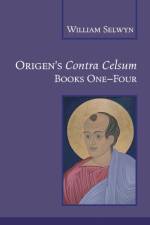
Presented here for the first time in years is Selwyn's edition to the Greek text of the first four books of Origen's 'Contra Celsum', the culmination of the apologetic movement of the second and third centuries and one of the great works of the early Eastern Church.
This long-standing series provides the guild of religion scholars a venue for publishing aimed primarily at colleagues. It includes scholarly monographs, revised dissertations, Festschriften, conference papers, and translations of ancient and medieval documents. Works cover the sub-disciplines of biblical studies, history of Christianity, history of religion, theology, and ethics. Festschriften for Karl Barth, Donald W. Dayton, James Luther Mays, Margaret R. Miles, and Walter Wink are among the seventy-five volumes that have been published. Contributors include: C. K. Barrett, Francois Bovon, Paul S. Chung, Marie-Helene Davies, Frederick Herzog, Ben F. Meyer, Pamela Ann Moeller, Rudolf Pesch, D. Z. Phillips, Rudolf Schnackenburgm Eduard Schweizer, John Vissers
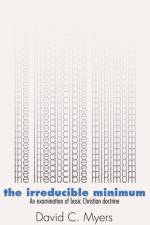
'The Irreducible Minimum' is a careful examination of the eleven essential doctrines, including the doctrine of the Bible, Dispensationalism, Theology Proper and Trinitarianism, Christology, Holy Spirit, Angels, Sin, Salvation, the Church, and the doctrine of last things, from a pre-tribulational, pre-millennial viewpoint.
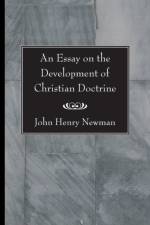
John Henry Cardinal Newman begins the 'Essay' with a definition of development, pointing out that the real problem is how to distinguish true developments from corruptions and decays. He then goes on to a sweeping consideration of the growth and development of doctrine in the Catholic Church, from the time of the Apostles to Newman's own era. He demonstrates that the basic "rule" under which Christianity proceeded through the centuries is to be found in the principle of development, and emphasized that throughout the entire life of the Church this law of development has been in effect and safeguards the faith from any real corruption.
In the first part of this intriguing study, McNally treats the complex social, intellectual, and theological factors that affected biblical interpretation in the early medieval period. In the second part he provides a classified bibliography of commentaries from the period.
"'The Resultant Greek Testament' is intended to exhibit in a compact and intelligible form the latest results of textual criticism. . . . I have judged it more convenient to the reader to put in the body of the page the text on which the majority of modern critics are agreed, relegating to the footnotes readings less numerously or less weightily sanctioned." from the PrefaceWeymouth based this "majority reading" text on the following editions: Lachmann (1842-50), Tregelles (1857-72), Tischendorf (1869-72), Alford (1874-77), the Bale edition (1880), Westcott and Hort (1881), the Revised Version readings (1881), Lightfoot's Pauline epistles (1865-75), Ellicott's Pauline epistles (1867-80), and Weiss's text of Matthew (1876). In addition, Weymouth notes that he made use of Vaticanus, Sinaiticus, and other uncials that earlier editors did not have available. For comparison, he used the Compultusian Polyglot, Robert Stephens' folio of 1550, and the Textus Receptus.
The ministry of William H. Weiblen at Wartburg Theological Seminary bridges the generations from the time of J. Michael Reu and the second generation of Fritschels to the present time of celebration at the seminary's sesquicentennial. This book captures the wisdom of Dr. Weiblen as he reflects on the missionary history of the seminary and the course of his own life. 'The Air I Breathe Is Wartburg Air' includes intimate conversations with Bill Weiblen and offers a substantial collection of his theological writings, addresses, and sermons.
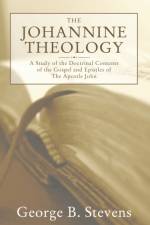
From the author's Preface:The aim of this volume is to present, in systematic form, the theological contents of the Gospel and Epistles of John. . . . No treatise which purports to furnish a critical and systematic presentation of the theology of John has hitherto been composed in English. . . . It can hardly be doubted, therefore, that there is room in our theological literature for an exposition of the theology of John, which shall set forth the salient features of this great type of New Testament teaching. . . . I shall be gratified if this volume serves in some measure to elucidate and emphasize some of those [Johannine] conceptions, to make more manifest their great depth and richness, and to illustrate their value for Christian thought and life.
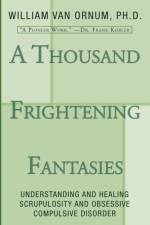
This book is based on an international survey, which offers hope and help to countless people suffering from invalid fears and anxieties about sin, guilt and punishment.
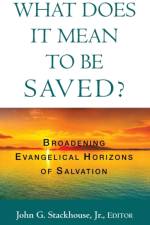
Since the birth of evangelicalism in the eighteenth century, it has defined itself as a movement keenly interested in salvation. What, however, has the evangelical understanding of salvation been? What is it today? What should it be? What Does It Mean to Be Saved? marshals leading evangelical scholars to probe these questions with the goal of encouraging a more holistic understanding of salvation. Each chapter introduces a distinctive point of view on an aspect of redemption. Issues addressed in the volume include individual and corporate salvation, salvation with regard to women, the poor, the oppressed, and the natural world.
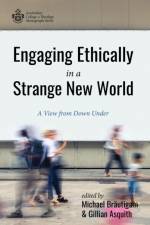
Christians in Australia are facing serious ethical issues. Contentious topics, such as same-sex marriage, the assisted-dying bill, gender fluidity, and attempts to censor Jesus-talk in the schoolyard, present serious challenges and require us to think more deeply about how we are to live in a strange new world. This volume presents papers from the 2018 Paradosis Conference at Melbourne School of Theology and brings together a number of voices to explore doctrinal foundations and their practical outworkings in the fields of biblical studies, systematic and practical theology, Islamic studies, and medical ethics. Contributors examine questions of contemporary interest as they pertain to both the Christian community itself and to Christian engagement with wider society. Part 1 comprises papers examining ethics in the Old Testament wisdom books, decision-making according to an early church model, the theological history of ethics, and the pastoral implications of Jonathan Edwards's reflections on beauty. Part 2 investigates the ramifications for Christian social ethics of the paradox of Jesus's stringent moral commands and his inclusive lifestyle, Islam's approach to homosexuality, virtue ethics as an alternative narrative within the "assisted-dying" debate, and the role of docility as a virtue in teaching, pastoral theology, and mission.
Abonner på vårt nyhetsbrev og få rabatter og inspirasjon til din neste leseopplevelse.
Ved å abonnere godtar du vår personvernerklæring.