


Gjør som tusenvis av andre bokelskere
Abonner på vårt nyhetsbrev og få rabatter og inspirasjon til din neste leseopplevelse.
Ved å abonnere godtar du vår personvernerklæring.Du kan når som helst melde deg av våre nyhetsbrev.

Women's letters and memoirs were until recently considered to have little historical significance. Many of these materials have disappeared or remain unarchived, often dismissed as ephemera. This collection showcases the range of critical debates that animate thinking about women's archives in Canada.
Considers the themes of agency and time through the burgeoning, interdisciplinary field of the environmental humanities. Fourteen essays and a photo album cover topics such as environmental practices and history, temporal literacy, graphic novels, ecocinema, ecomusicology, animal studies, Indigeneity, and green conservatism.
There are many things we can choose to do about climate change, including doing nothing at all. All of them have consequences, many of which will be unforeseen. If we could foretell more accurately what would happen to the climate in the future, our choices might be clearer, if not necessarily easier to make. Unfortunately, predicting future climate change is fraught with uncertainty, and we will be forced to make choices in the face of that uncertainty. To what extent are we motivated in this difficult process by a desire to do the right thing ? And how do we decide what is the right thing to do? The answer to these questions depends on whose ethical interests are considered. What is best for a Canadian living in the last decade of the twentieth century even supposing we could discover what that is might not be best for a Somali, or for our great-grandchildren, or for the rain forest of the Amazon or the kangaroos of Australia. Decisions about what to do about global warming will therefore be influenced by how much relative weight we give to the ethical interests of Canadians, Somalis, grandchildren, rain forests, kangaroos and a host of other variables. Weighing these competing interests is an exercise in applied ethics. This book examines the role that ethics can and should play in our decisions about how to deal with global warming.
Explores the key roles that culture, arts, and the humanities play in supporting healthy water-based ecology and provides local, global, and Indigenous perspectives on water that help to guide our societies in a time of global warming.
Contemporary notions of identity, belonging, and citizenship are established, contested, and legitimized within sites and institutions of public culture, heritage, and representation that reflect integration with the land, transforming landscape into landmarks.
Focuses on both critical animal studies and posthumanism, two intertwining conversations that ask us to reconsider common sense understandings of other animals and what it means to be human.
Explores some of the latest developments in the literary and cultural practices of Canadians of Asian heritage. The essays in this collection examine the ways in which Asian Canadian authors (such as Larissa Lai and Shani Mootoo) and artists (such as Ken Lum and Paul Wong) have gone beyond autoethnography, or ethnographic autobiography.
Tells the story of three generations of a Jewish Hungarian family whose fate has been inextricably bound up with the turbulent history of Europe, from the First World War through the Holocaust and the communist takeover after World War II, to the family's dramatic escape and emmigration to Canada.
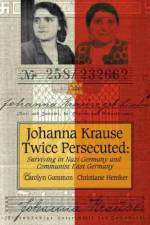
Persecuted as a Jew, both under the Nazis and in post-war East Germany, Johanna Krause (19072001) courageously fought her way through life with searing humour and indomitable strength of character. Johanna Krause Twice Persecuted is her story. Born in Dresden into bitter poverty, Krause received little education and worked mostly in shops and factories. In 1933, when she came to the defence of a Jewish man being beaten by the brownshirts, Krause was jailed for insulting the Furer After a secret wedding in 1935, she was arrested again with her husband, Max Krause, for breaking the law that forbade marriage between a Jew and an Aryan. In the years following, Johanna endured many atrocitiesa forced abortion while eight months pregnant and subsequent sterilization, her incarceration in numerous prisons and concentration camps, including Ravensbr"e;ck, the notorious womens camp near Berlin, and a death march. After the war, the Krauses took part enthusiastically in building the new socialist republic of East Germanyuntil 1958, when Johanna recognized a party official as a man who had tried to rape and kill her during the war. Thinking the communist party would punish the official, Joanna found out whose side the party was on and was subjected to anti-Semitic attacks. Both she and her husband were jailed and their business and belongings confiscated. After her release she lived as a persona non grata in East Germany, having been evicted from the communist party. It was only in the 1990s, after the reunification of Germany, that Johanna saw some justice. Originally published as Zweimal Verfolgt , the book is the result of collaboration between Johanna Krause, Carolyn Gammon, and Christiane Hemker. Translated by Carolyn Gammon, Johanna Krause Twice Persecuted will be of interest to scholars of auto/biography, World War II history, and the Holocaust.
Wrestles with the problems of situating Canadian literature in the ongoing debates about culture, identity, and globalization, and of applying the slippery term of postcolonialism to Canadian literature. The topics range in focus from discussions of specific literary works to general theoretical contemplations.
The Homing Place calls for a vital process of listening to the stories that Indigenous peoples have been telling about this continent since before the arrival of European Settlers centuries ago. Moreover, the text performs this process, creating a model for listening and incorporating Indigenous stories, throughout.
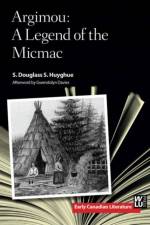
Both an adventure-laced captivity tale and an impassioned denunciation of the marginalization of Indigenous culture in the face of European colonial expansion, Douglass Smith Huyghue's Argimou (1847) is the first Canadian novel to describe the fall of eighteenth-century Fort Beausjour and the expulsion of the Acadians. Its integration of the untamed New Brunswick landscape into the narrative, including a dramatic finale that takes place over the reversing falls in Saint John, intensifies a sense of the heroic proportions of the novel's protagonist, Argimou. Even if read as an escapist romance and captivity tale, Argimou captures for posterity a sense of the Tantramar mists, boundless forests, and majestic waters informing the topographical character of pre-Victorian New Brunswick. Its snapshot of the human suffering occasioned by the 1755 expulsion of the Acadians, and its appeal to Victorian readers to pay attention to the increasingly disenfranchised state of Indigenous peoples, make the novel a valuable contribution to early Canadian fiction. Situating the novel in its eighteenth-century historical and geographical context, the afterword to this new edition foregrounds the author's skilful adaptation of historical-fiction conventions popularized by Sir Walter Scott and additionally highlights his social concern for the fate of Indigenous cultures in nineteenth-century Maritime Canada.
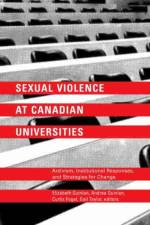
Takes up the topic of sexual violence on campus and explores its causes and consequences as well as strategies for its elimination. Drawing together original case studies, empirical research, and theoretical writing, this interdisciplinary collection charts the costs of campus sexual violence on students and university communities.
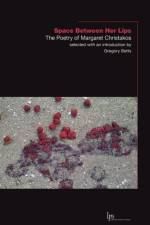
Space Between Her Lips presents the first selected works of one of Canada's most important poets of the last few decades. Margaret Christakos writes vibrant, exciting, and intellectually challenging poetry. She plays language games that bring a probing and disturbing humour to serious themes that range from childhood and children to women in contemporary techno-capitalist society to feminist literary theory, and so much more. Gregory Betts introduction to the collection highlights her formal diversity and her unique combination of feminist and avant-garde affinities. He connects the geographies of her life including Northern Ontario where she was raised, downtown Toronto where she studied with cutting-edge authors and artists like bpNichol and Michael Snow, and Montreal where she integrated with the country s leading feminist authors and thinkers with her polyphonic experimentation. While traversing the problem of bifurcated identities, Christakos is funny at a deeply semiotic level, wickedly wry, exposing something about the way we think by examining the way we speak of it. In her afterword, Christakos maps out a philosophy of writing that highlights her self-consciousness of the foibles of language but also deep concern for the themes she writes about, including her career-length exploration of self-discovery, hetero-, queer and bi-sexual sexualities, motherhood, self-care, and linguistic alienation. Indeed, Margaret Christakos is a whole-body poet, writing with the materiality of language about the movement of interior thought to embodied experience in the world.
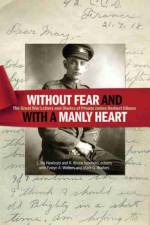
Private James Herbert (Herb) Gibson was 26 years old when he volunteered for service in the Canadian Expeditionary Force in the First World War. "Without fear and with a manly heart" collects his personal letters and diaries as well as those sent to him by family and friends. They reveal his beliefs, hopes, realizations, and tragedies.
Reorients conventional understandings of Canadian First World War poetry. By focusing on poems about the Canadian soldier, Battle Lines reveals the period's robust literary activity and its conflicting poetic renditions of battle romance and modernist fractiousness.
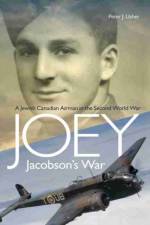
In the spring of 1940 Canada sent hundreds of highly trained volunteers to serve in Britain's Royal Air Force as it began a concerted bombing campaign against Germany. Nearly half of them were killed or captured within a year. This is the story of one of those airmen, as told through his own letters and diaries as well as those of his family and friends. Joey Jacobson, a young Jewish man from Westmount on the Island of Montreal, trained as a navigator and bomb-aimer in Western Canada. On arriving in England he was assigned to No. 106 Squadron, a British unit tasked with the bombing of Germany. Joey Jacobson's War tells, in his own words, why he enlisted, his understanding of strategy, tactics, and the effectiveness of the air war at its lowest point, how he responded to the inevitable battle stress, and how he became both a hopeful idealist and a seasoned airman. Jacobson's written legacy as a serviceman is impressive in scope and depth and provides a lively and intimate account of a Jewish Canadian's life in the air and on the ground, written in the intensity of the moment, unfiltered by the memoirist's reflection, revision, or hindsight. Accompanying excerpts from his father's diary show the maturation of the relationship between father and son in a dangerous time.
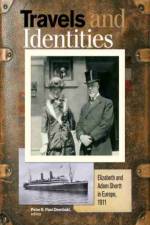
The diaries and letters presented in this volume reveal the multifaceted nature of Adam and Elizabeth Shortt, from public figures to difficult employers to a couple who couldn't help but live beyond their means.
The essays in this book make novel contributions to the growing literature on post-secularism and on religion and the public sphere. The authors additionally present new areas of inquiry for future research on the Baha'i faith.
Archetypes from Underground: Notes on the Dostoevskian Self uncovers archetypal imagery in Dostoevskys stories and novels and argues that archetypes bring a new dimension to our understanding and appreciation of his works. In this interdisciplinary study, Harrison analyzes selected texts in light of fresh research in Dostoevsky studies, cultural history, comparative mythology, and depth psychology. He argues that one of Dostoevsky's chief concerns is the crisis of modernity, and that he dramatizes the conflicts of the modern self by depicting the dynamic, transformative nature of the psyche. Harrison finds the language and imagery of archetypes in Dostoevskys characters, symbols, and themes, and shows how these resonate in remarkable ways with the archetypes of self, persona, and the shadow. He demonstrates that major themes in Dostoevsky coincide with Western esotericism, such as the complementarity of opposites, transformation, and the symbolism of death and resurrection. These arguments inform a close reading of several of Dostoevskys texts, including The Double , Notes from Underground , and The Brothers Karamazov . Archetypes inform these works and others, bringing vitality to Dostoevskys major characters and themes. This research represents a departure from the religious and philosophical questions that have dominated Dostoevsky studies. This work is the first sustained analysis of Dostoevskys work in light of archetypes, framing a topic that calls for further investigation. Archetypes illumine the authors ideas about Russian national identity and its faith traditions and help us redefine our understanding of Russian realism and the prominent place Dostoevsky occupies within it.
An interdisciplinary collaboration of Canadian and American Jewish studies scholars who compare the experience of Jews along the chronological spectrum in their respective countries. Of particular interest to them is determining the factors that shaped the Jewish communities on either side of the common border, and why they differed.
Explores how women from a variety of religious and cultural communities have contributed to the richly textured, pluralistic society of Canada. Focusing on women's religiosity, it examines the ways in which they have carried and conserved, and brought forward and transformed their cultures - old and new - in modern Canada.
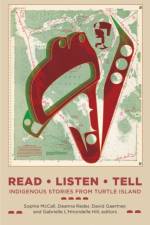
Brings together an extraordinary range of Indigenous stories from across Turtle Island (North America). From short fiction to as-told-to narratives, from illustrated stories to personal essays, these stories celebrate the strength of heritage and the liveliness of innovation.
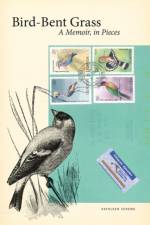
Bird-Bent Grass chronicles an extraordinary motherdaughter relationship that spans distance, time, and, eventually, debilitating illness. Personal, familial, and political narratives unfold through the letters that Geeske Venema-de Jong and her daughter Kathleen exchanged during the late 1980s and through their weekly conversations, which started after Geeske was diagnosed with Alzheimer's disease twenty years later. In 1986, Kathleen accepted a three-year teaching assignment in Uganda, after a devastating civil war, and Geeske promised to be her daughter's most faithful correspondent. The two women exchanged more than two hundred letters that reflected their lively interest in literature, theology, and politics, and explored ideas about identity, belonging, and home in the context of cross-cultural challenges. Two decades later, with Geeske increasingly beset by Alzheimer's disease, Kathleen returned to the letters, where she rediscovered the evocative image of a tiny, bright meadow bird perched precariously on a blade of elephant grass. That image of simultaneous tension, fragility, power, and resilience sustained her over the years that she used the letters as memory prompts in a larger strategy to keep her intellectually gifted mother alive. Deftly woven of excerpts from their correspondence, conversations, journal entries, and email updates, Bird-Bent Grass is a complex and moving exploration of memory, illness, and immigration; friendship, conflict, resilience, and forgiveness; cross-cultural communication, the ethics of international development, and letter-writing as a technology of intimacy. Throughout, it reflects on the imperative and fleeting business of being alive and loving others while they're ours to hold.
Employment for former prisoners is a critical pathway toward reintegration into society and is central to the processes of desistance from crime. Nevertheless, the economic climate in Western countries has aggravated the ability of former prisoners and people with criminal records to find gainful employment. After Prison opens with a former prisoner s story of reintegration employment experiences. Next, relying on a combination of research interviews, quantitative data, and literature, contributors present an international comparative review of Canada s evolving criminal record legislation; the promotive features of employment; the complex constraints and stigma former prisoners encounter as they seek employment; and the individual and societal benefits of assisting former prisoners attain gainful employment. A main theme throughout is the interrelationship between employment and other central conditions necessary for safety and sustenance. This book offers suggestions for criminal record policy amendments and new reintegration practices that would assist individuals in the search for employment. Using the evidence and research findings of practitioners and scholars in social work, criminology and law, psychology, and other related fields, the contributors concentrate on strategies that will reduce the stigma of having been in prison; foster supportive relationships between social and legal agencies and prisons and parole systems; and encourage individually tailored resources and training following release of individuals.
Social justice requires that people have both food security and food sovereignty. Eat Local, Taste Global offers solutions to identified contradictions that include making farmers' markets more inclusive, improving conditions for migrant farm workers, and making alternative forms of agriculture more feasible.
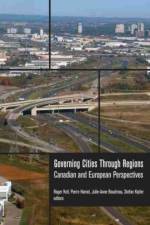
Broadens and deepens our understanding of metropolitan governance through an innovative comparative project that engages with Anglo-American, French, and German literatures on the subject of regional governance.
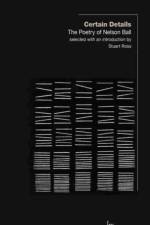
Nelson Ball has had a significant impact on contemporary Canadian poetry not only as a poet but as an editor, with his Weed/Flower Press in the 1960s and 70s. Certain Details provides a major overview of the breadth and many paths of Ball's poetry over six decades. This selection of his work includes his trademark minimalist poems in addition to longer works and sequences; it spans nature poems, homages, meditations, narratives, found poems, and visual poems. The book contains selections from all of Ball's major collections as well as works that have previously appeared only in chapbook or ephemeral form. In a generous and thoughtful afterword, and for the first time in print, Ball discusses his processes, influences, and aesthetics. The book is introduced by editor and poet Stuart Ross, who offers a personal entry point into Nelson Ball's extraordinary oeuvre.
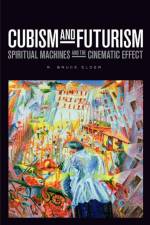
Cubism and futurism were closely related movements that vied with each other in the economy of renown. Perception, dynamism, and the dynamism of perceptionthese were the issues that passed back and forth between the two. Cubism and Futurism: Spiritual Machines and the Cinematic Effect shows how movement became, in the traditional visual arts, a central factor with the advent of the cinema: gone were the days when an artwork strived merely to lift experience out the realm of change and flow. The cinema at this time was understood as an electric art, akin to X-rays, coloured light, and sonic energy. In this book, celebrated filmmaker and author Bruce Elder connects the dynamism that the cinema made an essential feature of the new artwork to the new science of electromagnetism. Cubism is a movement on the cusp of the transition from the Cartesian world of standardized Cartesian coordinates and interchangeable machine parts to a Galvanic world of continuities and flows. In contrast, futurism embraced completely the emerging electromagnetic view of reality. Cubism and Futurism examines the similarity and differences between the two movements' engagement with the new science of energy and shows that the notion of energy made central to the new artwork by the cinema assumed a spiritual dimension, as the cinema itself came to be seen as a pneumatic machine.
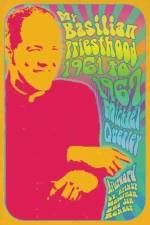
My Basilian Priesthood is a memoir of Michael Quealey's six years in the order in the 1960s. During his priesthood, Quealey was director of the Newman Centre at the University of Toronto and engaged in reforming the mass and in other theological matters. The 1960s was a time of questioning traditions, including the role of Biblical criticism, the nature of liturgy, the place of women in the Church and in society, and the power of community living and decision-making. Quealey was deeply involved in all these matters, and sought to fulfill his commitment to service and balance that with his faith and vows of obedience to the institution of the Church. Written decades after the events he describes, the book is his reflection on the excitement of the times and the tensions created when tradition encountered new ideas and new forms of communal living. Here's a story that blends Toronto history with Catholic Church history and an inside look at 1960s counterculture.
Abonner på vårt nyhetsbrev og få rabatter og inspirasjon til din neste leseopplevelse.
Ved å abonnere godtar du vår personvernerklæring.