
Gjør som tusenvis av andre bokelskere
Abonner på vårt nyhetsbrev og få rabatter og inspirasjon til din neste leseopplevelse.
Ved å abonnere godtar du vår personvernerklæring.Du kan når som helst melde deg av våre nyhetsbrev.

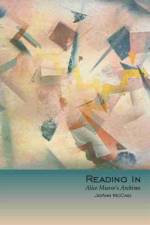
Collections of authors' manuscripts and correspondence have traditionally been used in ways that further illuminate the published text. JoAnn McCaig sets out to show how archival materials can also provide fascinating insights into the business of culture, and reveal the individuals, institutions, and ideologies that shape the author and her work.
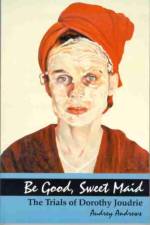
January 21, 1995: Dorothy Joudrie is arrested for attempting to murder her estranged husband. Soon after, Audrey Andrews begins to write her book. Audrey and Dorothy had known each other as children, but the identification of Andrews with Joudrie goes beyond merely the accident of a childhood acquaintance. It has to do with being subjected to the same societal constraints placed on girls and women during the years immediately following World War II, the years in which they had prepared for their adult lives. Expectations, placidly accepted then, are now seen as unrealistic and unreasonable. Did these expectations have some part in causing the tragedy in Dorothy Joudries life? When Andrews attempted to understand why Dorothy Joudrie had tried to kill her husband, and to write Joudries story, she began to examine her own life, her own expectations those she had of herself and those others had of her. She also realized that telling the story of anyone is an intricate and often ephemeral pursuit. Any story she wrote could only be her version of Joudries experience. Nevertheless, it was important to be as honest as she could about her interpretation of that life. She determined to show carefully and accurately the damage that had been done to one woman damage that is still being done to many others through prejudice, attitudes, traditions and the institutions that are still the foundation of our society, and of our lives, everyday. The result is a fascinating account of events leading up to the trial, the trial itself and the effect of Joudries trial on the life of Audrey Andrews.
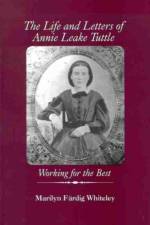
A collection of the writings of an articulate woman who is both ordinary and extraordinary. She paints a vivid picture of the joys and hardships of growing up on a pioneer farm in Canada during the last century and documents her spiritual and educational quests and conquests.
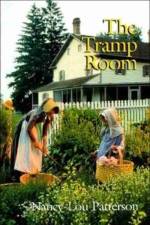
A young girl falls asleep in the Joseph Schneider Haus and wakes up in the 1850s. At the same time, a tramp boy seeks sanctuary from a cruel master. Caught in the past, the young girl, Elizabeth Salisbury, is thrust into the drama of the tramp boy s struggle to remain free.
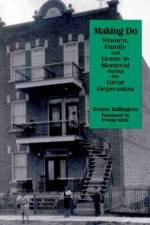
By interviewing Montreal francophone women who were already married at the beginning of the 1930s, and by examining their principal responsibilities, Denyse Baillargeon uncovers the alternative strategies these housewives used to counter poverty.
Shows that ethical questions can be resolved by examining the ethical principles present in each culture, critically assessing each value, and identifying common values found within all traditions. The book encourages the development of global awareness and sensitivity to and respect for the diversity of peoples and their values.
Much work done by women theorists on traditional social and political topics such as revolution, abolition of slavery, public health care, war and militarism is little known or difficult to obtain. This anthology contains significant excerpts from the pens of women like Stael, Wollstonecraft, Nightingale, Chatelet and others.
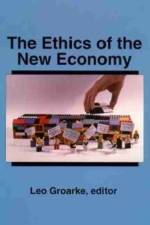
Is restructuring an underhanded way to make the rich richer and the poor poorer? Or is it necessary, although bitter, medicine for an ailing economy? In The Ethics of the New Economy: Restructuring and Beyond, a range of contributors tackle thorny ethical issues.
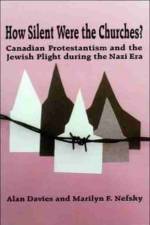
Winner of the 1997 Jewish Book Committee award for scholarship on a Canadian Jewish subject. Ever since Abella and Troper (None Is too Many, 1982) exposed the anti-Semitism behind Canada s refusal to allow Jewish escapees from the Third Reich to immigrate, the Canadian churches have been under a shadow. Were the churches silent or largely silent, as alleged, or did they speak? In How Silent Were the Churches? a Jew and a Christian examine the Protestant record. Old letters, sermons and other church documents yield a profile of contemporary Protestant attitudes. Countless questions are raised How much anti-Semitism lurked in Canadian Protestantism? How much pro-German feeling? How accurately did the churches of Canada read the signs of the times? Or did they bury their heads in the sand? Davies and Nefsky discover some surprising answers. The theologies and the historical and ethnic configurations of Protestant Canada, encompassing religious communities from the United Church to the Quakers, are brought into relief against the background of the Great Depression, the rise of fascism in Europe and the resurgence of nativism in Canadian society. The authors conclude their study with an evaluation of the limits to Protestant influence in Canada and the dilemmas faced by religious communities and persons of conscience when confronted by the realities of power.
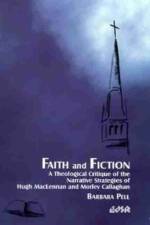
Up to now, there has been no substantial application of theological criticism to the works of Hugh MacLennan and Morley Callaghan, the two most important Canadian novelists before 1960. This volume is a significant contribution to the relatively new field studying the relation between religion and literature in Canada.
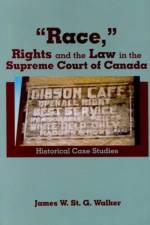
Four cases in which the legal issue was "race" drawn from the period between 1914 and 1955, are intimately examined to explore the role of the Supreme Court of Canada and the law in the racialization of Canadian society.
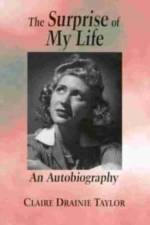
It s an autobiography! If I tell you what s in it you won t read the book. Claire Drainie Taylor Or would you? Maybe you d be intrigued by the progression of a life begun as an unexceptional little girl born to a middle-class Jewish Canadian couple in a small prairie town who, at age sixteen, married a refined Englishman, and survived the Great Depression, partly alone in a shack in the woods of Vancouver Island. Or how, only a few months after returning to Vancouver, with no training and minimal education, this same young woman walked on stage at one of Canada s finest old theatres, and went on to a successful thirty-year career as an actress and radio dialogue writer. Having been compelled by her family to write her memoir, it wasn t until she d finished and reread her manuscript that Claire Drainie Taylor realized what an extraordinary life she d led. Her descriptions of the many fascinating incidents that make up her story, and how she dealt with them, revealed herself to herself in a way that illuminates what she calls The Surprise of My Life.
Contributors to this volume use a holistic approach comprising the four elements - earth, water, air, and fire - to address the diverse themes and variations in First Nations communities across Canada.
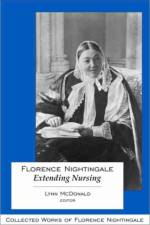
Relates the introduction of professional training and standards outside St Thomas', beginning with London hospitals and others in Britain, followed by hospitals in Europe, America, Australia and Canada. Also presented is material on work in India, Japan and China.
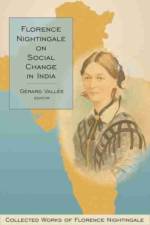
Shows the shift of focus that occurred during Florence Nightingale's more than forty years of work on public health in India. While the focus in the preceding volume, Health in India, was top-down reform, this book documents concrete proposals for self-government.
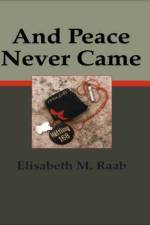
It is Easter Sunday, April 1945, early in the morning, maybe just dawn. We stand still, like frozen grey statues. Us. Seven hundred and thirty women, wrapped in wet, grey, threadbare blankets, standing in the rain. Our blankets hang over our heads, drape down to the soil. We hold them closed with our hands from the inside, leaving only a small opening to peer out, so that we save the precious warmth of our breath. So begins the author s sojourn, her search for freedom that begins with the chaotic barrenness in which she found herself after her liberation on Easter Sunday, April 1945, and takes her across several continents and half a lifetime. Raab paints a brief yet moving picture of her idyllic life before her internment and the shock and the horrors of Auschwitz, but it is in the images of life after her liberation, that Raab imparts her most poignant story a story told in a clear, almost sparse, always honest style, a story of the brutal, and, at times, the beautiful facts of human nature. This book will appeal to a number of audiences to readers interested in human nature under the most trying circumstances, to historians of World War II or Jewish history, to veterans and their families who lived through World War II, and to those interested in politics and the evils of political extremism.
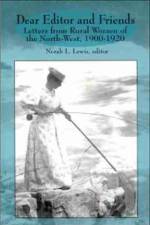
Through letters written to the women's pages in agricultural newspapers, rural women forged a vital network that supported, encouraged and educated women in ways to improve their rural lives. Their letters show how these rural women made significant and vital contributions to the settlement and development of the Canadian North-West.
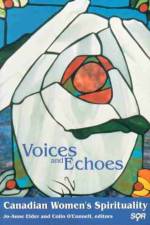
"Every time we raise our voices, we hear echoes." Jo-Anne Elder, from the Foreword Through short stories, journal entries and poetry, the women in Voices and Echoes explore the changing landscape of their spiritual lives. Experienced writers such as Lorna Crozier, Di Brandt and Ann Copeland, as well as strong new voices, appear to speak to each other as they draw from a wealth of personal resources to find a way to face life's questions and discover meaning in their lives. There is something familiar about these stories and poems - they echo those we've heard before and those we've half forgotten. Whether they search for a voice in a world where men monopolize or journey into painful memories to free the self from the past, they do not despair, they do not end. Individual entries become the whole story - an unending story of rebirth and reaffirmation. The book begins with an illuminating foreword that introduces readers to the cultural and philosophical background of many of the stories, and concludes with the reflections of scholars, writers and artists that are intended to provoke further discussion.
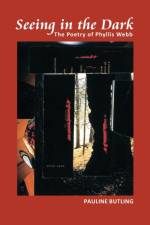
Poet Phyllis Webb initiated new ways of seeing into the cultural "dark" of Western thought. By blurring the axis between "light" and "dark", she redefined in positive terms women's subjectivity and sexuality, which are traditionally assigned "dark" negative values.
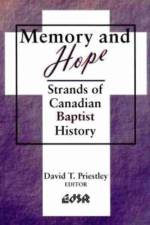
How are Baptists distinctive as a Christian denomination? Canadian Baptists, confronted with the question of discovering a common identity from the welter of strands of influence that make up their heritage, may infer several answers from the essays in Memory and Hope.
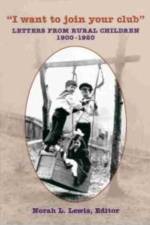
In letters written to the children's pages of newspapers, we hear the clear and authentic voices of real children who lived in rural Canada and Newfoundland between 1900 and 1920. Children tell us about their families, their schools, jobs and communities and the suffering caused by the terrible costs of World War I.
The Study of Religion in British Columbia is a story of enterprise, innovation and isolation. In this unique survey Brian J. Fraser examines the history and development of the institutions of higher education where religion is taught and describes the methods used to understand the religious dimension of human endeavour in Canada's westernmost province. Fraser analyzes the sources, development and persistence of two distinct approaches to the study of religion in British Columbia: theological studies and religious studies. He traces the early strength and recent expansion of theological studies, especially among conservative evangelical Christians, and sets the creation of British Columbia's only department of religious studies at the University of British Columbia in this context. He also describes the innovative curricula designed by several of the institutions for the study of religion in the province. Finally, he contends that the differing views on the nature of religion held by these institutions and their constituencies have led to a continuing isolation from each other. The Study of Religion in British Columbia is the latest volume in the Canadian Corporation for the Study of Religion's series on the study of religion in Canada. Readers interested in the rich diversity of personalities and perspectives that have shaped religious studies in British Columbia will find here a concise description of its evolution and a thought-provoking examination of its significance.
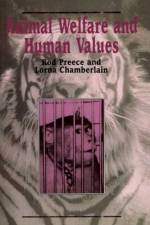
As the most populous province in Canada, Ontario is a microcosm of the animal welfare issues which beset Western civilization. The authors of this book, chairman and vice-chairman, respectively, of the Ontario Society for the Prevention of Cruelty to Animals, find themselves constantly being made aware of the atrocities committed in the Society s jurisdiction. They have been, in turn, puzzled, exasperated and horrified at humanity s cruelty to our fellow sentient beings. The issues discussed in this book are the most contentious in animal welfare disputes animal experimentation, fur-farming and trapping, the use of animals for human entertainment and the conditions under which animals are raised for human consumption. They are complex issues and should be thought about fairly and seriously. The authors, standing squarely on the side of the animals, suggest community and belonging as concepts through which to understand our relationships to other species. They ground their ideas in Wordsworth s primal sympathy and Jung s unconscious identity with the animal realm. The philosophy developed in this book embraces common sense and compromise as the surest paths to the goal of animal welfare. It requires respect and consideration for other species while acknowledging our primary obligations to our fellow humans.
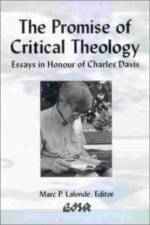
Written in tribute to one of the foremost Catholic theologians in the English-speaking world, the essays in The Promise of Critical Theology address the question: Can critical theology secure its critical operation without undermining its foundation in religious tradition and experience? Is "critical theology" simply an oxymoron when viewed from both sides of the equation? From Marc Lalonde's introductory essay which delimits Davis' fundamental position, that the primary task of critical theology is the critique of religious orthodoxy, the essays examine Davis' distinction between faith and belief and build upon the promise of critical theology as inextricably bound to the promise of faith. They ask: What is its promise? What particular religious ideas, themes, stories are appropriate for its concrete expression? How can the community of faith receive its transformative message? What might be the contribution of other religious traditions and philosophies? Essays by Paul Lakeland, Dennis McCann, Kenneth Melchin, Michael Oppenheim and Marsha Hewitt respond to these and other questions and critically relate Davis' work to ongoing developments in modern theology, critical theory, philosophy and the social sciences. Their diversity attests to the comprehensive scope of Davis' thought and exemplifies the progressive character of contemporary religious discourse. They honour Davis and illuminate the promise of critical religious thinking in itself.
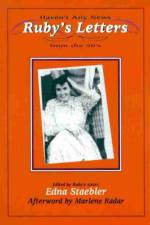
In 1957 when Edna Staebler first began to collect and edit letters from her sister Ruby, she did so simply because she was sure that others would enjoy reading them as much as her own family did. Over fifty years later, the letters remain a joy to read and reclaim the ordinary voice of a housewife.
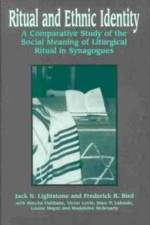
In this innovative and comprehensive collection of essays Jack Lightstone and Frederick Bird document and interpret ritual practice among contemporary Canadian Jews. They particularly focus on the character and meaning of the public performance of the Sabbath liturgy in six urban Canadian synagogues.
Examines the character, use and social meaning of the formalised rhetoric which pervades the "Babylonian Talmud". This title explores how the editors of the "Talmud" employ a consistent and highly laconic code of formalised linguistic terms and literary patterns to create the "Talmud's" renowned dialectical, analytic 'essays'.
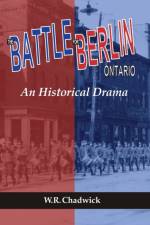
In August 1914, Berlin, Ontario, settled largely by people of German origin, was a thriving, peaceful city. By the spring of 1915 it was a city torn apart by the tensions of war. By September 1916, Berlin had become Kitchener. It began with the need to raise a battalion of 1,100 men to support the British war effort. Meeting with resistance from a peace-loving community and spurred on by the jingoistic nationalism that demanded troops to fight the hated Hun, frustrated soldiers began assaulting citizens in the streets and, on one infamous occasion, a Lutheran clergyman in his parsonage. Out of this turmoil arose a movement to rid the city of its German name, and this campaign, together with the recruiting efforts, made 1916 the most turbulent year in Kitchener s history. This is the story of the men and women involved in these battles, the soldiers, the civic officials, the business leaders, and the innocent bystanders, and how they behaved in the face of conditions they had never before experienced.
Abonner på vårt nyhetsbrev og få rabatter og inspirasjon til din neste leseopplevelse.
Ved å abonnere godtar du vår personvernerklæring.