








Gjør som tusenvis av andre bokelskere
Abonner på vårt nyhetsbrev og få rabatter og inspirasjon til din neste leseopplevelse.
Ved å abonnere godtar du vår personvernerklæring.Du kan når som helst melde deg av våre nyhetsbrev.

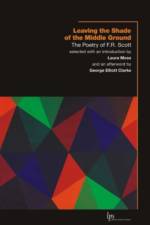
Leaving the Shade of the Middle Ground contains thirty-five of F.R. Scotts poems from across the five decades of his career. Scotts artistic responses to a litany of social problems, as well as his emphasis on nature and landscapes, remain remarkably relevant. Scott weighed in on many issues important to Canadians today, using different terms, perhaps, but with no less urgency than we feel now: biopolitics, neoliberalism, environmental concerns, genetic modification, freedom of speech, civil rights, human rights, and immigration. Scott is best remembered for The Canadian Authors Meet, W.L.M.K, and Laurentian Shield, but his poetic oeuvre includes significant occasional poems, elegies, found poems, and pointed satires. This selection of poems showcases the politics, the humour, and the beauty of this central modernist figure. The introduction by Laura Moss and the afterword by George Elliott Clarke provide two distinct approaches to reading Scotts work: in the contexts of Canadian modernism and of contemporary literary history, respectively.
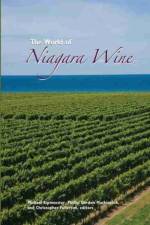
A transdisciplinary exploration of the Niagara wine industry. It explores the history and regulation of wine production as well as its contemporary economic significance. It examines the social and cultural ramifications of Niagara's reliance on grapes and wine as an economic motor for the region.
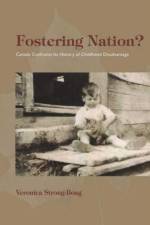
Offers a comprehensive perspective on Canada's provision for marginalized youngsters from the nineteenth to the twenty-first century. This title examines kin care, institutions, state policies, birth parents, foster parents, and foster youngsters, reminding that children's welfare cannot be divorced from that of their parents and communities.
Presents a collection of interdisciplinary essays that examine the various contexts - political, social, and cultural - that have shaped the study of Canadian literature and the role it plays in our understanding of the Canadian nation-state.
Gathers the work of scholars and performance practitioners who together explore questions about the oral, written, and visual. The book includes the voices of oral performance practitioners, while the scholarship of many of the academic contributors is informed by their participation in oral storytelling.
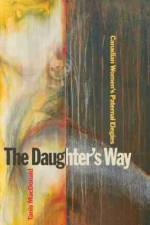
Investigates negotiations of female subjectivity in twentieth-century Canadian women's elegies with an emphasis on the father's death as a literary and political watershed. This book examines the work of Dorothy Livesay, P K Page, Jay Macpherson, Margaret Atwood, Kristjana Gunnars, Lola Lemire Tostevin, Anne Carson, and Erin Mourie.
Argues that service deliverers have discretion in how policies are implemented, and the exercise of this discretion is how citizens experience policy - whether or not it is fair and reasonable, and discusses policy issues currently under debate in Canada.
The memoir of renowned Canadian composer John Beckwith recounts his more than sixty years in creative output and music education. His life story is a slice of Canadian cultural history. Canadian composer John Beckwith recounts his early days in Victoria, his studies in Toronto with Alberto Guerrero, his first compositions, and his later studies in Paris with the renowned Nadia Boulanger, of whom he offers a comprehensive personal view. In the memoir s central chapters Beckwith describes his activities as a writer, university teacher, scholar, and administrator. Then, turning to his creative output, he considers his compositions for instrumental music, his four operas, choral music, and music for voice. A final chapter touches on his personal and family life and his travel adventures. For over sixty years John Beckwith has participated in national musical initiatives in music education, promotion, and publishing. He has worked closely with performing groups such as the Orford Quartet and the Canadian Brass and conductors such as Elmer Iseler and Georg Tintner. A former reviewer for the Toronto Star and a CBC script writer and programmer in the 1950s and 60s, he later produced many articles and books on musical topics. Acting under Robert Gill and Dora Mavor Moore in student days and married for twenty years to actor/director Pamela Terry, he witnessed first-hand the growth of Toronto theatre. He has collaborated with the writers Jay Macpherson, Margaret Atwood, Dennis Lee, and bpNichol, and teamed repeatedly with James Reaney, a close friend. His life story is a slice of Canadian cultural history.
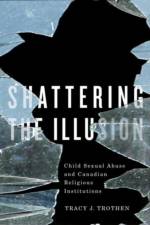
Shattering the Illusion is the first book to gather and comparatively analyze policies addressing child sexual abuse complaints in a selection of religious institutions in Canada. Although there is a substantial body of literature regarding Christianity and sexual abuse, very little of it focuses on religious institutions in Canada and their respective policies. In the foreword, Tracey J. Trothen summarizes the Cornwall Inquiry, out of which this book arose. She then examines the Roman Catholic Church, The United Church of Canada, the Anglican Church, the Mennonite Church, Islam, and the Canadian Unitarian Council/Unitarian Universalist Association, describing in detail the evolution and particular content of policies and procedures that address child sexual abuse complaints directed at paid and volunteer faith community representatives and/ or leaders. She identifies differences and common themes among the approaches taken by the institutions and provides a summary table for an accessible comparative overview. Child sexual abuse is not new, but the emergence of policies to address abuse complaints within religious institutions is. This book identifies significant and shared causal factors behind the emergence of policy and reviews their content carefully. This review will serve as a significant tool for furthering the development of such policies.
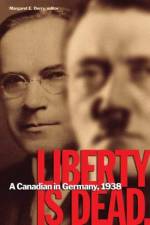
In the spring and summer of 1938, a third-generation German Canadian took an unforgettable road trip in Europe. Franklin Wellington Wegenast drove through Austria, Italy, France, Luxembourg, and Germany. He stopped to talk to people along the way and offered rides to those requesting them. He listened to what his passengers had to say about their lives, the conditions they lived under, and their views on what was happening in Europe. Wegenast heard Hitler speak in Innsbruck, and so witnessed first-hand Nazi power as Austrias independence crumbled. In his journal he noted the sheer animal force in the cries of the crowd, and foresaw the collision course that was shaping up between the Germans who supported Hitlers ideology and the rest of the world. Wegenast was unable to publish the journal he kept on his journey, and at the time of his death in 1942 it was in an unorganized state. It is published here for the first time alongside commentary that puts the entries in the contexts of Wegenasts life experiences, the prevailing attitudes of the day, both in North America and Europe, and modern scholarship on Germany in the 1930s. The book includes correspondence Wegenast had with a young German for a few months after his return to Canada, correspondence that reveals even more clearly the intensity of his feelings and his fear for the future. Newly released government documents and diaries kept by Germans during the interwar period have meant a considerable outpouring in recent years of material on German sentiment in the 1930s. Wegenasts diaries and letters corroborate modern assessments of German thinking and add insightful commentary, providing an outsider/insider view on the brewing conflict.
Aims to create a new public health approach to the prevention of weight-related disorders, one that counters the confusion and frustration from public policies, messages, and programs that recipients of prevention efforts often experience.
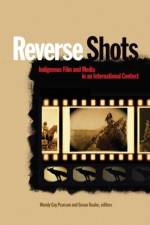
Offers a unique scholarly perspective on current work in the world of Indigenous film and media. Chapters focus primarily on Canada, Australia, and New Zealand and cover areas as diverse as the use of digital technology in the creation of Aboriginal art, and the healing effects of Native humour in First Nations documentaries.
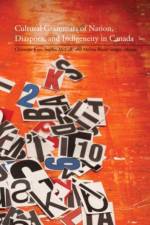
Considers how the terms of critical debate in literary and cultural studies in Canada have shifted with respect to matters of race, nation, and difference.
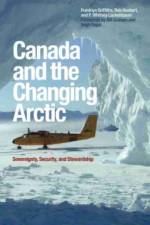
Global warming has had a dramatic impact on the Arctic environment, including the ice melt that has opened previously ice-covered waterways. State and non-state actors who look to the region and its resources with varied agendas have started to pay attention. Do new geopolitical dynamics point to a competitive and inherently conflictual race for resources? Or will the Arctic become a region governed by mutual benefit, international law, and the achievement of a widening array of cooperative arrangements among interested states and Indigenous peoples? As an Arctic nation Canada is not immune to the consequences of these transformations. In Canada and the Changing Arctic: Sovereignty, Security, and Stewardship , the authors, all leading commentators on Arctic affairs, grapple with fundamental questions about how Canada should craft a responsible and effective Northern strategy. They outline diverse paths to achieving sovereignty, security, and stewardship in Canadas Arctic and in the broader circumpolar world. The changing Arctic region presents Canadians with daunting challenges and tremendous opportunities. This book will inspire continued debate on what Canada must do to protect its interests, project its values, and play a leadership role in the twenty-first-century Arctic. Forewords by Senator Hugh Segal and former Minister of Foreign Affairs and of National Defence Bill Graham.
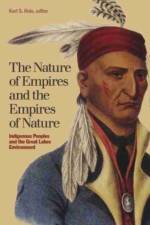
Explores the power of Nature and the attempts by Empires (United States, Canada, and Britain) to control it from Indigenous or Indigenous influenced perspectives. This title hopes to inspire ways of looking at the Great Lakes watershed and the people and empires contained within it.
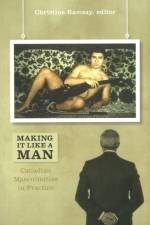
Includes a collection of essays on the practice of masculinities in Canadian arts and cultures, including visual art, literature, film, cultural history and sport, where to make it like a man is to participate in the cultural, sociological and historical fluidity of ways of being a man in Canada, from the country's origins in 19th century.
Anne of Tim Hortons: Globalization and the Reshaping of Atlantic-Canadian Literature is a study of the work of over twenty contemporary Atlantic-Canadian writers that counters the widespread impression of Atlantic Canada as a quaint and backward place. By examining their treatment of work, culture, and history, author Herb Wyile highlights how these writers resist the image of Atlantic Canadians as improvident and regressive, if charming, folk. After an introduction that examines the current place of the region within the Canadian federation and the broader context of economic globalization, Anne of Tim Hortons explores how Atlantic-Canadian writers present a picture of the region that is much more complex and less quaint than the stereotypes through which it is typically viewed. Through the works of authors such as Michael Winter, Lisa Moore, George Elliott Clarke, Rita Joe, Frank Barry, Alistair MacLeod, and Bernice Morgan, among others, the book looks at the changing (and increasingly corporate) nature of work, the cultural diversification and subversive self-consciousness of Atlantic-Canadian literature, and Atlantic-Canadian writers often revisionist approach to the regions history. What these writers are engaged in, the book contends, is a kind of collective readjustment of the image of the region. Rather than a marginal place stranded outside of time, Atlantic Canada in these works is very much caught up in contemporary economic, political, and cultural developments, particularly the broad sweep of economic globalization.
We All Giggled tells the stories of two families that came together when the author's parents met and married in 1945. The H"e;glins had lost most of their fortune in the course of two world wars, and the Wachendorff s had survived the Nazi years despite their Jewish ancestry. The families' roots are traced back to a vineyard in southern Germany, a jail in Geneva, the Conservatory in St. Petersburg, and the hometown of a Jewish merchant in Silesia. This engaging book centres on the author's recollections of his grandparents, his parents, and his own growing up in postwar Germany in an environment of bourgeois stability and comfort. As the author chronicles his family's ups and downs and abiding love for music, food, and art across several generations, a rich tapestry of anecdotes unfoldsabout opera singers, restaurants, and travels, and about family relations, romance, and the kind of "e;impromptu reactions to people, places, and situations that often result in uncontrollable giggles."e;
Offers two separate but interconnected strategies for reading alternative culture in Canada from the 1940s through to the present: a history of radical artistic practice in Canada; and a collection of eleven essays that focus on a range of institutions, artists, events, and actions.
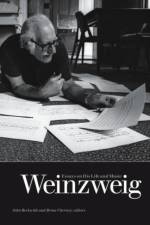
First comprehensive study of John Weinzweig (1913 2006), the pre-eminent Canadian composer of his generation, with essays by composers, theorists, and musicologists. Includes a CD of extracts. Influenced by European modernists such as Stravinsky, Berg, and Webern, Weinzweig was the first Canadian composer to employ serialism, thereby bringing a spirit of innovation to mid-twentieth-century Canadian music. A forceful advocate for modern Canadian composition, Weinzweig played a key role in the founding of the Canadian League of Composers and the Canadian Music Centre during a buoyant and expansive period for the arts in Canada. He was an influential force as a teacher of composition, first with the Royal Conservatory of Music and later with the University of Toronto s music faculty. This first comprehensive study of Weinzweig since his death consists of new essays by composers, theorists, and musicologists. It deals with biographical aspects (the social context of early-twentieth-century Toronto, his activism, his teaching, his early scores for CBC Radio dramas), analyzes his compositional processes and his output (his approach to serialism, his instrumental practice, the presence of jazz elements, the vocal works, the divertimenti), and examines various evaluations of his music (his own in letters, interviews, talks, and writings plus those of critics and scholars, of listeners, and of performers). The essays are framed by the co-editors portrait/assessment of Weinzweig and a brief personal memoir. Much of the content draws on new research in the extensive Weinzweig Fonds at Library and Archives Canada in Ottawa. Included at the end of the book are a List of Works by John Weinzweig by Kathleen McMorrow and a Discography by David Olds. Supplementing the volume is an audio CD of extracts (some in their first public release), ranging from a 1937 student work to a song cycle of 1994. </p
The Second World War had been under way for a year when Marie and John Williamson welcomed two English brothers to join them and their two children in their small house in north Toronto for the duration of the conflict. Marie wrote over 150 letters to the boys' mother, imagining that she could make Margaret feel she was still with her children.
Writing in Dust is the first sustained study of prairie Canadian literature from an ecocritical perspective. Drawing on recent scholarship in environmental theory and criticism, Jenny Kerber considers the ways in which prairie writers have negotiated processes of ecological and cultural change in the region from the early twentieth century to the present. The book begins by proposing that current environmental problems in the prairie region can be understood by examining the longstanding tendency to describe its diverse terrain in dualistic terms-either as an idyllic natural space or as an irredeemable wasteland. It inquires into the sources of stories that naturalize ecological prosperity and hardship and investigates how such narratives have been deployed from the period of colonial settlement to the present. It then considers the ways in which works by both canonical and more recent writers ranging from Robert Stead, W.O. Mitchell, and Margaret Laurence to Tim Lilburn, Louise Halfe, and Thomas King consistently challenge these dualistic landscape myths, proposing alternatives for the development of more ecologically just and sustainable relationships among people and between humans and their physical environments. Writing in Dust asserts that "e;reading environmentally"e; can help us to better understand a host of issues facing prairie inhabitants today, including the environmental impacts of industrial agriculture, resource extraction, climate change, shifting urban-rural demographics, the significance of Indigenous understandings of human-nature relationships, and the complex, often contradictory meanings of eco-cultural metaphors of alien/invasiveness, hybridity, and wildness.
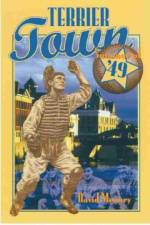
Based on exhaustive research and extensive interviews, David Menary recreates the 1949 baseball season in Terrier Town through the eyes of Charlie Hodge. While Charlie is a fictional character, the other players are not. This is a story that will resonate with young and old alike, baseball fans or not.
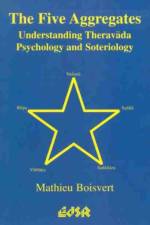
If Buddhism denies a permanent self, how does it perceive identity? According to Buddhist texts, the entire universe, including the individual, is made up of different phenomena, which Buddhism classifies into different categories: what we conventionally call a "person" can be understood in terms of five aggregates, the sum of which must not be taken for a permanent entity, since beings are nothing but an amalgam of ever-changing phenomena. Although the aggregates are only a "convenient fiction," the Buddha nevertheless made frequent use of the aggregate scheme when asked to explain the elements at work in the individual. In this study Mathieu Boisvert presents a detailed analysis of the five aggregates (pañcakkhandha) and establishes how the Theravda tradition views their interaction. He clarifies the fundamentals of Buddhist psychology by providing a rigorous examination of the nature and interrelation of each of the aggregates and by establishing, for the first time, how the function of each of these aggregates chains beings to the cycle of birth, death and rebirth - the theory of dependent origination (paticcasamuppada). Boisvert contends that without a thorough understanding of the five aggregates, we cannot grasp the liberation process at work within the individual, who is, after all, simply an amalgam of the five aggregates. The Five Aggregates represents an important and original contribution to Buddhist studies and will be of great interest to all scholars and students of Buddhism.
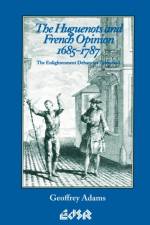
The decision of Louis XIV to revoke the Edict of Nantes and thus liquidate French Calvinism was well received in the intellectual community which was deeply prejudiced against the Huguenots. This antipathy would gradually disappear. After the death of the Sun King, a more sympathetic view of the Protestant minority was presented to French readers by leading thinkers such as Montesquieu, the abbé Prévost, and Voltaire. By the middle years of the eighteenth century, liberal clerics, lawyers, and government ministers joined Encyclopedists in urging the emancipation of the Reformed who were seen to be loyal, peaceable and productive. Then, in 1787, thanks to intensive lobbying by a group which included Malesherbes, Lafayette, and the future revolutionary Rabaut Saint-Étienne, the government of Louis XVI issued an edict of toleration which granted the Huguenots a modest bill of civil and religious rights. Adams' illuminating work treats a major chapter in the history of toleration; it explores in depth a fascinating shift in mentalités, and it offers a new focus on the process of "reform from above" in pre-Revolutionary France.
Loretta Czernis applies her sociological training in document analysis to study one government prescription for what ails Canadians. The Report of the Task Force on Canadian Unity rewrote Canada by reinventing patriotism, essentially inviting Canadians to imagine a new Canada.
Provides a detailed ethnographic and historical analysis of how, in spite of superficial appearances to the contrary, traditional Tongan values continue to play key roles in the way that Tongans make their way in the modern world.
Writing, for Michael Snow, is as much a form of art-making as the broad range of visual art activities for which he is renowned, including the Walking Woman series and the film Wavelength. Conversely, many of the texts included in this anthology are as significant visually as they are at the level of content they are meant to be looked at as well as read. Situated somewhere between a repository of contemporary thought by one of our leading Canadian artists and a history book as it brings to light some important moments in the cultural life of Canada since the 1950s, these texts tell their own story, marking the passage of time, ideas and attitudes. The works included here, ranging from essays and interviews and record album cover notes to filmscripts and speeches (which, in Snow s hands, often fall into the category of performance art), are not only built for browsing, they offer insights into both the professional and the private Snow. Together, they expand the context of Snow s work and show the evolution of a great Canadian artist, beginning with his early attempts at defining art, to his emergence and recognition on the international art scene. This book is one of four books that are part of the Michael Snow Project. Initiated by the Art Gallery of Ontario and The Power Plant Gallery, the project also includes four exhibitions of his visual art and music.
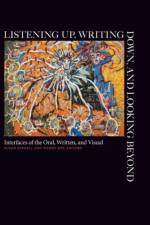
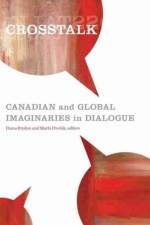
Argues for the value of attending to narratorial, lyric, and theatrical conventions in dialogue with questions of epistemological and social justice. Using the twinned framing devices of crosstalk and cross-sighting, the contributing authors attend to how the interplay of the verbal and the visual maps public spheres of creative engagement today.
Abonner på vårt nyhetsbrev og få rabatter og inspirasjon til din neste leseopplevelse.
Ved å abonnere godtar du vår personvernerklæring.