














Gjør som tusenvis av andre bokelskere
Abonner på vårt nyhetsbrev og få rabatter og inspirasjon til din neste leseopplevelse.
Ved å abonnere godtar du vår personvernerklæring.Du kan når som helst melde deg av våre nyhetsbrev.

Presents the vibrant and diverse field of material culture studies in Canadian literary, artistic, and political contexts today. The first of its kind, the collection features sixteen essays by leading scholars, each of whom examines a different object of study, including the beaver, geraniums, comics, water, a musical playlist, and the human body.
Available in English for the first time, Joaquim Amat-Piniellas searing Catalan novel, K.L. Reich , is a central work of testimonial literature of the Nazi concentration camps. Begun immediately after Amat-Piniellas liberation in 1945, the book is based on his own four-year internment at Mauthausen. When the war is over, remember all this. Remember me, implores one of the books characters on his deathbed, and it is this call to bear witness that Amat-Piniella takes up in his account of the Spanish Republican fighters who were exiled in France at the end of the Spanish Civil War in 1939 and soon swept up into the German concentration camp system. As an already organized anti-fascist army, they played an important role as a nucleus of resistance within the camps, and their story is little known to English-language readers. Because of the length of his internment, his decision to write his book as fiction, and his staggering powers of observation and recollection, Amat-Piniellas portrayal of life in the camps is unmatched in scope and detail. It is also a compelling study of three powerful ideological movements at work at the time: anarchism, communism, and fascism, all within the desperate and brutal world of the camps. My book does not seek to deepen wounds or differences, but to unite people before cruelty, said Amat-Piniella. This is an essential text as we ponder the twentieth century and its meaning to us today. This edition includes a new preface, annotations, and a translators note.
Like Anne Frank, Israel Unger and his family hid for two years in an attic crawl space during the Second World War. Against all odds, they emerged alive. This book is as much a Holocaust story as it is a story of a young immigrant making every possible use of the opportunities Canada had to offer.
Investigates how films portray human emotional relationships with the more-than-human world and how such films act upon their viewers' emotions. Contributors explore how film represents and shapes human emotion in relation to different environments and what role time, place, and genre play in these affective processes.
What do literary dystopias reflect about the times? In Blast, Corrupt, Dismantle, Erase, contributors address this amorphous but pervasive genre, using diverse critical methodologies to examine how North America is conveyed or portrayed in a perceived age of crisis, accelerated uncertainty, and political volatility.
Examines the development of the Canada-US border-security relationship as an outgrowth of the much lengthier Canada-US relationship. The book suggests that this relationship has been both highly reflexive and hegemonic, and that such realities are embodied in the metaphorical images and texts that describe the Canada-US border over its history.
Provides a snapshot of emerging theories and perspectives in the field of child and youth care across North America. Well-known scholars and researchers present new and innovative critical perspectives, written in a provocative manner and reflecting outside-the-box thinking.
Motherlode: A Mosaic of Dutch Wartime Experience is Carolyne Van Der Meer's creative reinterpretation through short stories, poems, and essays of the experiences of her mother and other individuals who either spent their childhoods in Nazi-occupied Holland or were deeply affected by wartime in Holland. The book documents the author's personal journey as she uncovers her mother's past through their correspondence and discussion and through research in the Netherlands. Motherlode also considers mother-daughter relationships and the effect of wartime on motherhood. Motherlode is not about recording precise historical data; rather, it attempts to recover and interpret the complex emotions of the individuals growing up in wartime. The book is based on interviews with the author's mother and other Dutch Canadians, interviews with and letters from Canadian Jewish war veterans, and information provided by individuals with direct or indirect experience of the Dutch Resistance. The creative pieces explore onderduik (going into/being in hiding), life in an occupied country, the work of the Dutch Resistance, liberation, collective and individual cultural memory, and the way in which wartime childhoods shaped adulthood for these individuals.
The essays collected in Parallel Encounters offer close analysis of an array of cultural representations of the Canada-US border, in both site-specificity and in the ways in which they reveal and conceal cultural similarities and differences.
Tom Wayman's poetry has been published around the world to great acclaim. Wayman is one of Canada's most prolific and public poets, and his writing since the 1960s has been by turns angry, engaged, hopeful, tender, and hilarious. His voice and persona are his alone but simultaneously ours too. His recurring themeswork, mortality, love, lust, friendship, the natural worldmake his work a poetry of human inevitabilities, a poetry that exults in the inevitability of seeing poetry in the everyday. Wayman's craft is poesis (from the Ancient Greek "e;to make"e;)making a change, making a difference, making a ruckus, making the most of our time. His working life has always been inextricable from his writing one; his poems offer an honest and candid consideration of the ideological underpinnings, practical realities, and subtle beauties of a life lived on job sites and picket lines, in union halls, classrooms, and book-stuffed offices, and on the page itself. The Order in Which We Do Things is a collection of more than thirty of Wayman's best poems, selected and introduced by Owen Percy. Percy's introduction explores the genesis of Wayman's print persona and contextualizes his politically engaged, conversational voice within the pantheon of its various publics. In his afterword, "e;Work and Silence,"e; Wayman reflects on his more than forty years in print as a work poet, and underlines poetry's sustained power to engage readers, invite solidarity, and stoke the fires of critical resistance to the order in which we do things.
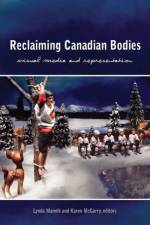
The central focus of Reclaiming Canadian Bodies is the relationship between visual media, the construction of Canadian national identity, and notions of embodiment. It asks how particular representations of bodies are constructed and performed within the context of visual and discursive mediated content.
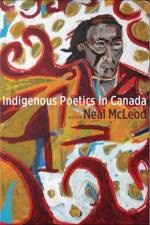
Broadens the way in which Indigenous poetry is examined, studied, and discussed in Canada. Breaking from the parameters of traditional English literature studies, this volume embraces a wider sense of poetics, including Indigenous oralities, languages, and understandings of place
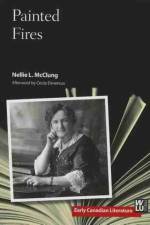
Painted Fires , first published in 1925, narrates the trials and tribulations of Helmi Milander, a Finnish immigrant, during the years approaching the First World War. The novel serves as a vehicle for McClung's social activism, especially in terms of temperance, woman suffrage, and immigration policies that favour cultural assimilation. In her afterword, Cecily Devereux situates Painted Fires in the context of McClung's feminist fiction and her interest in contemporary questions of immigration and "e;naturalization."e; She also considers how McClung's representation of Helmi Milander's story draws on popular culture narratives.
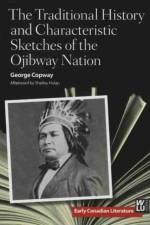
The Traditional History and Characteristic Sketches of the Ojibway Nation (1850) was one of the first books of Indigenous history written by an Indigenous author. The book blends nature writing and narrative to describe the language, religious beliefs, stories, land, work, and play of the Ojibway people. Shelley Hulan's afterword considers Copway's rhetorical strategies in framing a narrativeshe considers it a form of "e;history, interrupted"e;for a non-Indigenous readership.
This Awareness of Beauty is the first book to consider the orchestral and wind band music of Canadian composer Healey Willan, who was known primarily for his choral work. A succinct biography accompanies historical, analytical, and critical investigations of Willan's instrumental music, asserting Willan's seminal place in Canadian music and the significance of his orchestral and wind band music both nationally and internationally. Each composition is investigated in chronological order to illustrate the composer's evolution as a creator of instrumental music from his early years in England to his later, and more notable, accomplishments in Canada. Willan's orchestral music may be seen as both a reaction to and a stimulus for the significant improvement in Canadian orchestral performance during the 1930s and 40s, a factor in the creation of his large-scale compositions, including two symphonies and a piano concerto. Although much has been written about Willan, most of it has centred on his choral work, with biography and/or musicology as the frame of reference; this project considers his instrumental music in terms of performance, provides historical context for many of the works included, and corrects errors that have crept into the literature.
A collection of essays about the natural environment in a province rich in natural resources and aggressive in development goals. This is a casebook on Alberta from which emerges a far wider set of implications for North America and for the biosphere in general. The writers come from an array of disciplinary backgrounds.
In acknowledging the possibility that as the world changes so too does racism, this book argues that racism is not disappearing, despite claims of living in a post-racial and multicultural world. To the contrary, racisms persist by transforming into different forms whose intent or effects remain the same: to deny and disallow as well as to exclude and exploit. Racisms in a Multicultural Canada is organized around the assumption that race is not simply a set of categories and that racism is not just a collection of individuals with bad attitudes. Rather, racism is as much a matter of interests as of attitudes, of property as of prejudice, of structural advantage as of personal failing, of whiteness as of the "e;other,"e; of discourse as of discrimination, and of unequal power relations as of bigotry. This multi-dimensionality of racism complicates the challenge of formulating anti-racism and anti-colonialist strategies capable of addressing it. Employing a critical framework that puts politics and power at the centre of analysis, this book focuses on why racisms proliferate, how they work in contemporary societies, and how the way we think and talk about racism changes over time. Specifically, it examines the working of contemporary racisms in a multicultural Canada that claims to abide by principles of multiculturalism and a commitment to a post-racial society.
A Brief History of Women in Quebec examines the historical experience of women of different social classes and origins (geographic, ethnic, and racial) from the period of contact between Europeans and Aboriginals to the twenty-first century to give a nuanced and complex account of the main transformations in their lives. Themes explored include demography, such as marriage, fecundity, and immigration; womens work outside and inside the home, including motherhood; education, from elementary school to post-secondary and access to the professions; the impact of religion and government policies; and social and political activism, including feminism and struggles to attain equality with men. Early chapters deal with New France and the first part of the nineteenth century, and the remaining are devoted to the period since 1880, an era in which womens lives changed rapidly and dramatically. The book concludes that transformation in the means of production, womens social and political activism (including feminism), and Quebec nationalism are three main keys to understanding the history of Quebec women. Together, the three show that womens history, far from being an adjunct to general history, is essential to a full understanding of the past. Originally published in French with the title Breve histoire des femmes au Quebec.
To invest in vice can be a sound financial decision, but despite the lure of healthy profits, individuals and mutual funds have been reluctant to invest in this type of stock. After all, who would take pride in supporting the tobacco industry, knowing it sells a deadly product? And what social responsibilities do investors bear with respect to compulsive gamblers who have lost so much money that suicide becomes an attractive option? Canada the Good considers more than five hundred years of debates and regulation that have conditioned Canadians attitudes towards certain vices. Early European settlers implemented a Christian moral order that regulated sexual behaviour, gambling, and drinking. Later, some transgressions were diagnosed as health issues that required treatment. Those who refused the label of illness argued that behaviours formerly deemed as vices were within the range of normal human behaviour. This historical synthesis demonstrates how moral regulation has changed over time, how it has shaped Canadians lives, why some debates have almost disappeared and others persist, and why some individuals and groups have felt empowered to tackle collective social issues. Against the background of the evolution of the state, the enlargement of the body politic, and mounting forays into court activism, the author illustrates the complexity over time of various forms of social regulation and the control of vice.
The Foreigner (1909) tells the story of Kalman Kalmar, a young Ukrainian immigrant working in rural Saskatchewan. It addresses the themes of male maturation, cultural assimilation, and a form of muscular Christianity recurring in Connors popular Western tales. Daniel Colemans afterword considers the texts departure from Connors established fiction formulas and provides a unique framework for understanding its depiction of difference.
Linda Hutcheon, in this original study, examines the modes, forms and techniques of narcissistic fiction, that is, fiction which includes within itself some sort of commentary on its own narrative and/or linguistic nature. Her analysis is further extended to discuss the implications of such a development for both the theory of the novel and reading theory. Having placed this phenomenon in its historical context Linda Hutcheon uses the insights of various reader-response theories to explore the "e;paradox"e; created by metafiction: the reader is, at the same time, co-creator of the self-reflexive text and distanced from it because of its very self-reflexiveness. She illustrates her analysis through the works of novelists such as Fowles, Barth, Nabokov, Calvino, Borges, Carpentier, and Aquin. For the paperback edition of this important book a preface has been added which examines developments since first publication. Narcissistic Narrative was selected by Choice as one of the outstanding academic books for 19811982.
Since the early 1990s, tens of thousands of memoirs by celebrities and unknown people have been published, sold, and read by millions of American readers. The memoir boom, as the explosion of memoirs on the market has come to be called, has been welcomed, vilified, and dismissed in the popular press. But is there really a boom in memoir production in the United States? If so, what is causing it? Are memoirs all written by narcissistic hacks for an unthinking public, or do they indicate a growing need to understand world events through personal experiences? This study seeks to answer these questions by examining memoir as an industrial product like other products, something that publishers and booksellers help to create. These popular texts become part of mass culture, where they are connected to public events. The genre of memoir, and even genre itself, ceases to be an empty classification category and becomes part of social action and consumer culture at the same time. From James Frey's controversial A Million Little Pieces to memoirs about bartending, Iran, the liberation of Dachau, computer hacking, and the impact of 9/11, this book argues that the memoir boom is more than a publishing trend. It is becoming the way American readers try to understand major events in terms of individual experiences. The memoir boom is one of the ways that citizenship as a category of belonging between private and public spheres is now articulated.
Jean-Luc Godard and Anne-Marie Mieville are among the most important postwar filmmakers; they have worked across forms, across media, and across countries. This book examines the way they expanded the possibilities of cinema by using cutting-edge video equipment in a constant search for a new kind of filmmaking.
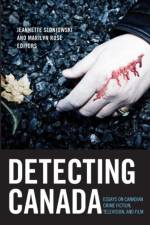
The first serious book-length study of crime writing in Canada, Detecting Canada contains thirteen essays on many of Canada's most popular crime writers. Genres examined range from the well-loved police procedural and the amateur sleuth to those less well known, such as anti-detection and contemporary noir novels.
Strategic litigation against public participation (SLAPP) involves lawsuits brought by individuals, corporations, groups, or politicians to curtail political activism and expression. An increasingly large part of the political landscape in Canada, they are often launched against those protesting, boycotting, or participating in some form of political activism. A common feature of SLAPPs is that their intention is rarely to win the case or secure a remedy; rather, the suit is brought to create a chill on political expression. Blocking Public Participation examines the different types of litigation and causes of action that frequently form the basis of SLAPPs, and how these lawsuits transform political disputes into legal cases, thereby blocking political engagement. The resource imbalance between plaintiffs and defendants allows plaintiffs to tie up defendants in complex and costly legal processes. The book also examines the dangers SLAPPs pose to political expression and to the quality and integrity of our democratic political institutions. Finally, the book examines the need to regulate SLAPPs in Canada and assesses various regulatory proposals. In Canada, considerable attention has been paid to the legalization of politics and the impact on the Charter in diverting political activism into the judicial arena. SLAPPs, however, are an under-studied element of this process, and in their obstruction of political engagement through recourse to the courts they have profound implications for democratic practice.
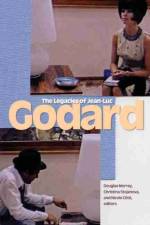
The artistic impact of Jean-Luc Godard, whose career in cinema has spanned over fifty years and yielded a hundred or more discrete works in different media cannot be overestimated. This book maps the range and diversity of Godard's impact across these different fields, and contains reassessments of key films.
Provides critical information for practitioners and educators in mental health services about the self-described needs of young people diagnosed with mental illness. The book portrays the stages of living with mental illness through the recovery model ELAR - emergence, loss, adaptation, and recovery.
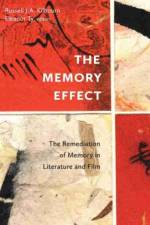
Essays on the status of memory-individual and collective, cultural and transcultural-in contemporary literature, film, and other visual media. Contributors look at memory's representation, adaptation, translation, and appropriation, as well as its mediation and remediation.
Abonner på vårt nyhetsbrev og få rabatter og inspirasjon til din neste leseopplevelse.
Ved å abonnere godtar du vår personvernerklæring.