






Gjør som tusenvis av andre bokelskere
Abonner på vårt nyhetsbrev og få rabatter og inspirasjon til din neste leseopplevelse.
Ved å abonnere godtar du vår personvernerklæring.Du kan når som helst melde deg av våre nyhetsbrev.

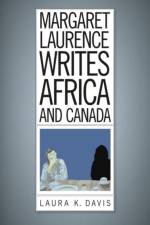
Margaret Laurence Writes Africa and Canada is the first book to examine how Laurence addresses decolonization and nation building in 1950s Somalia and Ghana, and 1960s and 1970s English Canada.Focusing on Laurence s published works as well as her unpublished letters not yet discussed by critics, the book articulates how Laurence and her characters are poised between African colonies of occupation during decolonization and the settler-colony of English Canada during the implementation of Canadian multiculturalism. Laurence s Canadian characters are often divided subjects who are not quite members of their ancestral imperial cultures, yet also not truly native to their nation. Margaret Laurence Writes Africa and Canada shows how Laurence and her characters negotiate complex tensions between self and nation, and argues that Laurence s African and Canadian writing demonstrates a divided Canadian subject who holds significant implications for both the individual and the country of Canada.Bringing together Laurence s writing about Africa and Canada, Davis offers a unique contribution to the study of Canadian literature. The book is an original interpretation of Laurence s work and reveals how she displaces the simple notion that Canada is a sum total of different cultures and conceives Canada as a mosaic that is in flux and constituted through continually changing social relations.
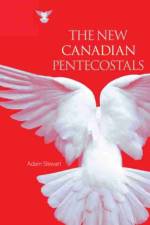
The New Canadian Pentecostals takes readers into the everyday religious lives of the members of three Pentecostal congregations located in the Region of Waterloo, Ontario, Canada. Using the rich qualitative and quantitative data gathered through participant observation, personal interviews, and surveys conducted within these congregations, Adam Stewart provides the first book-length study focusing on the specific characteristics of Canadian Pentecostal identity, belief, and practice. Stewart asserts that Pentecostalism remains an important tradition in the Canadian religious landscapecontrary to the assumptions of many Canadian sociologists and scholars of religion. Recent decreases in Canadian Pentecostal affiliation recorded by Statistics Canada are not the result of Pentecostals abandoning their congregations; rather, they are indicative of a radical transformation from traditionally Pentecostal to generically evangelical modes of religious identity, belief, and practice that are changing the ways that Pentecostals understand and explain their religious identities. The case study presented in this book suggests that a new breed of Canadian Pentecostals are emerging for whom traditional definitions and expressions of Pentecostalism are much less important than religious autonomy and individualism.
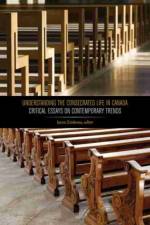
Presents essays on religious life in Canada that address the state of religious communities dedicated to religious virtuosity normally characterized by formal promises of chastity, poverty, and obedience. The essays examine a range of topics related to the general state of consecrated life in contemporary Canadian Christian and Buddhist traditions.
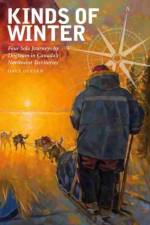
This book demolishes many of the cliches that imbue writings about bush life, the Far North, and dogsledding. It is a unique blend of armchair adventure, personal memoir, and thoughtful, down-to-earth reflection.
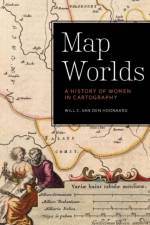
This book explores the largely unrecognized contribution of women to the development of maps throughout history. Common themes explored are social justice and the making of maps work for the betterment of humanity.
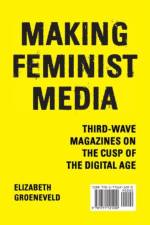
Making Feminist Media provides new ways of thinking about the vibrant media and craft cultures generated by Riot Grrrl and feminisms third wave. It focuses on a cluster of feminist publicationsincluding BUST , Bitch , HUES , Venus Zine , and Rockrgrl that began as zines in the 1990s. By tracking their successes and failures, this book provides insight into the politics of feminisms recent past. Making Feminist Media brings together interviews with magazine editors, research from zine archives, and analysis of the advertising, articles, editorials, and letters to the editor found in third-wave feminist magazines. It situates these publications within the long history of feminist publishing in the United States and Canada and argues that third-wave feminist magazines share important continuities and breaks with their historical forerunners. These publishing lineages challenge the still-dominantand hotly contested wave metaphor categorization of feminist culture. The stories, struggles, and strategies of these magazines not only represent contemporary feminism, they create and shape feminist cultures. The publications provide a feminist counter-public sphere in which the competing interests of editors, writers, readers, and advertisers can interact. Making Feminist Media argues that reading feminist magazines is far more than the consumption of information or entertainment: it is a profoundly intimate and political activity that shapes how readers understand themselves and each other as feminist thinkers.
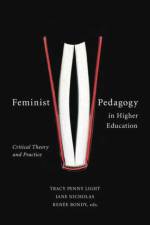
Contributors from a variety of disciplines provide a critical context for the relationship between feminist pedagogy and academic feminism by exploring the complex ways that critical perspectives can be brought into the classroom.
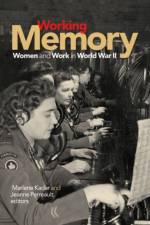
Explores the work women did during the war: the labour of survival, resistance, and collaboration, and the labour of recording, representing, and memorializing these wartime experiences. The contributors follow their subjects' tracks and deepen our understanding of the experiences from the imprints left behind.
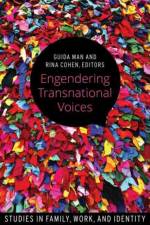
Examines the transnational practices and identities of immigrant women, youth, and children in an era of global migration and neoliberalism, addressing such topics as family relations, gender and work, schooling, cultural identities, caring for children and the elderly, inter- and multi-generational relationships, and refugee determination.
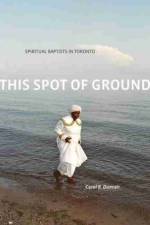
Explores the emergence of the Spiritual Baptist faith, an African-Caribbean religious tradition, in Toronto, Canada.
In this major work Professor MacDonald chronicles an intensive and systematic archaeological survey of the southern flank of the Wadi el Hasa in WestâCentral Jordan. The survey resulted in the recovery of human evidence spanning the Lower Paleolithic to the Ottoman period (500,000 B.C.âA.D. 1918). The area is cut by a number of impressive and deep, southâtoânorth flowing wadis. As a region marginal for farming but stable for grazing, it would be the first to "empty out" and the last to "fill up" compared to more favourable regions. The methodology employed included a combination of purposive, predictive, and pedestrian transects. Lithics spanning the Lower Paleolithic to the end of the Early Bronze period (500,000â2000 B.C.) and ceramics covering the period from the Pottery Neolithic to the end of the Ottoman domination (4750 B.C.âA.D. 1918) were collected in the area. Sites surveyed included lithic and sherd scatters, camps, hamlets, villages, roads, milestones, fortresses, watchtowers, and mills. This research sheds new light on the settlement of the area, which now appears to have been most dense during the Middle Paleolithic, Iron II, Nabataean, and Byzantine periods.
Expresses the eschatological faith of the Church by using the time language of our age. To achieve this, this book provides an overview on the research in the nature of time done in geology, cosmology, physics, biology, psychology, sociology, history and philosophy and proposes a notion of time for "timely" Christology and for "timely" eschatology.
For Canada the last century was one of great social and economic change: an increasingly urban population witnessed shifts from an agricultural to a mixed economy and from moderate to greater wealth. Heick chronicles how changing attitudes toward butter and margarine reflected the nature of that society.
How did an ambitious British army officer advance his career in mid-eighteenth-century North America? This study examines the career of an Anglo-Irish-Acadian army officer, treating in considerable detail the network of old-world connections and patrons which at times facilitated his advancement.
Since the late 1950s Stan Brakhage has been in the forefront of independent filmmaking. His body of work - some seventy hours - is one of the largest of any filmmaker in the history of cinema, and one of the most diverse. Probably the most widely quoted experimental filmmaker in history, his films typify the independent cinema. Until now, despite well-deserved acclaim, there has been no comprehensive study of Brakhage's oeuvre. The Films of Stan Brakhage in the American Tradition fills this void. R. Bruce Elder delineates the aesthetic parallels between Brakhage's films and a broad spectrum of American art from the 1920s through the 1960s. This book is certain to stir the passions of those interested in artistic critique and interpretation in its broadest terms.
Addresses the contribution that political theories of modern political philosophers have made to our understandings of peace. By looking back at the great works of political philosophy, this collection hopes to revive peace as an active question for political philosophy while making an original contribution to contemporary peace research.
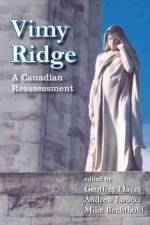
On the morning of April 9, 1917, troops of the Canadian Corps under General Julian Byng attacked the formidable German defences of Vimy Ridge. Since then, generations of Canadians have shared a deep emotional attachment to the battle, inspired partly by the spectacular memorial on the battlefield. Although the event is considered central in Canadian military history, most people know very little about what happened during that memorable Easter in northern France. Vimy Ridge: A Canadian Reassessment draws on the work of a new generation of scholars who explore the battle from three perspectives. The first assesses the Canadian Corps within the wider context of the Western Front in 1917. The second explores Canadian leadership, training, and preparations and details the story of each of the four Canadian divisions. The final section concentrates on the commemoration of Vimy Ridge, both for contemporaries and later generations of Canadians. This long-overdue collection, based on original research, replaces mythology with new perspectives, new details, and a new understanding of the men who fought and died for the remarkable achievement that was the Battle of Vimy Ridge. Co-published with the Laurier Centre for Military, Strategic and Disarmament Studies
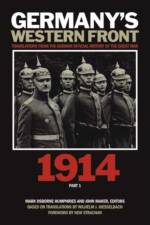
This multi-volume series is the first English-language translation of Der Weltkrieg, the German official history of the First World War. Originally produced between 1925 and 1944 using classified archival records that were destroyed after the Second World War, Der Weltkrieg is the inside story of Germany's experience on the Western front.
Canadas engagement with post-independence Africa presents a puzzle. Although Canada is recognized for its activism where Africa is concerned, critics have long noted the contradictions that underlie Canadian involvement. Focusing on the period following 2000, and by juxtaposing Jean Chretiens G8 activism with the Harper governments retreat from continental engagement, David R. Blacks Canada and Africa in the New Millennium illustrates a history of consistent inconsistency in Canadas relationship with Africa. Black combines three interpretive frames to account for this record: the tradition of good international citizenship; Canadas role as a benign face of Western hegemonic interests in Africa; and Africas role as the basis for a longstanding narrative concerning Canadas ethical mission in the world. To examine Africas place in Canadas foreign policyand Canadas place in AfricaBlack focuses on G8 diplomacy, foreign aid, security assistance through peace operations and training, and the increasingly controversial impact of Canadian extractive companies. Offering an integrated account of Canadas role in sub-Saharan Africa, Black provides a way of understanding the nature and resilience of recent shifts in Canadian policy. He underscores how Africathough marginal to Canadian interests as traditionally conceivedhas served as an important marker of Canadas international role.
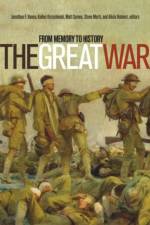
Offers a new look at the ways the Great War has been remembered and commemorated through the twentieth century and into the twenty-first. Drawing on contributions from history, cultural studies, film, and literary studies this collection offers fresh perspectives on the Great War and its legacy at the local, national, and international levels.
Is prison a humane form of punishment and an effective means of rehabilitation? Are current prison policies, such as shifting resources away from rehabilitation toward housing more offenders, improving the safety and lives of incarcerated populations? Considering that many Canadians have served time, are currently incarcerated, or may one day be incarceratedand will be released back into societyit is essential for the functioning and betterment of communities that we understand the realities that shape the prison experience for adult male offenders. Surviving Incarceration reveals the unnecessary and omnipresent violence in prisons, the heterogeneity of the prisoner population, and the realities that different prisoners navigate in order to survive. Ricciardelli draws on interviews with almost sixty former federal prisoners to show how their criminal convictions, masculinity, and sexuality determined their social status in prison and, in consequence, their potential for victimization. The book outlines the modern "e;inmate code"e; that governs prisoner behaviours, the formal controls put forth by the administration, the dynamics that shape sex-offender experiences of incarceration, and the personal growth experiences of many prisoners as they cope with incarceration.
A collection of essays and poems that address some of the most pressing issues of the discipline in the twenty-first century. The collection brings together fifteen original essays addressing "publics", "poetry", and "poetics" from the situated space of Canada while simultaneously troubling the notion of the nation as a stable term.
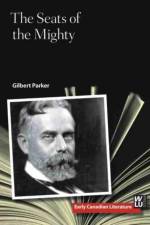
From the pen of Gilbert Parker comes one of the most popular Canadian novels of the late nineteenth century. First published simultaneously in Canada and the United States in 1896, The Seats of the Mighty is set in Quebec City in 1759, against the backdrop of the conflict between the English and the French over the future of New France. Written and published after Parker's move to England, the novel attempts to romanticize French Canada without alienating his English and American readership. The novels enduring popularity led to a stage version in 1897 and a silent film in 1914.
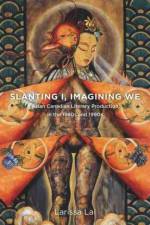
The 1980s and 1990s are a historically crucial period in the development of Asian Canadian literature. Slanting I, Imagining We: Asian Canadian Literary Production in the 1980s and 1990s contextualizes and reanimates the urgency of that period, illustrates its historical specificities, and shows how the concerns of that momentfrom cultural appropriation to race essentialism to shifting models of the statecontinue to resonate for contemporary discussions of race and literature in Canada. Larissa Lai takes up the term Asian Canadian as a term of emergence, in the sense that it is constantly produced differently, and always in relation to other termsoften whiteness but also Indigeneity, queerness, feminism, African Canadian, and Asian American. In the 1980s and 1990s, Asian Canadian erupted in conjunction with the post-structural recognition of the instability of the subject. But paradoxically it also came into being through activist work, and so depended on an imagined stability that never fully materialized. Slanting I, Imagining We interrogates this fraught tension and the relational nature of the term through a range of texts and events, including the Gold Mountain Blues scandal, the conference Writing Thru Race, and the self-writings of Evelyn Lau and Wayson Choy.
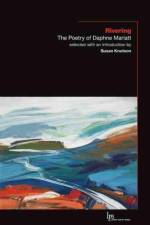
Opening doors, dreaming awake, tracing networks of music and meaning, Marlatts poetry stands out as an essential engagement with what matters to anyone writing with a social-environmental conscience. Rivering includes poems inspired by the village of Steveston where, before the war, a Japanese-Canadian community lived within the rhythms of salmon on the Fraser River delta. Also gathered into Rivering : lesbian love poetry from Touch to my Tongue ; a transformance of Nicole Brossards Mauve ; passages from The Given , winner of the 2009 Dorothy Livesay Poetry Prize; a traditional Kuri song from the Noh drama, The Gull ; and an unpublished excerpt from the chamber opera Shadow Catch. Difficult, beautiful, heart-breaking realities of the twenty-first century are urgently immediate in selections from Liquidities: Vancouver Poems Then and Now . All of the poems speak to Marlatts poetics of place and of language as passage between distant or disparate human beings, and between human beings and the more-than-human world. The selections are framed by Susan Knutsons deeply attentive critical introduction and by Marlatts immediacies of writing, a new lyrical essay investigating the act of writing. Closing with a walking meditation situated by her Buddhist practice, Rivering is both a pocket Marlatt and an introduction to one of the best poets of our time.
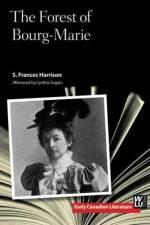
In The Forest of Bourg-Marie , originally published in 1898, Toronto author and musician S. Frances Harrison draws together a highly mythologized image of Quebec society and the forms of Gothic literature that were already familiar to her English-speaking audience. It tells the story of a fourteen-year-old French Canadian who is lured to the United States by the promise of financial reward, only to be rejected by his grandfather upon his return. In doing so, the novel offers a powerful critique of the personal and cultural consequences of emigration out of Canada. In her afterword, Cynthia Sugars considers how The Forest of Bourg-Marie reimagines the Gothic tradition from a settler Canadian perspective, turning to a French-Canadian setting with distinctly New-World overtones. Harrisons twist on the traditional Gothic plotline offers an inversion of such Gothic motifs as the decadent aristocrat and ancestral curse by playing on questions of illegitimacy and cultural preservation.
Magie Dominics first memoir , The Queen of Peace Room, was shortlisted for the Canadian Womens Studies Award, ForeWord magazines Book of the Year Award, and the Judy Grahn Award. Told over an eight-day period, the book captured a lifetime of turbulent memories, documenting with skill Dominics experiences of violence, incest, and rape. But her story wasnt finished. Street Angel opens to the voice of an eleven-year-old Dominic. Shes growing up in Newfoundland. Her mother suffers from terrifying nighttime hallucinations. Her fathers business is about to collapse. She layers the world she hears on radio and television onto her family, speaking in paratactic prose with a point-blank delivery. She finds relief only in the glamour of Hollywood films and the majesty of Newfoundlands wilderness. Revealing her life through flashbacks, humour, and her signature self-confidence, Dominic takes readers from 1950s Newfoundland to 1960s Pittsburgh, 1970s New York, and the end of the millennium in Toronto. Capturing the long days of childhood, this book questions how important those days are in shaping who we become as we age and time seems to speed up. With quick brush-stroke chapters Dominic chronicles sixty years of a complex, secretive family in this story about violence, adolescence, families, and forgiveness.
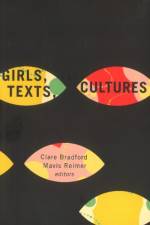
This book focuses on girls and girlhoods, texts for and about girls, and the cultural contexts that shape girls' experience. It brings together scholars from girls' studies and children's literature, fields that have traditionally worked separately, to showcase the breadth and complexity of girl-related studies.
Abonner på vårt nyhetsbrev og få rabatter og inspirasjon til din neste leseopplevelse.
Ved å abonnere godtar du vår personvernerklæring.