

















Gjør som tusenvis av andre bokelskere
Abonner på vårt nyhetsbrev og få rabatter og inspirasjon til din neste leseopplevelse.
Ved å abonnere godtar du vår personvernerklæring.Du kan når som helst melde deg av våre nyhetsbrev.

Hacking provides an introduction to the community of hackers and an analysis of the meaning of hacking in twenty-first century societies. On the one hand, hackers infect the computers of the world, entering where they are not invited, taking over not just individual workstations but whole networks. On the other, hackers write the software that fuels the Internet, from the most popular web programmes to software fundamental to the Internet's existence. Beginning from an analysis of these two main types of hackers, categorised as crackers and Free Software/Open Source respectively, Tim Jordan gives the reader insight into the varied identities of hackers, including: Hacktivism; hackers and populist politics Cyberwar; hackers and the nation-state Digital Proletariat; hacking for the man Viruses; virtual life on the Internet Digital Commons; hacking without software Cypherpunks; encryption and digital security Nerds and Geeks; hacking cultures or hacking without the hack Cybercrime; blackest of black hat hacking Hackers end debates over the meaning of technological determinism while recognising that at any one moment we are all always determined by technology. Hackers work constantly within determinations of their actions created by technologies as they also alter software to enable entirely new possibilities for and limits to action in the virtual world. Through this fascinating introduction to the people who create and recreate the digital media of the Internet, students, scholars and general readers will gain new insight into the meaning of technology and society when digital media are hacked.
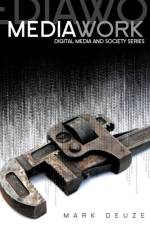
The media are home to an eclectic bunch of people. This book is about who they are, what they do, and what their work means to them. Based on interviews with media professionals in the United States, New Zealand, South Africa, and The Netherlands, and drawing from both scholarly and professional literatures in a wide variety of disciplines, it offers an account of what it is like to work in the media today. Media professionals face tough choices. Boundaries are drawn and erased: between commerce and creativity, between individualism and teamwork, between security and independence. Digital media supercharge these dilemmas, as industries merge and media converge, as audiences become co-creators of content online. The media industries are the pioneers of the digital age. This book is a critical primer on how media workers manage to survive, and is essential reading for anyone considering a career in the media, or who wishes to understand how the media are made.
This vigorously argued book reveals the central role that Islam has played in European history. Following the movement of people, culture and religion from East to West, Goody breaks down the perceived opposition between Islam and Europe, showing Islam to be a part of Europe's past and present. In an historical analysis of religious warfare and forced migration, Goody examines our understanding of legitimate violence, ethnic cleansing and terrorism. His comparative perspective offers important and illuminating insights into current political problems and conflicts. Goody traces three routes of Islam into Europe, following the Arab through North Africa, Spain and Mediterranean Europe; the Turk through Greece and the Balkans; and the Mongol through Southern Russia to Poland and Lithuania. Each thrust made its mark on Europe in terms of population and culture. Yet this was not merely a military impact: especially in Spain, but elsewhere too, Europe was substantially modified by this contact. Today it takes the form of some eleven million immigrants, not to speak of the possible incorporation of further millions through Bosnia, Albania and Turkey.
Social activism and dissent have become global phenomena for our times. Ordinary people across the world are fighting back. This newly potent political force has defeated governments in India and Spain, and has brought down the EU draft constitution. Disaffected by the triumph of markets, public goods, public interest and public spaces are regaining political ground. Daniel Drache argues that, feeding off distrust and suspicion of governments, and assisted by the new cultural flows of people, ideas and information, this is a political phenomenon without historical precedent. No-one owns the new public, elites remain baffled by its power and impact. No-one can contain its innovative, inclusive and rapidly evolving organizational style. No-one can determine when the current cycle of dissent will peak. This lively and engaging book is a must-read for anyone interested in the role of protesters and publics in contemporary politics.
Beast. Monster. Savage. Psycho. The glowering menace of Mike Tyson has spooked us for almost two decades. And still we remain fascinated. Why? Ellis Cashmore's answer is disturbing: white society has created Tyson as vengeance for the loss of privilege produced by civil rights. Cashmore's eviscerating analysis of Tyson's life and the culture in which he grew up, rose to prominence and descended into disgrace provokes the reader into re-thinking the role of one of the most controversial and infamous figures of recent history. Told as an odyssey-style homeward journey to Tyson's multi-pathological origins in the racially-explosive ghettos of the 1960s, Tyson's story is part biography, part tragedy and part exposition. His associations with people like Al Sharpton, Don King and Tupac Shakur shaped his life; and events, such as the O J Simpson trial and the Rodney King riots, formed a turbulent background for the Tyson psychodrama. Over the course of an epic boxing career, Tyson was transformed from the most celebrated athlete on earth to a primal, malevolent hate-figure. Yet, even after being condemned as a brute, Tyson retained a power - a power to captivate. Cashmore reveals that the sources of that power lie as much in us as in Tyson himself.
What will be the fate of childhood in the twenty-first century? Will children increasingly be living 'media childhoods', dominated by the electronic screen? Will their growing access to adult media help to abolish the distinctions between childhood and adulthood? Or will the advent of new media technologies widen the gaps between the generations still further? In this book, David Buckingham provides a lucid and accessible overview of recent changes both in childhood and in the media environment. He refutes simplistic moral panics about the negative influence of the media, and the exaggerated optimism about the 'electronic generation'. In the process, he points to the challenges that are posed by the proliferation of new technologies, the privatization of the media and of public space, and the polarization between media-rich and media-poor. He argues that children can no longer be excluded or protected from the adult world of violence, commercialism and politics; and that new strategies and policies are needed in order to protect their rights as citizens and as consumers. Based on extensive research, After the Death of Childhood takes a fresh look at well-established concerns about the effects of the media on children. It offers a challenging and refreshing approach to the perennial concerns of researchers, parents, educators, media producers and policy-makers.
The Democratic Republic of Congo has become one of the world's bloodiest hot spots. 2003 saw the end of a five-year war in which millions lost their lives - one of the deadliest conflicts since World War II. Despite recent peace agreements and democratic elections, the country is still plagued by army and militia violence. Congo remains deeply troubled, since the deep-rooted causes of conflict have not been adequately addressed. The conflict in the DRC has divided opinion; some call it a civil war, or a war of aggression by the country's neighbours; others a continuation of Rwanda's Hutu-Tutsi conflict on Congolose soil, and a war of partition and pillage. The prevalence of rape and sexual violence has led some analysts to mark it out as a hidden war against women'. Tom Turner's insightful book reveals how each of these descriptions accurately captures the separate elements of this complex and multidimensional political conflict. In exploring each of these contributory factors, he shows how current attempts to rebuild the shattered state and society of DRC are doomed to fail. So long as the full complexity of the Congo crisis is not taken into account and a clear consensus as to its precise dimensions reached, the future looks bleak. The DRC, he argues, will likely remain a global hot spot for some time to come.
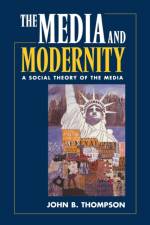
This wide-ranging and innovative book develops an original theory of the media and their impact on the modern world, from the emergence of printing to the most recent developments in the media industries.
Zygmunt Bauman's new book is a brilliant exploration, from a sociological point of view, of the 'taboo' subject in modern societies: death and dying. The book develops a new theory of the ways in which human mortality is reacted to, and dealt with, in social institutions and culture. The hypothesis explored in the book is that the necessity of human beings to live with the constant awareness of death accounts for crucial aspects of the social organization of all known societies. Two different 'life strategies' are distinguished in respect of reactions to mortality. One, 'the modern strategy', deconstructs mortality by translating the insoluble issue of death into many specific problems of health and disease which are 'soluble in principle'. The 'post-modern strategy' is one of deconstructing immortality: life is transformed into a constant rehearsal of 'reversible death', a substitution of 'temporary disappearance' for the irrevocable termination of life. This profound and provocative book will appeal to a wide audience. It will also be of particular interest to students and professionals in the areas of sociology, anthropology, theology and philosophy.
Feminism Confronts Technology provides a lively and engaging exploration of the impact of technology on women's lives from word processors to food processors, and genetic engineering to the design of cities. Comprehensive and critical, this book surveys the sociological and feminist literature on technology, highlighting the male bias in the way technology is defined as well as developed. Wajcman sets the scene with an overview of feminist theories of science and technology: encompassing the technologies of production and reproduction as well as domestic technology. The author challenges the common assumption that technology is gender neutral, looking at whether technology can liberate women or whether the new technologies are reinforcing sexual divisions in society.
Globalization is now widely discussed but the debates often remain locked within particular disciplinary discourses. This book brings together for the first time a social theory and cultural studies approach to the understanding of globalization. The book starts with an analysis of the relationship between the globalization process and contemporary culture change and goes on to relate this to debates about social and cultural modernity. At the heart of the book is a far-reaching analysis of the complex, ambiguous "e;lived experience"e; of global modernity. Tomlinson argues that we can now see a general pattern of the dissolution between cultural experience and territorial location. The "e;uneven"e; nature of this experience is discussed in relation to first and third world societies, along with arguments about the hybridization of cultures, and special role of communications and media technologies in this process of "e;deterritorialization"e;. Globalization and Cultureconcludes with a discussion of the cultural politics of cosmopolitanism. Accessibly written, this book will be of interest to second year undergraduates and above in sociology, media studies, cultural and communication studies, and anyone interested in globalization.
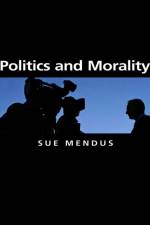
Public disenchantment with politics has become a key feature of the world in which we live. Politicians are increasingly viewed with suspicion and distrust, and electoral turnout in many modern democracies continues to fall. But are we right to display such contempt towards our elected representatives? Can politicians be morally good or is politics destined to involve dirty hands or the loss of integrity, as many modern philosophers claim? In this book, Susan Mendus seeks to address these important questions to assess whether this apparent tension between morality and politics is real and, if so, why. Beginning with an account of integrity as involving a willingness to stand by ones most fundamental moral commitments, the author discusses three reasons for thinking that politics undermines integrity and is incompatible with morality. These are: the relationship between politics and utilitarian calculation; the possibility that the realm of politics is a separate realm of value; and the difficulty of reconciling the demands of different social roles. She concludes that, in the modern world, we all risk losing our integrity. To that extent, we are all politicians. Moreover, we have reason to be glad that politicians are not always morally good. Written with verve and clarity, this book provides students and general readers an accessible guide to the philosophical debates about the complex relationship between politics and morality in the contemporary world.
Since 9/11 politicians, preachers, conservatives and the media are all speaking about evil. In the past the dicourse about evil in our religious, philosophic and literary traditions has provoked thinking, questioning and inquiry. But today the appeal to evil is being used as a political tool to obscure compex issues, block serious thinking and stifle public discussion and debate. We are now confronting a clash of mentalities, not a clash of civilisations. One mentality is drawn to absolutes, moral certainties, and simplistic dichotomies of good and evil. The other seriously questions an appeal to absolutes in politics and criticizes the simplistic division of the world into the forces of evil and the forces of good. In The Abuse of Evil Bernstein challenges the claim that without an appeal to absolutes, we lack the grounds for acting decisively in fighting our enemies. The post 9/11 abuse of evil corrupts both democratic politics and religion. The stakes are high in this clash of mentalities in shaping how we think and act in the world today - and in the future.
Bob Dylan s contribution to popular music is immeasurable. Venerated as rock s one true genius, Dylan is considered responsible for introducing a new range of topics and new lyrical complexity into popular music. Without Bob Dylan, rock critic Dave Marsh once claimed, there would be no popular music as we understand it today. As such an exalted figure, Dylan has been the subject of countless books and intricate scholarship considering various dimensions of both the man and his music. This book places new emphasis on Dylan as a rock star. Whatever else Dylan is, he is a star iconic, charismatic, legendary, enigmatic. No one else in popular music has maintained such star status for so long a period of time. Showing how theories of stardom can help us understand both Bob Dylan and the history of rock music, Lee Marshall provides new insight into how Dylan s songs acquire meaning and affects his relationship with his fans, his critics and the recording industry. Marshall discusses Dylan s emergence as a star in the folk revival (the spokesman for a generation ) and the formative role that Dylan plays in creating a new type of music rock and a new type of star. Bringing the book right up to date, he also sheds new light on how Dylan s later career has been shaped by his earlier star image and how Dylan repeatedly tried to throw off the limitations and responsibilities of his stardom. The book concludes by considering the revival of Dylan over the past ten years and how Dylan s stardom has developed in a way that contains, but is not overshadowed by, his achievements in the 1960s.
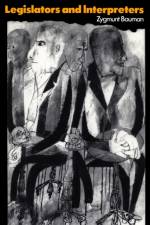
The book discusses the role of intellectuals in the modern world. Bauman connects this with current analyses of modernity and post-modernity. The theme of the book is that the tasks of intellectuals change from being 'legislators' to 'interpreters' with the transition from modernity to post-modernity. The book discusses the role of intellectuals in the modern world. Bauman connects this with current analyses of modernity and post-modernity. The theme of the book is that the tasks of intellectuals change from being 'legislators' to 'interpreters' with the transition from modernity to post-modernity.
Mark Harrison's book illuminates the threats posed by infectious diseases since 1500. He places these diseases within an international perspective, and demonstrates the relationship between European expansion and changing epidemiological patterns. The book is a significant introduction to a fascinating subject. Gerald N. Grob, Rutgers State University In this lively and accessible book, Mark Harrison charts the history of disease from the birth of the modern world around 1500 through to the present day. He explores how the rise of modern nation-states was closely linked to the threat posed by disease, and particularly infectious, epidemic diseases. He examines the ways in which disease and its treatment and prevention, changed over the centuries, under the impact of the Renaissance and the Enlightenment, and with the advent of scientific medicine. For the first time, the author integrates the history of disease in the West with a broader analysis of the rise of the modern world, as it was transformed by commerce, slavery, and colonial rule. Disease played a vital role in this process, easing European domination in some areas, limiting it in others. Harrison goes on to show how a new environment was produced in which poverty and education rather than geography became the main factors in the distribution of disease. Assuming no prior knowledge of the history of disease, Disease and the Modern World provides an invaluable introduction to one of the richest and most important areas of history. It will be essential reading for all undergraduates and postgraduates taking courses in the history of disease and medicine, and for anyone interested in how disease has shaped, and has been shaped by, the modern world.
A concise, accessible introduction to the development, application and evaluation of nursing theories, this new edition of Fundamentals of Nursing Models, Theories & Practice provides a thorough overview of the body of knowledge on the topic, and a clear outline of their relevance to everyday nursing practice. Linking the development of theory to practice, this full-updated text features learning outcomes, key concept summaries and reflective exercises to aid the study of this key element of all modern nursing courses. Special Features Clearly examines the relationship between nursing theory, clinical practice and nursing roles Accessible and user-friendly with a range of features to help study, including key concepts, learning objectives and reflective exercises Useful for all pre-registration nursing students, as well as newly qualified nurses Accompanied by an online resource centre featuring case studies, multiple choice questions, exercises and activities
A Companion to Nordic Cinema presents a collection of original essays that explore one of the world s oldest regional cinemas from its origins to the present day. Offers a comprehensive, transnational and regional account of Nordic cinema from its origins to the present day Features original contributions from more than two dozen international film scholars based in the Nordic countries, the United States, Canada, Scotland, and Hong Kong Covers a wide range of topics on the distinctive evolution of Nordic cinema including the silent Golden Age, Nordic film policy models and their influence, audiences and cinephilia, Nordic film training, and indigenous S mi cinema. Considers Nordic cinema s engagement with global audiences through coverage of such topics as Dogme 95, the avant-garde filmmaking movement begun by Danish directors Lars von Trier and Thomas Vinterberg, and the global marketing and distribution of Nordic horror and Nordic noir Offers fresh investigations of the work of global auteurs such as Carl Th. Dreyer, Ingmar Bergman, Lars von Trier, Aki Kaurism ki, and Roy Andersson. Includes essays on Danish and Swedish television dramas, Finland s eco-documentary film production, the emerging tradition of Icelandic cinema, the changing dynamics of Scandinavian porn, and many more
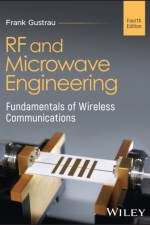
This book provides a fundamental and practical introduction to radio frequency and microwave engineering and physical aspects of wireless communication In this book, the author addresses a wide range of radio-frequency and microwave topics with emphasis on physical aspects including EM and voltage waves, transmission lines, passive circuits, antennas, radio wave propagation. Up-to-date RF design tools like RF circuit simulation, EM simulation and computerized smith charts, are used in various examples to demonstrate how these methods can be applied effectively in RF engineering practice. Design rules and working examples illustrate the theoretical parts. The examples are close to real world problems, so the reader can directly transfer the methods within the context of their own work. At the end of each chapter a list of problems is given in order to deepen the reader s understanding of the chapter material and practice the new competences. Solutions are available on the author s website. Key Features: Presents a wide range of RF topics with emphasis on physical aspects e.g. EM and voltage waves, transmission lines, passive circuits, antennas Uses various examples of modern RF tools that show how the methods can be applied productively in RF engineering practice Incorporates various design examples using circuit and electromagnetic (EM) simulation software Discusses the propagation of waves: their representation, their effects, and their utilization in passive circuits and antenna structures Provides a list of problems at the end of each chapter Includes an accompanying website containing solutions to the problems (http:\\www.fh-dortmund.de\gustrau_rf_textbook) This will be an invaluable textbook for bachelor and masters students on electrical engineering courses (microwave engineering, basic circuit theory and electromagnetic fields, wireless communications). Early-stage RF practitioners, engineers (e.g. application engineer) working in this area will also find this book of interest.
Introduction to Pragmatics guides students through traditional and new approaches in the field, focusing particularly on phenomena at the elusive semantics/pragmatics boundary to explore the role of context in linguistic communication. Offers students an accessible introduction and an up-to-date survey of the field, encompassing both established and new approaches to pragmatics Addresses the traditional range of topics such as implicature, reference, presupposition, and speech acts as well as newer areas of research, including neo-Gricean theories, Relevance Theory, information structure, inference, and dynamic approaches to meaning Explores the relationship and boundaries between semantics and pragmatics Ideal for students coming to pragmatics for the first time
Enables chemical engineers to use mathematics to solve common on-the-job problems With its clear explanations, examples, and problem sets, Applied Mathematics and Modeling for Chemical Engineers has enabled thousands of chemical engineers to apply mathematical principles to successfully solve practical problems. The book introduces traditional techniques to solve ordinary differential equations as well as analytical methods to deal with important classes of finite-difference equations. It then explores techniques for solving partial differential equations from classical methods to finite-transforms, culminating with??numerical methods??including orthogonal collocation. This Second Edition demonstrates how classical mathematics solves a broad range of new applications that have arisen since the publication of the acclaimed first edition. Readers will find new materials and problems dealing with such topics as: Brain implant drug delivery Carbon dioxide storage Chemical reactions in nanotubes Dissolution of pills and pharmaceutical capsules Honeycomb reactors used in catalytic converters New models of physical phenomena such as bubble coalescence Like the first edition, this Second Edition provides plenty of worked examples that explain each step on the way to finding a problem's solution. Homework problems at the end of each chapter are designed to encourage readers to more deeply examine the underlying logic of the mathematical techniques used to arrive at the answers. Readers can refer to the references, also at the end of each chapter, to explore individual topics in greater depth. Finally, the text's appendices provide additional information on numerical methods for solving algebraic equations as well as a detailed explanation of numerical integration algorithms. Applied Mathematics and Modeling for Chemical Engineers is recommended for all students in chemical engineering as well as professional chemical engineers who want to improve their ability to use mathematics to solve common on-the-job problems.
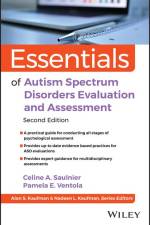
Quickly acquire the knowledge and skills you need to utilize the varied assessments frequently used in evaluating autism spectrum disorders With both the detection and awareness of autism spectrum disorders (ASD) on the rise, there is an urgent need for an increasing number of professionals to not only learn about the nature and course of the various autism spectrum disorders, but also to know how to identify, assess, and diagnose the presence of these disorders. Essentials of Autism Spectrum Disorders Evaluation and Assessment addresses the main domains of assessment, defines the purpose of the assessment, suggests test instruments, and discusses the unique clinical applications of each instrument to the diagnosis of ASD. Like all the volumes in the Essentials of Psychological Assessment series, each concise chapter features numerous callout boxes highlighting key concepts, bulleted points, and extensive illustrative material, as well as test questions that help you gauge and reinforce your grasp of the information covered. Providing an in-depth look at ASD evaluation and assessment, this straightforward book includes samples of integrated reports from comprehensive model diagnostic evaluations and prepares clinical and school psychologists, as well as speech and language pathologists, to effectively evaluate and assess ASD. Complete coverage of the identification andassessment of autism spectrum disorders Expert advice on avoiding common pitfalls Conveniently formatted for rapid reference Other titles in the Essentials of Psychological Assessment series: Essentials of Dyslexia Assessment and Intervention Essentials of Assessment Report Writing Essentials of School Neuropsychological Assessment Essentials of Evidence-Based Academic Interventions Essentials of Specific Learning Disability Identification Essentials of Processing Assessment Essentials of Executive Function Assessment Essentials of Cross-Battery Assessment, Second Edition
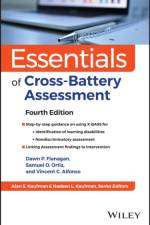
The most up-to-date resource of comprehensive information for conducting cross-battery assessments The Cross-Battery assessment approach also referred to as the XBA approach is a time-efficient assessment method grounded solidly in contemporary theory and research. The XBA approach systematically integrates data across cognitive, achievement, and neuropsychological batteries, enabling practitioners to expand their traditional assessments to more comprehensively address referral concerns. This approach also includes guidelines for identification of specific learning disabilities and assessment of cognitive strengths and weaknesses in individuals from culturally and linguistically diverse backgrounds. Like all the volumes in the Essentials of Psychological Assessment series, Essentials of Cross-Battery Assessment, Third Edition is designed to help busy practitioners quickly acquire the knowledge and skills they need to make optimal use of psychological assessment instruments. Each concise chapter features numerous callout boxes highlighting key concepts, bulleted points, and extensive illustrative material, as well as test questions that help you to gauge and reinforce your grasp of the information covered. Essentials of Cross-Battery Assessment, Third Edition is updated to include the latest editions of cognitive ability test batteries , such as the WISC-IV, WAIS-IV, and WJ III COG, and special purpose cognitive tests including the WMS-IV and TOMAL-II. This book now also overs many neuropsychological batteries such as the NEPSY-II and D-KEFS and provides extensive coverage of achievement batteries and special purpose tests, including the WIAT-III, KM-3, WRMT-3 and TOWL-4. In all, this book includes over 100 psychological batteries and 750 subtests, all of which are classified according to CHC (and many according to neuropsychlogical theory. This useful guide includes a timesaving CD-ROM, Essential Tools for Cross-Battery Assessment (XBA) Applications and Interpretation, which allows users to enter data and review results and interpretive statements that may be included in psychological reports. Note: CD-ROM/DVD and other supplementary materials are not included as part of eBook file.
An insightful guide to understanding and visualizing multivariate statistics using SAS , STATA , and SPSS Multivariate Analysis for the Biobehavioral and Social Sciences: A Graphical Approach outlines the essential multivariate methods for understanding data in the social and biobehavioral sciences. Using real-world data and the latest software applications, the book addresses the topic in a comprehensible and hands-on manner, making complex mathematical concepts accessible to readers. The authors promote the importance of clear, well-designed graphics in the scientific process, with visual representations accompanying the presented classical multivariate statistical methods . The book begins with a preparatory review of univariate statistical methods recast in matrix notation, followed by an accessible introduction to matrix algebra. Subsequent chapters explore fundamental multivariate methods and related key concepts, including: Factor analysis and related methods Multivariate graphics Canonical correlation Hotelling's T-squared Multivariate analysis of variance (MANOVA) Multiple regression and the general linear model (GLM) Each topic is introduced with a research-publication case study that demonstrates its real-world value. Next, the question "e;how do you do that?"e; is addressed with a complete, yet simplified, demonstration of the mathematics and concepts of the method. Finally, the authors show how the analysis of the data is performed using Stata , SAS , and SPSS . The discussed approaches are also applicable to a wide variety of modern extensions of multivariate methods as well as modern univariate regression methods. Chapters conclude with conceptual questions about the meaning of each method; computational questions that test the reader's ability to carry out the procedures on simple datasets; and data analysis questions for the use of the discussed software packages. Multivariate Analysis for the Biobehavioral and Social Sciences is an excellent book for behavioral, health, and social science courses on multivariate statistics at the graduate level. The book also serves as a valuable reference for professionals and researchers in the social, behavioral, and health sciences who would like to learn more about multivariate analysis and its relevant applications.
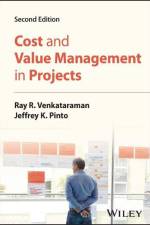
Cost and Value Management in Projects provides practicing managers with a thorough understanding of the various dimensions of cost and value in projects, along with the factors that impact them, and the managerial approaches that would be most effective for achieving cost efficiency and value optimization. This book addresses cost from a strategic perspective, offering thorough coverage of the various elements of value management such as value planning, value engineering and value analysis from the perspective of projects.
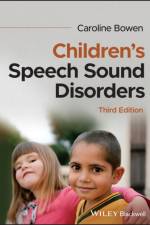
Caroline Bowen's Children s Speech Sound Disorders will be welcomed by experienced and novice clinicians, clinical educators, and students in the field of speech-language pathology/speech and language therapy for its practical, clinical focus. Drawing on the evidence base where possible, and making important theory to practice links overt, Bowen enhances her comprehensive account of assessment and clinical management of children with protracted or problematic speech development, with the addition of forty nine expert essays. These unique contributions are authored by fifty one internationally respected academicians, clinicians, researchers and thinkers representing a range of work settings, expertise, paradigms and theoretical orientations. In response to frequently asked questions about their work they address key theoretical, assessment, intervention, and service delivery issues.
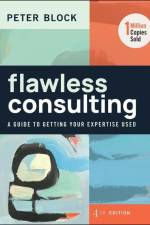
This Third Edition to Peter Block's Flawless Consulting addresses business changes and new challenges since the second edition was written ten years ago. It tackles the challenges next-generation consultants face, including more guidance on how to ask better questions, dealing with difficult clients, working in an increasingly virtual world, how to cope with complexities in international consulting, case studies, and guidelines on implementation. Also included are illustrative examples and exercises to help you cement the guides offered.
Featuring a wide range of international case studies, Ethics, Technology, and Engineering presents a unique and systematic approach for engineering students to deal with the ethical issues that are increasingly inherent in engineering practice. Utilizes a systematic approach to ethical case analysis -- the ethical cycle -- which features a wide range of real-life international case studies including the Challenger Space Shuttle, the Herald of Free Enterprise and biofuels. Covers a broad range of topics, including ethics in design, risks, responsibility, sustainability, and emerging technologies Can be used in conjunction with the online ethics tool Agora (http://www.ethicsandtechnology.com) Provides engineering students with a clear introduction to the main ethical theories Includes an extensive glossary with key terms
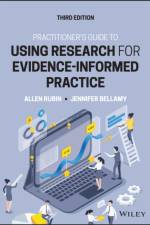
Written by a top scholar in the field, Practitioner's Guide to Using Research for Evidence-Based Practice gives essential and practical guidance on how to integrate research appraisal into evidence-based practice endeavors to ensure the best client care. This reader-friendly book presents you with the knowledge you need about various research designs and methods so that when engaging in the evidence-based practice (EBP) process, you can determine which interventions, programs, policies, and assessment tools are supported by the best evidence.
Abonner på vårt nyhetsbrev og få rabatter og inspirasjon til din neste leseopplevelse.
Ved å abonnere godtar du vår personvernerklæring.