










Gjør som tusenvis av andre bokelskere
Abonner på vårt nyhetsbrev og få rabatter og inspirasjon til din neste leseopplevelse.
Ved å abonnere godtar du vår personvernerklæring.Du kan når som helst melde deg av våre nyhetsbrev.

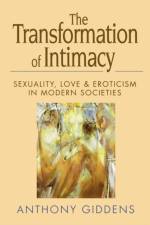
The sexual revolution: an evocative term, but what meaning can be given to it today? How does 'sexuality' come into being and what connections does it have with the changes that have affected personal life on a more general plane? In answering these questions, Anthony Giddens disputes many of the dominant interpretations of the role of sexuality in modern culture. The emergence of what the author calls plastic sexuality - sexuality freed from its intrinsic relation to reproduction - is analysed in terms of the long-term development of the modern social order and social influences of the last few decades. Giddens argues that the transformation of intimacy, in which women have played the major part, holds out the possibility of a radical democratization of the personal sphere. This book will appeal to a large general audience as well as being essential reading for students and professionals.
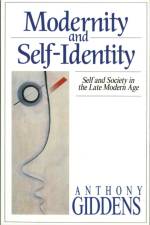
This major study develops a new account of modernity and its relation to the self. Building upon the ideas set out in The Consequences of Modernity, Giddens argues that 'high' or 'late' modernity is a post traditional order characterised by a developed institutional reflexivity. In the current period, the globalising tendencies of modern institutions are accompanied by a transformation of day-to-day social life having profound implications for personal activities. The self becomes a 'reflexive project', sustained through a revisable narrative of self identity. The reflexive project of the self, the author seeks to show, is a form of control or mastery which parallels the overall orientation of modern institutions towards 'colonising the future'. Yet it also helps promote tendencies which place that orientation radically in question - and which provide the substance of a new political agenda for late modernity. In this book Giddens concerns himself with themes he has often been accused of unduly neglecting, including especially the psychology of self and self-identity. The volumes are a decisive step in the development of his thinking, and will be essential reading for students and professionals in the areas of social and political theory, sociology, human geography and social psychology.
How should one understand the nature and possibilities of political radicalism today? The political radical is normally thought of as someone who stands on the left, opposing backward-looking conservatism. In the present day, however, the left has turned defensive, while the right has become radical, advocating the free play of market forces no matter what obstacles of tradition or custom stand in their way. What explains such a curious twist of perspective? In answering this question Giddens develops a new framework for radical politics, drawing freely on what he calls "e;philosophic conservatism"e;, but applying this outlook in the service of values normally associated with the Left. The ecological crisis is at the core of this analysis, but is understood by Giddens in an unconventional way - as a response to a world in which modernity has run up against its limits as a social and moral order. The end of nature, as an entity existing independently of human intervention, and the end of tradition, combined with the impact of globalization, are the forces which now have to be confronted, made use of and coped with. This book provides a powerful interpretation of the rise of fundamentalism, of democracy, the persistence of gender divisions and the question of a normative political theory of violence. It will be essential reading for anyone seeking a novel approach to the political challenges which we face at the turn of the twenty-first century.
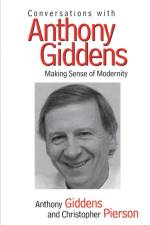
Anthony Giddens has been described as 'the most important English social philosopher of our time'. Over twenty-five years, and even more books, he has established himself as the most widely-read and widely-cited social theorist of his generation. His ideas have profoundly influenced the writing and teaching of sociology and social theory throughout the English-speaking world. In recent years, his writing has become much more explicitly political, and in 1996 he took up his high-profile appointment as Director of the London School of Economics and Political Science. It is in this new position and with these new political ideas that he has been described as the key intellectual figure of New Labour in Britain. Following the astonishing success of Labour in the 1997 General Election, his ideas have been the focus of intense interest. In this series of extended interviews with Chris Pierson, Giddens lays out with customary clarity and directness the principal themes in the development of his social theory and the distinctive political agenda which he recommends. This volume will be of great interest to second- and third-year students in sociology and social theory, politics and political theory, as well as to the general reader.
With the growing challenges of economic globalization and national welfare state retrenchment, the development and future of EU social policy has become increasingly important. This exciting new textbook provides a comprehensive, detailed and up-to-date overview of this contested area and examines whether EU social policy is strengthening or weakening European social policy regimes. The book begins with a general outline of the postwar development of EU social policy and its evolving relationship to the theory and practice of European integration. Then it provides a detailed and theoretically engaged description of the main areas of EU social policy including: labour, gender, anti-poverty, anti-discrimination, elderly, disability, youth, and public health policy. There is also a chapter exploring the social policy role of the structural funds, particularly the European Social Fund. The book concludes by arguing against both sides of the strengthening/weakening debate, calling for a more subtle analysis of the effects of EU social policy on national social policy regimes. This book is the most up-to-date and comprehensive available and offers the reader a detailed and accessible exploration of the area. It will be essential reading for anyone studying the EU or national social policy, as well as for practitioners in the field.
This book provides an introduction to the work of Norbert Elias. It is the first systematic appraisal of two central themes of his thought - violence and civilization. Although Elias is best known for his theory of civilizing processes, this study highlights the crucial importance of the concept of decivilizing processes. Fletcher argues that while Elias did not develop a theory of decivilizing processes, such a theory is logically implied in his perspective and is highly pertinent to an understanding of the most violent episodes of twentieth-century history, such as the Nazi genocides. Elias's original synthesis of sociology and psychology is examined through an analysis of several key texts including The Civilizing Process, The Established and the Outsiders and The Germans. Fletcher shows how Elias constructs his "e;figurational models"e; and applies these comparatively to specific historical examples drawn from England and Germany. Violence and Civilization is an excellent introduction to Elias's work. It will appeal to students of sociology, anthropology, and history interested in understanding the phenomenon of violence in the modern world.
This exciting new book is the first comprehensive and critical study of the relationship between the Pragmatist tradition and political theory. Festenstein develops his argument through a detailed and original reading of four key thinkers: John Dewey, Richard Rorty, Jurgen Habermas and Hilary Putnam.
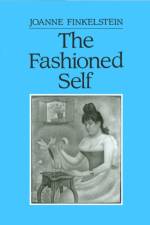
This book examines the nature of the self and self-identity in the modern age, and the way in which they have been moulded through the alteration of bodily appearance, exemplified fashions, facelifts and diets. The idea that an individual's character is revealed through physical appearance is, Finkelstein argues, deeply embedded in Western culture. And since fashions and cosmetics are closely linked to sexual difference, the author concentrates on aspects of gender identity, suggesting that the female and male identity are differentiated through opposed experiences of the body.
This introductory textbook examines the role of the Third World and the processes of development from the study of international politics and argues that in an increasingly globalized world development can no longer be seen as an isolated practice.
This book provides a critical assessment of contemporary social theory for students in the social sciences. Delanty examines the writings of a number of key contemporary thinkers, including Habermas, Foucault, Bauman, Touraine, Giddens and Beck, and provides a clear account of the strengths and limitations of their work.
This introductory textbook offers a concise and lucid account of the main developments in contemporary feminist thinking, and demonstrates the centrality of feminist thought to all areas of intellectual enquiry. In a wide-ranging discussion, Evans argues that most accounts of the world since the Enlightenment have been constructed in terms of a distinction between the public and the private which excluded women. Using both historical and more recent examples, she examines the breadth and complexity of feminist thinking, focusing on key themes such as the body, representation, engendering knowledge, and the relationship between women and the state. Evans argues that feminist thought seeks less to add to existing theory than to re-theorize the social and symbolic worlds; no contemporary account of these worlds, she suggests, is complete without a discussion of the implications of gender difference. This book offers a clear and coherent guide to contemporary feminism for students of women's studies, gender studies, sociology, social theory and literary theory.
This book presents a series of pioneering studies which together constitute a reappraisal of our understanding of the relationship between gender and history.
In recent years there has been a resurgence of interest in the work of Emmanuel Levinas, widely recognized as one of the most important yet difficult philosophers of the 20th century. In this much-needed introduction, Davis unpacks the concepts at the centre of Levinas's thought - alterity, the Other, the Face, infinity - concepts which have previously presented readers with major problems of interpretation. Davis traces the development of Levinas's thought over six decades, describing the context in which he worked, and the impact of his writings. He argues that Levinas's work remains tied to the ontological tradition with which he wants to break, and demonstrates how his later writing tries to overcome this dependency by its increasingly disruptive, sometimes opaque, textual practice. He discusses Levinas's theological writings and his relationship to Judaism, as well as the reception of his work by contemporary thinkers, arguing that the influence of his work has led to a growing interest in ethical issues among poststructuralist and postmodernist thinkers in recent years. Comprehensive and clearly written, this book will be essential reading for students and researchers in continental philosophy, French studies, literary theory and theology.
The aim of this book is both to illustrate and to discuss some of the main varieties of cultural history which have emerged since the questioning of what might be called its "e;classic"e; form, exemplified in the work of Jacob Burckhardt and Johan Huizinga. Among the themes of individual chapters are the history of popular culture, the history of Carnival, the history of mentalities, the history of gestures, the history of jokes, and even the history of dreams. The emphasis of both the introduction and the case-studies which follow is on the variety of forms taken by cultural history today. The classic model has not been replaced by any new orthodoxy, despite the importance of approaches inspired by social and cultural anthropology. Variety is to be found in the cultures studied as well as among their historians. The case-studies included in the volume come not only from Europe (and in particular from Italy) but also from the New World, especially Brazil. Particular emphasis is placed on the importance of cultural encounters, cultural conflicts, and their consequences, whether these consequences should be described in terms of mixing, syncretism or synthesis. Written by one of the leading cultural historians in Europe today, this book will be of particular interest to students of early modern Europe, of the encounters between European culture and the New World, and to students and scholars interested in problems of historiography.
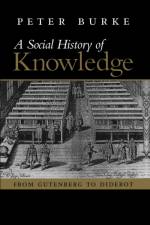
In this book Peter Burke adopts a socio-cultural approach to examine the changes in the organization of knowledge in Europe from the invention of printing to the publication of the French Encyclop die. The book opens with an assessment of different sociologies of knowledge from Mannheim to Foucault and beyond, and goes on to discuss intellectuals as a social group and the social institutions (especially universities and academies) which encouraged or discouraged intellectual innovation. Then, in a series of separate chapters, Burke explores the geography, anthropology, politics and economics of knowledge, focusing on the role of cities, academies, states and markets in the process of gathering, classifying, spreading and sometimes concealing information. The final chapters deal with knowledge from the point of view of the individual reader, listener, viewer or consumer, including the problem of the reliability of knowledge discussed so vigorously in the seventeenth century. One of the most original features of this book is its discussion of knowledges in the plural. It centres on printed knowledge, especially academic knowledge, but it treats the history of the knowledge 'explosion' which followed the invention of printing and the discovery of the world beyond Europe as a process of exchange or negotiation between different knowledges, such as male and female, theoretical and practical, high-status and low-status, and European and non-European. Although written primarily as a contribution to social or socio-cultural history, this book will also be of interest to historians of science, sociologists, anthropologists, geographers and others in another age of information explosion.
This book aims to understand the different readings of Castiglione's Cortegiano or Book of the Courtier from the Renaissance to the twentieth century.
The Art of Conversation is a major contribution to the social history of language - a relatively new field which has become the focus of lively interdisciplinary debate in recent years. Drawing on the work of sociolinguists and others, Burke uses their concept while reserving the right to qualify their theories where the historical record makes this seem appropriate. Like the sociolinguists, Burke in concerned with the way language varies according to who is communicating to whom, on what occasion, in what medium and on what topic. Unlike many sociolinguists, Burke adds a historical dimension, treating language as an inseparable part of social history. This approach is outlined and justified in the first chapter and then exemplified in the remaining four, which deal with the early modern period. Among the topics discussed are the changing role of Latin, which is shown to be very much alive in the age of its alleged decline; language and identity in Italy, a politically divided region at the time but one where educated elites had a common language; the art of conversation, in other words the advice on speaking in polite company offered in hundreds of treaties of the period; and silence, viewed as an act of communication with a significance which changes over time and varies according to the setting and the persons who are silent. The Art of Conversation will be of great interest to students and scholars in social and cultural history, linguistics, the sociology of language and the ethnography of communication.
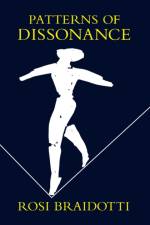
This book is a brilliant and timely analysis of the complex issues raised by the relation between women and philosophy. It offers a critical account of a wide range of contemporary philosophical and feminist texts and it develops this account into an original project of critical feminist thought. Braidotti examines contemporary French philosophy as practised by men such as Foucault and Derrida, showing that they rely on a notion of 'the feminine' in order to undermine classical thought, which bears no direct relevance to the historical experience of women. Braidotti then looks at the attempts of contemporary feminist thinkers in Europe and the United States to show the gendered nature of discursive power games. She discusses the contributions of Luce Irigaray and many other feminist theorists to the understanding of sexual difference and of its implications for philosophy and politics. This book will be of interest to students and researchers in women's studies, feminist theory, social theory, cultural studies, philosophy and literature, and anyone interested in contemporary feminism and the relation between feminist theory, post-structuralism and psychoanalysis.
Hannah Arendt is increasingly recognised as one of the most original social and political thinkers of the twentieth century. In this important book, Richard Bernstein sets out to show that many of the most significant themes in Arendt's thinking have their origins in their confrontation with the Jewish Question. By approaching her mature work from this perspective, we can gain a richer and more subtle grasp of her main ideas. Bernstein discusses some of the key experiences and events in Arendt's life story in order to show how they shaped her thinking. He examines her distinction between the Jewish parvenu and the pariah, and shows how the conscious pariah becomes a basis for understanding the independent thinker. Arendt's deepest insights about politics emerged from her reflections on statelessness, which were based on her own experiences as a stateless person. By confronting the horrors of totalitarianism and the concentration camps, Arendt developed her own distinctive understanding of authentic politics - the politics required to express our humanity and which totalitarianism sought to destroy. Finally, Bernstein takes up Arendt's concern with the phenomenon of the banality of evil. He follows her use of Eichmann in order to explore how the failure to think and to judge is the key for grasping this new phenomenon. Hannah Arendt and the Jewish Question offers a new interpretation of Arendt and her work - one which situates her in her historical context as an engaged Jewish intellectual.
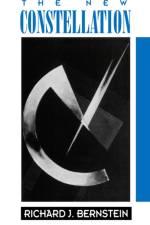
In this major new work, Bernstein explores the ethical and political dimensions of the modernity/post-modernity debate. Bernstein argues that modernity / post-modernity should be understood as a kind of mood - one which is amorphous, shifting and protean but which exerts a powerful influence on our current thinking. Focusing on thinkers such as Heidegger, Derrida, Foucault, Habermas and Rorty, Bernstein probes the strengths and weaknesses of their work, and shows how they have contributed to the formation of a new mood, a new and distinctive constellation of ideas. This new constellation has put ethical and political issues back on the philosophical agenda, forcing us to confront anew, the Socratic question 'How should I live?'
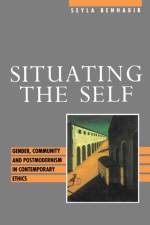
Focusing on contemporary debates in moral and political theory, Situating the Self argues that a non-relative ethics, binding on us in virtue of out humanity, is still a philosophically viable project. This intersting new book should be read by all those concerned with the problems of critical theory, the analysis of modernity, and contemporary ethics, as well as students and professionals in philosophy, sociology and political science.
All major western countries today contain groups that differ in their religious beliefs, customary practices or ideas about the right way in which to live. How should public policy respond to this diversity? In this important new work, Brian Barry challenges the currently orthodox answer and develops a powerful restatement of an egalitarian liberalism for the twenty-first century. Until recently it was assumed without much question that cultural diversity could best be accommodated by leaving cultural minorities free to associate in pursuit of their distinctive ends within the limits imposed by a common framework of laws. This solution is rejected by an influential school of political theorists, among whom some of the best known are William Galston, Will Kymlicka, Bhikhu Parekh, Charles Taylor and Iris Marion Young. According to them, this 'difference-blind' conception of liberal equality fails to deliver either liberty or equal treatment. In its place, they propose that the state should 'recognize' group identities, by granting groups exemptions from certain laws, publicly 'affirming' their value, and by providing them with special privileges or subsidies. In Culture and Equality, Barry offers an incisive critique of these arguments and suggests that theorists of multiculturism tend to misdiagnose the problems of minority groups. Often, these are not rooted in culture, and multiculturalist policies may actually stand in the way of universalistic measures that would be genuinely beneficial.
The purpose and location of frontiers affect all human societies in the contemporary world - this book offers an introduction to them and the issues they raise.
Since his death in 1986, Michel de Certeau's reputation as a thinker has steadily grown both in France and throughout the English-speaking world. His work is extraordinarily innovative and wide-ranging, cutting across issues in historiography, literary and cultural studies, anthropology, sociology, theology, philosophy and psychoanalysis. This book represents the first full-length study of Certeau's thought. It is organized around the central theme of interpretation and alterity, which Ahearne uses to illuminate Certeau's work as a whole. The author also examines Certeau's theory and practice of historiography; his reflection on the relations between changing historical forms of writing, reading and orality; and his distinction between the "e;strategic"e; programmes of the politically powerful and the "e;tactics"e; of the relatively powerless. Ahearne places Certeau's work in its general intellectual context, relating it to the views of important contemporary thinkers, such as Pierre Bourdieu and Michel Foucault, and demonstrating the decisive importance to Certeau's thought of the writings of the early modern mystics and travellers. This book constitutes an excellent critical introduction to Certeau's work, while also providing a comprehensive and nuanced reading for those already familiar with his thought.
In this book the author moves beyond the time of clocks and calendars in order to study time as embedded in social interactions, structures, practices and knowledge, in artefacts, in the body, and in the environment. Adam suggests ways not merely to deconstruct but to reconstruct both common-sense and social science understanding.
Many authors who discuss the idea of globalization see it as continuing pre-established paths of development of modern societies. Post-modernist writers, by contrast, have lost sight of the importance of historical narrative altogether. Martin Albrow argues that neither group is able to recognize the new era which stares us in the face. A history of the present needs an explicit epochal theory to understand the transition to the Global Age. When globality displaces modernity there is a general decentering of state, government, economy, culture, and community. Albrow calls for a recasting of the theory of such institutions and the relations between them. He finds an open potential for society to recover its abiding significance in the face of the declining nation state. At the same time a new kind of citizenship is emerging. This important book will provoke both radicals and conservatives. Its scholarship ranges widely across the social sciences and humanities. It is bound to promote wide cross-disciplinary debate.
Roman Disasters looks at how the Romans coped with, thought about, and used disasters for their own ends. Rome has been famous throughout history for its great triumphs. Yet Rome also suffered colossal disasters. From the battle of Cannae, where fifty thousand men fell in a single day, to the destruction of Pompeii, to the first appearance of the bubonic plague, the Romans experienced large scale calamities.Earthquakes, fires, floods and famines also regularly afflicted them.This insightful book is the first to treat such disasters as a conceptual unity. It shows that vulnerability to disasters was affected by politics, social status, ideology and economics. Above all, it illustrates how the resilience of their political and cultural system allowed the Romans to survive the impact of these life-threatening events. The book also explores the important role disaster narratives played in Christian thought and rhetoric.Engaging and accessible, Roman Disasters will be enjoyed by students and general readers alike.
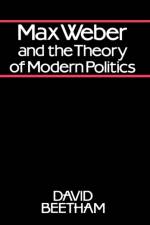
Max Weber's writings on the politics of Wilhelmine in Germany and the Russian revolutions of 1905 and 1917 are much less well known than his contributions to historical and theoretical sociology, yet they are essential to any overall assessment of his thought. Drawing on these writings, still mostly untranslated, David Beetham offers the most comprehensive account available in English of Weber's political theory. The book explores Weber's central concern with the prospects for liberal Parliamentarism in authoritarian societies and in an age of mass politics and bureaucratic organization, and shows how this concern led him to a revision of democratic theory which is still influential. It argues that Weber's analyzis of the class basis of contemporary politics necessitate a modification in some of the accepted interpretations of his sociology of modern capitalism. A special feature of the book is its full treatment of the extensive German literature on Weber's political thought. This second edition contains a substantial new critical introduction and an expanded bibliography. Otherwise the text of the widely acclaimed first edition remains unaltered. This is a book which adds an essential dimension to the understanding of Max Weber for students of sociology and politics who have previously only approached his work through his sociological writings.
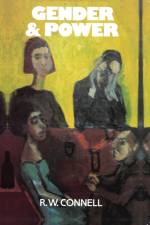
This book is an important introductory textbook on sexual politics and an original contribution to the reformulation of social and political theory. In a discussion of, among other issues, psychoanalysis, Marxism and feminist theories, the structure of gender relations, and working class feminism, Connell has produced a major work of synthesis and scholarship which will be of unique value to students and professionals in sociology, politics, women's studies and to anyone interested in the field of sexual politics. Visit www.raewynconnell.net
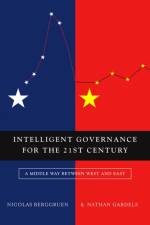
For decades, liberal democracy has been extolled as the best system of governance to have emerged out of the long experience of history. Today, such a confident assertion is far from self-evident. Democracy, in crisis across the West, must prove itself. In the West today, the authors argue, we no longer live in "e;industrial democracies,"e; but "e;consumer democracies"e; in which the governing ethos has ended up drowning households and governments in debt and resulted in paralyzing partisanship. In contrast, the long-term focus of the decisive and unified leadership of China is boldly moving its nation into the future. But China also faces challenges arising from its meteoric rise. Its burgeoning middle class will increasingly demand more participation, accountability of government, curbing corruption and the rule of law. As the 21st Century unfolds, both of these core systems of the global order must contend with the same reality: a genuinely multi-polar world where no single power dominates and in which societies themselves are becoming increasingly diverse. The authors argue that a new system of "e;intelligent governance"e; is required to meet these new challenges. To cope, the authors argue that both East and West can benefit by adapting each other s best practices. Examining this in relation to widely varying political and cultural contexts, the authors quip that while China must lighten up, the US must tighten up. This highly timely volume is both a conceptual and practical guide of impressive scope to the challenges of good governance as the world continues to undergo profound transformation in the coming decades.
Abonner på vårt nyhetsbrev og få rabatter og inspirasjon til din neste leseopplevelse.
Ved å abonnere godtar du vår personvernerklæring.