
















Gjør som tusenvis av andre bokelskere
Abonner på vårt nyhetsbrev og få rabatter og inspirasjon til din neste leseopplevelse.
Ved å abonnere godtar du vår personvernerklæring.Du kan når som helst melde deg av våre nyhetsbrev.

Women's awareness of the threat and reality of sexual violence is now perhaps more than ever publicly acknowledged. Yet this fact continues to be almost wholly ignored. This new study, based on in-depth interviews with 60 women, is the first to cover the experience of a range of forms of sexual violence over women's lifetimes. Drawing on feminist theory, developing a critique of male research and quoting extensively from the women interviewed, it developes feminist thought in several key areas: the similarities and differences between forms of sexual violence; the ways women define their experiences; and the strategies women use in resisting, coping with and surviving sexual violence. The author stresses the importance for all women of recognizing the incidents of sexual violence in their lives and seeing themselves and other women as survivors rather than victims. In highlighting the ways in which the media, the criminal justice system and even the "e;helping"e; profess ions contribute to the trivialization of sexual violence, she demonstrates the necessity of women organizing collectively to end this suffering.
It is only a decade ago that the eighteenth-century distinction between civil society and the state seemed old-fashioned, an object of cynicism, even of outright hostility. In this important new book, John Keane shows how, in a wholly unexpected reversal of fortunes, this antiquated distinction has since become voguish among politicians, academics, journalists, business leaders, relief agencies and citizens' organizations. John Keane examines the various sources and phases of the dramatic world-wide popularization of the term. He traces its reappearance in a wide range of contexts - from China to Tunisia, from South Africa to the emerging European Union - and clarifies the conflicting grammars and vocabularies of the language of civil society. Considerable care is taken to highlight the different possible meanings of the distinction between civil society and the state. Keane also takes the reader into previously uncharted intellectual territory by demonstrating that the civil society perspective contains unharnessed potentials: that it is possible to develop bold new images of civil society that alter the ways in which we think about matters such as power, property, violence, politics, publicity and democracy. Written with style and imagination, this important book by John Keane will be of great interest to students and scholars in politics, media studies, sociology, social and political theory, and to a broader public audience interested in the central debates and political developments of our time.
This is a major contribution to feminist theory and debate, addressing issues such as sexual violence, social violence and hatred of foreigners in a lucid and highly original way.
This volume develops a novel approach to state theory. It offers a comprehensive review of the existing literature on the state and sets a new agenda for state research. Four central themes define the scope of the book: an account of the bases of the operational autonomy of the state; the need to develop state theory as part of a more general social theory; the possibilities of explaining 'capitalist societalization' without assuming that the economy is the ultimate determinant of societal dynamics; and a defence of the method of articulation in theory construction. In developing these issues, Bob Jessop both builds on and goes well beyond the view presented in his earlier books, The Capitalist State (1982) and Nicos Poulantzas (1985). The result is a highly original statement which will become a center-point of discussion. The volume confirms the author's standing as one of the most important post-War Marxist state theorists.
This book marks a radical and powerful intervention in traditional arguments about pornography. Kappeler re-examines the artistic distinctions between fantasy and reality, pornography and erotica, and challenges the legal definition of obscenity as well as the intellectual defence of 'freedom of expression'. By linking images of actual violence with the imaginative portrayal of women in the realm of the aesthetic, she establishes vital connections between modes of representation and social forms of power and domination. It is essential reading for anyone concerned with issues of pornography and sexual politics and related debates in literary criticism and cultural studies.
This book provides a clear and comprehensive introduction to the work of Willard van Orman Quine, the most important and influential American philosopher of the post-war period. An understanding of Quine's work is essential for anyone who wishes to follow contemporary debates in the philosophy of language, the philosophy of mind and metaphysics. Hookway traces the development of Quine's work from his early criticisms of logical positivism and empiricism to his more recent theories about mind and meaning. He gives particular attention to Quine's controversial arguments concerning the indeterminacy of translation, comparing Quine's views with those of Davidson, Putnam and others. Hookway concludes by offering a critical appraisal of Quine's approach and of some of his fundamental philosophical commitments. This lucid and balanced study will be essential reading for students of philosophy. It will also be invaluable for students in the social sciences and other disciplines who are looking for a clear introduction to Quine's ideas.
In this book Paul Hirst makes a major contribution to democratic thinking, advocating "e;associative democracy"e;; the belief that human welfare and liberty are best served when as many of the affairs of society as possible are managed by voluntary and democratically self-governing associations.
The writings of Harold Garfinkel have had a major impact on the social sciences and linguistics. This book offers a systematic and innovative analysis of his theories and of the ethnomethodological movement which he has inspired. It is the only full-length study focused on the writings of Harold Garfinkel and will be essential reading for all those concerned with understanding and evaluating one of the most radically original social scientists of recent times.
This book provides a highly original account of the changing meaning of democracy in the contemporary world, offering both an historical and philosophical analysis of the nature and prospects of democracy today.
This volume offers an incisive overview of central issues and controversies in political thought and analysis. It includes major discussions of the idea of the modern state, contemporary theories of the state, problems of power and legitimation, new forms of democratic ideal, citizenship and social movements, the direction of public policy and the fate of sovereignty in the modern global system. While analysing these topics, the author critically assesses the thought of many of those who have contributed decisively to political discussion. Among those whose works are discussed are classic figures such as Hobbes, Locke, Mill and Marx, as well as contemporary writers such as Habermas, Offe and Giddens. Political Theory and the Modern State is an ideal resource for students seeking an introduction to modern politics and political sociology. It is also an original statement about the many competing perspectives in political thought today.
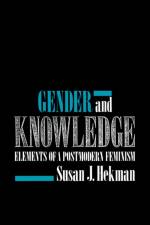
After the success of the hardback, students and academics will welcome the publication of this book in paperback. The aim of the book is to explore the connection between two perspectives that have had a profound effect upon contemporary thought: post-modernism and feminism. Through bringing together and systematically analysing the relations between these, Hekman is able to make a major intervention into current debates in social theory and philosophy. The critique of Enlightenment knowledge, she argues, is at the core of both post-modernism and feminism. Each also offers a basis for critical reflections about the other. In particular, post-modern philosophy provides a means of criticizing aspects of contemporary feminism and thus contributing to the development of a more sophisticated approach to current feminist issues.
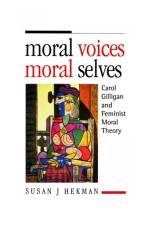
This book is an original discussion of key problems in moral theory. The author argues that the work of recent feminist theorists in this area, particularly that of Carol Gilligan, marks a radically new departure in moral thinking. Gilligan claims that there is not only one true, moral voice, but two: one masculine, one feminine. Moral values and concerns associated with a feminine outlook are relational rather than autonomous; they depend upon interaction with others. In a far-reaching examination and critique of Gilligan's theory, Hekman seeks to deconstruct the major traditions of moral theory which have been dominant since the Enlightenment. She challenges the centrepiece of that tradition: the disembodied, autonomous subject of modernist philosophy. Gilligan's approach transforms moral theory from the study of abstract universal principles to the analysis of moral claims situated in the interactions of people in definite social contexts. Hekman argues that Gilligan's approach entails a multiplicity of moral voices, not just one or even two. This book addresses moral problems in a challenging way and will find a wide readership among philosopher's, feminist thinkers and psychologists.
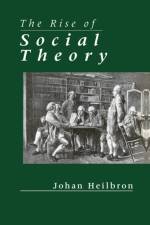
This book is a detailed and wide-ranging account of the birth of social theory as a distinctive and modern intellectual genre, providing a brilliant account of the "e;pre-history"e; of sociology and a vivid portrayal of intellectual culture between the Enlightenment and the age of Romanticism.
This book provides an accessible account of popular political, social and economic movements in the Third World. Focusing on poor and marginalized groups within developing countries, it shows how these groups have been stimulated into action by recent demands for political and economic change. Haynes describes the growing interest in democratic change in the Third World during the 1980s and 1990s, and argues that demands for democracy, human rights and economic change were a widespread catalyst for the emergence of hundreds of thousands of popular movements in Latin America, Africa and Asia. Sometimes these took the form of demands for more political representation and greater economic development; others were concerned with environmental protection, the broad position of women and the establishment of Islamic states and societies. Haynes argues that these emerging popular organizations are best regarded as building blocks of civil society that, in time, will enhance the democratic nature of many political environments in the Third World. The book will be welcomed by students and researchers in development studies, politics and sociology.
The new study provides a fresh and timely reassessment of the political philosophy of Hannah Arendt. While analysing the central themes of Arendt's work, Phillip Hansen also shows that her work makes a significant contribution to contemporary debates. Specifically, Hansen argues that Arendt provides a powerful account of what it means to think and act politically. This account can establish the grounds for a contemporary citizen rationality in the face of threat to a genuine politics. Amoung other issues, Hansen discusses Arendt's conception of history and historical action; her account of politics and of the distinction between public and private; her analysis of totalitarianism as the most ominous form of 'false ' politics; and her treatment of revolution. The book is a balanced and opportune reappraisal of Arendt's contributions to social and political theory. It will be welcomed by students and scholars in politics, sociology and philosophy.
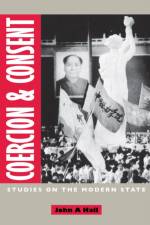
This book examines the key institutional structures and processes of modernity. Combining historical insight with sustained political and social analysis, Hall analyses the form and character of capitalism, war, late development, civil society and the the causes and collapse of socialism and addesses the revival of nationalism and the possibilities of democratization.
This is a lucid study of Walter Benjamin's lifelong fascination with the city and forms of metropolitan experience, highlighting the relevance of Benjamin's work to our contemporary understanding of modernity.
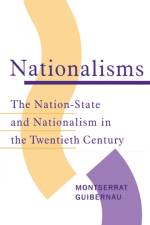
Guibernau offers a comparative analysis of nationalist movements in nations without states.
This is a comprehensive and accessible account of the nature of nationalism, which has re-emerged as one of the fundamental forces shaping world society today.
This book examines the different ways in which order has been achieved in world affairs with a view to understanding current political dilemmas and opportunities. International Ordersbegins by distinguishing between world order and international order in the spirit of Hedley Bull. This leads to an analysis of five different principles of international order - the principles of the balance of power, the concert of great powers, liberal regimes, interdependence, and the exercise of hegemony. However, principles of international order are rarely simply clear cut in their operations, they intermingle with the perceptions of human agents and the plans of political leaders who have sought to structure the world polity to serve particular aims. The core of this volume comprises a detailed historical sociology of how international order was achieved at three crucial phases in the history of the states system. Theories and evidence are deployed to examine: the emergence of the European states system; the development of the European state from Westphalia to the rise of Nazism; and the emergence and impact of the Cold War. Throughout, the theories of world order are examined, tested and, in the light of evidence, improved. In conclusion, considerable attention is given to the forces of integration and disintegration which might strengthen or undermine world order in the future, and an argument is offered concerning the ethical grounds on which intervention in the affairs of another state might be justified.
What are the relations between feminism and history, feminist politics and historical practice? What are the connections between gender and class? What part have racial identities and ethnic difference played in the construction of Englishness? Through a series of provocative and richly detailed essays, Catherine Hall explores these questions. She argues that feminism has opened up vital new questions for history and transformed familiar historical narratives. Class can no longer be understood outside of gender, or gender outside of class. But English identities have also been rooted in imperial power. White, Male and Middle Class explores the ways in which middle-class masculinities were rooted in conceptions of power over dependants - whether black or female.
This is a lively introduction to management, covering an array of management orthodoxies and demonstrating, through contemporary sociological theory, that many of the old approaches are in need of reconstruction.
Representations of Youth examines the various constructions of `youth' and `adolescence' in recent British and North American research. Mainstream and radical approaches have presented a series of `crises' about young people in relation to, among other things, unemployment, `teenage pregnancy' and `delinquency'. This book considers research in psychology, sociology, education, criminology and cultural studies in order to assess these accounts. The author offers a critical review of a wide range of findings about young people in areas as diverse as education and training, leisure, family life and sexuality. She shows that whilst youth research texts do not reflect young people's experiences in any straightforward manner, they do indicate the various complex and contradictory ways in which `youth', `adolescence' and specific groups of young people are represented in contemporary western societies. In so arguing, she presents new terms for thinking about the position of young people today. This is an important new text accessibly written for students of sociology, social psychology and contemporary culture in both Britain and the USA. It will also be of great interest to social science researchers in a range of other disciplines.
With their remarkable electoral successes, Green parties worldwide seized the political imagination of friends and foes alike. Mainstream politicians busily disparage them and imitate them in turn. This new book shows that 'greens' deserve to be taken more seriously than that. This is the first full-length philosophical discussion of the green political programme. Goodin shows that green public policy proposals are unified by a single, coherent moral vision - a 'green theory of value' - that is largely independent of the `green theory of agency' dictating green political mechanisms, strategies and tactics on the one hand, and personal lifestyle recommendations on the other. The upshot is that we demand that politicians implement green public policies, and implement them completely, without committing ourselves to the other often more eccentric aspects of green doctrine that threaten to alienate so many potential supporters.
This book establishes whether contemporary social theory can help us understand the structural origins of environmental degradation and environmental politics.
In this book Anthony Giddens addresses a range of issues concerning current developments in social theory, relating them to the prospects for sociology in the closing decades of the twentieth century. Composed of closely integrated papers, all written over the past few years, the book includes seven essays not previously published, plus two have not appeared in English before. In assessing the likely future evolution of sociology in particular, and the social sciences in general, the author both draws upon ideas established in his more abstract theoretical writings and examines critically competing traditions of thought. Those looking for an accessible introduction to Gidden's writing will find in this book a set of clear expositions of his basic ideas. By situating these ideas in relation to the critical assessment of the views of others, however, the author provides new sources of insight into the distinctiveness of his own claims.
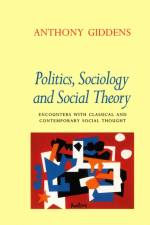
Built upon a series of critical encounters with major figures in classical and present-day social and political thought, this volume offers not only a challenging critique of major traditions of social and political analysis, but unique insights into the ideas which Giddens has developed over the past two decades.
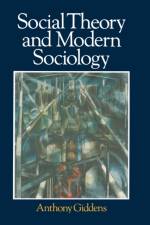
Is there a future for sociology? To many, sociology seems to have lost its way. Born of the ideas of Auguste Comte in the nineteenth century, sociology established itself as 'the science of modernity', linked to a progressive view of history. Yet today the idea of progress has more or less collapsed; with its demise, some say, sociological thought has moved to the margins of contemporary intellectual culture. In this book the author challenges such an interpretation, showing that sociology continues to hold a central position within the social sciences. Looking both to the past of sociology and the diversity of intellectual trends found in the present-day, Giddens explores many aspects of the sociological heritage. Comte, Durkheim, Parsons, Marshall, and Habermas are among the figures covered. Giddens also connects sociological work directly to current political issues and places the discipline of sociology in the context of broad questions of social and political theory. This book will be of interest to undergraduates and professionals in the fields of sociology, anthropology and political science.
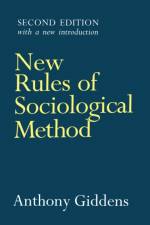
This is a new and revised edition of a book which has already established itself as a basic text in social theory. The first section of the work provides a concise critical analysis of some leading schools of thought in social philosophy, giving particular attention to phenomenology, ethnomethodology and Wittgensteinian thought. Giddens concentrates primarily upon the implications of these various perspectives for an account of human action and its intelligibility. An `action approach' on its own, however, will not do; in human social life, action and structure presuppose one another. The author therefore moves on to provide a series of concepts relevant to understanding the production and reproduction of society. The book concludes with a succinct statement of some `new rules of sociological method'. Representing the first, and most trenchant, exposition of the principles of structuration theory, this edition also contains a substantial new Introduction in which Giddens replies to some of the more persistent criticisms made of the original version and also addresses some important issues originally discussed only in a cursory way.
The social sciences have long been based upon contrasts drawn between the 'militaristic' societies of the past, and the 'capitalist' or 'industrial' societies of the present. But how valid are such contrasts, given that the current era is one stamped by the impact of war and by the intensive development of sophisticated weaponry? In setting out to address this and similar questions, this book investigates issues that have been substantially neglected by those working in sociology and social theory. Anthony Giddens offers a sociological analysis of the nature of the modern nation-state and its association with the means of waging war. His analysis is connected in a detailed way to problems that have traditionally preoccupied sociologists - the impact of capitalism and industrialism upon social development in the modern period. The result is a theory both of the institutional parameters of modernity and of the nature of international relations. The book is a sequel to the author's much discussed Contemporary Critique of Historical Materialism. The framework of social theory outlined in that work is here elucidated in a systematic and thorough-going fashion. The novel and provocative ideas which the author develops will interest those working in a wide variety of disciplines: sociology, politics, geography and international affairs.
Abonner på vårt nyhetsbrev og få rabatter og inspirasjon til din neste leseopplevelse.
Ved å abonnere godtar du vår personvernerklæring.