























Gjør som tusenvis av andre bokelskere
Abonner på vårt nyhetsbrev og få rabatter og inspirasjon til din neste leseopplevelse.
Ved å abonnere godtar du vår personvernerklæring.Du kan når som helst melde deg av våre nyhetsbrev.

This wide-ranging and accessible book provides a thorough overview of the key debates in gender and political theory.
This book is a clear and accessible introduction to the writings of Helene Cixous, novelist, dramatist and critic, whose work has had a major impact on feminist theory and practice. Susan Sellers, a major scholar on Cixous, provides a lucid account of Cixous's theoretical position, and in particular her distinctive theory of an ' criture f minine'. She discusses the development of Cixous's literary oeuvre in the context of this theory, and analyses a selection of the works in detail to illustrate the different stages in Cixous's writing career. Focusing on the key novels and plays, Sellers explores a range of issues and themes central to her work; the correlation between the death of Cixous's own father and her 'coming-into-being' as a writer; the psychological process of separation and individuation and the creation of a female authorial self; the discovery of the other and the dramatization of love; the delineation/depiction of an alternative form of relationship between self and other which would have a significance in a wider sphere than that of the merely personal. This much-needed book will be welcomed by students in literature and literary theory, feminism and women's studies, English and French studies and philosophy.
Market Society provides an original and accessible review of changing conceptions of the market in modern social thought. The book considers markets as social institutions rather than simply formal models, arguing that modern ideas of the market are based on critical notions of social order, social action and social relations. Examining a range of perspectives on the market from across different social science disciplines, Market Society surveys a complex field of ideas in a clear and comprehensive manner. In this way it seeks to extend economic sociology beyond a critique of mainstream economics, and to engage more broadly with social, political and cultural theory. The book explores historical approaches to the emergence of a modern market society, as well as major approaches to the market within modern economic theory and sociology. It addresses key arguments in economic sociology and anthropology, the relation between markets and states, and critical and cultural theories of market rationality. It concludes with a discussion of markets and culture in a late modern context. This wide-ranging text will be of interest to undergraduate and postgraduate students in sociology, economic theory and history, politics, social and political theory, anthropology and cultural studies.
In this book Hilary Rose develops new terms for thinking about science and feminism, locating the feminist criticism of science as both integral to the feminist movement and to the radical science movement.
The writings of the Frankfurt school, in particular of Horkheimer, Adorno, Marcuse, and Jurgen Habermas, caught the imagination of the radical movements of the 1960s and 1970s and became a key element in the Marxism of the New Left. Partly due to their rise to prominence during the political turmoil of the 1960s, the work of these critical theorists has been the subject of continuing controversy in both political and academic circles. However, their ideas are frequently misunderstood. In this major work, now available from Polity Press, David Held presents a much-needed introduction to, and evaluation of, critical theory. Some of the major themes he considers are critical theory's relation to Marx's critique of political economy, Freudian psychoanalysis, aesthetics and the philosophy of history. There is also an extended discussion of critical theory's substantive contribution to the analysis of capitalism, culture, the family, the individual, as well as its contribution to epistemology and methodology.
This book is the first comprehensive critical study of the work of Paul Feyerabend, one of the foremost twentieth-century philosophers of science. The book traces the evolution of Feyerabend's thought, beginning with his early attempt to graft insights from Wittgenstein's conception of meaning onto Popper's falsificationist philosophy. The key elements of Feyerabend's model of the acquisition of knowledge are identified and critically evaluated. Feyerabend's early work emerges as a continuation of Popper's philosophy of science, rather than as a contribution to the historical approach to science with which he is usually associated. In his more notorious later work, Feyerabend claimed that there was, and should be, no such thing as the scientific method. The roots of Feyerabend's 'epistemological anarchism' are exposed and the weaknesses of his cultural relativism are brought out. Throughout the book, Preston discusses the influence of Feyerabend's thought on contemporary philosophers and traces his stimulating but divided legacy. The book will be of interest to students of philosophy, methodology, and the social sciences.
Democracy and democratization are now high on the political agenda, but there is growing indifference to the gap between rich and poor. Political equalities matter more than ever, while economic inequality is accepted almost as a fact of life. It is the separation between economic and political that lies at the heart of this book.
This book examines the implications of new communication technologies in the light of the most recent work in social and cultural theory and argues that new developments in electronic media, such as the Internet and Virtual Reality, justify the designation of a "e;second media age"e;.
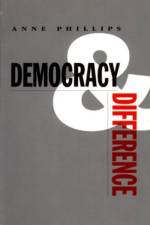
A new emphasis on diversity and difference is displacing older myths of nation or community. A new attention to gender, race, language or religion is disrupting earlier preoccupations with class. But the welcome extended to heterogeneity can bring with it a disturbing fragmentation and closure. Can we develop a vision of democracy through difference: a politics that neither denies group identities nor capitulates to them? In this volume, Anne Phillips develops the feminist challenge to exclusionary versions of democracy, citizenship and equality. Relating this to the crisis in socialist theory, the growing unease with the pretensions of Enlightenment rationality, and the recent recuperation of liberal democracy as the only viable politics, she builds on debates within feminism to address general questions of difference. When democracies try to wish away group difference and inequality, they fail to meet their egalitarian promise. When yearnings towards an undifferentiated unity become the basis for radical politics and change, too many groups drop out of the picture. Through her critical discussions of recent feminist and socialist theory Anne Phillips rejects this democracy of denial. She also warns, however, of the dangers on the other side. The simpler celebrations of diversity risk freezing group differences as they are, encouraging a patchwork of local identities from which people can speak only to themselves. Her arguments then combine in a powerful restatement of the case for a more active and participatory democracy. It is only through enhanced communication and discussion that people can respect and learn from their differences.
In this path-breaking work, Mark Poster highlights the nature of the newly emerging forms of social life, in the current era. The flexibility of language which the computer allows makes the written word less certain and less concrete. The result of these changes, Poster argues, is a new communication experience, an interaction between humankind and a new kind of reality. Poster discusses the addictive properties of television and arcade video games, as well as the surveillance possibilities which the new communication technologies offer the state. His wide-ranging analysis incorporates the new language-based theories of mathematics, philosophy and literature in Wiener, Derrida and Barthes, among others. This work is a major new contribution to the debate surrounding the future of electronically mediated-experiences.
This book offers a fresh, accessible and original interpretation of the modern state, concentrating particularly on the emergence and nature of democracy. Poggi presents an extensive conceptual portrait of the state, distinguishing its early characteristics from those which have developed subsequently and are apparent in contemporary states. He reviews the 'historical career' of the state, from the dissolution of feudal forms of rule to the advent of modern, liberal-democratic systems. Poggi also discusses the nature of liberal-democratic regimes, and the distinctive features of the Soviet one-party system. Finally, the chapter discusses the challenges set to the state by contemporary developments in military affairs, in the international economy, and in the ecological sphere.
Democracy is the central political issue of our age, yet debates over its nature and goals rarely engage with feminist concerns. Now that women have the right to vote, they are thought to present no special problems of their own. But despite the seemingly gender-neutral categories of individual or citizen, democratic theory and practice continues to privilege the male. This book reconsiders dominant strands in democratic thinking - focusing on liberal democracy, participatory democracy, and twentieth century versions of civic republicanism - and approaches these from a feminist perspective. Anne Phillips explores the under-representation of women in politics, the crucial relationship between public and private spheres, and the lessons of the contemporary women's movement as an experience in participatory democracy.
This important book traces the impact of the movement of people, ideas and capital across the globe.
Prostitution is still the subject of intense controversy among feminists but theoretical and political analyses are often only loosely grounded in empirical research. This book offers new perspectives on prostitution based on wide-ranging research in nine countries and extensive work with prostitute users.
In this new book Henrietta Moore examines the nature and limitations of the theoretical languages used by anthropologists and others to write about sex, gender and sexuality. Moore begins by discussing recent feminist debates on the body and the notion of the non-universal human subject. She then considers why anthropologists have contributed relatively little to these debates, and suggests that this has much to do with the history of anthropological thought with regard to the conceptualization of "e;persons"e; and "e;selves"e; cross-culturally. Moore develops a specific anthropological approach to feminist post-structuralist and psychoanalytic theory. In subsequent chapters Moore pursues a series of related themes including the links between gender, identity and violence; questions of gender and identity in the context of intra-household resource allocation; the construction of domestic space and its relationship to bodily practices and the internationalization of relations of difference; and the links between the gender of the anthropologist and the writing of anthropology. This volume demonstrates anthropology's contribution to current debates in feminist theory.
This is the first book which examines the nature and significance of a feminist critique in anthropology. It offers a clear introduction to, and balanced assessment of, the theoretical and practical issues raised by the development of a feminist anthropology. Henrietta Moore situates the development of a feminist approach in anthropology within the context of the discipline, examining the ways in which women have been studied in anthropology - as well as the ways in which the study of gender has influenced the development of the discipline anthropology. She considers the application of feminist work to key areas of anthropological research, and addresses the question of what social anthropology has to contribute to contemporary feminism. Throughout the book Henrietta Moore's analysis is informed by her own extensive fieldwork in Africa and by her concern to develop anthropological theory and method by means of feminist critique. This book will be of particular value to students in anthropology, women's studies and the social sciences.
This new introduction to ethics is written for students who are approaching philosophy for the first time.
This is one of the first systematic discussions of the nature of trust as a means of social cohesion, discussing the works of leading social theorists on the issue of social solidarity.
A good political community is one whose citizens are actively engaged in deciding their common future together. Bound together by ties of national solidarity, they discover and implement principles of justice that all can share, and in doing so they respect the separate identities of minority groups within the community. In the essays collected in this book, David Miller shows that such an ideal is not only desirable, but feasible. He explains how active citizenship on the republican model differs from liberal citizenship, and why it serves disadvantaged groups better than currently fashionable forms of identity politics. By deliberating freely with one another, citizens can reach decisions on matters of public policy that are both rational and fair. He couples this with a robust defence of the principle of nationality, arguing that a shared national identity is necessary to motivate citizens to work together in the name of justice. Attempts to create transnational forms of citizenship, in Europe and elsewhere, are therefore misguided. He shows that the principle of nationality can accommodate the demands of minority nations, and does not lead to a secessionist free-for-all. And finally he demonstrates that national self-determination need not be achieved at the expense of global justice. This is a powerful statement from a leading political theorist that not only extends our understanding of citizenship, nationality and deliberative democracy, but engages with current political debates about identity politics, minority nationalisms and European integration.
This work provides an introduction to the work of Michel Foucault. It offers an assessment of all of Foucault's work, including his final writings on governmentality and the self. McNay argues that the later work initiates an important shift in his intellectual concerns which alters any retrospective reading of his writings as a whole. Throughout, McNay is concerned to assess the normative and political implications of Foucault's social criticism. She goes beyond the level of many commentators to look at the values from which Foucault's work springs and reveals the implicit assumptions underlying his social critique. The author also provides an account and assessment of recent literature on Foucault, including that of Habermas and Taylor. She discusses Foucault's position in the modernity/postmodernity debate, his own ambivalence to Enlightenment thought and his place in recent developments in feminist and cultural theory.
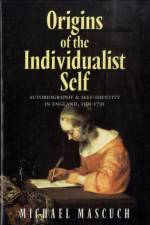
This book traces the emergence of the concept of self-identity in modern Western culture, as it was both reflected in and advanced by the development of autobiographical practice in early modern England. It offers a fresh and illuminating appraisal of the nature of autobiographical narrative in general and of the early modern forms of biography, diary and autobiography in particular. The result is a significant and original contribution to the history of individualism. Michael Mascuch argues that the definitive characteristic of individualist self-identity is the personal capacity to produce a unified retrospective autobiographical narrative, and he stresses that this capacity was first demonstrated in England during the last decade of the eighteenth century. He examines the long-term process of innovation in written discourse leading up to this event, from the first use of blank almanacs and common place books by the pious in the late sixteenth century, through the popular criminal biographies of the late seventeenth century, to the printed-for-the-author scandalous memoirs of the mid-eighteenth century. While offering a detailed account of a significant period in the rise of a modern literary genre, Origins of the Individualist Self also addresses topics which are central in the fields of literary and cultural theory and social and cultural history.
This book introduces green ideas to students of the social sciences, showing how society affects and is affected by nature and assessing the future of the green movement.
The work of Erving Goffman has had an enormous impact throughout the social sciences. Yet his writings have not received the detailed scrutiny which they deserve. This new book is the first comprehensive and accessible account of Erving Goffman's contributions, ranging in its scope from his very earliest work right up to the projects upon which he was engaged at the time of his death. Goffman's writings, Manning argues, are much more systematic and conceptually powerful than is ordinarily acknowledged. The book thus offers a defence of Goffman's writings as well as providing an introduction for those who have no prior acquaintance with Goffman's ideas.
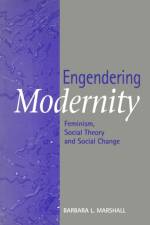
In this book Barbara Marshall argues that the debates around both modernity and postmodernity neglect the role of women and significance of gender in the formation of contemporary societies.
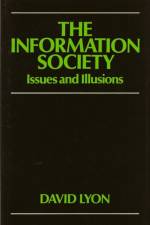
In this book David Lyon analyses the various contexts of surveillance activity and offers a balanced account of the influence electronic information systems have on the social order today.
This book is about how we present our selves in everyday talk and interaction. Selves and conversations are skilful accomplishments requiring trust, dependency, and co-ordination. They are produced by multiple partners co-operating in the production of social events. The self is a 'performed character' - a 'dramatic effect' in Goffman's terms - which results from shaping our behavior to create a desired impression. Talk is both the means and the product of such events. Selves live in worlds that talk creates. Using the methods of conversation analysis, this book seeks to discover how selves are created and transformed in everyday talk. It examines how pronouns are used to create interactional boundaries, the strategic manipulation of interactional support, talk in dealing with conflict, and stylistic differences associated with gender. Theoretical discussion is combined with fine-grained analysis of ordinary conversations. The book will be of particular interest to students and professionals in sociology, social psychology, sociolinguistics and communication studies.
Media, Communication, Culture offers a bold and comprehensive analysis of developments in the field amidst the effects of postmodernism and globalization. James Lull, one of the leading scholars in the discipline, draws from a wide range of social and cultural theory, including the work of John B. Thompson, Thomas Sowell, Nestor Garcia Canclini, Anthony Giddens and Samuel P. Huntington, to formulate a well balanced and highly original account of key contemporary developments worldwide. The first edition of Media, Communication, Culture became a well established introductory text. For this new edition coverage has been expanded from six to ten chapters, and has been thoroughly updated to include all new developments in the field. In his familiar and accessible style, Lull brings to life a diverse range of examples and mini case studies which will prove invaluable to the reader. These range from the hip-hop hybrids of New Zealand's Maori youth and the vastly divergent meaning of race and culture in Brazil and the United States to the global impact of McDonalds and Microsoft. Complex theoretical ideas such as globalization, symbolic power, popular culture, ideology, consciousness, hegemony, social rules, media audience, cultural territory, and superculture are explained in a clear and engaging way that challenges traditional understandings. By connecting major streams of theory to the latest trends in the global cultural mix, the book provides a fresh and unsurpassed introduction to media, communication and cultural studies. It will prove essential reading for undergraduates and above in the fields of media studies, communication studies, cultural studies and the sociology of culture.
This book provides an overview of debates about whether we are entering into a phase of social existence without precedent - the 'information society'. Intended as a bridge between the literatures of 'social theory' and the 'social impact of technology', this study exposes the myths surrounding the creation of the information society, discussing technologies such as cable TV and robotics.
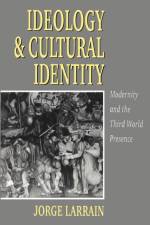
In this book Jorge Larrain discusses three of the most important concepts in the social sciences: ideology, reason and cultural identity.
This is a new introductory text providing an up-to-date account of leading theories of development. The book includes a discussion of classical accounts of development, particularly that of Marx, but also considers current debates on the issue. Theories of imperialism, neo-imperialism, dependency, world systems theory and other conceptions are all given full and balanced consideration. A feature of the work is the connections drawn between theoretical interpretation and empirical application: in this respect, the author concentrates particularly upon drawing materials from the Latin American experiences. Readable, accurate and incisive, the book also provides an original standpoint upon problems of development. It will be of interest to students and professionals in sociology, political sciences and anthropology.
Abonner på vårt nyhetsbrev og få rabatter og inspirasjon til din neste leseopplevelse.
Ved å abonnere godtar du vår personvernerklæring.