












Gjør som tusenvis av andre bokelskere
Abonner på vårt nyhetsbrev og få rabatter og inspirasjon til din neste leseopplevelse.
Ved å abonnere godtar du vår personvernerklæring.Du kan når som helst melde deg av våre nyhetsbrev.

Strategies that enable organizations to succeed as businesses and as responsible corporate citizens Based on the authors' many years of research and hands-on experience, this book provides tested and proven practical strategies that make it possible for organizations to develop, maintain, or extend their competitive advantage without causing harm to the environment and society. Moreover, it explains how to set goals and objectives and then monitor, measure, and report on progress towards achieving corporate social responsibility and environmental sustainability. Most importantly, readers will discover that this can all be accomplished while, at the same time, improving bottom-line profitability. Practical Sustainability Strategies: How to Gain a Competitive Advantage is divided into four parts: Part 1, Introduction to Sustainability, underscores the urgency for organizations to adopt and develop sustainable practices Part 2, Sustainable Strategies, details numerous strategies that have been proven to work, including environmental innovation through biomimicry, green buildings, and green chemistry Part 3, Tools and Metrics, offers practical information on implementing strategies and measuring sustainability and reporting, including global standards and guidelines for managing sustainability, life-cycle analysis, carbon and water footprints such as GRI, GHG Protocol, UN Global Compact Part 4, Conclusion, provides an expert forecast of the future of sustainability Case studies based on the authors' research and fieldwork illustrate how leading companies have implemented each of the sustainability strategies discussed in the book. There's also an appendix with additional case studies exploring various aspects of business practices and sustainability. Practical Sustainability Strategies is ideal as a graduate textbook as well as a reference for business managers. All readers will not only gain a greater appreciation for sustainable development, but also the skills needed to integrate sustainability into all aspects of their organization's business practices.
Political Theory Without Borders offers a comprehensive survey of the issues that have shaped political theory in the wake of social and environmental globalization. Focuses on specific questions that arise from issues of global spillovers like climate change and pollution, international immigration, and political intervention abroad Includes chapters written by some of the best new scholars working in the field today, along with key texts from some of the most well-known scholars of previous generations Illustrates how the classics concerns of political theory justice and equality, liberty and oppression have re-emerged with renewed significance at the global level The newest volume in the distinguished philosophy, politics & society series, initiated by Peter Laslett in 1956
The new edition of Brown's Boundary Control and Legal Principles has been updated to reflect ongoing changes in surveying technology and surveying law, notably by adding water boundary expert George Cole as a contributor to revamp information on Riparian and Littorial Boundaries. Additionally, a new appendix has been introduced containing a comprehensive list of surveying books that have been referenced in court cases and legal decisions as persuasive authority over the years. It is indispensable reading for students and practicioners studying for the Fundamentals of Land Surveying licensure exam.
The standard bearing guide for multicultural counseling courses now enhanced with research-based, topical, and pedagogical refinements Counseling the Culturally Diverse: Theory and Practice, 7th Edition is the new update to the seminal work on multicultural counseling. From author Derald Wing Sue one of the most cited multicultural scholars in the United States this comprehensive work includes current research, cultural and scientific theoretical formations, and expanded exploration of internalized racism. Replete with real-world examples, this book explains why conversations revolving around racial issues remain so difficult, and provides specific techniques and advice for leading forthright and productive discussions. The new edition focuses on essential instructor and student needs to facilitate a greater course-centric focus. In response to user feedback and newly available research, the seventh edition reflects: Renewed commitment to comprehensiveness. As compared to other texts in the field, CCD explores and covers nearly all major multicultural counseling topics in the profession. Indeed, reviewers believed it the most comprehensive of the texts published, and leads in coverage of microaggressions in counseling, interracial/interethnic counseling, social justice approaches to counseling, implications of indigenous healing, the sociopolitical nature of counseling, racial identity development, and cultural use of evidence-based practice. Streamlined Presentation to allow students more time to review and analyze rather than read more detailed text New advances and important changes, such as expanded coverage of internalized racism, cultural humility, expansion of microaggression coverage to other marginalized groups, social justice/advocacy skills, recent research and thinking on evidence-based practice, and new approaches to work with specific populations. Most current work in multicultural mental health practice including careful consideration of the multicultural guidelines proposed by the American Psychological Association and the draft guidelines for Multicultural and Social Justice Counseling Competencies (MSJCC) (2015) from the American Counseling Association's Revision Committee. Expanded attention to the emotive nature of the content so that the strong emotive reaction of students to the material does not prevent self-exploration (a necessary component of cultural competence in the helping professions). Strengthened Pedagogy in each chapter with material to facilitate experiential activities and discussion and to help students digest the material including broad Chapter Objectives and more specific and oftentimes controversial Reflection and Discussion Questions. Every chapter opens with a clinical vignette, longer narrative, or situational example that previews the major concepts and issues discussed in the chapter. The Chapter Focus Questions serve as prompts to address the opening 'course objectives,' but these questions not only preview the content to be covered, but are cast in such a way as to allow instructors and trainers to use them as discussion questions throughout the course or workshop. We have retained the 'Implications for Clinical Practice' sections and added a new Summary after every chapter. Instructor's Handbook has been strengthen and expanded to provide guidance on teaching the course, anticipating resistances, overcoming them, and providing exercises that could be used such as case studies, videos/movies, group activities, tours/visits, and other pedagogy that will facilitate learning. Easier comparison between and among groups made possible by updating population specific chapters to use common topical headings (when possible). Offering the perfect blend of theory and practice, this classic text helps readers
This brand new title in the Lecture Notes series covers a core element of the medical school curriculum. It presents the basic science needed to understand mechanisms of disease and describes the clinical presentations of the disorders associated with different glands, concluding with the relevant investigations and management. Focusing on conditions commonly encountered on the wards and in exams, with key points to aid revision and recall, this new title is perfect as a course companion and is the ideal revision tool for medical students, specialist nurses, and doctors working on endocrinology rotations. Lecture Notes: Endocrinology and Diabetes is also essential for endocrinology trainees approaching the new Knowledge Based Assessment (KBA).
Fully revised to reflect today s media environment, this new edition of Critical Media Studies offers students a comprehensive introduction to the field and demonstrates how to think critically about the power and influence of media in our daily lives. Material new to this edition includes a chapter on sociological analysis and reveals new ways audiences use media in their everyday lives to manage social roles, relationships, and contexts. Readers will also appreciate the extensive updating of previously discussed examples to reflect contemporary industry standards, textual forms, and audience behaviors and the inclusion of more international material to reflect contemporary media s global reach. Continuing its well-received writing style that is both engaging and accessible, the book s twelve perspectives provide readers with a diverse array of critical approaches to media studies, including original approaches such as erotic, sociological, and ecological analysis. Combining the best of well-tested theory with cutting-edge scholarship, this new edition of Critical Media Studies, offers invaluable insights into our current understanding of the nature and consequences of media in today s world. Updated and enhanced online resources for instructors including PowerPoint slides, test bank, study guides, and sample assignments can be found at www.wiley.com/go/criticalmediastudies.
Introducing a new edition of the popular reference on machine analysis Now in a fully revised and expanded edition, this widely used reference on machine analysis boasts many changes designed to address the varied needs of engineers in the electric machinery, electric drives, and electric power industries. The authors draw on their own extensive research efforts, bringing all topics up to date and outlining a variety of new approaches they have developed over the past decade. Focusing on reference frame theory that has been at the core of this work since the first edition, this volume goes a step further, introducing new material relevant to machine design along with numerous techniques for making the derivation of equations more direct and easy to use. Coverage includes: Completely new chapters on winding functions and machine design that add a significant dimension not found in any other text A new formulation of machine equations for improving analysis and modeling of machines coupled to power electronic circuits Simplified techniques throughout, from the derivation of torque equations and synchronous machine analysis to the analysis of unbalanced operation A unique generalized approach to machine parameters identification A first-rate resource for engineers wishing to master cutting-edge techniques for machine analysis, Analysis of Electric Machinery and Drive Systems is also a highly useful guide for students in the field.
The contemporary debate on economic policy is dominated by the issue of 'which model of capitalism works best'.
In this book the authors examine the relations between work and time and explore the possibilities of developing new and more flexible working patterns.
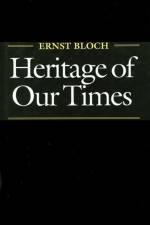
Heritage of Our Times is a brilliant examination of modern culture and its legacy by one of the most important and deeply influential thinkers of the 20th century. Bloch argues that the key elements of a genuine cultural tradition are not just to be found in the conveniently closed and neatly labeled ages of the past, but also in the open and experimental cultural process of our time. One of the most compelling aspects of this work is a contemporary analysis of the rise of Nazism. It probes its bogus roots in German history and mythology at the very moment when the ideologies of Blood and Soil and the Blond Beast were actually taking hold of the German people. The breadth and depth of Bloch's vision, together with the rich diversity of his interest, ensure this work a place as one of the key books of the 20th century.
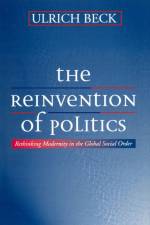
Those who advocate ideas about "e;postmodernity"e; and "e;post-industrialism"e; offer radical critiques of existing social and political institutions. But they provide very little in place of those institutions. It is all very well to criticize the limitations of social democracy, the welfare state, trade unionism, and social classes as agents of change, but once these have been thrown into crisis what other institutions do we have to depend on? The Reinvention of Politics, suggests we should think again about forging a new model of politics for our times. An active, devolved civil society, Beck argues, can sustain the claim that modernity is inherently democratic. For many issues now - for example, those involving technology, environment protest, the family, or gender relations - belong to the domain of what the author calls "e;subpolitics"e;. The postmodern critique of modernity, in Beck's view, is based on mistaken generalizations about a transitional phase in the evolution of modern society. What is needed, he argues, is the reinvention of politics, corresponding to th new demands of a society which remains modern, but which has progressed beyond the earlier form of industrial society. This book will be essential reading for second-year undergraduates and above in the fields of social and political theory, sociology and political science.
"e;Helga Nowotny's exploration of the forms and meaning of time in contemporary life is panoramic without in any way partaking of the blandness of a survey. From the artificial time of the scientific laboratory to the distinctively modern yearning for one s own time, she regards every topic in this wide-ranging book from a fresh angle of vision, one which reveals unsuspected affinities between the bravest, newest worlds of global technology and the most ancient worlds of myth."e; --Lorraine Daston, University of Chicago This book represents a major contribution to the understanding of time, giving particular attention to time in relation to modernity. The development of industrialism, the author points out, was based upon a linear and abstract conception of time. Today we see that form of production, and the social institutions associated with it, supplanted by flexible specialization and just-in-time production systems. New information and communication technologies have made a fundamental impact here. But what does all this mean for temporal regimes? How can we understand the transformation of time and space involved in the bewildering variety of options on offer in a postmodern world? The author provides an incisive analysis of the temporal implications of modern communication. She considers the implications of worldwide simultaneous experience, made possible by satellite technologies, and considers the reorganization of time involved in the continuous technological innovation that marks our era. In this puzzling universe of action, how does one achieve a 'time of one's own'? The discovery of a specific time perspective centred in the individual, she shows, expresses a yearning for forms of experience that are subversive of established institutional patterns. This brilliant study, became a classic in Germany, will be of interest to students and professionals working in the areas of social theory, sociology, politics and anthropology.
Ecological Politics in and Age of Risk by Ulrich Beck is an original analysis of ecological politics as one part of a renewed engagement with the domain of sub-politics.
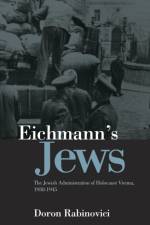
The question of the collaboration of Jews with the Nazi regime during the persecution and extermination of European Jewry is one of the most difficult and sensitive issues surrounding the Holocaust. How could people be forced to cooperate in their own destruction? Why would they help the Nazi authorities round up their own people for deportation, manage the 'collection points' and supervise the people being deported until the last moment? This book is a major new study of the role of the Jews, and more specifically the 'Judenrat' or Jewish Council, in Holocaust Vienna. It was in Vienna that Eichmann developed and tested his model for a Nazi Jewish policy from 1938 onwards, and the leaders of the Viennese Jewish community were the prototypes for all subsequent Jewish councils. By studying the situation in Vienna, it is possible to gain a unique insight into the way that the Nazi regime incorporated the Jewish community into its machinery of destruction. Drawing on recently discovered archives and extensive interviews, Doron Rabinovici explores in detail the actions of individual Jews and Jewish organizations and shows how all of their strategies to protect themselves and others were ultimately doomed to failure. His rich and insightful account enables us to understand in a new way the terrible reality of the victims' plight: faced with the stark choice of death or cooperation, many chose to cooperate with the authorities in the hope that their actions might turn out to be the lesser evil.
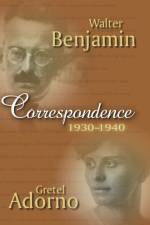
We must see to it that we put the best of ourselves in our letters; for there is nothing to suggest that we shall see each other again soon. So wrote Walter Benjamin to Gretel Adorno in spring 1940 from the south of France, shortly before he took his own life. The correspondence between Gretel Adorno and Walter Benjamin, published here in its complete form for the first time, is the document of a great friendship that existed independently of Benjamin's relationship with Theodor W. Adorno. While Benjamin, alongside his everyday worries, writes especially about those projects on which he worked so intensively in the last years of his life, it was Gretel Karplus-Adorno who did everything in her power to keep Benjamin in the world. She urged him to emigrate and told him about Adorno's plans and Bloch's movements, thus maintaining the connection between the old Berlin friends and acquaintances. She helped him through the most difficult times with regular money transfers, and organized financial support from the Saar region, which was initially still independent from the Third Reich. Once in New York, she attempted to entice Benjamin to America with her descriptions of the city and the new arrivals from Europe though ultimately to no avail.
Europe is Europe s last remaining realistic political utopia. But Europe remains to be understood and conceptualized. This historically unique form of international community cannot be explained in terms of the traditional concepts of politics and the state, which remain trapped in the straightjacket of methodological nationalism. Thus, if we are to understand cosmopolitan Europe, we must radically rethink the conventional categories of social and political analysis. Just as the Peace of Westphalia brought the religious civil wars of the seventeenth century to an end through the separation of church and state, so too the separation of state and nation represents the appropriate response to the horrors of the twentieth century. And just as the secular state makes the exercise of different religions possible, so too cosmopolitan Europe must guarantee the coexistence of different ethnic, religious and political forms of life across national borders based on the principle of cosmopolitan tolerance. The task the authors have set themselves in this book is nothing less than to rethink Europe as an idea and a reality. It represents an attempt to understand the process of Europeanization in light of the theory of reflexive modernization and thereby to redefine it at both the theoretical and the political level. This book completes Ulrich Beck s trilogy on cosmopolitan realism , the volumes of which complement each other and can be read independently. It is essential reading for anyone interested in the key social and political developments of our time.
'My dears: this is but a brief note to welcome you to the new world, where you are now no longer all too far away from us. So begins Adorno s letter to his parents in May 1939, welcoming them to Cuba where they had just arrived after fleeing from Nazi Germany at the last minute. At the end of 1939 his parents moved again to Florida and then to New York, where they lived from August 1940 until the end of their lives. It is only with Adorno s move to California at the end of 1941 that his letters to his parents start arriving once more, reporting on work and living conditions as well as on friends, acquaintances and the Hollywood stars of his time. One finds reports of his collaborations with Max Horkheimer, Thomas Mann and Hanns Eisler alongside accounts of parties, clowning around with Charlie Chaplin, and ill-fated love affairs. But the letters also show his constant longing for Europe: Adorno already began to think about his return as soon as the USA entered the war. Adorno s letters to his parents surely the most open and direct letters he ever wrote not only afford the reader a glimpse of the experiences that gave rise to the famous Minima Moralia, but also show Adorno from a previously unknown, very personal side. They end with the first reports from the ravaged Frankfurt to his mother who remained in New York and from Amorbach, Adorno s childhood paradise
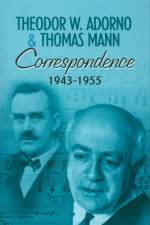
In December 1945 Thomas Mann wrote a famous letter to Adorno in which he formulated the principle of montage adopted in his novel Doctor Faustus. The writer expressly invited the philosopher to consider, with me, how such a work and I mean Leverkhns work could more or less be practically realized. Their close collaboration on questions concerning the character of the fictional composers putatively late works (Adorno produced specific sketches which are included as an appendix to the present volume) effectively laid the basis for a further exchange of letters. The ensuing correspondence between the two men documents a rare encounter of creative tension between literary tradition and aesthetic modernism which would be sustained right up until the novelists death in 1955. In the letters, Thomas Mann openly acknowledged his fascinated reading of Adornos Minima Moralia and commented in detail on the Essay on Wagner, which he was as eager to read as the one in the Book of Revelation consumes a book which tastes as sweet as honey. Adorno in turn offered detailed observations upon and frequently enthusiastic commendations of Manns later writings, such as The Holy Sinner, The Betrayed One and The Confessions of Felix Krull. Their correspondence also touches upon issues of great personal significance, notably the sensitive discussion of the problems of returning from exile to postwar Germany. The letters are extensively annotated and offer the reader detailed notes concerning the writings, events and personalities referred or alluded to in the correspondence.
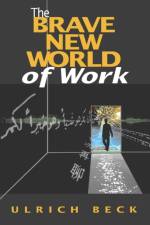
In this important book, Ulrich Beck - one of the leading social thinkers in Europe today - examines how work has become unstable in the modern world and presents a new vision for the future. Beck begins by describing how the traditional work society, with its life-long job paths, is giving way to a much less stable world in which skills can be suddenly devalued, jobs obliterated, welfare cover reduced or eliminated. The West would appear to be heading towards a social structure of ambiguity and multiple activity that has hitherto been more characteristic of the developing world. But what appears to be the end of traditional working practices can also be seen as an opportunity to develop new ideas and models for work in the twenty-first century. Beck's alternative vision is centred on the concept of active citizens democratically organized in local, and increasingly also regional or transnational, networks. Against the threat of social exclusion, everyone can and must have a right to be included in a new definition and distribution of work. This will involve constant movement between formal employment (with a major reduction in working hours) and forms of self-organized artistic, cultural and political 'civil labour', providing equal access to comprehensive social protection. The aim must be to turn insecurity around, so that it becomes a positive and enriching discontinuity of life. Drawing on his earlier work on risk and reflexive modernization, The Brave New World of Work is also closely linked to his studies on globalization and individualization. These processes are part of the same challenge upon which a politics of modernity must now base itself. Not only the future of work, but also the very survival of democracy and the welfare state will depend on the development of a newly committed and 'multi-active' transnational citizenship. This book will be of great interest to second- and third-year students in sociology, politics, geography and the social sciences generally. It will also appeal to a broader audience interested in the issues and debates surrounding the changing nature of work.
This book provides a critical history of the movement associated with the journal Annales, from its foundation in 1929 to the present. This movement has been the single most important force in the development of what is sometimes called the new history . Renowned cultural historian, Peter Burke, distinguishes between four main generations in the development of the Annales School. The first generation included Lucien Febvre and Marc Bloch, who fought against the old historical establishment and founded the journal Annales to encourage interdisciplinary collaboration. The second generation was dominated by Fernand Braudel, whose magnificent work on the Mediterranean has become a modern classic. The third generation, deeply associated with the cultural turn in historical scholarship, includes recently well-known historians such as Emmanuel Le Roy Ladurie, Jacques Le Goff and Georges Duby. This new edition brings us right up to the present, and contemplates the work of a fourth generation, including practitioners such as Roger Chartier, Serge Gruzinski and Jacques Revel. This new generation continued much of the cultural focus of the previous Annales historians, while diversifying further, and becoming increasingly reflexive , a move that owes much to the sociocultural theories of Michel Foucault, Michel de Certeau and Pierre Bourdieu. Wide-ranging yet concise, this new edition of a classic work of analysis of one of the most important historical movements of the twentieth century will be welcomed by students of history and other social sciences and by the interested general reader.
In this thought-provoking new book, Anthony Smith analyses key debates between historians and social scientists on the role of nations and nationalism in history. In a wide-ranging analysis of the work of historians, sociologists, political scientists and others, he argues that there are three key issues which have shaped debates in this field: first, the nature and origin of nations and nationalism; second, the antiquity or modernity of nations and nationalism; and third, the role of nations and nationalism in historical, and especially recent, social change. Anthony Smith provides an incisive critique of the debate between modernists, perennialists and primordialists over the origins, development and contemporary significance of nations and nationalism. Drawing on a widerange of examples from antiquity and the medieval epoch, as well as the modern world, he develops a distinctive ethnosymbolic account of nations and nationalism.This important book by one of the world s leading authorities on nationalism and ethnicity will be of particular interest to students and scholars in history, sociology and politics.
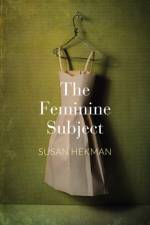
In 1949 Simone de Beauvoir asked, What does it mean to be a woman? Her answer to that question inaugurated a radical transformation of the meaning of woman that defined the direction of subsequent feminist theory. What Beauvoir discovered is that it is impossible to define woman as an equal human being in our philosophical and political tradition. Her effort to redefine woman outside these parameters set feminist theory on a path of radical transformation. The feminist theorists who wrote in the wake of Beauvoir s work followed that path. Susan Hekman s original and highly engaging new book traces the evolution of woman from Beauvoir to the present. In a comprehensive synthesis of a number of feminist theorists she covers French feminist thinkers Luce Irigaray and Helene Cixous as well as theorists such as Carol Gilligan, Carole Pateman and Judith Butler. The book examines the relational self, feminist liberalism and Marxism, as well as feminist theories of race and ethnicity, radical feminism, postmodern feminism and material feminism. Hekman argues that the effort to redefine woman in the course of feminist theory is a cumulative process in which each approach builds on that which has gone before. Although they have approached woman from different perspectives, feminist theorists has moved beyond the negative definition of our tradition to a new concept that continues to evolve. The Feminine Subject is a remarkably succinct yet wide-ranging analysis which will appeal to all feminist scholars and students as well as anyone interested in the changing nature of feminism since the 1950s.
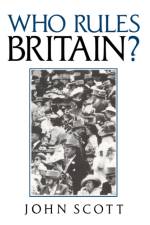
The lifestyle, economic basis and political affiliations of the British upper class are the focus of this exciting new textbook. Combining a review of existing sociological theory on class and capitalism with material drawn from a great variety of sources it is likely to become a standard course text. Examining the question of whether there is still a ruling class in Britain, John Scott presents an account of the historical development of the British upper class, the development of industrial and financial dynasties, town and country society as well as of London and the political world. Photographs and other illustrations cover subjects as diverse as public school fees, the structure of parliament, and the dates and events of the 'Season'.
This volume presents a systematic discussion of the leading theoretical approaches to social stratification. It is both an accessible overview and a distinctive contribution to the analysis of class, status and power. John Scott argues that Max Weber's conceptual framework - reconstructed and enlarged - provides the basis for integrating what have been considered up to now as divergent approaches to stratification studies. Marxist theories of class and economic division, normative functionalist theories of status and cultural division, and elitist theories of command and authoritarian division all find their place in the proposed framework. Each theoretical approach is illustrated through empirical investigations undertaken by writers associated with them. Recent work by Dahrendorf, Wright and Goldthorpe is also examined, and it is shown how their arguments contribute to a theoretical synthesis in the analysis of stratification. Stratification and Power will be much appreciated by students and academics alike in the social sciences. The clarity of its style and the significance of its contribution have made it a leading text in its field.
This textbook aims to give an introduction to the use of documentary sources in social research. It is designed to be a companion to courses in research methods in the social sciences and history and a reference text for those beginning research on documentary sources. The book begins with an overview of the nature of social research and the variety of methods which can be used. Scott identifies three types of evidence useful in such research - physical evidence, personal evidence and documentary evidence. He argues that the logic of research is common to each type of evidence, but that each involves specific methodological issues. An appraisal grid for the analysis of documents is presented, showing the criteria which must be used in evaluating documentary sources. In the following chapters these criteria are applied to the variety of documentary sources available to the social researcher: census data and official statistics; government publications; directories and yearbooks; personal diaries and letters.
The political history of the twentieth century can be viewed as the history of democracy s struggle against its external enemies: fascism and communism. This struggle ended with the fall of the Berlin Wall and the collapse of the Soviet regime. Some people think that democracy now faces new enemies: Islamic fundamentalism, religious extremism and international terrorism and that this is the struggle that will define our times. Todorov disagrees: the biggest threat to democracy today is democracy itself. Its enemies are within: what the ancient Greeks called 'hubris'. Todorov argues that certain democratic values have been distorted and pushed to an extreme that serves the interests of dominant states and powerful individuals. In the name of democracy and human rights , the United States and some European countries have embarked on a crusade to enlighten some foreign populations through the use of force. Yet this mission to help others has led to Abu Ghraib and Guantanamo, to large-scale destruction and loss of life and to a moral crisis of growing proportions. The defence of freedom, if unlimited, can lead to the tyranny of individuals. Drawing on recent history as well as his own experience of growing up in a totalitarian regime, Todorov returns to examples borrowed from the Western canon: from a dispute between Augustine and Pelagius to the fierce debates among Enlightenment thinkers to explore the origin of these perversions of democracy. He argues compellingly that the real democratic ideal is to be found in the delicate, ever-changing balance between competing principles, popular sovereignty, freedom and progress. When one of these elements breaks free and turns into an over-riding principle, it becomes dangerous: populism, ultra-liberalism and messianism, the inner enemies of democracy.
The West has long defined the pursuit of happiness in economic terms but now, in the wake of the 2007-8 financial crisis, it is time to think again about what constitutes our happiness.In this wide-ranging new book, the leading economist Daniel Cohen traces our current malaise back to the rise of homo economicus: for the last 200 years, the modern world has defined happiness in terms of material gain. Homo economicus has cast aside its rivals, homo ethicus and homo empathicus, and spread its neo-Darwinian logic far and wide. Yet, instead of bringing happiness, homo economicus traps human beings in a world devoid of any ideals. We are left feeling empty and dissatisfied.Today more and more people are beginning to recognize that competition and material gain are not the only things that matter in life. The central paradox of our era is that we look to the economy to give direction to our world at the very time when social needs are migrating toward sectors that are hard to place within the scope of market logic. Health, education, scientific research, and the world of the Internet form the heart of our post-industrial societies, but none of these belong to the traditional economic mould. While human creativity is higher than ever, homo economicus imposes himself like a sad prophet, a killjoy of the new age.Drawing on a rich array of examples, Cohen explores the new digital and genetic revolutions and examines the limitations of homo economicus in our rapidly transforming world. As human beings have an extraordinary ability to adapt, he argues that we need to rebalance the relation between competition and cooperation in favour of the latter.This thought-provoking analysis of our contemporary predicament will be of great value to anyone interested in the relationship between what happens in our economies and our personal happiness.
The world is populated with many different objects, to which we often attribute properties: we say, for example, that grass is green, that the earth is spherical, that humans are animals, and that murder is wrong. We also take it that these properties are things in their own right: there is something in which being green, or spherical, or an animal, or wrong, consists, and that certain scientific or normative projects are engaged in uncovering the essences of such properties. In light of this, an important question arises: what kind of things should we take properties themselves to be? In Properties, Douglas Edwards gives an engaging, accessible, and up-to-date introduction to the many theories of properties available. Edwards charts the central positions in the debate over properties, including the views that properties are universals, that properties are constructed from tropes, and that properties are classes of objects, and assesses the benefits and disadvantages of each. Attempts to deny the existence of properties are also considered, along with pluralist proposals, which aim to accommodate the different kinds of properties that are found in various philosophical debates. Properties is the ideal introduction to this topic and will be an invaluable resource for scholars and students wishing to learn more about the important roles that properties have played, and continue to play, in contemporary philosophy.
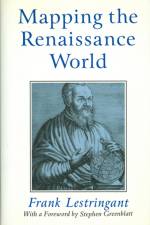
This book focuses on the work of the great sixteenth-century traveller and map-maker Andre Thevat and explores the interrelations between representation and power in the age of discovery.
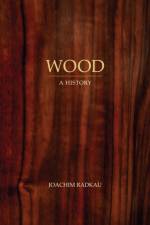
tzi the iceman could not do without wood when he was climbing his Alpine glacier, nor could medieval cathedral-builders or today's construction companies. From time immemorial, the skill of the human hand has developed by working wood, so much so that we might say that the handling of wood is a basic element in the history of the human body. The fear of a future wood famine became a panic in the 18th century and sparked the beginnings of modern environmentalism. This book traces the cultural history of wood and offers a highly original account of the connection between the raw material and the human beings who benefit from it. Even more, it shows that wood can provide a key for a better understanding of history, of the pecularities as well as the varieties of cultures, of a co-evolution of nature and culture, and even of the rise and fall of great powers. Beginning with Stone Age hunters, it follows the twists and turns of the story through the Middle Ages and the Industrial Revolution to the global society of the twenty-first century, in which wood is undergoing a varied and unexpected renaissance. Radkau is sceptical of claims that wood is about to disappear, arguing that such claims are self-serving arguments promoted by interest groups to secure cheaper access to, and control over, wood resources. The whole forest and timber industry often strikes the outsider as a world unto itself, a hermetically sealed black box, but when we lift the lid on this box, as Radkau does here, we will be surprised by what we find within. Wide-ranging and accessible, this rich historical analysis of one of our most cherished natural resources will find a wide readership.
Abonner på vårt nyhetsbrev og få rabatter og inspirasjon til din neste leseopplevelse.
Ved å abonnere godtar du vår personvernerklæring.