
















Gjør som tusenvis av andre bokelskere
Abonner på vårt nyhetsbrev og få rabatter og inspirasjon til din neste leseopplevelse.
Ved å abonnere godtar du vår personvernerklæring.Du kan når som helst melde deg av våre nyhetsbrev.

Your essential guide to excellent dadding You're already great at loads of things -- why not add great dad to the list? Being a Great Dad For Dummies is a complete toolkit for the new (or recent) dad, with advice on conception, caring for newborns, connecting with your little one in the first years and helping your child develop and grow. This no-nonsense Dummies guide prepares you to take the leap into fatherhood and tackle challenges like a pro. Perfect for stay-at-home dads, working dads and everyone in between. Make parenting look easy with this must-have book. Inside... Supporting mum in pregnancy Keeping your baby healthy What to expect during the first twelve months of life Thriving in the toddler years Making the most of preschool Navigate the big changes in your family life
Your one-stop guide to programming with Java If you've always wanted to program with Java but didn't know where to start, this will be the java-stained reference you'll turn to again and again. Fully updated for the JDK 9, this deep reference on the world's most popular programming language is the perfect starting point for building things with Java and an invaluable ongoing reference as you continue to deepen your knowledge. Clocking in at over 900 pages, Java All-in-One For Dummies takes the intimidation out of learning Java and offers clear, step-by-step guidance on how to download and install Java tools; work with variables, numbers, expressions, statements, loops, methods, and exceptions; create applets, servlets, and JavaServer pages; handle and organize data; and so much more. Focuses on the vital information that enables you to get up and running quickly with Java Provides details on the new features of JDK 9 Shows you how to create simple Swing programs Includes design tips on layout, buttons, and labels Everything you need to know to program with Java is included in this practical, easy-to-use guide!
Check out this guide to rock guitar techniqueIf you're ready to start playing some rockin' tunes on the guitar, there's no better teacher than Rock Guitar For Dummies. This is the ultimate guide to playing rock 'n' roll on six strings, even if you've never picked up a guitar before! Master the riffs and melodies of your favorite songs and artists, or make up a few of your own. Find out how to choose the right amplifier, strum power chords, and maintain your guitar. Moving over from another style of guitar playing? You'll love this guide's deep dive into rock guitar technique. You'll even learn to differentiate the sounds of classic rock, heavy metal, grunge, progressive rock, and beyond. Plus, you'll get access to online resources, including audio and video clips, to bring your rock 'n' roll education to life.* Get step-by-step instruction on playing rhythm and lead guitar in a variety of rock styles* Practice with countless exercises and songs to add to your repertoire* Download and stream over 150 audio and video tracks demonstrating the exercises and techniques in the book* Find essential tips and tricks for tuning up, changing strings, and maintaining your guitarIf you're a novice or intermediate guitarist wanting to rock 'n' roll, this is the friendly Dummies guide for you.
Discover the essential materials for phase-locked loop circuit design, from fundamentals to practical design aspects A phase-locked loop (PLL) is a type of circuit with a range of important applications in telecommunications and computing. It generates an output signal with a controlled relationship to an input signal, such as an oscillator which matches the phases of input and output signals. This is a critical function in coherent communication systems, with the result that the theory and design of these circuits are essential to electronic communications of all kinds. Phase-Locked Loops: System Perspectives and Circuit Design Aspects provides a concise, accessible introduction to PLL design. It introduces readers to the role of PLLs in modern communication systems, the fundamental techniques of phase-lock circuitry, and the possible applications of PLLs in a wide variety of electronic communications contexts. The first book of its kind to incorporate modern architectures and to balance theoretical fundamentals with detailed design insights, this promises to be a must-own text for students and industry professionals. The book also features: Coverage of PLL basics with insightful analysis and examples tailored for circuit designers Applications of PLLs for both wireless and wireline systems Practical circuit design aspects for modern frequency generation, frequency modulation, and clock recovery systems Phase-Locked Loops is essential for graduate students and advanced undergraduates in integrated circuit design, as well researchers and engineers in electrical and computing subjects.
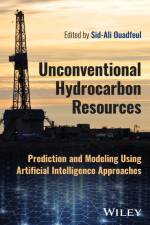
Unconventional Hydrocarbon ResourcesEnables readers to save time and effort in exploring and exploiting shale gas and other unconventional fossil fuels by making use of advanced predictive toolsUnconventional Hydrocarbon Resources highlights novel concepts and techniques for the geophysical exploration of shale and other tight hydrocarbon reservoirs, focusing on artificial intelligence approaches for modeling and predicting key reservoir properties such as pore pressure, water saturation, and wellbore stability. Numerous application examples and case studies present real-life data from different unconventional hydrocarbon fields such as the Barnett Shale (USA), the Williston Basin (USA), and the Berkine Basin (Algeria).Unconventional Hydrocarbon Resources explores a wide range of reservoir properties, including modeling of the geomechanics of shale gas reservoirs, petrophysics analysis of shale and tight sand gas reservoirs, and prediction of hydraulic fracturing effects, fluid flow, and permeability.Sample topics covered in Unconventional Hydrocarbon Resources include:* Calculation of petrophysical parameter curves for non-conventional reservoir modeling and characterization* Comparison of the Levenberg-Marquardt and conjugate gradient learning methods for total organic carbon prediction in the Barnett shale gas reservoir* Use of pore effective compressibility for quantitative evaluation of low resistive pays and identifying sweet spots in shale reservoirs* Pre-drill pore pressure estimation in shale gas reservoirs using seismic genetic inversion* Using well-log data to classify lithofacies of a shale gas reservoirUnconventional Hydrocarbon Resources is a valuable resource for researchers and professionals working on unconventional hydrocarbon exploration and in geoengineering projects.
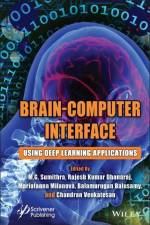
BRAIN-COMPUTER INTERFACEIt covers all the research prospects and recent advancements in the brain-computer interface using deep learning.The brain-computer interface (BCI) is an emerging technology that is developing to be more functional in practice. The aim is to establish, through experiences with electronic devices, a communication channel bridging the human neural networks within the brain to the external world. For example, creating communication or control applications for locked-in patients who have no control over their bodies will be one such use. Recently, from communication to marketing, recovery, care, mental state monitoring, and entertainment, the possible application areas have been expanding. Machine learning algorithms have advanced BCI technology in the last few decades, and in the sense of classification accuracy, performance standards have been greatly improved. For BCI to be effective in the real world, however, some problems remain to be solved.Research focusing on deep learning is anticipated to bring solutions in this regard. Deep learning has been applied in various fields such as computer vision and natural language processing, along with BCI growth, outperforming conventional approaches to machine learning. As a result, a significant number of researchers have shown interest in deep learning in engineering, technology, and other industries; convolutional neural network (CNN), recurrent neural network (RNN), and generative adversarial network (GAN).AudienceResearchers and industrialists working in brain-computer interface, deep learning, machine learning, medical image processing, data scientists and analysts, machine learning engineers, electrical engineering, and information technologists.
This book serves as a unique resource on the field of novel drug delivery systems (NDDSs), catering to both academic audiences (researchers, teachers, students) and industry professionals (pharmaceutical policymakers, managers, R&D, regulatory, business development, and marketing) involved in NDDSs. The evolving nature of diseases and the emergence of new health complications have driven a significant shift in drug therapy. Coupled with changes in human lifestyles and economic conditions, these factors have compelled the pharmaceutical industry to develop novel, efficient, and affordable drug products. The rise of promising technologies aimed at enhancing therapeutic performance further underscores the importance of novel drug delivery systems (NDDSs), making this field one of the most dynamic in pharmaceutical sciences today. This book offers a comprehensive exploration of NDDS applications, catering to both academic and industry professionals. It is designed to be both user-friendly and thorough, meeting the needs of diverse readers-from those seeking practical insights to those delving deeply into the field's various sectors. The content has been meticulously compiled, organized, and analyzed by a team of experts to ensure accuracy, relevance, and currency. The book provides up-to-date information suitable for a broad audience, reflecting the wide scope of the NDDS field. The first section covers the foundational principles of NDDS, including their scientific and therapeutic basis, as well as the epidemiological and economic trends driving their development. Subsequent sections explore market-oriented aspects, such as global trends and projections. Chapters 3 to 12 present a taxonomy of NDDS categorized by their routes of administration. The book concludes with a forward-looking report on the potential future directions of NDDS. Written in clear, concise language, the book is accessible to non-native English readers, ensuring broad usability. Original figures, created by experts with scientific and graphic design expertise, enhance the reading experience and aid in understanding complex concepts. Audience A wide variety of professional readers from universities and other research institutions to health industries (industrial pharmaceutical and related), to the relevant high-tech startups to health and pharma policymakers and managers will be among the audiences of this book.
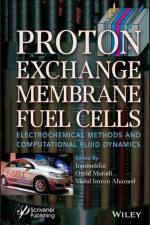
PROTON EXCHANGE MEMBRANE FUEL CELLSEdited by one of the most well-respected and prolific engineers in the world and his team, this book provides a comprehensive overview of hydrogen production, conversion, and storage, offering the scientific literature a comprehensive coverage of this important fuel.Proton exchange membrane fuel cells (PEMFCs) are among the most anticipated stationary clean energy devices in renewable and alternative energy. Despite the appreciable improvement in their cost and durability, which are the two major commercialization barriers, their availability has not matched demand. This is mainly due to the use of expensive metal-catalyst, less durable membranes, and poor insight into the ongoing phenomena inside proton exchange membrane fuel cells. Efforts are being made to optimize the use of precious metals as catalyst layers or find alternatives that can be durable for more than 5000 hours.Computational models are also being developed and studied to get an insight into the shortcomings and provide solutions. The announcement by various companies that they will be producing proton exchange membrane fuel cells-based cars by 2025 has accelerated the current research on proton exchange membrane fuel cells. The breakthrough is urgently needed. The membranes, catalysts, polymer electrolytes, and especially the understanding of diffusion layers, need thorough revision and improvement to achieve the target. This exciting breakthrough volume explores these challenges and offers solutions for the industry. Whether for the student, veteran engineer, new hire, or other industry professionals, this is a must-have for any library.
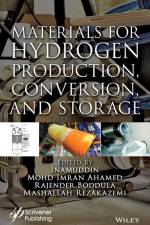
Edited by one of the most well-respected and prolific engineers in the world and his team, this book provides a comprehensive overview of hydrogen production, conversion, and storage, offering the scientific literature a comprehensive coverage of this important fuel. Continually growing environmental concerns are driving every, or almost every, country on the planet towards cleaner and greener energy production. This ultimately leaves no option other than using hydrogen as a fuel that has almost no adverse environmental impact. But hydrogen poses several hazards in terms of human safety as its mixture of air is prone to potential detonations and fires. In addition, the permeability of cryogenic storage can induce frostbite as it leaks through metal pipes. In short, there are many challenges at every step to strive for emission-free fuel. In addition to these challenges, there are many emerging technologies in this area. For example, as the density of hydrogen is very low, efficient methods are being developed and engineered to store it in small volumes. This groundbreaking new volume describes the production of hydrogen from various sources along with the protagonist materials involved. Further, the extensive and novel materials involved in conversion technologies are discussed. Also covered here are the details of the storage materials of hydrogen for both physical and chemical systems. Both renewal and non-renewal sources are examined as feedstocks for the production of hydrogen. The non-renewal feedstocks, mainly petroleum, are the major contributor to date but there is a future perspective in a renewal source comprising mainly of water splitting via electrolysis, radiolysis, thermolysis, photocatalytic water splitting, and biohydrogen routes. Whether for the student, veteran engineer, new hire, or other industry professionals, this is a must-have for any library.
A COMPANION TO LITERARY EVALUATION The first critical survey devoted solely to literary evaluation When we read a novel, watch a play, or hear lyric poetry in performance, we intuitively make a private assessment of its artistic qualities. Yet it is commonly assumed within academia that literature cannot be defined. Consequently, the question of "is it any good" is hardly ever addressed in the world of literary studies. Bridging the gap between the non-academic literary world and the university, A Companion to Literary Evaluation helps readers balance instinctive judgment and reasoned assessment to articulate how or why a particular author, playwright, or poet inhabits an exalted position while others do not. A diverse panel of contributors explores key issues from various perspectives, including analytical aesthetics, the philosophy of literature, opinionated bias, and common sense. It covers topics from lyric poetry, newspaper reviewing, literary translation, and the question of Shakespeare's genius, to the simple notion of how a life of reading books alters our sense of what is good and what is not. Throughout the book, easily accessible chapters emphasize the importance of maintaining clarity of values in the evaluation of literary works, illustrate how seemingly divergent perspectives sometimes overlap, discuss the impact of Modernism, the teaching of evaluation in schools, relativism versus subjectivism in assessing literary value, and more. Incorporating methodologies that demonstrate why literature can be treated as something different from other forms of language, A Companion to Literary Evaluation is a must-read for undergraduates, research students, lecturers, and academics in search of fresh perspectives on standard literary critical issues.
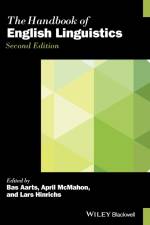
Second edition of this popular Handbook bringing together stimulating discussions of core English linguistics topics in a single, authoritative volume--includes numerous new and thoroughly updated chaptersThe second edition of the popular Handbook of English Linguistics brings together stimulating discussions of the core topics in English linguistics in a single, authoritative volume. Written by an international team of experts, the chapters cover syntax, methodology, phonetics and phonology, lexis and morphology, variation, stylistics, and discourse, and also provide discussions of theoretical and descriptive research in the field.The revised edition includes new and updated chapters on English Corpus Linguistics, experimental approaches, complements and adjuncts, English phonology and morphology, lexicography, and more. In-depth yet accessible chapters introduce key areas of English linguistics, discuss relevant research, and suggest future research directions.An important academic contribution to the field, this book:* Presents thirty-two in-depth, yet accessible, chapters that discuss new research findings across the field, written by both established and emerging scholars from around the world* Builds upon the very successful first edition, published in 2006* Incorporates new trends in English linguistics, including digital research methods and theoretical advances in all subfields* Suggests future research directionsThe Handbook of English Linguistics, 2nd Edition is an essential reference work for researchers and students working in the field of English language and linguistics.
The bestselling annual baseball preview from the smartest analysts in the business Now in its 20th edition, the Baseball Prospectus annual shows once again how it became the industry leader: The 2015 edition includes key stat categories, more controversial player predictions, and the kind of wise, witty baseball commentary that makes this phone-book-thick tome worth reading cover to cover. Baseball Prospectus 2015 provides fantasy players and insiders alike with prescient PECOTA projections, which Sports Illustrated has called ""perhaps the game's most accurate projection model."" Still, stats are just numbers if you don't see the larger context, and Baseball Prospectus brings together an elite team of analysts to provide the definitive look at all thirty teams?their players, their prospects, and their managers?to explain away flukes, hot streaks, injury-tainted numbers, and park effects. Victory, after all, could come down to choosing between the supposed sleeper and the overrated prospects who won't be able to fool people in the Show like they have down on the farm. Nearly every major-league team has sought the advice of current or former Prospectus writers, and readers of Baseball Prospectus 2015 will understand what all those fans have been raving about.
Keeping your books in order and your taxes minimized are crucial elements for profitable real estate investing, and it's vital for real estate investors to take an active role in their administration. 81 Financial and Tax Tips for the Canadian Real Estate Investor offers clear direction and applicable examples to unravel these often complex issues that are key to maximizing your revenue and reducing your taxes. This isn't a guide to tax evasion or dodgy accounting. This is a guide to understanding the limitations, requirements and benefits of the Canadian system and making sure that they work for you, the investor, and not against you. Different forms of property ownership and property type bring with them variations in how they must be accounted for in your books and the taxation rules associated with them. These differences are not the responsibility of your accountant or lawyer, they're yours. 81 Financial and Tax Tips for the Canadian Real Estate Investor is an accessible guide to tax and accounting and how these concerns intersect with your real estate investments. If you're serious about your real estate investments, 81 Financial and Tax Tips for the Canadian Real Estate Investor is a vital resource that will help you maximize your revenue and keep more of that money in your bank account.
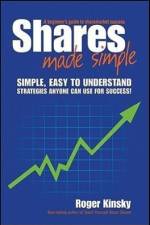
Are you thinking of joining the thousands of Australians profiting from our stock market, but intimidated by the jargon and unsure of where to start? Let Australia's foremost share-investing educator guide you through the simplest ways to make money from shares -- and how to ensure you protect your hard-earned dollars in the process! Shares Made Simple is the essential ground-up investing guide for stock market beginners. Unlike most sharemarket guides, this book explains in simple language all the relevant stock market terms and definitions; includes practical, uncomplicated tips after each succinct section to ensure readers have grasped concepts clearly; and then provides straightforward strategies for profiting on the market -- no expensive financial advisor required! Kinsky covers everything you'll need to get started and get ahead: buying and selling shares, building a portfolio, managing risk, dealing with dividends and how to pick the best stocks.
Emotional processes are increasingly studied in psychology, whether through their modes of expression or through their effect on cognitive processes. While the theorization of the link between emotional and cognitive processes has varied over the centuries, the impact of emotions on cognitive functions is now undeniable and is supported by experimental arguments. Psychological processes are currently considered necessary for, or influenced by, the emergence of emotions. Learning is at the heart of individual development and involves different cognitive processes; the study of the emotional processes at work in a learning situation must of course not be overlooked.This book presents the contributions of different disciplines of psychology in understanding the role of emotional processes in learning situations, from a developmental and whole-life perspective.
The Internet of Things (IoT) has contributed greatly to the growth of data traffic on the Internet. Access technologies and object constraints associated with the IoT can cause performance and security problems. This relates to important challenges such as the control of radio communications and network access, the management of service quality and energy consumption, and the implementation of security mechanisms dedicated to the IoT.In response to these issues, this book presents new solutions for the management and control of performance and security in the IoT. The originality of these proposals lies mainly in the use of intelligent techniques. This notion of intelligence allows, among other things, the support of object heterogeneity and limited capacities as well as the vast dynamics characterizing the IoT.
An exploration of the modern European novel from a renowned English literature scholar Reading the Modern European Novel since 1900 is an engaging, in-depth examination of the evolution of the modern European novel. Written in Daniel R. Schwarz's precise and highly readable style, this critical study offers compelling discussions on a wide range of major works since 1900 and examines recurring themes within the context of significant historical events, including both World Wars and the Holocaust. The author cites important developments in the evolution of the modern novel and explores how these paradigmatic works of fiction reflect intellectual and cultural history, including developments in painting and cinema. Schwarz focuses on narrative complexity, thematic subtlety, and formal originality as well as how novels render historical events and cultural developments. Discussing major works by Proust, Camus, Mann, Kafka, Grass, di Lampedusa, Bassani, Kertesz, Pamuk, Kundera, Saramago, Müller and Ferrante, Schwarz explores how these often experimental masterworks pay homage to the their major predecessors - discussed in Schwarz's ground-breaking Reading the European Novel to 1900 - even while proposing radical departures from realism in their approach to time and space, their testing the limits of language, and their innovative ways of rendering the human psyche. Written for teachers and students by a highly-acclaimed scholar and including valuable study questions, Reading the Modern European Novel since 1900 offers a guide for a deeper understanding of how these original modern masters respond to both the past and present.
ROTATING MACHINERYThis third volume in a broad collection of current rotating machinery topics, written by industry experts, is a must-have for rotating equipment engineers, maintenance personnel, students, and anyone else wanting to stay abreast with current rotating machinery concepts and technology.Rotating Machinery Fundamentals and Advances represents a broad category of equipment, which includes pumps, compressors, fans, gas turbines, electric motors, internal combustion engines, etc., that are critical to the efficient operation of process facilities around the world. These machines must be designed to move gases and liquids safely, reliably, and in an environmentally friendly manner. To fully understand rotating machinery, owners must be familiar with their associated technologies, such as machine design, lubrication, fluid dynamics, thermodynamics, rotordynamics, vibration analysis, condition monitoring, maintenance practices, reliability theory, and others.The goal of the "Advances in Rotating Machinery" book series is to provide industry practicioners a time-saving means of learning about the most up-to-date rotating machinery ideas and best practices. This three-book series covers industry-relevant topics, such as design assessments, modeling, reliability improvements, maintenance methods and best practices, reliability audits, data collection, data analysis, condition monitoring, and more.Readers will find a good mix of theory and sage experience throughout this book series. Whether for the veteran engineer, a new hire, technician, or other industry professional, this is a must-have for any library.This outstanding new vcolume includes:* Machinery monitoring concepts and best practices* Optimizing Lubrication and Lubricant Analysis* Machinery troubleshooting* Reliability improvement ideas* Professional development advice
Model-based Systems Architecting is a key tool for designing complex industrial systems. It is dedicated to the working systems architects, engineers and modelers, in order to help them master the complex integrated systems that they are dealing with in their day-to-day professional lives. It presents the CESAMES Systems Architecting Method (CESAM), a systems architecting and modeling framework which has been developed since 2003 in close interaction with many leading industrial companies, providing rigorous and unambiguous semantics for all classical systems architecture concepts. This approach is practically robust and easy-to-use: during the last decade, it was deployed in more than 2,000 real system development projects within the industry, and distributed to around 10,000 engineers around the globe.
Abonner på vårt nyhetsbrev og få rabatter og inspirasjon til din neste leseopplevelse.
Ved å abonnere godtar du vår personvernerklæring.