















Gjør som tusenvis av andre bokelskere
Abonner på vårt nyhetsbrev og få rabatter og inspirasjon til din neste leseopplevelse.
Ved å abonnere godtar du vår personvernerklæring.Du kan når som helst melde deg av våre nyhetsbrev.

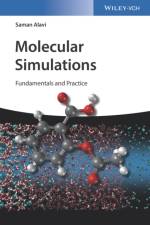
Addressing the need of chemistry, biology and engineering students to understand and perform their own molecular simulations, the author introduces the fundamentals of molecular modeling for a broad, practice–oriented audience and presents versatile practical applications. The book presents a thorough overview of the underlying concepts. Starting out with Newton′s equations, it moves on to force–field methods for modelling potential energy surfaces. The author gives an account of probability concepts and subsequently introduces statistical and quantum mechanics. In addition to Monte–Carlo methods, the core of the text covers molecular dynamics simulations in detail and shows how to derive critical physical parameters. The background knowledge required in physics, chemistry and mathematics is given when needed and together with the simulation methodology. The whole is rounded off with a look at advanced techniques and gives invaluable advice on how to set up simulations for a diverse range of applications, preparing readers for their own endeavors in this exciting field.
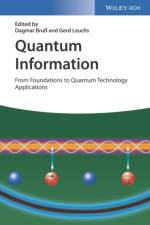
This comprehensive textbook on the rapidly advancing field introduces readers to the fundamental concepts of information theory and quantum entanglement, taking into account the current state of research and development. It thus covers all current concepts in quantum computing, both theoretical and experimental, before moving on to the latest implementations of quantum computing and communication protocols. It contains problems and exercises and is therefore ideally suited for students and lecturers in physics and informatics, as well as experimental and theoretical physicists in academia and industry who work in the field of quantum information processing. The second edition incorporates important recent developments such as quantum metrology, quantum correlations beyond entanglement, and advances in quantum computing with solid state devices.
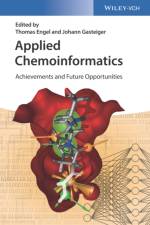
Edited by worldΓÇôfamous pioneers in chemoinformatics, this is a clearly structured and applicationΓÇôoriented approach to the topic, providing upΓÇôtoΓÇôdate and focused information on the range of applications in this exciting field. The authors explain methods and software tools, such that users will not only learn the basics but also how to use the different software packages available, including tools for correct data interpretation and structure simulation, right up to computerΓÇôguided library design for medicinal chemistry. They also describe applications in such different fields as structure spectra correlations, virtual screening, prediction of active sites, library design, and toxicity modelling. The book is aimed at advanced students as well as lecturers, but also at applicationΓÇôoriented scientists wishing to acquire the skills needed to benefit from a simplified workflow via chemoinformatics. Together with the corresponding textbook "Chemoinformatics ΓÇô A Textbook Bridging to Bioinformatics" on the fundamentals of chemoinformatics readers will have a comprehensive overview of the field.
Der Umgang mit vorhandener Bausubstanz gehört zu den täglichen Aufgaben für Bauingenieure und Architekten. Das vorliegende Buch vermittelt die notwendigen Kenntnisse der verschiedenen Methoden der Zustandserfassung und Bewertung von Bauteilen und Tragwerk sowie der Planung von Instandsetzungs- und Ertüchtigungsmaßnahmen. Ein Überblick über die Entwicklung der Bemessungsregeln und Materialkennwerte im Stahlbetonbau hilft bei der Auswertung von Bestandsunterlagen.Zahlreiche anschauliche Beispiele machen das Buch zu einem unverzichtbaren Leitfaden für die Planung und zu einem wertvollen Begleiter für das Studium. Für die zweite Auflage wurden die Inhalte mit Bezug zu den gültigen technischen Regelwerken vollständig aktualisiert. Darüber hinaus wurden einige Teile zum besseren Verständnis vollständig überarbeitet und neue Abschnitte aufgenommen.
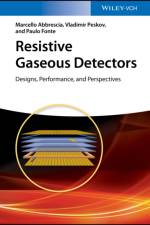
This first book to critically summarize the latest achievements and emerging applications within this interdisciplinary topic focuses on one of the most important types of detectors for elementary particles and photons: resistive plate chambers (RPCs). In the first part, the outstanding, international team of authors comprehensively describes and presents the features and design of single and doubleΓÇôlayer RPCs before covering more advanced multiΓÇôlayer RPCs. The second part then focuses on the application of RPCs in high energy physics, materials science, medicine and security. Throughout, the experienced authors adopt a didactic approach, with each subject presented in a simple way, increasing in complexity step by step.
Bei der statischen Berechnung von Erdbauten stehen die Probleme der Standsicherheit im Vordergrund. In diesem Buch werden die Nachweise für Böschungen, Dämme sowie Stützmauern behandelt und in übersichtlichen Tafeln dargestellt. Ausgewählte Zahlenbeispiele verdeutlichen die Zusammenhänge zwischen den Sicherheitsbedingungen.Die Erdbaumechanik, die den Hauptteilen "Erdbausysteme" und "Berechnungsverfahren" zugrunde liegt, ist eine beständige Grundlage der Statik im Erdbau. Damit ist dieser unveränderte Nachdruck des zuletzt 1999 erschienen Standardwerkes auch heute noch ein wertvolles Nachschlagewerk für die Planungspraxis. Das Buch erscheint in der Reihe "Ernst & Sohn ZEITLOS" als unveränderter Nachdruck.
A review of the interdisciplinary field of synthetic biology, from genome design to spatialEngineering.Written by an international panel of experts, Synthetic Biology draws from various areas of research in biology and engineering and explores the current applications to provide an authoritative overview of this burgeoning field. The text reviews the synthesis of DNA and genome engineering and offers a discussion of the parts and devices that control protein expression and activity. The authors include information on the devices that support spatial engineering, RNA switches and explore the early applications of synthetic biology in protein synthesis, generation of pathway libraries, and immunotherapy.Filled with the most recent research, compelling discussions, and unique perspectives, Synthetic Biology offers an important resource for understanding how this new branch of science can improve on applications for industry or biological research.Advanced BiotechnologyBiotechnology is a broad, interdisciplinary field of science, combining biological sciences and relevant engineering disciplines, that is becoming increasingly important as it benefits the environment and society as a whole. Recent years have seen substantial advances in all areas of biotechnology, resulting in the emergence of brand new fields. To reflect this progress, Sang-Yup Lee (KAIST, South Korea), Jens Nielsen (Chalmers University, Sweden), and Gregory Stephanopoulos (MIT, USA) have joined forces as the editors of a new Wiley-VCH book series. Advanced Biotechnology will cover all pertinent aspects of the field and each volume will be prepared by eminent scientists who are experts on the topic in question.
An integral overview of the theory and design of printheads, authored by an expert with over 30 years′ experience in the field of inkjet printing. Clearly structured, the book presents the design of a printhead in a comprehensive and clear form, right from the start. To begin with, the working principle of piezo–driven drop–on–demand printheads in theory is discussed, building on the theory of mechanical vibrations and acoustics. Then the design of single–nozzle as well as multi–nozzle printheads is presented, including the importance of various parameters that need to be optimized, such as viscosity, surface tension and nozzle shape. Topics such as refilling the nozzle and the impact of the droplet on the surface are equally treated. The text concludes with a unique set of worked–out questions for training purposes as well as case studies and a look at what the future holds. An essential reference for beginning as well as experienced researchers, from ink developers to mechanical engineers, both in industry and academia.
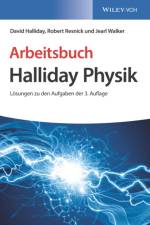
Das Arbeitsbuch zur dritten Auflage des "Halliday" hilft bei der Durchdringung des Stoffs der einführenden Experimentalphysik-Vorlesungen für Hauptfachstudierende. Es enthält die Lösungen inklusive des Lösungswegs zu mehr als 2500 Aufgaben unterschiedlichen Schwierigkeitsgrades aus allen Kapiteln des Lehrbuchs.Dabei stammen die Aufgaben aus allen Themenbereichen der Experimentalphysik und reichen von Standardaufgaben, die jeder können muss, bis hin zu weiterführenden Aufgaben für Fortgeschrittene.Sowohl einzeln erhältlich als auch im Deluxe-Set mit dem Lehrbuch!
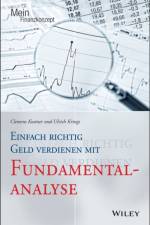
Bei der Fundamentalanalyse wird der faire Wert eines Unternehmens ermittelt. Anleger, die diese Art der Analyse verwenden, stützen ihre Investitionsentscheidung auf diese Grundlage. Gerade im Hinblick auf die Blasen und Finanzkrisen in der jüngeren Vergangenheit ist es empfehlenswert, sich bei der Analyse und Bewertung von Unternehmen (und deren Aktien) wieder verstärkt auf fundamentale Daten zu fokussieren."Einfach richtig Geld verdienen mit Fundamentalanalyse" ist ein Einsteigerbuch für Anleger, die nachhaltig erfolgreich mit Aktien Geld verdienen wollen. Clemens Kustner und Ulrich Krings stellen Ansätze vor, mit denen Sie Marktpreise hinterfragen und beurteilen können, ob Unternehmen und Aktien fair bewertet sind. Damit richtet sich das Buch an gewissenhafte und vorsichtige Investoren, die der Bewertung eines Unternehmens durch den Markt und dem Rat wohlmeinender "Spezialisten" nicht blind vertrauen wollen und sich lieber selbst ein Bild über den fundamental gerechtfertigten Wert eines Unternehmens machen. Clemens Kustner und Ulrich Krings greifen damit auch den für aktive Investoren wesentlichen Gedanken auf, dass es eines der zentralen Risiken bei der Kapitalanlage ist, zu teuer zu kaufen."Einfach richtig Geld verdienen mit Fundamentalanalyse" hat einen sehr praktischen Fokus. Dem Leser werden robuste Techniken und Instrumente vorgestellt, mit deren Hilfe er wesentliche Fragestellungen einer fundamentalen Unternehmens- und Wertanalyse beantworten kann. Die diskutierten Ansätze werden durchgehend anhand von Beispielen und Fallstudien verdeutlicht. Wesentliche Fragestellungen sind dabei:- Wie lässt sich der fundamentale Wert eines Unternehmens ermitteln?- Wie kann man unternehmerische Strategien analysieren, um herauszufinden, ob sie Wert schaffen? - Wie kann man den Finanzbericht eines Unternehmens zerlegen, um relevante Informationen für die Bewertung eines Unternehmens herauszufiltern? - Wie relevant sind Gewinne, Cashflows und Buchwerte für den Wert eines Unternehmens? - Welche Faktoren bestimmen das Kurs-Gewinn-Verhältnis eines Unternehmens und wie kann man berechnen, wie hoch das Kurs-Gewinn-Verhältnis aus fundamentaler Sicht sein sollte? - Wie hängen die Profitabilität eines Unternehmens und der Unternehmenswert zusammen? - Was ist Wachstum? Welches Wachstum ist aus einer fundamentalen Bewertungssicht relevant? Soll man für Wachstum zahlen? Wie bewertet man Wachstumsunternehmen? - Wie kann man mit Fundamentaldaten gute Aktieninvestments machen?
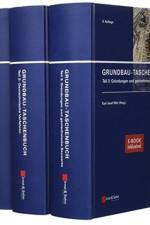
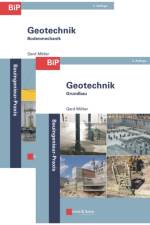
Das komplexe und technisch hoch spezialisierte Gebiet der Geotechnik bildet ein Fundament des Bauingenieurwesens, dessen Herausforderungen heute u. a. im innerstädtischen Infrastrukturbau, im Bauen im Bestand oder in der Gestaltung tiefer, in das Grundwasser hineinreichender Baugruben liegen.Der Band Bodenmechanik vermittelt alle wichtigen Aspekte über den Aufbau und die Eigenschaften des Bodens, die bei der Planung und Berechnung sowie bei der Begutachtung von Schäden des Systems Bauwerk-Baugrund zu berücksichtigen sind. Schwerpunkte sind die Baugrunderkundung, die Ermittlung von Bodenkennwerten im Labor sowie die Behandlung von Setzungs- und Tragfähigkeitsnachweisen einschließlich des Erddrucks. Der Band Grundbau befähigt Bauingenieure, grundbauspezifische Probleme zu erkennen und zu lösen. Prägnant und übersichtlich führt es insbesondere in alle wichtigen Methoden der Gründung und der Geländesprungsicherung ein. Auch Themen wie Frost im Baugrund, Baugrundverbesserung und Wasserhaltung werden behandelt. Alle Darstellungen in beiden Bänden basieren auf dem aktuellen technischen Regelwerk. Zahlreiche Beispiele, die nachvollziehbar erläutert werden, sowie eine große Anzahl von Hinweisen auf den Umgang mit den zu beachtenden Normen und weiterführende Literatur erleichtern das Verständnis. Das Buch ist eine unverzichtbare Orientierungshilfe in der täglichen Planungs- und Gutachterpraxis und erleichtert den Umgang mit dem neuen Regelwerk.
Abonner på vårt nyhetsbrev og få rabatter og inspirasjon til din neste leseopplevelse.
Ved å abonnere godtar du vår personvernerklæring.