










Gjør som tusenvis av andre bokelskere
Abonner på vårt nyhetsbrev og få rabatter og inspirasjon til din neste leseopplevelse.
Ved å abonnere godtar du vår personvernerklæring.Du kan når som helst melde deg av våre nyhetsbrev.

Physik ohne Mathematik, das ist unmöglich. Aber wenn Sie Ihre liebe Mühe mit Mathe haben, dann hilft Ihnen dieses Buch, ganz gleich aus welchem Grund Sie sich mit Physik beschäftigen müssen: als Studienanfänger der Physik, als Student der Ingenieurwissenschaften oder der Medizin. Dieses Buch erklärt Ihnen, was Sie über einfache, komplexe und mehrdimensionale Analysis, Differentialgleichungen und Lineare Algebra wissen sollten. Zahlreiche Beispiele machen die Erläuterungen noch anschaulicher.
Sie wollen - oder müssen - Englisch sprechen und wollen auch verstanden werden? Sie möchten E-Mails auf Englisch verfassen oder bereiten sich gar auf den TOEFL vor? Dann ist dieses Buch genau das richtige für Sie: Lars Blöhdorn, Dozent der Sprachwissenschaften, und Denise Hodgson-Möckel, Dozentin und Muttersprachlerin, erklären Ihnen locker, witzig und leicht verständlich auch die kompliziertesten Regeln der englischen Sprache.
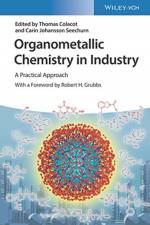
Showcases the important role of organometallic chemistry in industrial applications and includes practical examples and case studiesThis comprehensive book takes a practical approach to how organometallic chemistry is being used in industrial applications. It uniquely offers numerous, real-world examples and case studies that aid working R&D researchers as well as Ph.D. and postdoc students preparing to ace interviews in order to enter the workforce. Edited by two world-leading and established industrial chemists, the book covers flow chemistry (catalytic and non-catalytic organometallic chemistry), various cross-coupling reactions (C-C, C-N, and C-B) in classical batch chemistry, conjugate addition reactions, metathesis, and C-H arylation and achiral hydrogenation reactions. Beginning with an overview of the many industrial milestones within the field over the years, Organometallic Chemistry in Industry: A Practical Approach provides chapters covering: the design, development, and execution of a continuous flow enabled API manufacturing route; continuous manufacturing as an enabling technology for low temperature organometallic chemistry; the development of a nickel-catalyzed enantioselective Mizoroki-Heck coupling; and the development of iron-catalyzed Kumada cross-coupling for the large scale production of Aliskiren intermediates. The book also examines aspects of homogeneous hydrogenation from industrial research; the latest industrial uses of olefin metathesis; and more.-Includes rare industrial case studies difficult to find in current literature-Helps readers successfully carry out their own reactions -Covers topics like flow chemistry, cross-coupling reactions, and dehydrative decarbonylation-Features a foreword by Nobel Laureate R. H. Grubbs-A perfect resource for every R&D researcher in industry-Useful for PhD students and postdocs: excellent preparation for a job interviewOrganometallic Chemistry in Industry: A Practical Approach is an excellent resource for all chemists, including those working in the pharmaceutical industry and organometallics.
A thorough description of new design theory, fabrication methods, and applications of advanced thin films.
This authoritative handbook focuses on the science and applications of metal oxides for energy storage. It provides in-depth, application-oriented information by covering electrochemistry, morphology and both in situ and in operando characterization.
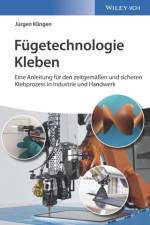
Kleben gehört zu den wärmearmen Fügetechniken und ist in der Lage, praktisch alle technisch nutzbaren Werkstoffe miteinander und untereinander flächig und stoffschlüssig zu verbinden. Die hierbei durch Adhäsion entstehende Verbindung wird sehr schonend aufgebaut, da der Klebvorgang weder großer Hitze (wie beim Schweißen oder Löten), noch strukturschwächende Löcher (wie beim Nieten oder Schrauben) bedarf. Die in der Regel großflächig ausgelegte Klebung sorgt zudem für eine relativ gleichmäßige Spannungsverteilung im Bauteil. In einem klar strukturierten 5-Phasensystem bietet Fügetechnologie Kleben hier eine detaillierte Anleitung für die Schritte, die für den Aufbau eines sicheren und stabilen Klebprozesses zur Herstellung eines qualitativ hochwertigen Bauteils notwendig sind. Berücksichtigt werden dabei unter anderem die Vorbehandlung der zu verklebenden Werkstoff oberflächen, die Auswahl der geeigneten Klebstoffe, die Dimensionierung der Verklebung sowie die Prozessschritte zur Dosierung beziehungsweise Aushärtung der Klebstoffe. Dem Anwender werden so moderne und nachhaltige Materialien sowie klebtechnische Verfahren präsentiert, mit einem besonderen Fokus auf Oberflächenbehandlungsmöglichkeiten, Klebstoffe und Verarbeitungsmethoden relevant für Industrie und Handwerk.
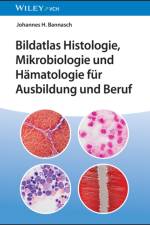
Anhand von mehr als 300 vierfarbigen Abbildungen dokumentiert der Autor die wichtigsten Lehr- und Lerninhalten in den drei "Mikroskopiefächern" Hämatologie, Histologie und medizinische Mikrobiologie. Die Auswahl der Themen orientiert sich an den Anforderungen für die Ausbildung als MTA bzw. MTLA. In der Hämatologie werden die wichtigsten krankeitsbedingten Blutbilder erläutert und mit nicht-krankheitsbedingten Veränderungen verglichen. In der Histologie werden alle wichtigen Organe und Organsysteme mithilfe unterschiedlicher Färbetechniken dokumentiert. In der Mikrobiologie sind Nachweise der häufigsten humanpathogenen Keime gezeigt, sowohl im Urspungsmaterial als auch nach Vermehrung auf Agarplatten. Das umfangreiche Bildmaterial wird begleitet von steckbriefartigen Zusammenfassungen der Bildinhalte und deren Bedeutung für die Medizin. Praktische Tipps zur Herstellung der Präparate und zum richtigen Mikroskopieren runden das Buch ab.
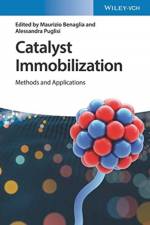
Covers more in deep the synergistic catalysis arisen from the combined use of a metal catalyst and an organocatalysts.
Dieser Brückenkurs Mathematik erleichtert Studierenden der Ingenieur- und Naturwissenschaften den Übergang von Schule zur Hochschule und Universität.
A guide to the lastest industry principles for optimizing the production of solid state active pharmaceutical ingredients Solid State Development and Processing of Pharmaceutical Molecules is an authoritative guide that covers the entire pharmaceutical value chain. The authors?noted experts on the topic?examine the importance of the solid state form of chemical and biological drugs and review the development, production, quality control, formulation, and stability of medicines. The book explores the most recent trends in the digitization and automation of the pharmaceutical production processes that reflect the need for consistent high quality. It also includes information on relevant regulatory and intellectual property considerations. This resource is aimed at professionals in the pharmaceutical industry and offers an in-depth examination of the commercially relevant issues facing developers, producers and distributors of drug substances. This important book: * Provides a guide for the effective development of solid drug forms *' Compares different characterization methods for solid state APIs * Offers a resource for understanding efficient production methods for solid state forms of chemical and biological drugs * Includes information on automation, process control, and machine learning as an integral part of the development and production workflows * Covers in detail the regulatory and quality control aspects of drug development Written for medicinal chemists, pharmaceutical industry professionals, pharma engineers, solid state chemists, chemical engineers, Solid State Development and Processing of Pharmaceutical Molecules reviews information on the solid state of active pharmaceutical ingredients for their efficient development and production.
Abonner på vårt nyhetsbrev og få rabatter og inspirasjon til din neste leseopplevelse.
Ved å abonnere godtar du vår personvernerklæring.