

















Gjør som tusenvis av andre bokelskere
Abonner på vårt nyhetsbrev og få rabatter og inspirasjon til din neste leseopplevelse.
Ved å abonnere godtar du vår personvernerklæring.Du kan når som helst melde deg av våre nyhetsbrev.

Eight outre tales of the doubly weird by J. Sheridan LeFanu, E.T.A. Hoffmann, Algernon Blackwood, Guy de Maupassant, Honore de Balzac, Hans Christian Andersen, Henry James, and Charlotte Perkins Gilman. . . . The face in the mirror is yours, but ever so slightly different. A shadow haunts your house, but it walks in places you've never gone. You grew up with a boy who had your face and your name, except he always did everything right, while you never could. Evil twins, double images: these are the tales of the Doppelganger.
It begins with the end of the world . . . In some way, Jeffson is chosen, for he tells of hearing the voices from an early age. Adam Jeffson ends up as the first man to reach the North Pole -- alone -- where he finds a scene of wonder and terror described in Shiel's evocative prose. Jeffson struggles back to the ship, and along the way, the real horror begins.H.G. Wells lauded The Purple Cloud as "brilliant" and H. P. Lovecraft later praised the novel as exemplary weird fiction, "delivered with a skill and artistry falling little short of actual majesty." It begins with the end of the world.
Sometimes it is said that the great writers examine the world around them and then write about what they see in it. Surely this is true of Mary Shelley -- was true of her even at age nineteen. She made order out of chaos, and found parents where there were none.The book charts a young woman's education under a tyrannical father figure. As a six-year-old orphan, Elizabeth Raby prevents Rupert Falkner from committing suicide; Falkner then adopts her and brings her up to be a model of virtue. However, she falls in love with Gerald Neville, whose mother Falkner had unintentionally driven to her death years before. When Falkner is finally acquitted of murdering Neville's mother, Elizabeth's female values subdue the destructive impulses of the two men she loves, who are reconciled and unite with Elizabeth in domestic harmony.
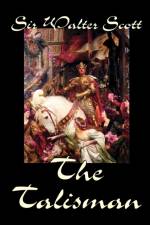
The main characters are the Scottish knight Kenneth, a fictional version of David of Scotland, Earl of Huntingdon, who returned from the third Crusade in 1190; Richard the Lionheart; Saladin; and Edith Plantagenet, a relative of Richard.In Scott's own words: "the warlike character of Richard I, wild and generous, a pattern of chivalry, with all its extravagant virtues and its no less absurd errors, was opposed to that of Saladin, in which the Christian and English monarch showed all the cruelty and violence of an Eastern sultan and Saladin, on the other hand, displayed the deep policy and prudence of a European sovereign, whilst each contended which should excel the other in the knightly qualities of bravery and generosity. This singular contrast afforded, as the author conceived, materials for a work of fiction possessing peculiar interest."
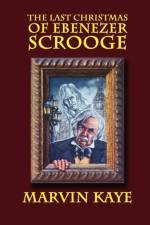
Marvin Kaye has crafted a wondeful sequel to Charles Dickens' "A Christmas Carol," picking up the story of Ebenezer Scrooge and revisiting familiar characters such as Jacob Marley, Bob Cratchit, and many others, following it through to an altogether satisfying conclusion in an intricate tapestry of the real and the supernatural, as the reformed Scrooge tries to satisfy a nagging feeling of something yet undone. ". . . intriguing and unusual. It's a very interesting idea to put a new text into an 'intertextual' relationship with a Dickens original. The treatment of the Jewish angle throws a sidelight on early C19th society and fictional representations of it at the time which is extremely interesting. I'm sure that many readers will find it fascinating . . . In short, a worthy endeavour with much that is thought-provoking." --Charles Palliser"It's a brave soul who writes a sequel to a universally-loved and -known book like "A Christmas Carol"; it's a rarer man still who does a job as fine as Marvin Kaye of evoking Charles Dickens without imitating him, of extending a story that had until now seemed resolved and delivering a tale which will delight, terrify and affect all readers." --Kim Newman "I was impressed and moved on many levels-not only by Marvin Kaye's mastery of Dickensian style, but also by a kind of optimism, or idealism, far more consistent with Victorian Dickens/Kaye than with purely contemporary Kaye. I can imagine that Marvin really did write it as Dickens might have wanted it to go." --Paula Volsky"This is a magical, indeed a miraculous, story. Here is the vision of the Afterlife which Dickens did not address, but was the unanswered question at the end of his original tale. It is rare indeed when an author writes a sequel to some other author's work and does not diminish both. It's brilliant." --Morgan Llywelyn
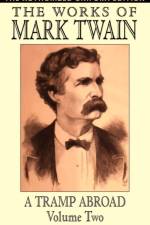
One of the finest of Twain's travel books, detailing (often hilariously) his adventures in Europe, as a Yankee confronting the Old World. France, Germany, and Switzerland will never quite seem the same again. A fascinating glimpse of far times and places, seen through the eye of America's best writer.
"[Cabell's] most substantial post-Biography fantasy was "The Nightmare Has Triplets," a sequence comprising Smirt: An Urban Nightmare, Smith: A Sylvan Interlude, and Smire: An Acceptance in the Third Person. This explicitly emulates the logic and geography of dreams . . . successfully mistly and dreamlike . . ." --The Encyclopedia of Fantasy
"[Cabell's] most substantial post-Biography fantasy was "The Nightmare Has Triplets," a sequence comprising Smirt: An Urban Nightmare, Smith: A Sylvan Interlude, and Smire: An Acceptance in the Third Person. This explicitly emulates the logic and geography of dreams . . . successfully mistly and dreamlike . . ." --The Encyclopedia of Fantasy
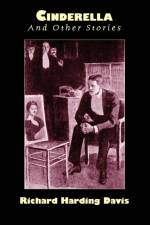
Collection of Davis's short stories, originally published in 1899. Included are: "Cinderella," "Miss Delamar's Understudy," "The Editor's Story," "An Assisted Emigrant," and "The Reporter Who Made Himself King."
A collection of 10 science fiction stories by acclaimed master Keith Roberts, author of "Pavane" and "The Chalk Giants."
Thubway Tham is a small, short-tempered gnome of a man, a professional pickpocket with an annoying lisp. But he is no mere thief . . . he is the king of his chosen profession, a master "dip" who works only in the subways of New York City. Like all such villains, he faces a cunning adversary in Police Detective Craddock, who is always half a pace behind. Craddock has sworn to put Tham behind bars, where he belongs. But Tham is clever enough to always remain one step ahead of Craddock and everyone else. Despite being a criminal, Tham always comes off well: the people whom he relieves of their wallets are often deserving of it, and he has a tendency to take on other, much worse crooks to give them their just desserts. And, of course, there are scoundrels aplenty in his world: a rival pickpocket who moves in on his turf in "Thubway Tham's Baggage Check;" Shifty Shane, the holdup man, who calls Tham a coward because he doesn't use a gun; and Mr. Clackworthy, a slick grifter from Chicago, who looks down on dips as the lowest of thieves. Call him an early antihero. Tham endears himself to readers because he has a moral compass. He knows his place is in the gutter of the world, but that doesn't mean he can't strive to better himself - or others.
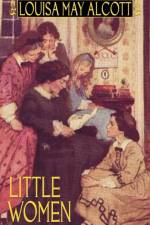
Louisa May Alcott published many books, but "Little Women" remains her most beloved literary creation and holds a special place in the annals of American literature. Alcott's charming stories, warm and human characters, and unerring sense of timing for both comedy and tragedy make the heroines of "Little Women" come alive. A Wildside Literary Classic.
This gothic novel delves into the dangers of spiritualism and the occult. It follows a young man who, grieving the loss of a loved one, becomes obsessed with contacting the dead. As he delves deeper into necromancy, he faces increasingly sinister forces that blur the lines between reality and the supernatural. The novel explores themes of grief, obsession, and the psychological toll of tampering with dark powers.
Joseph Thomas Sheridan Le Fanu was the leading ghost-story writer of the nineteenth century and was central to the development of the genre in the Victorian era.From "Green Tea": "The evil spirits associated with man are, indeed from the hells, but when with man they are not then in hell, but are taken out thence. The place where they then are, is in the midst between heaven and hell, and is called the world of spirits -- when the evil spirits who are with man, are in that world, they are not in any infernal torment, but in every thought and affection of man, and so, in all that the man himself enjoys. But when they are remitted into their hell, they return to their former state. . . ." "If evil spirits could perceive that they were associated with man, and yet that they were spirits separate from him, and if they could flow in into the things of his body, they would attempt by a thousand means to destroy him; for they hate man with a deadly hatred. . . ." "Knowing, therefore, that I was a man in the body, they were continually striving to destroy me, not as to the body only, but especially as to the soul; for to destroy any man or spirit is the very delight of the life of all who are in hell; but I have been continually protected by the Lord. Hence it appears how dangerous it is for man to be in a living consort with spirits, unless he be in the good of faith. . . ." "Nothing is more carefully guarded from the knowledge of associate spirits than their being thus conjoint with a man, for if they knew it they would speak to him, with the intention to destroy him. . . ."
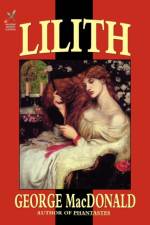
George MacDonald (1824-1905) was a Scottish author, teacher, and, briefly, clergyman, whose theology was too personal and idiosyncratic for him to remain on the pulpit for very long, but whose imagination led him to write two of the most important visionary novels of the 19th century, Phantastes and Lilith.Includes an introduction by fantasy scholar Darrell Schweitzer.
Gary A. Braunbeck was born in Newark, Ohio in the Year of the Rat and has been apologizing for it ever since. After surviving eight years of Catholic school, he studied for the priesthood until he didn't anymore. He's worked at a variety of occupations over the years, including actor (stage, television, one movie), musician, a carny "stick," animal groomer, short-order cook, bartender, janitor (six stints at that one), newspaper reporter, and habilitation supervisor for developmentally disabled adults. When he's not out and about accosting strangers to forgive him for his sins, he can usually be found holed up in his office, writing, which everyone agrees is best not only for him, but society at large. He made his first professional fiction sale, "Amymone's Footsteps," to Twilight Zone's NIGHT CRY in 1985 and has been writing and selling steadily ever since. To date, he's published nearly 200 short stories in the horror, science fiction, western, fantasy, and mystery fields. His published novels include In Hollow Houses, Isaac Asimov's I-Bots: Time Was (co-written with Steve Perry), This Flesh Unknown, and The Indifference of Heaven (the last nominated for both The International Horror Guild and Bram Stoker award for Outstanding Novel). Among his collections are Things Left Behind (another Bram Stoker-nominated work), Escaping Purgatory (in collaboration with Alan M. Clark), and GRAVEYARD PEOPLE: The Collected Cedar Hill Stories, Volume 1. Borderlands Press will be releasing another collection, this a compilation of short-shorts, entitled The Little Orange Book of Odd Stories, sometime in 2004. x3 is his first science fiction collection.
Part II of Bouvard and Pecuchet also includes several bonus shorts: the play "The Dance of Death," an essay on Rabelais, and other non-fiction.GUSTAVE FLAUBERT (1821-1880) was the son of a French surgeon. He studied law in Paris but soon returned to his hometown (Croisset, near Rouen) to devote his life to writing. He is the author of the immortal Madame Bovary (1856), a novel about the loves and frustrations of a romantic woman married to a provincial dullard. The book was criticized for immorality and prosecuted, but Flaubert won the case. Of the extremely well-realized heroine, he once remarked, "I am her." The novel is one of the greatest explorations of a female character by a male writer, in all of literature. Among Flaubert's other notable works are Salammbo (1863), a historical romance of ancient Carthage which influenced Robert E. Howard (the author of the Conan series), and The Temptation of Saint Anthony, which was translated into vivid, almost hallucinogenic English prose by Lafcadio Hearn. Flaubert also wrote plays, short stories, and the long satire Bouvard and Pecuchet. His life was outwardly uneventful, but full. He was heavily influenced by several women, including his mother, a mistress, and a woman ten years his senior with whom he fell in love as a young man. He travelled to North Africa and the Middle East in 1851. He received honors from the emperor Napoleon III. Among his friends and associates were Emile Zola, George Sand, and the Russian writer Ivan Turgenev. His work is characterized by criticism of small-town bourgois values, a curious tendency to romanticism, a fondness for the exotic, and a dedication to the then rising Realist movement, with its dedication to depicting life as it is, without judgment.
Part II of Bouvard and Pecuchet also includes several bonus shorts: the play "The Dance of Death," an essay on Rabelais, and other non-fiction. GUSTAVE FLAUBERT (1821-1880) was the son of a French surgeon. He studied law in Paris but soon returned to his hometown (Croisset, near Rouen) to devote his life to writing. He is the author of the immortal Madame Bovary (1856), a novel about the loves and frustrations of a romantic woman married to a provincial dullard. The book was criticized for immorality and prosecuted, but Flaubert won the case. Of the extremely well-realized heroine, he once remarked, "I am her." The novel is one of the greatest explorations of a female character by a male writer, in all of literature. Among Flaubert's other notable works are Salammbo (1863), a historical romance of ancient Carthage which influenced Robert E. Howard (the author of the Conan series), and The Temptation of Saint Anthony, which was translated into vivid, almost hallucinogenic English prose by Lafcadio Hearn. Flaubert also wrote plays, short stories, and the long satire Bouvard and Pecuchet. His life was outwardly uneventful, but full. He was heavily influenced by several women, including his mother, a mistress, and a woman ten years his senior with whom he fell in love as a young man. He travelled to North Africa and the Middle East in 1851. He received honors from the emperor Napoleon III. Among his friends and associates were Emile Zola, George Sand, and the Russian writer Ivan Turgenev. His work is characterized by criticism of small-town bourgois values, a curious tendency to romanticism, a fondness for the exotic, and a dedication to the then rising Realist movement, with its dedication to depicting life as it is, without judgment.
When Tom Tyzack is viciously beaten to death with a golf club on the local golf course, PC Arthur Root, the local village bobby, is in the unenviable position of having to question his fellow club members. He is regarded with scorn by the detective in charge of the case, and the latter's ill-natured attitude toward the suspects does little to assist him in solving the mystery. But it is Root who, after a second brutal murder, stumbles on the clue that leads to the discovery of the killer!
Aahz falls for the offer of a piece of the rock, literally, when he invests in a scheme to build pyramids. He is so enthusiastic about the concept that he ropes in everyone else he knows to invest. But all is not perfect. It's up to Skeeve to figure out why the deal is running sour even before the ink's dry on the papyrus.
What's got more magic treasure than a dragon's hoard? The Wildside Book of Loot, with its thousands of personalized items has all the treasure a GM could ever want. With treasure for every occasion -- from the aftermath of a dungeon crawl to those late-night shopping expeditions at the pawnshop selling "lightly used" magic items -- The Wildside Book of Loot is an important resource for GMs who want to provide the perfect loot for the occasion. From basic resources (like tables of the most commonly found magic items and a spell point rune generator) to the expected (thousands of weapons and items that raise stats) to the truly exotic (like magical pets and furniture), The Wildside Book of Loot is a unique resource for roleplaying gamers.
Abonner på vårt nyhetsbrev og få rabatter og inspirasjon til din neste leseopplevelse.
Ved å abonnere godtar du vår personvernerklæring.