
























Gjør som tusenvis av andre bokelskere
Abonner på vårt nyhetsbrev og få rabatter og inspirasjon til din neste leseopplevelse.
Ved å abonnere godtar du vår personvernerklæring.Du kan når som helst melde deg av våre nyhetsbrev.

The Fall 1989 issue of Weird Tales showcases Featured Author Karl Edward Wagner (who contributes a major Kane novella and an interview) and Featured Artist J.K. Potter (who contributes all the artwork). Also includes work by Jonathan Carroll, Nina Kiriki Hoffman, Brian Lumley, and more.
The Fall 1988 issue of Weird Tales showcases the work of Featured Author Keith Taylor and Featured Artist Carl Lundgren. Also includes work by Tad Williams, Alan Rodgers, W.T. Quick, and many more.
Poor Folk is an epistolary novel -- that is, a tale told as a series of letters between the characters. And oh, what characters these are! Makar Dievushkin Alexievitch is a copy writer, barely squeaking by; Barbara Dobroselova Alexievna works as a seamstress, and both face the sort of everyday humiliation society puts upon the poor. These are people respected by no one, not even by themselves. These are folks too poor, in their circumstances, to marry; the love between them is a chaste and proper thing, a love that brings some readers to tears. But it isn't maudlin, either; Fyodor Dostoevsky has something profound to say about these people and this circumstance. And he says it very well. When the book was first published a leading Russian literary critic of the day -- Belinsky -- prophesied that Dostoevsky would become a literary giant. It isn't hard to see how he came to that conclusion, and in hindsight, he was surely was correct.
Dumas constructs the plot around the notion that the Man in the Iron Mask is the twin brother of Louis XIV, Philippe, who had been concealed and imprisoned from birth by his father, Louis XIII and his mother, Anne of Austria, "for the good of France". Only a very few people living at the start of the novel know of Philippe's existence; these include his mother, Anne and her former confidante, the Duchesse de Chevreuse. Chevreuse has let the secret slip to Aramis, the Bishop of Vannes and her former lover.
ERNEST DUDLEY is an English author known to millions of crime fiction addicts for his weekly _Armchair Detective_ roadio broadcasts, and also for the Doctor Morelle series of stories (and radio plays) in which the shrewd detective-psychiatrist solved countless mysteries with the aid of his assistant, Miss Frayle. The Adventure of Jimmy Strange presents fifteen short stories about a new hero -- Jimmy Strange.
Written in 1913, roughly a year before the outbreak of World War I, much of it takes place in a single room in Challenger's house in Sussex.This would be the last story written about Challenger until the 1920s, by which time Doyle's spiritualist beliefs had begun to influence his writing.It was upon Friday, the twenty-seventh of August -- a date forever memorable in the history of the world. . . . It is imperative that now at once, while these stupendous events are still clear in my mind, I should set them down with that exactness of detail which time may blur. But even as I do so, I am overwhelmed by the wonder of the fact that it should be our little group of the "Lost World" -- Professor Challenger, Professor Summerlee, Lord John Roxton, and myself -- who have passed through this amazing experience. When, some years ago, I chronicled in the Daily Gazette our epoch-making journey in South America, I little thought that it should ever fall to my lot to tell an even stranger personal experience, one which is unique in all human annals and must stand out in the records of history as a great peak among the humble foothills which surround it. The event itself will always be marvelous, but the circumstances that we four were together at the time of this extraordinary episode came about in a most natural and, indeed, inevitable fashion. I will explain the events which led up to it as shortly and as clearly as I can, though I am well aware that the fuller the detail upon such a subject the more welcome it will be to the reader, for the public curiosity has been and still is insatiable. It was upon Friday, the twenty-seventh of August -- a date forever memorable in the history of the world. . . .
Editor Robert Weinberg has assembled a stellar collection of rare horror stories from the weird fiction pulps, including contributions from Robert Barbour Johnson, Julius Long, G.G. Pendarves, Mary Elizabeth Counselman, Mearle Prout, Mindret Lord, Robert E. Howard, Earl Pierte, Jr., Seabury Quinn, J. Wesley Rosenquest, and Robert Nelson.
Lloyd Biggie is not only a writer, but also a musician. In THE METALLIC MUSE he has included seven science fiction stories, written over several years, all of which in some way relate to the arts. Thoroughly entertaining and provocative, many of the stories explore the intricate relationship between life and art, and all of them contain very pertinent ideas about present and future experience. Superbly demonstrating their author's depth of insight to the human condition, they offer to all who read them an intriguing blend of accurate analysis and sometimes devastating speculation.
Old Concord offers a vivid account of the historical and cultural significance of Concord, Massachusetts, during the American Revolution. This detailed exploration captures the town's pivotal role in shaping early American history, from its iconic battles to its enduring legacy. Through rich descriptions and historical insights, the book serves as a tribute to the birthplace of American independence.
James Henry Schmitz (1911-1981) was an American writer born in Hamburg, Germany of American parents. He is best known for space opera and strong female characters (such as Telzey Amberdon and Trigger Argee) that didn't fit into the damsel in distress stereotype typical of science fiction during the time he was writing. Included in this volume are "An Incident on Route 12," "Watch the Sky," "The Winds of Time," and "Lion Loose."
The Wanderer's Necklace by H. Rider Haggard is an epic historical adventure that weaves together elements of romance, mystery, and the supernatural. The story follows Olaf, a Norse nobleman, who discovers an ancient necklace with mysterious powers. This discovery sets him on a thrilling journey across Europe and the Middle East. Along his path, Olaf faces numerous trials, battles, and intrigues, all while seeking the truth behind the necklace and its connection to his destiny. His adventures lead him to Byzantium, where he becomes entangled in court politics and falls in love with the beautiful Heliodore. Published in 1914, The Wanderer's Necklace is a captivating tale that showcases Haggard's talent for blending historical detail with imaginative storytelling.
Since 1977, The Wolfe Pack has published The Gazette, chockful of articles and tales of America's greatest sleuth, Nero Wolfe, who prefers beer and orchids to working at his West 35th Street brownstone. But thanks to Wolfe's wisecracking associate Archie Goodwin and his agent REX STOUT, Wolfe's seventy-two cases are mystery classics.THE NERO WOLFE FILES is a generous collection of Neronian reading delights selected from over twenty-five years of The Gazette by veteran anthologist, novelist, and charter member of The Wolfe Pack Marvin Kaye.
A collage novel following in tradition started by surreal artist Max Ernst. It follows the story of two sisters and a mysterious creature called The Nightengale, chronicling their journeys. A fun and fabulous exploration of myth and metaphor.
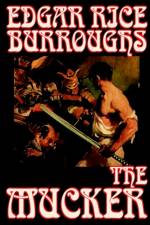
Billy Byrne was a product of the streets and alleys of Chicago's great West Side. From Halsted to Robey, and from Grand Avenue to Lake Street there was scarce a bartender whom Billy knew not by his first name. And, in proportion to their number which was considerably less, he knew the patrolmen and plain clothes men equally as well, but not so pleasantly. His kindergarten education had commenced in an alley back of a feed-store. Here a gang of older boys and men were wont to congregate at such times as they had naught else to occupy their time, and as the bridewell was the only place in which they ever held a job for more than a day or two, they had considerable time to devote to congregating. They were pickpockets and second-story men, made and in the making, and all were muckers, ready to insult the first woman who passed, or pick a quarrel with any stranger who did not appear too burly. By night they plied their real vocations. By day they sat in the alley behind the feedstore and drank beer from a battered tin pail. The question of labor involved in transporting the pail, empty, to the saloon across the street, and returning it, full, to the alley back of the feed-store was solved by the presence of admiring and envious little boys of the neighborhood who hung, wide-eyed and thrilled, about these heroes of their childish lives. Billy Byrne, at six, was rushing the can for this noble band, and incidentally picking up his knowledge of life and the rudiments of his education.
This collection of ghost stories blends humor and the supernatural, offering readers a light-hearted take on encounters with the paranormal. Each tale features quirky characters and amusing situations as the narrator recounts his various meetings with ghosts, spirits, and other supernatural entities. With a whimsical tone, Bangs combines ghostly happenings with wit and satire, making this an entertaining read for fans of both comedy and ghost stories.
Here is the complete guide to running Discon I, the 1963 World Science Fiction Convention, in Washington, D.C. It contains the wit and wisdom of the convention committee, which consisted of George Scithers, Dick Eney, Bob Pavlat, and Bill Evans. Their collective experiences and observations provide insights into what to do (and not to do) for any convention, regardless of size or date.
"The time has not yet come for a complete history of the Negro peoples. Archæological research in Africa has just begun, and many sources of information in Arabian, Portuguese, and other tongues are not fully at our command; and, too, it must frankly be confessed, racial prejudice against darker peoples is still too strong in so-called civilized centers for judicial appraisement of the peoples of Africa. Much intensive monographic work in history and science is needed to clear mooted points and quiet the controversialist who mistakes present personal desire for scientific proof. Nevertheless, I have not been able to withstand the temptation to essay such short general statement of the main known facts and their fair interpretation as shall enable the general reader to know as men a sixth or more of the human race. Manifestly so short a story must be mainly conclusions and generalizations with but meager indication of authorities and underlying arguments. Possibly, if the Public will, a later and larger book may be more satisfactory on these points." -- W.E.B. Du Bois [Complete with maps and reading guilde.] Original publication date: 1915.
Step into the mysterious world of Chinese folklore with Lafcadio Hearn's Some Chinese Ghosts. Published in 1887, this collection of ghost stories brings to life haunting tales of love, loss, and vengeance from ancient Chinese legends. Hearn's masterful storytelling captures the essence of the supernatural, introducing spirits, specters, and otherworldly beings. Each tale offers a unique glimpse into the rich tapestry of Chinese mythology, filled with unforgettable characters and eerie encounters. Perfect for fans of ghost stories and Eastern folklore, Some Chinese Ghosts promises a captivating journey into the unknown.
Milton A. Rothman was best known to generations of science-fiction readers for a single classic story written at age 19: "Heavy Planet," published under the byline of "Lee Gregor" in 'Astounding Science Fiction' in 1939 at the beginning of the Golden Age and kept in print for decades in the classic anthology 'Adventures in Time and Space'. He was also a pioneer of early fandom, a founder of the Philadelphia Science Fiction Society, a fanzine publisher, and a World Science Fiction Convention chairman. After World War II, he became one of the country's leading nuclear physicists, but continued to write science fiction throughout his life. Here, for the first time, all his science fiction stories are collected in one volume, giving a clear picture of the author's development from youth to old age, reflecting lifelong preoccupations with physics, mathematics, music, the futility of war, and, of course, science fiction itself. Here is an authentic voice from the early years of the modern science fiction field. Features an introduction by science fiction master Frederik Pohl.
Mary Hallock-Greenewalt played the piano with the Philadelphia and Pittsburgh Orchestras as a concert soloist, invented her own color organ that she called a "Sarabet" after her mother, and, in her pursuit of the art she named "Nourathar" by combining the Arabic words for "essence of light,"she had to invent the machinery required as well. Numbered among her inventions are the rheostat that allos the gradual fading of light, the mercury switch, and was among the earliest developers of colored gel filters for tinting theatrical lights. Her patent for the rheostat became the subject of an infirngement lawsuit in the lat 1920s against such large corporations as General Electric, a lawsuit that she ultimately won in 1936. This volume collects all eleven of her technology patents, revealing the refinement and evolution of the Sarabet. These patents also enable a clear evaluation of her contributions to visual music, since, as Dr. Betancourt notes in his introduction, the patents allow a much clearer determination of her place in history and a peer-reviewed statement of her accomplishments.
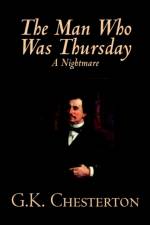
Is THE MAN WHO WAS THURSDAY a gripping adventure story of murderous criminals and brilliant policemen, or something deeper. . . ? We can't discuss the book's denoument here in the cover copy, but this title tempts us. Let us instead say that the book gave us an inevitable and moving experience as the investigators finally discovered who Sunday is.
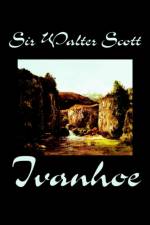
The Prior Aymer had taken the opportunity afforded him, of changing his riding robe for one of yet more costly materials, over which he wore a cope curiously embroidered. Besides the massive golden signet ring, which marked his ecclesiastical dignity, his fingers, though contrary to the canon, were loaded with precious gems; his sandals were of the finest leather which was imported from Spain; his beard trimmed to as small dimensions as his order would possibly permit, and his shaven crown concealed by a scarlet cap richly embroidered. The appearance of the Knight Templar was also changed; and, though less studiously bedecked with ornament, his dress was as rich, and his appearance far more commanding, than that of his companion. He had exchanged his shirt of mail for an under tunic of dark purple silk, garnished with furs, over which flowed his long robe of spotless white, in ample folds. The eight-pointed cross of his order was cut on the shoulder of his mantle in black velvet. The high cap no longer invested his brows, which were only shaded by short and thick curled hair of a raven blackness, corresponding to his unusually swart complexion. Nothing could be more gracefully majestic than his step and manner, had they not been marked by a predominant air of haughtiness, easily acquired by the exercise of unresisted authority. . . .
The famous "weird menace" pulp magazines are among the most sought-after publications by collectors. The "Spicy" magazines -- which included Spicy Mystery, Spicy Adventure, Spicy Detective, and others -- published a titilating mix of fantasy, horror, mystery, and suspense, punctuated by episodes of torture, sadism, sex, and other risque elements. Although tame by current standards, and sometimes of dubious literary merit, these publications presented tales which thrilled a sensation-hungry audience. Despite the themes and constraints of the market, writers who would later become famous -- including Hugh B. Cave, E. Hoffman Price, Robert Leslie Bellem, and many more -- were frequent contributors. This issue features Bellem, Hugh Speer, Justin Case (Hugh B. Cave), and many others -- plus all the classic "spicy" artwork!
Classic horror stories from the pulps, including work by Robert E. Howard, Seabury Quinn, G.G. Pendarves, and many more.
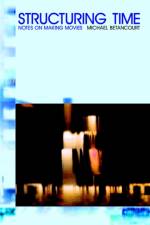
A NEW KINETIC ART: This book presents a new approach to the conceptual basis of all visual art, and while it is about making movies -- the catch-all for video, film, computer graphics and anything else that may appear to move -- the thrust of this book is a radical redefinition of all visual media, including traditional standards like painting. The framework these notes propose is a way of thinking about visual art that eliminates all former media in favor of a division based on our ability to see movement or change in a work of art. While most movies change and move rapidly, this understanding is equally concerned with the very slow, or apparently immobile.
From the pages of the September, 1935 issue of Secret Agent X comes this sensational full length novel, Legions of the Living Dead: "From nowhere hurtled that black death car. And from nowhere came its grisly occupants. They were not of the earth, for their human flesh was immune to bullets. They were not of the grave, for they manned the wheel and a blasting machine gun- Secret Agent "X" made a desperate maneuver to block their invasion of the land of the living. And in that weird terror trap, he came face to face with a man he knew-a man he knew had died five years ago!"
"The Wallet of Kai Lung was a thing made deliberately, in hard material and completely successful. It was meant to produce a particular effect of humour by the use of a foreign convention, the Chinese convention, in the English tongue. It was meant to produce a certain effect of philosophy and at the same time it was meant to produce a certain completed interest of fiction, of relation, of a short epic. It did all these things. . . . It is one of the tests of excellent work that such work is economic, that is, that there is nothing redundant in order or in vocabulary, and at the same time nothing elliptic--in the full sense of that word: that is, no sentence in which so much is omitted that the reader is left puzzled. That is the quality you get in really good statuary--in Houdon, for instance, or in that triumph the archaic Archer in the Louvre. The Wallet of Kai Lung satisfied all these conditions." --Hilaire Belloc
Abonner på vårt nyhetsbrev og få rabatter og inspirasjon til din neste leseopplevelse.
Ved å abonnere godtar du vår personvernerklæring.