














Gjør som tusenvis av andre bokelskere
Abonner på vårt nyhetsbrev og få rabatter og inspirasjon til din neste leseopplevelse.
Ved å abonnere godtar du vår personvernerklæring.Du kan når som helst melde deg av våre nyhetsbrev.

The gruff voice of the other warder broke out at once, above the shuffling of feet: "What are you stopping for? Get on there in front." From the corner of my eye I caught sight of the civil guard hurrying towards the prostrate figure by the wall; and then, just as the whole gang lurched forward again, the thing happened with beautiful abruptness. A broad, squat figure shot out suddenly from the head of the column, and, literally hurling itself over the wall, landed with a crash amongst the thick undergrowth. There was a second shout from the warder, followed almost instantly by a hoarse command to halt, as the civil guard jerked his carbine to his shoulder. The fugitive paid about as much attention to the order as a tiger would to a dog whistle. He was off again in an instant, bent almost double, and bursting through the tangled bushes with amazing swiftness. Bang! The charge of buckshot whistled after him, spattering viciously through the twigs, and several of the bolder spirits in the gang at once raised a half-hearted cry of "Murder!"
Five of H. Beam Piper's classic science fiction stories are collected here, including "Graveyard of Dreams," "Genesis," "Operation R.S.V.P.," "The Answer," and "Flight from Tomorrow."
Adapted into a play, it was titled Camille in English and became the basis for Verdi's 1853 opera, La Traviata, Duplessis undergoing yet another name change, this time to Violetta Valéry.Dumas was born in Paris, France, the illegitimate child of Marie-Laure-Catherine Labay, a dressmaker, and novelist Alexandre Dumas. During 1831 his father legally recognized him and ensured that the young Dumas received the best education possible at the Institution Goubaux and the Collège Bourbon. At that time, the law allowed the elder Dumas to take the child away from his mother. Her agony inspired Dumas fils to write about tragic female characters. In my opinion, it is impossible to create characters until one has spent a long time in studying men, as it is impossible to speak a language until it has been seriously acquired. Not being old enough to invent, I content myself with narrating, and I beg the reader to assure himself of the truth of a story in which all the characters, with the exception of the heroine, are still alive. Eyewitnesses of the greater part of the facts which I have collected are to be found in Paris, and I might call upon them to confirm me if my testimony is not enough. And, thanks to a particular circumstance, I alone can write these things, for I alone am able to give the final details, without which it would have been impossible to make the story at once interesting and complete. . . .
H.L. Mencken, then practising primarily as an American literary critic, praised the book in the pages of The Smart Set: "Until Three Soldiers is forgotten and fancy achieves its inevitable victory over fact, no war story can be written in the United States without challenging comparison with it--and no story that is less meticulously true will stand up to it. At one blast it disposed of oceans of romance and blather. It changed the whole tone of American opinion about the war; it even changed the recollections of actual veterans of the war. They saw, no doubt, substantially what Dos Passos saw, but it took his bold realism to disentangle their recollections from the prevailing buncombe and sentimentality.""Don't you know better than to sleep in your O.D. shirt? Take it off." "Yes, sir." "What's your name?" The man looked up, blinking, too dazed to speak. "Don't know your own name, eh?" said the officer, glaring at the man savagely, using his curt voice like a whip. -- "Quick, take off yer shirt and pants and get back to bed." The Officer of the Day moved on, flashing his light to one side and the other in his midnight inspection of the barracks. Intense blackness again, and the sound of men breathing deeply in sleep, of men snoring. As he went to sleep Fuselli could hear the man beside him swearing, monotonously, in an even whisper, pausing now and then to think of new filth, of new combinations of words, swearing away his helpless anger, soothing himself to sleep by the monotonous reiteration of his swearing. A little later Fuselli woke with a choked nightmare cry. He had dreamed that he had smashed the O.D. in the jaw and had broken out of the jug and was running, breathless, stumbling, falling, while the company on guard chased him down an avenue lined with little dried-up saplings, gaining on him, while with voices metallic as the clicking of rifle triggers officers shouted orders, so that he was certain to be caught, certain to be shot. He shook himself all over, shaking off the nightmare as a dog shakes off water, and went back to sleep again, snuggling into his blankets.
"This highly influential late-19th century Danish novel portrays the melancholy life of an idealistic young poet." --Publishers Weekly "Niels Lyhne recounts the life of its eponymous hero, a poet, emphasizing the influence of experience on psychological development and examining philosophical issues: the nature of reality, atheism, creativity and love. It is a dense narrative, striking at times in its richness of physical detail . . ." --Independent Publisher
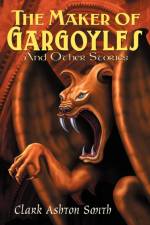
Clark Ashton Smith was a prodigy, who wrote Arabian Nights novels in his mid-teens and was heralded as a major voice in American poetry by the time he was nineteen. In one frantic burst in the middle 1930s, he wrote nearly a hundred strange, wondrous, and grotesque stories, most of which were published in Weird Tales, Strange Tales, Wonder Stories, and other pulps, but he was by no means a conventional pulp writer. A direct heir to Edgar Allan Poe and to the late Romantics and Decadents, a translator of Baudelaire, Smith wrote in baroque, jeweled prose of distant times and remote planets, of baleful magics and reanimated corpses, lost lovers, eldritch gods, and inexorable fate. He is also a writer whose works refuse to die, even after nearly a century.Think of him as the sorcerer-poet, alone in his eyrie in the dry California hills, dreaming his strange dreams and creating his unique worlds-of Zothique, the Earth's haunted last conti- nent at the end of time, Hyperborea, a prehistoric land, Posei- donis, the last foundering isle of Atlantis, and Averoigne, an unhistoried province of medieval France, thick with vampires. Think of the visions his stories conjure up as sendings, written in strange runes, transported from the sorcerer's lair by in- describable genii or winged spirits. His stories are altogether unlike anyone else's and quite wonderful, among the treasures of fantastic literature.This fine collection of Clark Ashton Smith's work reprints eight of his classic fantasies, including two set in Hyperborea.
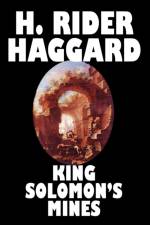
I am going to tell the strangest story that I remember. It may seem a queer thing to say, especially considering that there is no woman in it -- except Foulata. Stop, though! there is Gagaoola, if she was a woman, and not a fiend. But she was a hundred at least, and therefore not marriageable, so I don't count her. At any rate, I can safely say that there is not a _petticoat_ in the whole history.
This famous "weird menace" pulp magazine -- which included Spicy Mystery, Spicy Adventure, Spicy Detective, and others -- published a titilating mix of fantasy, horror, mystery, and suspense, punctuated by episodes of torture, sadism, sex, and other risque elements. Although tame by current standards, and sometimes of dubious literary merit, these publications presented tales which thrilled a sensation-hungry audience. Despite the themes and constraints of the market, writers who would later become famous -- including Hugh B. Cave, E. Hoffman Price, Robert Leslie Bellem, and many more -- were frequent contributors. This issue of Spice Mystery Stories includes contributions from Robert Leslie Bellem, Atwater Culpepper, Ellery Watson Calder, Carl Moore, E. Hoffman Price, Jerome Severs Perry, Don King, Charles R. Allen, Charles A. Baker, Jr., and Arthur Wallace.
A collection of letters from James Branch Cabell, covering a period of years and spanning a wide variety of subjects. A fascinating look at the man behind the work, and a glimpse at the personal thoughts of one of the 20th Century's greatest fantasists.
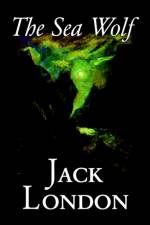
I glanced up. The captain had thrust his head and shoulders out of the pilot-house, and was staring intently into the fog as though by sheer force of will he could penetrate it. His face was anxious, as was the face of my companion, who had stumped over to the rail and was gazing with a like intentness in the direction of the invisible danger. Then everything happened, and with inconceivable rapidity. The fog seemed to break away as though split by a wedge and the bow of a steamboat emerged, trailing fog-wreaths on either side like seaweed on the snout of Leviathan. I could see the pilot-house and a white-bearded man leaning partly out of it, on his elbows. He was clad in a blue uniform, and I remember noting how trim and quiet he was. His quietness, under the circumstances, was terrible. He accepted Destiny, marched hand in hand with it, and coolly measured the stroke. As he leaned there, he ran a calm and speculative eye over us, as though to determine the precise point of the collision, and took no notice whatever when our pilot, white with rage, shouted, "Now you've done it!"
Andrew Lang's survey of English literature is a remarkably thorough look at the history of English writing, covering authors from Abbot Adamnan to Edward Young, and everyone of note in between.
When, yielding to the solicitations of my friends, I finally decided to write these Memoirs, the greatest difficulty which confronted me was that of recounting my share in the many notable events of the last three decades, in which I played a part, without entering too fully into the history of these years, and at the same time without giving to my own acts an unmerited prominence. To what extent I have overcome this difficulty I must leave the reader to judge. In offering this record, penned by my own hand, of the events of my life, and of my participation in our great struggle for national existence, human liberty, and political equality, I make no pretension to literary merit; the importance of the subject-matter of my narrative is my only claim on the reader's attention. Respectfully dedicating this work to my comrades in arms during the War of the Rebellion, I leave it as a heritage to my children, and as a source of information for the future historian. P. H. SHERIDAN. Nonguitt, Mass., August 2, 1888
When, yielding to the solicitations of my friends, I finally decided to write these Memoirs, the greatest difficulty which confronted me was that of recounting my share in the many notable events of the last three decades, in which I played a part, without entering too fully into the history of these years, and at the same time without giving to my own acts an unmerited prominence. To what extent I have overcome this difficulty I must leave the reader to judge. In offering this record, penned by my own hand, of the events of my life, and of my participation in our great struggle for national existence, human liberty, and political equality, I make no pretension to literary merit; the importance of the subject-matter of my narrative is my only claim on the reader's attention. Respectfully dedicating this work to my comrades in arms during the War of the Rebellion, I leave it as a heritage to my children, and as a source of information for the future historian. P. H. SHERIDAN. Nonguitt, Mass., August 2, 1888
Set in 19th-century Sicily, The Miracles of Antichrist explores themes of faith, revolution, and social change. The novel follows the story of an ancient statue of Christ that, after being mistaken for the Antichrist, starts to perform miracles with unintended consequences. As the island's people grapple with the tension between spiritual belief and political upheaval, Lagerlöf weaves a narrative rich in symbolism, exploring the conflicts between religion, socialism, and personal faith.
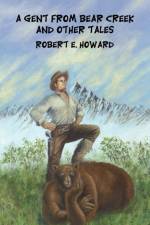
This collection showcases Robert E. Howard's comic westerns. Howard's novel "A Gent from Bear Creek" is included (with its text restored), as well as two additional western stories featuring Breck Elkins. Introduction by Paul Herman.
In The Antichrist, Nietzsche delivers a sharp critique of Christianity, challenging its moral foundations and its influence on Western civilization. He argues that Christian values, particularly those of humility and meekness, have weakened human potential and strength. Instead, Nietzsche advocates for a revaluation of values that celebrates life, power, and individualism. This provocative work, filled with philosophical insights, remains one of Nietzsche's most controversial and influential writings.
Saki was the pseudonym used by H.H. Munro (1870-1916), a British author and journalist who is best remembered for his short stories, which The Encyclopedia of Fantasy calls "witty, barbed and epigramatic." He wandered between the fanciful and the horrific, the urbane and the uncivilized with a grace that makes his work memoriable to all who have read it. The Happy Cat: Beasts, Super-Beasts, and Monsters is an expanded edition of his book of stories involving animals, and it includes one of his finest works, "Tobermory," in which a cat who had seen altogether too much scandal gains the power of speech. Other memoriable tales include "Laura," involving reincarnation and otters, and "The Story-Teller," in which the overly moral are devoured by wolves!
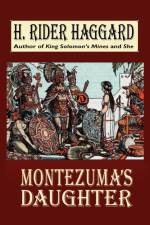
Montezuma's Daughter by H. Rider Haggard is an exhilarating tale of adventure and revenge set during the Spanish conquest of Mexico. The story follows Thomas Wingfield, an Englishman who journeys to the New World to avenge the murder of his mother. Amidst the clash of civilizations, Thomas becomes entangled with the Aztec people and falls in love with Montezuma's daughter, Otomie. As he navigates the perils of war, betrayal, and cultural upheaval, Thomas's quest for vengeance leads him to unexpected discoveries about love, loyalty, and his own destiny. Published in 1893, this novel combines historical drama with Haggard's signature storytelling prowess.
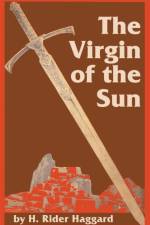
"In the historical romance The Virgin of the Sun, the Englishman Hubert de Hastings travels to Peru during the fourteenth-century. There he witnesses Incan civilization, tours Machu Picchu and falls in love with the Incan princess Quilla. Haggard had invented the plot of VS in 1891 as an alternative to the one used in Montezuma's Daughter." -visualhaggard.org
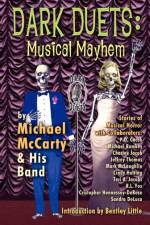
This volume assembled a devil's brew of horror, from prolific author Mike McCarty and a wide-ranging crew of collaborators, including Mark McLaughlin, P.D. Cacek, Jeffrey Thomas, Charlee Jacob, Cristopher Hennessey-DeRose, Sandy DeLuca, Teri A. Jacobs, R.L. Fox, Cindy Hulting, and Michael Romkey.
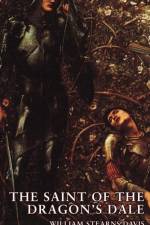
A story of the demon-haunted forests of Germany in the 13th century, complete with a witch whose twin ravens speak of Satan, robber barons, outlaws, a maiden in distress, and the mysterious Saint of the Dragon's Dale, a powerful, enigmatic figure with a dark secret.
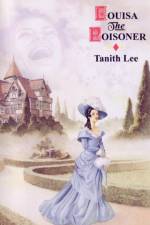
Raised in a swamp by a mad witch, poor Louisa grew up with one goal in mind: to marry a wealthy man, then inherit his lands and money by whatever means it takes. And Louisa may well succeed, for she is a stunning beauty with the manners of an angel. At last she sets off to make her fortune . . . and with the help of her vial of undetectable poison, she soon finds her first victim. A dazzlingly dark fantasy, as only Tanith Lee could write it!
Tasper Britt -- "Twelve-per-cent Britt" -- trimmed his slumber at both ends -- was owl and early bird, both, in his pursuit of the pence of the people, and got 'em coming and going. He was the money boss for the town of Egypt, and those who did not give him his per cent nickname called him "Phay-ray-oh" -- but behind his back, of course. To his face his debt slaves bespoke his favor obsequiously. Seeing that nearly every "Egyptian" with collateral owed him money, Mr. Britt had no fault to find with his apparent popularity. He did believe, complacently, that he was popular. A man who was less sure of himself would not have dared to appear out, all at once, with his beard dyed purple-black and with a scratch wig to match. Men gasped when they came into his office in Britt Block, but men held their faces measurably under control even though their diaphragms fluttered; the need of renewing a note -- paying a bonus for the privilege -- helped supplicants to hold in any bubbling hilarity. Therefore, Mr. Britt continued to be assured that he was pretty generally all right, so far as the folks of Egypt were concerned.
Fleet Marine Force Manual (FMFM) 6, Ground Combat Operations, provides the doctrinal basis for the planning and execution of ground combat operations for ground forces within the Marine air-ground task force (MAGTF). It establishes a common reference for operational and tactical combat elements of the MAGTF.
James De Mille (1833-1880) was a professor at Dalhousie University, Nova Scotia, and an early Canadian writer who published numerous works of popular fiction from the late 1860s through the 1870s. He attended Horton Academy in Wolfville and spent one year at Acadia University. He then travelled with his brother to Europe, spending half a year in England, France and Italy. On his return to North America, he attended Brown University, from which he obtained a Master of Arts degree in 1854. He married Anne Pryor, daughter of the president of Acadia University, John Pryor, and was there appointed professor of classics. He served there until 1865 when he accepted a new appointment at Dalhousie as professor of English and rhetoric. His most popular work with contemporaries, and the work for which he is known today, is A Strange Manuscript Found in a Copper Cylinder, which was serialized posthumously in Harper's Weekly in 1888. Other works included: Helena's Household (1867), Cord and Creese (1869), The Lady of the Ice (1870) and The American Baron (1872).
An autobiographical narrative, BEHIND THE SCENES traces Elizabeth Keckley's life from her enslavement in Virginia and North Carolina to her time as seamstress to Mary Todd Lincoln in the White House during Abraham Lincoln's administration. It was quite controversial at the time of its release--an uncompromising work that transgressed Victorian boundaries between public and private life, and lines of race, gender, and society.
Abonner på vårt nyhetsbrev og få rabatter og inspirasjon til din neste leseopplevelse.
Ved å abonnere godtar du vår personvernerklæring.