
























Gjør som tusenvis av andre bokelskere
Abonner på vårt nyhetsbrev og få rabatter og inspirasjon til din neste leseopplevelse.
Ved å abonnere godtar du vår personvernerklæring.Du kan når som helst melde deg av våre nyhetsbrev.

"Paul Laurence Dunbar, the first African-American to gain national eminence as a poet, was born in 1872 in Dayton, Ohio. The son of former slaves, he was a prolific author, writing short stories, novels, librettos, plays, songs and essays. However, it was for his poetry that he became famous, using words and dialect to convey the life-experiences of everyday African-Americans. His work proved equally popular among white and colored readers of his day. He lived to the age of 33.This, the first expanded edition of his short fiction, includes not only all twenty of the original stories, but adds five additional poems, showcasing his full range as an artist.
Contents: An artist's studio; Mysterious potion; Three visions; A dance and a promise; Cellini's story; Hotel Mars and its owner; Zara and Prince Ivan; A symphony in the air; An electric shock; My strange departure; A miniature creation; Secrets of the sun and moon; Sociable converse; Electric creed; Death by lightning; A struggle for the mastery
The Commander's Handbook for Religious Ministry Support (MCRP 6-12C) is a Marine Corps reference guide designed to aid commanders in providing effective religious ministry support. It emphasizes the role of chaplains and religious program specialists (RPs) in promoting spiritual readiness within the Marine Corps. The handbook covers the establishment and management of a Command Religious Program (CRP), which supports the free exercise of religion and helps to integrate spiritual care into the overall well-being of Marines and their families¿.It addresses topics like moral and spiritual resilience, the responsibilities of commanders in fostering a climate that supports religious needs, and the importance of integrating spiritual care into the broader command structure to maintain morale and ethical standards during deployments and stressful operations.
Laura Lee Hope's classic tale of a Christmas toy and its adventures is sure to charm the hearts of young and old readers alike. Join the Plush Bear, Donkey, the Flannel Pig, and their friends for all their adventures!
The second issue of Adventure Tales includes work from Dorothy Quick, Achmed Abdullah, John D. Swain, Christopher B. Booth, Harold Lamb, Nelson Bond, and Arthur O. Friel.
There was nothing to hold them together except knowing they might be the very last people on Uller -- or, perhaps, the very first! Includes the author's notes on the world of Uller. Originally published as the lead novel in the December 1952 issue of Startling Stories magazine!
This volume of short stories contains five of G.A. Henty's classic tales: "Bears snd Dacoits," "The Paternosters," "A Pipe of Mystery," "White-Faced Dick," and "A Brush with the Chinese.""Mr. Henty is one of the best of story tellers for young people."-Spectator"Mr. Henty is one of our most successful writers of historical tales."-Scotsman
"He speaks with a directness of the heart . . . with a craftsmanship and consistency that warrant the nickname he was given: the Dean of SF." -- The Encyclopedia of Science Fiction"Murray Leinster" was the pen name of William Fitzgerald Jenkins (1896-1975) - an author whose career spanned the first six decades of the 20th Century. From mystery and adventure stories in the earliest years to science fiction in his later years, he worked steadily and at a highly professional level of craftsmanship longer than most writers of his generation. He won a Hugo Award in 1956 for his novelet "Exploration Team," and in 1995 the Sidewise Award for Alternate History took its name from his classic story, "Sidewise in Time." His last original work appeared in 1967."Operation Terror," first published in 1962, is a novel of alien invasion, as inhuman monsters land and their conquest of Earth begins . . .
"Necessity is the mother of invention. This is undoubtedly true, but it is equally true that invention is not the only member of necessity's large family. Change of scene and circumstance are also among her children. It was necessity that gave birth to the resolve to travel to the end of the earth - of English earth at all events - in search of fortune, which swelled the bosom of yonder tall, wellfavoured youth, who, seated uncomfortably on the top of that clumsy public conveyance, drives up Market-Jew Street in the ancient town of Penzance. Yes, necessity - stern necessity, as she is sometimes called - drove that youth into Cornwall, and thus was the originating cause of that wonderful series of events which ultimately led to his attaining - but hold! Let us begin at the beginning. . . . "
Lost in the untamed Canadian wilderness, a young boy finds himself caught up in a perilous journey through snowbound forests and dangerous rivers. Alongside new allies and friends, he must outwit nature's challenges and navigate encounters with the indigenous peoples of the region. Will his determination and courage be enough to bring him back to safety?
Alexander Pope's The Rape of the Lock is a witty and playful mock-epic poem that satirizes the vanity and trivial pursuits of 18th-century high society. Based on a real incident, the poem humorously recounts the story of a nobleman who cuts a lock of hair from the beautiful Belinda, transforming a minor social indiscretion into a grand epic battle. With its sparkling wit and elegant verse, Pope's poem explores themes of vanity, honor, and the absurdity of aristocratic life. Infused with supernatural elements and rich in classical allusions, The Rape of the Lock is a timeless masterpiece that combines humor and social commentary with poetic brilliance. It remains one of Pope's most enduring works, celebrated for its clever use of the heroic couplet and its insightful portrayal of human folly.
The Sanskrit drama is said to have been invented by the sage Bharata, who lived at a very remote period of Indian history and was the author of a system of music. The earliest references to the acted drama are to be found in the Mahabhashya, which mentions representations of the Kansabadha and the Balibadha, episodes in the history of Krishna. Indian tradition describes Bharat as having caused to be acted before the gods a play representing the Svayamvara of Lakshmi.Tradition further makes Krishna and his cowherdesses the starting point of the Sangita, a representation consisting of a mixture of song, music, and dancing. The Gitagovinda is concerned with Krishna, and the modern Yatras generally represent scenes from the life of that deity.From all this it seems likely that the Hindu drama was developed in connection with the cult of Vishnu-Krishna; and that the earliest acted representations were, therefore, like the mysteries of the Christian Middle Ages, a kind of religious plays, in which scenes from the legends of the gods were enacted mainly with the aid of songs and dances supplemented with prose dialogues improvised by the performers. These earliest forms of Hindu dramatic literature are represented by those hymns of the Rig-Veda which contain dialogues such as those of Sarama and the Panis, Yama and Yami, Pururava and Urvaci.
'The Reverend Bernard Vane, at present vicar of St. Cyprian's, somewhere in the west end of London -- that is Redding's description of him,' Mr. Fairchild replied. 'I don't know how a fashionable London clergyman will settle down at Seacove, nor what his reasons are for coming here, I'm sure. I hope the change will be for good.'But his tone showed that he was not at all certain that it would prove so.'Is he married?' asked Celestina's mother. 'Oh yes, by the bye, I remember Mr. Redding spoke of children, but old Captain Deal came in just as he was telling more and I could not hear the rest.''There are several children and Mrs. Vane a youngish lady still, he said. The old Rectory will want some overhauling before they come to it, I should say,' remarked Mr. Fairchild. 'It must be nigh upon forty years since Dr. Bunton came there, and there's not much been done in the way of repairs, save a little whitewashing now and then. The doctor and Mrs. Bunton haven't needed much just by themselves -- but a family's different; they'll be needing nurseries and schoolrooms and what not, especially if they have been used to grand London ways.'
In this adventure-packed story, Tom Slade, a Boy Scout, finds himself on the trail of a mysterious disappearance during a camping expedition. As Tom and his fellow Scouts piece together clues, they face unexpected dangers and thrilling challenges in the wilderness. Filled with themes of friendship, bravery, and resourcefulness, this novel offers young readers an exciting blend of mystery and outdoor adventure.
Along a quiet, shady path, also leading to the church, a lady was slowly and thoughtfully walking, on whose countenance a slight shade of sadness, apparently, contended with happier thoughts. It was Mary Preston's last Sunday in her old home, previous to exchanging it for the new one to which she had been looking forward so long; and full as her heart was of thankfulness to God for the blessings He had bestowed, she could not take farewell of the Sunday school in which she had taught for several years, without some regret and many misgivings. Where, indeed, is the earnest teacher, however faithful, who can lay down the self-imposed task without some such feelings? Has the heart been in the work? Have thought and earnestness entered into the weekly instruction? Has a Christian example given force to the precepts inculcated? Above all, has there been earnest, persevering prayer to the Lord of the harvest, in dependence on whom alone the joyful reaping time can be expected?Such were some of the questions which had been passing through Miss Preston's mind; and the smile with which she greeted her class as she took her place was a little shadowed by her self-condemning reflections -- reflections which her fellow-teachers would have thought quite uncalled for in one who had been the most zealous and conscientious worker in that Sunday school. But Mary Preston little thought of comparing herself with others. She knew that to whom "much is given, of him shall be much required;" and judging herself by this standard, she felt how little she had rendered to the Lord for His benefits to her. As her wistful glance strayed during the opening hymn to the faces of her scholars, she could not help wondering what influence the remembrance of what she had tried to teach them would exert on their future lives.As her class had been much diminished by recent changes, and in view of her approaching departure the blanks had not been filled up, it consisted on this Sunday of only three girls, of ages varying from twelve to fourteen, but differing much in appearance, and still more widely in character and in the circumstances of their lives.
Land on Dara? One might as well commit suicide! Untouchable, like the Darans -- that's what they'd call Calhoun if he broke the quarantine. And they'd wipe him out on sight. But Dara needed him, and that was the kind of challenge this Interstellar Med Serviceman would never dodge.
This short story collection includes the title story, plus "Terry Dolan," "The Faithful Wife," "Emma Ashton," and many more.
This ain't never gonna be your Mama's anthology. Like a sucker punch with a fistful of quarters, these stories will knock you off your feet. From cold freezers to hot fires, the private eyes and tough guys between these covers travel through the blackness of men's souls. Working skip traces, investigating abusive spouses, and collecting bad debts brings them face-to-face with their worst fears. They fight back the only way they know how, using every trick they've learned while working the mean streets. . . . "New anthology series makes its debut with this impressive collection of P.I. stories . . ." THRILLING DETECTIVE said of the first volume of FEDORA. And this volume is even more impressive . . .
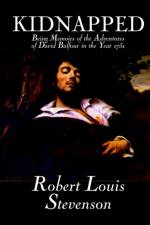
The political situation of the time is portrayed from different viewpoints, and the Scottish Highlanders are treated sympathetically. If you ever read this tale, you will likely ask yourself more questions than I should care to answer: as for instance how the Appin murder has come to fall in the year 1751, how the Torran rocks have crept so near to Earraid, or why the printed trial is silent as to all that touches David Balfour. These are nuts beyond my ability to crack. But if you tried me on the point of Alan's guilt or innocence, I think I could defend the reading of the text. To this day you will find the tradition of Appin clear in Alan's favor. If you inquire, you may even hear that the descendants of "the other man" who fired the shot are in the country to this day. But that other man's name, inquire as you please, you shall not hear; for the Highlander values a secret for itself and for the congenial exercise of keeping it I might go on for long to justify one point and own another indefensible; it is more honest to confess at once how little I am touched by the desire of accuracy. This is no furniture for the scholar's library, but a book for the winter evening school-room when the tasks are over and the hour for bed draws near; and honest Alan, who was a grim old fire-eater in his day has in this new avatar no more desperate purpose than to steal some young gentleman's attention from his Ovid, carry him awhile into the Highlands and the last century, and pack him to bed with some engaging images to mingle with his dreams.
The book is set in the fictional town of Winesburg, Ohio (not to be confused with the actual Winesburg), which is based loosely on the author's childhood memories of Clyde, Ohio. No sooner did _Winesburg, Ohio_ make its appearance than a number of critical labels were fixed on it: the revolt against the village, the espousal of sexual freedom, the deepening of American realism. Such tags may once have had their point, but by now they seem dated and stale. The revolt against the village (about which Anderson was always ambivalent) has faded into history. The espousal of sexual freedom would soon be exceeded in boldness by other writers. And as for the effort to place _Winesburg, Ohio_ in a tradition of American realism, that now seems dubious. Only rarely is the object of Anderson's stories social verisimilitude, or the "photographing" of familiar appearances, in the sense, say, that one might use to describe a novel by Theodore Dreiser or Sinclair Lewis. Only occasionally, and then with a very light touch, does Anderson try to fill out the social arrangements of his imaginary town -- although the fact that his stories are set in a mid-American place like Winesburg does constitute an important formative condition.
Sixteen years had Miss Taylor been in Mr. Woodhouse's family, less as a governess than a friend, very fond of both daughters, but particularly of Emma. Between THEM it was more the intimacy of sisters. Even before Miss Taylor had ceased to hold the nominal office of governess, the mildness of her temper had hardly allowed her to impose any restraint; and the shadow of authority being now long passed away, they had been living together as friend and friend very mutually attached, and Emma doing just what she liked; highly esteeming Miss Taylor's judgment, but directed chiefly by her own. The real evils, indeed, of Emma's situation were the power of having rather too much her own way, and a disposition to think a little too well of herself; these were the disadvantages which threatened alloy to her many enjoyments. . . .
A sailor narrates the obsessive quest of Ahab, captain of the whaler Pequod, for revenge on Moby Dick, a white whale which on a previous voyage destroyed Ahab's ship and severed his leg at the knee.Call me Ishmael. Some years ago -- never mind how long precisely -- having little or no money in my purse, and nothing particular to interest me on shore, I thought I would sail about a little and see the watery part of the world. It is a way I have of driving off the spleen and regulating the circulation. Whenever I find myself growing grim about the mouth; whenever it is a damp, drizzly November in my soul; whenever I find myself involuntarily pausing before coffin warehouses, and bringing up the rear of every funeral I meet; and especially whenever my hypos get such an upper hand of me, that it requires a strong moral principle to prevent me from deliberately stepping into the street, and methodically knocking people's hats off -- then, I account it high time to get to sea as soon as I can. This is my substitute for pistol and ball. With a philosophical flourish Cato throws himself upon his sword; I quietly take to the ship. There is nothing surprising in this. If they but knew it, almost all men in their degree, some time or other, cherish very nearly the same feelings towards the ocean with me.
Included in this volume are "The Lady with the Dog," "A Doctor's Visit," "An Upheaval," "Ionitch," "The Head of the Family," "The Black Monk," "Volodya," "An Anonymous Story," and "The Husband."
Set in the rugged landscape of Texas, this novel follows the life of cattle ranchers and the relationships they build on the open range. The protagonist, Tom, helps his friends find love while navigating the challenges of ranch life, from cattle drives to unpredictable weather. With its vivid depiction of cowboy culture and a subtle romantic thread, this Western captures the spirit of camaraderie and the hardiness of life on the frontier.
Abonner på vårt nyhetsbrev og få rabatter og inspirasjon til din neste leseopplevelse.
Ved å abonnere godtar du vår personvernerklæring.