

























Gjør som tusenvis av andre bokelskere
Abonner på vårt nyhetsbrev og få rabatter og inspirasjon til din neste leseopplevelse.
Ved å abonnere godtar du vår personvernerklæring.Du kan når som helst melde deg av våre nyhetsbrev.

The spaceship came plummeting out of the sky-a soundless, streaking, purple glow, moving faster and faster until it ripped at the trees, crashed through them and struck sickeningly against a hill. Momentarily it flared brightly, then went out.It was not long after that the murders began-strange, inexplicable deaths, all the victims found with their heads crushed as if their skulls had exploded outward.The trail of victims led from Arkansas to Tennessee, to Kentucky, Illinois and Michigan -- sixteen unrelated people who had only one thing in common: All of their brains had withered, as if sucked dry of their contents...And somewhere wandered an evil stranger from another planet, his personality expanding, his brain power increasing, preparing for the inevitable encounter that could make him master of the world!
In the following pages I have endeavored to present a correct description of the service performed by Company F, 1st Regiment Rhode Island Volunteers, during the spring and summer of 1861. While many of my comrades who served in that company may differ with me in some of the statements I have made, still I think that all will agree that what I have presented is as correct an account as can be had at this late period of that service. Thirty years is a long time for men to remember the particulars of any event, unless some memoranda of the same is at hand. During that service I endeavored to keep as correct as possible a daily journal of events, and from that journal I have prepared this brief history of the company, and I trust that my comrades who may read this will excuse any inaccuracies that in their opinion may appear; for it is my desire to place before you a correct history of Company F, the first company of volunteers that left Newport on the 17th of April, 1861, for the defence of the Stars and Stripes in the great war of the rebellion. -- Charles H. Clarke.
One of the most popular characters in the history of French crime fiction, Fantômas was created in 1911 and appeared in a total of 32 volumes written by the two collaborators, then a subsequent 11 volumes written by Allain alone after Souvestre's death. The character was also the basis of various film, television, and comic book adaptations. His importance in the history of crime fiction cannot be overestimated, as he represents a transition from Gothic novel villains of the 1800s, to modern-day serial killers."In the mode reminiscent of Sherlock Holmes and his ineradicable nemesis, the virtually immortal Professor Moriarty, Inspector Juve dedicates himself to the relentless pursuit of that evil genius Fantomas. He is, as they say in petrified Paris, "Nothing. . . Everything. . . Nobody. . . Somebody." And what does he do? He "spreads terror," diabolically, craftily beyond all imagining: slashes throats of kindly old ladies; stuffs strangled British socialites into trunks; boldly robs Russian princesses in their hotel rooms; pushes witnesses off speeding trains to their deaths. Can Juve prevail against that hellish power?" --Publishers Weekly
ACROSS THE WIDE MISSOURIIn the summer of 1819, Alexander Campbell and his family and their servants, along with other travelers, departed from the comparative comfort of their home in Highland County, Virginia, to set forth on a pio¬neering trek to the wilderness country of the Missouri Territory. James Brown Campbell, the family's eldest son, then only twenty years of age, began keeping a diary of their journey, recounting their terrible hardships, both on the way and after arriving in the "Promised Land," plus a detailed account of his work surveying parts of Missouri Territory, and their final, excruciating trip back home in 1821, a trek that was forced to an abrupt halt by the sudden illness and poignant death of Campbell's mother near Paoli, Indiana.Published for the first time ever, and meticulously edited by James's great-great-grandniece, Mary A. Burgess, this fascinating transcription includes a genealogical sketch of the Camp¬bell clan, a map of the Missouri Territory, and extensive name and place indexes. Not only illustrative of its period and the hardships endured by those who headed west into essentially unchartered land, this book provides a moving and thought-provoking account of life during America's pioneer days.MARY A. BURGESS has contributed numerous essays on literature and history to a variety of reference publications; she has also edited or written twenty books. MICHAEL BURGESS is an emeritus professor in the California State University System.
Alexander Sergeievitch Pushkin (1799-1837) is considered Russia's greatest poet and, by many, the greatest Russian writer. The father of Russian literature, he first achieved fame for his long narrative poems similar to Lord Byron's. In the late 1820s, Pushkin turned to prose and produced a series of outstanding works, influencing all Russian writers who followed.
Five of Oscar Wilde's best-known fairy tales for children (and adults) are collected in this volume: "The Happy Prince," "The Nightingale and the Rose," "The Selfish Giant," "The Devoted Friend," and "The Remarkable Rocket."
Pushkin, who was born in 1799 and died in 1838, is the founder of Russian literature, and it is difficult to overestimate his influence. He is the first, and still the most generally beloved, of all their national poets. The wild enthusiasm that greeted his verse has never passed away, and he has generally been regarded in Russia as one of the great poets of the world. Pushkin was, for a time at any rate, a Romantic, largely influenced, as all the world was then, by Byron. He is full of sentiment, smiles and tears, and passionate enthusiasms. He therefore struck out in a path in which he has had no great followers; for the big men in Russian literature are all Realists. Romanticism is as foreign to the spirit of Russian Realism as it is to French Classicism. What is peculiarly Slavonic about Pushkin is his simplicity, his naivete. Though affected by foreign models, he was close to the soil. This is shown particularly in his prose tales, and it is here that his title as Founder of Russian Literature is most clearly demonstrated. He took Russia away from the artificiality of the eighteenth century, and exhibited the possibilities of native material in the native tongue.
"Marine Corps Doctrinal Publication (MCDP) 2, ""Intelligence,"" describes the theory and philosophy of intelligence as practiced by the United States Marine Corps. It provides Marines a conceptual framework for understanding and conducting effective intelligence activities. The Marine Corps' view of intelligence is based on our common understanding of the nature of war and on our warfighting philosophy as described in MCDP 1,Warfighting.""Intelligence"" discusses the effective use of knowledge about the enemy and the environment in support of military decision-making. Intelligence acknowledges that uncertainty pervades the battlefield and that our best intelligence efforts can only reduce, not eliminate, uncertainty."
It was through the Patterson-Pratt forgery case that I first made the acquaintance of Terry Patten, and at the time I should have been more than willing to forego the pleasure.Our firm rarely dealt with criminal cases, but the Patterson family were long standing clients, and they naturally turned to us when the trouble came. Ordinarily, so important a matter would have been put in the hands of one of the older men, but it happened that I was the one who had drawn up the will for Patterson Senior the night before his suicide, therefore the brunt of the work devolved upon me. The most unpleasant part of the whole affair was the notoriety. Could we have kept it from the papers, it would not have been so bad, but that was a physical impossibility; Terry Patten was on our track, and within a week he had brought down upon us every newspaper in New York.
TEXAS GUNSMOKE!When Dr. Nicholas Blasingame joins his cousin Alicia and her husband in East Texas, he is scarred from political battles in Baltimore, where he lost his efforts at reform. In this new place he hopes to practice medicine and rebuild his life without conflict. Unfortunately, he finds political corruption as deeply entrenched in Moreno, Texas, as it was in Baltimore, this time in the hands of the elected officials, including the sheriff.Joining Alicia and Bart in their efforts to prevent abuse and outright theft, he finds himself threatened along with his kin. The only way he can handle this is by forgetting his life-long reluctance to take up arms and to accept the help of some unlikely allies."I'm continually amazed at Mayhar's ability to draw the reader seamlessly into her historical narratives. You can smell the gunpowder in this one!"-Robert Reginald.Ardath Mayhar is the author of more than sixty books, including science fiction, fantasy, western literature, poetry, and young adult tales, many of them being published by the Borgo Press imprint of Wildside Press. She lives and works in Eastern Texas.
The less you have, the more careful you are of your possessions. Hunter and Johnson owned exactly a section and a half of land, and for a mile and a half Quirt Creek was fenced upon either side. They hired two men, cut what hay they could from a field which they irrigated, fed their cattle through the cold weather, watched them zealously through the summer, and managed to ship enough beef each fall to pay their grocery bill and their men's wages and have a balance sufficient to buy what clothes they needed, and perhaps pay a doctor if one of them fell ill. Which frequently happened, since Brit was becoming a prey to rheumatism that sometimes kept him in bed, and Frank occasionally indulged himself in a gallon or so of bad whisky and suffered afterwards from a badly deranged digestion.
James Morgan Walsh (1897-1952) was one of Australia's most prolific authors, noted for his mysteries and thrillers. THE LOST VALLEY (1921) is set in Victoria, Australia's Western District. Other books of note include The Man Behind the Curtain (1927) and The League of Missing Men (1927).THE LOST VALLEYI came upon the place quite unexpectedly. Centuries of wind and wave had carved a little nook out of the foot of the cliff and fashioned it so cunningly that I did not see it until I was right on top of it. After the warmth of the open beach and the glare of the white road I had recently travelled its shade looked so inviting that I limped in under the overhang of the cliff and dropped joyfully on to the cool patch of sand. It was the first moment of contentment I had known for many weary months, and, needless to say, I set myself out to make the most of it. I was absolutely sick of tramping about. My left boot had burst and, by the feel of it, there wasn't too much left of my right sole. I had been crawling along the road since daylight-and for many days before for that matter-searching for a job that failed to materialise...
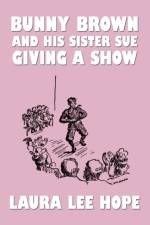
By the author of the "Bobbsey Twins" books, the Bunny Brown stories were eagerly welcomed by the children from about five to ten years of age. The lively doings of inquisitive little Bunny Brown and his smart, trustful sister Sue provided hours of entertainment.
Terry Gene Carr (1937-1987) was one of the most important editors in the science fiction field. Although most remembered for his long-running anthology series "Universe," which launched in 1971 and lasted seventeen volumes until 1987, Carr also edited two series of Ace Science Fiction Specials, which presented works by up-and-coming authors such as William Gibson (Neuromancer), Michael Swanwick (Into the Rift), Ursula K. le Guin (The Left Hand of Darkness), Alexei Panshin (Rite of Passage), and many more. His editing career was devoted, in many ways, to discovering and developing new talent in the field. His editing reach included "Year's Best" volumes of science fiction and fantasy, as well as quite a few other anthologies (both original and reprint)."Warlord of Kor" was originally published in 1963 as half of an Ace Double, selected by legendary editor Donald A. Wollheim. It is an exciting interplanetary adventure, as humans probe the mysteries of the planet Hirlaj and the few remaining aliens who live there.
This little story is founded on an episode in Canadian history which I found an interesting study, namely, the disbanding of a regiment of Scottish soldiers in the neighborhood of Rimouski and the district about Father Point. Many of these stalwart sons of old Scotia who were thus left adrift strangers in a strange land accepted the situation philosophically, intermarried amongst the French families already in that part of the country, and settled down as farmers in a small way. A visit to that part of the country will show what their industry has effected.Before having been in the district, I had always thought that the coasts of Lower St. Lawrence were almost incapable of any degree of cultivation, and practically of no agricultural value; but when at Father Point, some three summers ago, I was delighted to see all along the sandy road-sides long ridges of ploughed land, with potatoes, cabbages and beans growing in abundance. Back of these ridges, extending for many miles, are large tracts of most luxuriant pasture land on which browse cattle in very excellent condition.The manners of the people of this district, who, "far from the madding crowd's ignoble strife," live in Utopian simplicity, are most gentle and courteous, and would put to shame those of the dwellers of many a more civilized spot.It is very curious to trace the Scottish names of these people, handed down as they have been from generation to generation, though their pronunciation is much altered, and in most instances given a French turn, as, for example, Gourdon for Gordon, Noël for Nowell, and many others. However, in a few cases the names are such as even the most ingenious French tongue finds impossible to alter, and they remain in their original form, for example, Burns, Fraser and McAllister. It is strange to hear these names spoken by people who know no language but the French, and I was much struck by the incongruity.
The Black Douglas by S.R. Crockett is a historical novel set in 15th-century Scotland, focusing on the turbulent life of William Douglas, the 9th Earl of Douglas. The story is filled with political intrigue, betrayal, and the conflict between the Douglas clan and their rivals. Crockett vividly depicts the rugged Scottish landscape and the struggle for power during a time of feuds and shifting alliances. Rich in adventure and historical detail, the novel captures the spirit of medieval Scotland and the fierce loyalty of its characters.
In a land where nearly all the solid substance is rock -- not stone, mind you -- The Rock held a peculiar position. It dominated the landscape and the imagination of Silver Gap, and the superstition as well. It was a huge, greenish-white mass, a mile to the east of Thunder Peak, and over its smooth face innumerable waterfalls trickled and shone. With this colour and motion, like a mighty Artist, the wind and light played, forming pictures that needed little fancy to discern.At times cities would be delicately outlined with towers and roofs rising loftily; then again one might see a deep wood with a road winding far and away, luring home-tied feet to wander. And sometimes -- not often, to be sure -- the Ship would ride at anchor as on a painted sea.The Ship boded no good to Silver Gap as any one could tell. It had brought the plague and the flood; it brought bad crops and raids on hidden stills; it waited until its evil cargo had done its worst and then it sailed away in the night, bearing its pitiful load of dead, or its burden of fear and hate. Surely there was good and sufficient reason for dreading the appearance of The Ship, and on a certain autumn morning it appeared and soon after the two women, unknown to each other, came to Ridge House and this story began.
Abonner på vårt nyhetsbrev og få rabatter og inspirasjon til din neste leseopplevelse.
Ved å abonnere godtar du vår personvernerklæring.