

















Gjør som tusenvis av andre bokelskere
Abonner på vårt nyhetsbrev og få rabatter og inspirasjon til din neste leseopplevelse.
Ved å abonnere godtar du vår personvernerklæring.Du kan når som helst melde deg av våre nyhetsbrev.

"Mr. Trimm, recently president of the late Thirteenth National Bank, was taking a trip which was different in a number of ways from any he had ever taken. To begin with, he was used to parlor cars and Pullmans and even luxurious private cars when he went anywhere; whereas now he rode with a most mixed company in a dusty, smelly day coach. In the second place, his traveling companion was not such a one as Mr. Trimm would have chosen had the choice been left to him, being a stupid-looking German-American with a drooping, yellow mustache. And in the third place, Mr. Trimm's plump white hands were folded in his lap, held in a close and enforced companionship by a new and shiny pair of Bean's Latest Model Little Giant handcuffs. Mr. Trimm was on his way to the Federal penitentiary to serve twelve years at hard labor for breaking, one way or another, about all the laws that are presumed to govern national banks... "
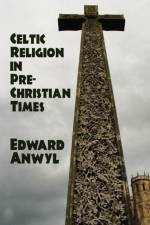
It is only as prehistoric archaeology has come to throw more and more light on the early civilisations of Celtic lands that it has become possible to interpret Celtic religion from a thoroughly modern viewpoint. The author cordially acknowledges his indebtedness to numerous writers on this subject, but his researches into some portions of the field especially have suggested to him the possibility of giving a new presentation to certain facts and groups of facts, which the existing evidence disclosed. [Transcribed from the 1906 Archibald Constable & Co. Ltd.]
Friedrich von Spielhagen (1829-1911) was a German novelist. Facsimile reprint of "Hammer and Anvil," 1970 edition.
Gene Autry meets the Ghost Riders in this 1955 in this young adult novel, originally published in 1955. [Facsimile Reprint Edition]
Walter Chalmers Smith (1824-1908) was a hymnist, poet and minister of the Free Church of Scotland. Collected edition revised by the author, 1902 edition.
Facsimile reprint of "Where Ghosts Walk" with illustrations, 1913 edition.
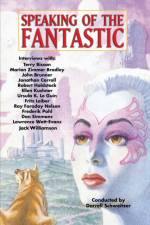
This volume collects interviews with science fiction and fantasy writers. Included are: Theodore Sturgeon, Alfred Bester, Frederick Pohl, James Gunn, Fritz Leiber, Hal Clement, and L. Sprague de Camp.
Facsimile reprint of "Further Indiscretions," 1918 edition.
Included in this volume: "Plans to Dispense With Artillery of the Present Type," "On the Dissipation of the Electrical Energy of the Hertz Resonator," "On Current Interrupters," "Tesla's New Discovery," "Talking With The Planets," "The Transmission Of Electrical Energy Without Wires," "Electric Autos," "The Transmission of Electrical Energy Without Wires as a Means for Furthering Peace," and "Tuned Lightning."
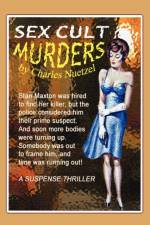
It started with a nasty killing, and then became a series of murders that put Stan Maxton front and center as the prime suspect.
Jonathan Swift was born in 1667, on the 30th of November. His father was a Jonathan Swift, sixth of the ten sons of the Rev. Thomas Swift, vicar of Goodrich, near Ross, in Herefordshire, who had married Elizabeth Dryden, niece to the poet Dryden's grandfather. Jonathan Swift married, at Leicester, Abigail Erick, or Herrick, who was of the family that had given to England Robert Herrick, the poet. As their eldest brother, Godwin, was prospering in Ireland, four other Swifts, Dryden, William, Jonathan, and Adam, all in turn found their way to Dublin. Jonathan was admitted an attorney of the King's Inns, Dublin, and was appointed by the Benchers to the office of Steward of the King's Inns, in January, 1666. He died in April, 1667, leaving his widow with an infant daughter, Jane, and an unborn child. Swift was born in Dublin seven months after his father's death. His mother after a time returned to her own family, in Leicester, and the child was added to the household of his uncle, Godwin Swift, who, by his four wives, became father to ten sons of his own and four daughters. Godwin Swift sent his nephew to Kilkenny School, where he had William Congreve among his schoolfellows. In April, 1782, Swift was entered at Trinity College as pensioner, together with his cousin Thomas, son of his uncle Thomas. That cousin Thomas afterwards became rector of Puttenham, in Surrey. Jonathan Swift graduated as B.A. at Dublin, in February, 1686, and remained in Trinity College for another three years. He was ready to proceed to M.A. when his uncle Godwin became insane. The troubles of 1689 also caused the closing of the University, and Jonathan Swift went to Leicester, where mother and son took counsel together as to future possibilities of life. His most famous work remains Gulliver's Travels.
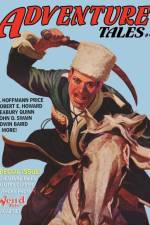
The fourth issue of Adventure Tales is a special "Weird Tales" tribute issue, featuring stories from contributors to the classic magazine, including Robert E. Howard ("Son of the White Wolf"), Seabury Quinn, John D. Swain, E. Hoffmann Price, Edwin Baird, and more!
Elie Berthet (1818-1891) was a 19th century French novelist. His works include L'enfant des bois (1865) (as The Wild Man of the Woods, 1868), and The Pre-Historic World (1876; translated into English by Mary J. Safford in 1879) and La Bete du Gevaudan (1858), a novel about a famous feral child. He is viewed as an influence on the development of the genre of "ape-man" fiction that ultimately led to the creation of Tarzan.
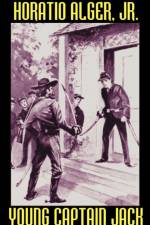
The adventures of a boy who is cast upon the Atlantic shore of a Southern State and taken into the home of one of the leading families. The youth grows up as a member of the family, knowing little or nothing of his past. Set at the time of the Civil War, fears of battle and bloodshed fill him and his adopted clan.
"This volume of M.R. James's classic ghostly fiction contains: ""Preface,"" ""The Residence at Whitminster,"" ""The Diary of Mr. Poynter,"" ""The Episode of Cathedral History, ""The Story of a Disappearance and an appearance,"" and ""Two Doctors."" About this volume, the author wrote: ""I have had my doubts about the wisdom of publishing a third set of tales; sequels are, not only proverbially but actually, very hazardous things. However, the tales make no pretence but to amuse, and my friends have not seldom asked for the publication. So not a great deal is risked, perhaps, and perhaps also some one's Christmas may be the cheerfuller for a storybook which, I think, only once mentions the war."""
MARY E. WILKINS FREEMAN (1852-1930) was born in Randolph, Massachusetts and died in Metuchen, New Jersey. Among her published regional short fiction and novels are A Humble Romance and Other Stories, A New England Nun and Other Stories, Jane Field, and The Portion of Labor. In 1926 she received the William Dean Howells Medal of the American Academy of Arts and Letters for distinction in fiction. That same year, she and Edith Wharton were among the first women to be elected to membership in the National Institute of Arts and Letters.
Talera is a world of warriors and heroes, not all of them human, a world where sailing ships ply the skies as well as the waters, and where beasts are as likely to hunt men as be hunted by them. On Talera, beauty and steel are equally dangerous companions, and sorcery is the deadliest of them all.Ruenn Maclang is a 19th-century Earthman mysteriously transported to this wondrous world. His sword is his constant companion, and war a daily promise that is seldom broken. But now he must battle the woman he loves, and either kill his own brother-or die in the attempt!A grand fantasy adventure in the tradition of Edgar Rice Burroughs and Robert E. Howard!
Marlowe's unfinished masterpiece, as completed by George Chapman (1598). Includes an introduction and notes by Edward Blunt.
Abonner på vårt nyhetsbrev og få rabatter og inspirasjon til din neste leseopplevelse.
Ved å abonnere godtar du vår personvernerklæring.