











Gjør som tusenvis av andre bokelskere
Abonner på vårt nyhetsbrev og få rabatter og inspirasjon til din neste leseopplevelse.
Ved å abonnere godtar du vår personvernerklæring.Du kan når som helst melde deg av våre nyhetsbrev.

To that perpetual question, "What's new in magic?" comes this book: Atomic Magic is new, colorful, and entertaining, making use of topics that are current to the public mind. It is the application of the super science of popular science fiction to the art of magic. [Originally published in 1951.]
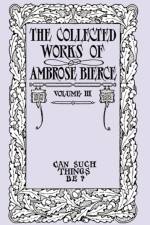
Volume III of the "Collected Works of Ambrose Bierce" (title: "Can Such Things Be?") is a facsimile reprint of the 250-copy limited edition of 1910.
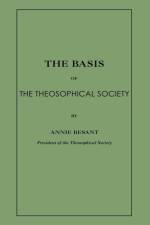
Annie Besant, former president of the Theosophical Society, sets out the basic principles and beliefs of Theosophy in this short book. Originally published in 1907, this edition is a facsimile reprint from a privately printed edition from 1910.
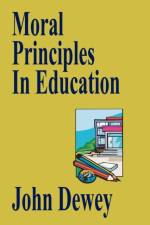
John Dewey -- a former professor of philosophy in Columbia University -- studies the Moral Principles in Education. Included are such topics as "The Moral Purpose of the School," "The Moral Training Given by the School Community," "The Moral Training from Methods of Instruction," "The Social Nature of the Course of Study," and "The Psychological Aspect of Moral Education."
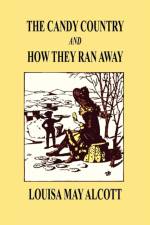
This volume contains two short children's stories by Louisa May Alcott: "The Candy Country" and "How They Ran Away."
A collection of more than 100 routines, suggestions, tips, presentations, gags, and other ideas for the "Vanishing Milk Pitcher" magic trick.
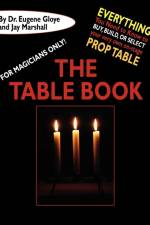
Many magicians need tables for their acts. This book shows you what to look for and how to construct your very own prop table. A necessary reference book for every illusionist, conjurer, and amateur stage magician!
What is Prayer? Is it mere superstition, or is it verifiable as the fact that water wets and fire burns? Neville set out to answer this question for himself. You can read it in an hour, but you will remember PRAYER: The Art of Believing for the rest of your life.
Covering topics as diverse as holidays, business events, farms, schools, and religious occasions, this volume provides a starting point for speeches on almost every subject.
"Mark Phillips" was the pseudonym of two well-known science fiction writers: Randall Garrett and Laurence M. Janifer. Their joint pen-name, derived from their middle names (Philip and Mark), was coined soon after their original meeting, at a science-fiction convention. Both men were drunk at the time, which explains a good deal, and only one ever sobered up. A matter for constant contention between the collaborators was which one.They collaborated for some years, and devised an interesting method of work: Mr. Garrett handled the verbs, the adverbs and the interjections, Mr. Janifer the nouns, pronouns, and adjectives. Conjunctions are a matter of joint decision, and in the case of a tie, the entire game was replayed at Fenway Park, Boston, the following year.Regardless of who wrote what, Brain Twister is a highly enjoyable novel about spies and telepathy, as only two great writers could have conceived it!
Abonner på vårt nyhetsbrev og få rabatter og inspirasjon til din neste leseopplevelse.
Ved å abonnere godtar du vår personvernerklæring.