







![Devil's Dictionary [Facsimile Edition] af Ambrose Bierce](https://cdnbackdoor.tales.as/thumbnail/150x225/00053/24877/cover.1498312548.jpg)
![Devil's Dictionary [Facsimle Edition] af Ambrose Bierce](https://cdnbackdoor.tales.as/thumbnail/150x225/00053/24870/cover.1498312545.jpg)










Gjør som tusenvis av andre bokelskere
Abonner på vårt nyhetsbrev og få rabatter og inspirasjon til din neste leseopplevelse.
Ved å abonnere godtar du vår personvernerklæring.Du kan når som helst melde deg av våre nyhetsbrev.

In this epic poem, G.K. Chesterton brings to life the legendary King Alfred the Great and his struggle against the invading Danes. Through lyrical and evocative verse, the poem explores themes of faith, heroism, and the enduring fight between good and evil. Chesterton weaves historical and mythical elements, crafting a timeless narrative about the resilience of Christian civilization in the face of pagan aggression.
The third book in "The Rover Boys' Series for Young Americans", one of the most influential juvenile fiction series in American pop culture.
Essays reprinted from the Daily News. Includes "On Gargoyles," "The Futurists," "How I Found the Superman," and "Cheese."
Frank Merriwell was the fictional creation of Gilbert Patten, who wrote under the pseudonym Burt L. Standish. The model for all later American juvenile sports fiction, Merriwell excelled at football, baseball, crew, and track at Yale while solving mysteries and righting wrongs. He played with great strength and received traumatic blows without injury.A biographical entry on Patten noted that Frank Merriwell "had little in common with his creator or his readers." Patten offered some background on his character: "The name was symbolic of the chief characteristics I desired my hero to have. Frank for frankness, merry for a happy disposition, well for health and abounding vitality."Merriwell's classmates observed, "He never drinks. That's how he keeps himself in such fine condition all the time. He will not smoke, either, and he takes his exercise regularly. He is really a remarkable freshie."Merriwell originally appeared in a series of magazine stories starting April 18, 1896 ("Frank Merriwell: or, First Days at Fardale") in Tip Top Weekly, continuing through 1912, and later in dime novels and comic books. Patten would confine himself to a hotel room for a week to write an entire story.
Frank Merriwell was the fictional creation of Gilbert Patten, who wrote under the pseudonym Burt L. Standish. The model for all later American juvenile sports fiction, Merriwell excelled at football, baseball, crew, and track at Yale while solving mysteries and righting wrongs. He played with great strength and received traumatic blows without injury.A biographical entry on Patten noted that Frank Merriwell "had little in common with his creator or his readers." Patten offered some background on his character: "The name was symbolic of the chief characteristics I desired my hero to have. Frank for frankness, merry for a happy disposition, well for health and abounding vitality."Merriwell's classmates observed, "He never drinks. That's how he keeps himself in such fine condition all the time. He will not smoke, either, and he takes his exercise regularly. He is really a remarkable freshie."Merriwell originally appeared in a series of magazine stories starting April 18, 1896 ("Frank Merriwell: or, First Days at Fardale") in Tip Top Weekly, continuing through 1912, and later in dime novels and comic books. Patten would confine himself to a hotel room for a week to write an entire story.
Frank Merriwell was the fictional creation of Gilbert Patten, who wrote under the pseudonym Burt L. Standish. The model for all later American juvenile sports fiction, Merriwell excelled at football, baseball, crew, and track at Yale while solving mysteries and righting wrongs. He played with great strength and received traumatic blows without injury.A biographical entry on Patten noted that Frank Merriwell "had little in common with his creator or his readers." Patten offered some background on his character: "The name was symbolic of the chief characteristics I desired my hero to have. Frank for frankness, merry for a happy disposition, well for health and abounding vitality."Merriwell's classmates observed, "He never drinks. That's how he keeps himself in such fine condition all the time. He will not smoke, either, and he takes his exercise regularly. He is really a remarkable freshie."Merriwell originally appeared in a series of magazine stories starting April 18, 1896 ("Frank Merriwell: or, First Days at Fardale") in Tip Top Weekly, continuing through 1912, and later in dime novels and comic books. Patten would confine himself to a hotel room for a week to write an entire story.
Robert William Chambers (May 26, 1865 - December 16, 1933) was an American artist and writer. He was born in Brooklyn, New York, to William P. Chambers (1827 - 1911), a famous lawyer, and Caroline Chambers (nee Boughton), a direct descendant of Roger Williams, the founder of Providence, Rhode Island. Robert's brother was Walter Boughton Chambers, the world famous architect.
"The Devil's Dictionary," by Ambrose Bierce, is a satirical book first published in 1911. It offers reinterpretations of terms in the English language which lampoon cant and political double-talk. "The Devil's Dictionary" has inspired many imitations both in its day and more recently. Recent examples include "The Computer Contradictionary" and "The Devil's Dictionary X."
"The Devil's Dictionary," by Ambrose Bierce, is a satirical book first published in 1911. It offers reinterpretations of terms in the English language which lampoon cant and political double-talk. "The Devil's Dictionary" has inspired many imitations both in its day and more recently. Recent examples include "The Computer Contradictionary" and "The Devil's Dictionary X."
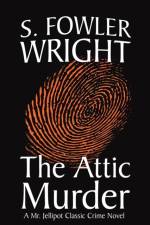
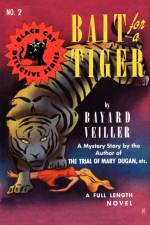
From the author of "The Trial of Mary Dugan" comes this riveting tale of murder in New York City. A series of murders involving the deft stabbing of innocent young girls has the press and populace howling for action. No one, from the Commissioner and Chief Inspector to the lowliest detective of the force, has a clue toward solving the crimes, despite their access to the latest crime-solving equipment and techniques. It falls to Captain Wilson, an officer of the old school, to devise a trap for the tiger. And Wilson knows just the right bait to use . . .
The premiere issue of "Science Stories" magazine (October, 1953), edited by Ray Palmer of Amazing Stories fame, features a short novel by Jack Williamson ("Hocus Pocus Universe") as well as fiction by R.J. McGregor, Jan Tourneau, Robert Moore Williams, and Rog Phillips. Cover by Hannes Bok. Interior illustrations by Bok, Michael Becker, Charles Hornstein, J. Allen St. John, Burdoff, and Pierce. [Facsmile reprint.]
George William Russell (1867-1935), who wrote under the pseudonym "AE," was an Anglo-Irish supporter of the Nationalist movement in Ireland, a critic, poet, and painter. He was also a mystical writer the center of a group of followers of Theosophy in Dublin.
This volume assembled a pair of classic mystery novels. First, Secret Corridors, by Hugh Pentecost ("A Lieut. Luke Bradley Case") presents a hotel-based crime story. Then comes Week-End to Kill, by Frederick Nebel.
William Tufnell Le Queux (1864-1927) was an Anglo-French journalist and writer. He was also a diplomat (honorary consul for San Marino), a traveller (in Europe, the Balkans and North Africa), a flying buff who officiated at the first British air meeting at Doncaster in 1909, and a wireless pioneer who broadcast music from his own station long before radio was generally available. His best-known works remain the anti-German invasion fantasies "The Great War in England in 1897" (1894) and "The Invasion of 1910" (1906), the latter of which was a phenomenal bestseller. "The Seven Secrets" was originally published in 1903.
Abonner på vårt nyhetsbrev og få rabatter og inspirasjon til din neste leseopplevelse.
Ved å abonnere godtar du vår personvernerklæring.