




Gjør som tusenvis av andre bokelskere
Abonner på vårt nyhetsbrev og få rabatter og inspirasjon til din neste leseopplevelse.
Ved å abonnere godtar du vår personvernerklæring.Du kan når som helst melde deg av våre nyhetsbrev.

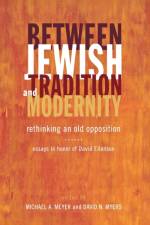
Brings together leading Jewish scholars to explore the developing interrelation between tradition and change within modern Judaism.
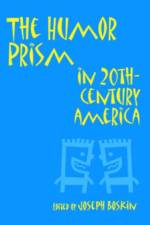
This text explores to what extent and in what ways American humour in the 20th century reflects history, examining the dynamics and disguised messages behind humour. The author also discusses the cultural and social implications of humour.
This versatile three-volume set is specifically designed to introduce students of Spanish to the literature of Spain and Latin America.
John Ford's classic film ""The Searchers"" was a product of post-World War II American culture, examining white racism and violence and its social and psychological origins. Here, historians and film scholars cover the major issues of the film as seen through a contemporary prism.
This is an historical account of a Lutheran missionary's life with American Indians in central lower Michigan in the 19th century. Reprinted five times in its original German, this English translation tells how Baierlein helped establish a colony of Indians, teaching them many useful skills.
Contributors examine the early days of video game history before the industry crash that ended the medium's golden age.
Highlights the industries, markets, identities, and histories that distinguish cinema beyond the traditional hubs of mainstream Western cinema. This title not only includes geographic case studies of small national cinemas located at the global margins, like New Zealand and Scotland, but also of filmmaking that comes from peripheral cultures.
I Love Lucy is one of the best loved sitcoms in the history of American television. ""I Love Lucy"" aired for six seasons between 1951 and 1957 as a top-rated weekly sitcom, and its characters appeared in thirteen hour-long specials between 1958 and 1960. This title presents an analysis of ""I Love Lucy"".
The pantheon of big-budget, commercially successful films encompasses a range of genres, including biblical films, war films, romances, comic-book adaptations, animated features, and historical epics. This title considers the history of the American blockbuster - the large-scale, high-cost film - as it evolved from the 1890s.
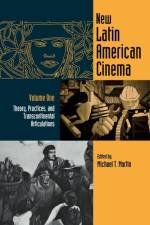
This volume (first of two), maps the historical and cultural contexts of film practices in Latin America. It explores the formation of the New Latin American cinema movement, its national and continental implications (diasporic/exilic experience), and the writings of pioneer film-makers.
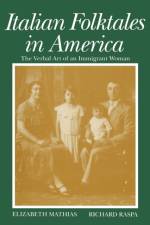
A collection that greatly enriches our understanding of who told (and tells) marchen (Italian folktales) to whom, why and how they are told, and, perhaps most important, under what conditions.
Though the history of the screenplay is as long and rich as the history of film itself, critics and scholars have neglected it as a topic of serious research. Script Culture and the American Screenplay treats the screenplay as a literary work in its own right, presenting analyses of screenplays from a variety of frameworks, including feminism, Marxism, structuralism, philosophy, and psychology. In distancing the text of screenplays from the on-screen performance typically associated with them, Kevin Alexander Boon expands the scope of film studies into exciting new territory with this volume. Script Culture and the American Screenplay is divided into two parts. Part 1 provides a general background for screenplay studies, tracing the evolution of the screenplay from the early shot lists and continuities of George Mlis and Thomas Harper Ince to the more detailed narratives of contemporary works. Part 2 offers specific, primarily thematic, critical examinations of screenplays, along with discussions of the original screenplay and the screenplay adaptation. In all, Boon explains that screenplay criticism distinguishes itself from traditional film studies in three major ways. The primary focus of screenplay criticism is on the screenplay rather than the film, the focus of screenplay studies is on the screenwriter rather than the director, and screenplay criticism, like literary criticism, is written to illuminate a reader's understanding of the text. Boon demonstrates that whether we are concerned with aesthetics and identifying rules for distinguishing the literary from the non-literary, or whether we align ourselves with more contemporary theories, which recognize texts as distinguishable in their inter-relationships and marked difference, screenplays constitute a rich cache of works worthy of critical examination. Film scholars as well as students of film, creative writing, and literary studies will appreciate this singular volume.
Abonner på vårt nyhetsbrev og få rabatter og inspirasjon til din neste leseopplevelse.
Ved å abonnere godtar du vår personvernerklæring.