










Gjør som tusenvis av andre bokelskere
Abonner på vårt nyhetsbrev og få rabatter og inspirasjon til din neste leseopplevelse.
Ved å abonnere godtar du vår personvernerklæring.Du kan når som helst melde deg av våre nyhetsbrev.

This volume is a documented history of the Jewish people in North America from the late 16th century. It chronicles the evolving domestic, religious and political experiences of Jews in the American colonies and later the United States.
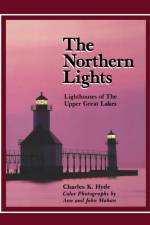
This is a guide to the lighthouses of the Great Lakes. Discussing Michigan maritime history, the book also provides a more general history of the United States Lighthouse Service and its descendants, and how these organisations functioned on the Great Lakes.
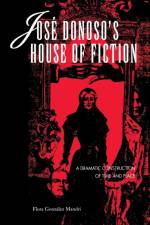
This text examines the multiple narrative perspectives Donoso presents and traces a transformation in Donoso's works from complex stage performance to political forum. It illuminates a weaving of feminine and masculine aspects of artistic voice in his work.
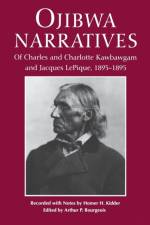
These 52 narratives feature the tales of three 19th-century Ojibwa storytellers - Charles and Charlotte Kawbawgam and Jacques LePique. Collected by Homer H. Kidder, the stories present a fresh view of an early period of Ojibwa thought and way of life in Michigan's Upper Peninsula.
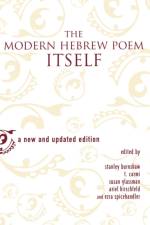
A collection of modern Hebrew poetry. In this new and expanded edition of a volume first printed in 1965, a new generation of Hebrew poets is added. Each poem appears in both its original Hebrew and an English phonetic transcription, along with a commentary and a literal English translation.
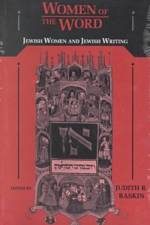
These essays survey the achievements of Jewish women writers from the Renaissance to the modern era. Raised in Jewish cultures wary of female aspirations, this diverse group often found that a life devoted to literary expression required sacrifices.
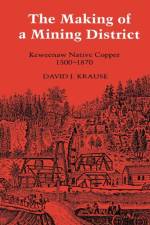
The Keweenaw Peninsula of northern Michigan is the only place on earth where large amounts of copper are found in the pure metallic "native" state. The Making of a Mining District is the first book to fully document how the value of these unique deposits came to be recognized, from the time Europeans first became aware of the native copper shortly after 1500 to the establishment of the region as one of the great copper mining districts of the world.Krause focuses on the period from 1820 to 1865, when the district's true mining potential became clearer to many and when American science changed from a pleasant amateur diversion into a more rigorous professional discipline, a change clearly reflected in attitudes toward this unique region.
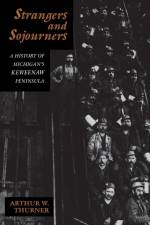
This is the story of the copper-mining communities in Michigan's Keweenaw Peninsula and of the people who created them.
Following World War II, members of the sizable Jewish community in what had been Kurdistan, now part of Iraq, left their homeland and resettled in Palestine where they were quickly assimilated with the dominant Israeli-Jewish culture.The Jews of Kurdistan is a unique historical document in that it presents a picture of Kurdish Jewish life and culture prior to World War II. It is the only ethnological study of the Kurdish Jews ever written and provides a comprehensive look at their material culture, life cycles, religious practices, occupations, and relations with the Muslims.In his preface, Raphael Patai offers data he considers important for supplementing Brauer's book, and comments on the book's values and limitations fifty years after Brauer wrote it. Patai has included additional information elicited from Kurdish Jews in Jerusalem, verified quotations, and completed the bibliography.
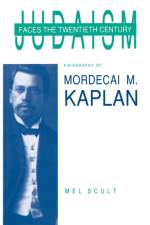
This critical examination of the life of Mordecai Kaplan is based on Kaplan's unpublished 27-volume diary, thousands of personal letters, sermons, and Scult's own long-term relationship with Kaplan.
For almost a quarter of a century, Harry James Cargas has been wrestling with the pain and bewilderment he feels about the Holocaust. In a series of essays, Cargas deals with a variety of issues and questions that the Holocaust raises and concludes that Christian churches must accept a major portion of the blame for centuries of Jewish persecution that led up to the massacres of World War II. Further, he criticizes the silence and even complicity of many Christians during the Holocaust.The essays are wide-ranging, from the silence of the Vatican and Kurt Waldheim's visit to Pope John Paul II to the persecution of the gypsies and the canonization of Edith Stein. Along the way, Cargas arrives at disturbing conclusions and proposes specific actions for both the individuals and the institutional church.Reflections of a Post-Auschwitz Christian challenges Christians to make the Holocaust a turning point in their thinking and in their relations with Jews.
In the collection of interviews with Amonia Somors, Griselda Gambaro, Juleita Campos, Elvira Orphee, Luisa Valenzuela, and Marta Traba, Evelyn Picon Garfield reflects on the lives, careers, and creative expressions of six authors whose cultivation of diverse genres and styles have made a significant contribution to Latin American fiction.
This collection of essays from scholars in the United States, the United Kingdom, and the Netherlands, examines how biases against minorities in the U.S. and western Europe are perpetuated directly and indirectly through such media channels as newspapers, television coverage, everyday language use, and through the educational curriculum, teacher attitudes, and teacher-student interaction. Written especially for this volume, the essays demonstrate how the dominant population controls not only what happens to subordinate populations, but also how the general public perceives that reality. Discourse and Discrimination is valuable reading for students and scholars in linguistics, discourse analysis, mass communication, sociology, social psychology, and black and ethnic studies.
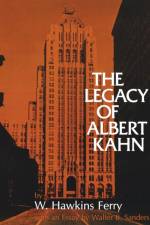
The Legacy of Albert Kahn salutes the achievements of one of America's most distinguished architects. Originally the catalog for a major retrospective exhibition at the Detroit Institute of Arts, this volume has become an invaluable handbook in tracing the creative genius of Albert Kahn.Known principally for his development of modern industrial architecture, Kahn also made significant contributions in the areas of commercial, civic, institutional, and domestic architecture. Dividing the early and late works, each chapter is a chronological presentation of designs within a given architectural category. Black-and-white photographs and illustrations abound.Eclectic and visionary, the man whose legacy included the General Motors and Fisher Buildings, the Rouge Plant, and a considerable number of buildings on the University of Michigan's Ann Arbor campus continues to be a source of inspiration for a new generation of architects.
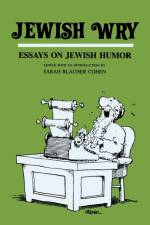
Office copier folklore-those tattered sheets of cartoons, mottoes, zany poems, defiant sayings, parodies, and crude jokes that regularly circulate in office buildings everywhere-is the subject of this innovative study. this type of folklore represents a major form of tradition in modern America, and the authors have compiled this raw data for scholarship-and entertainment. These creations of the Paperwork Empire comment on topics and problems that concern all urban Americans. No one and nothing escapes their raunchy wit and sarcasm. Bosses, ethnic groups, minorities, the sexes, alternative lifestyles, politics, welfare, government workers, the law, bureaucracy, and even "The Night Before Christmas" all come under fire to form a biting, and hilarious, commentary on modern American society.
From Aabec in Antrim County to Zutphen in Ottawa County, from Hell to Hooker, Michigan Place Names is a compendium of information on the origins of the state's geographical names. With alphabetically arranged thumb-nail sketches, Walter Romig introduces readers to a host of colorful personalities and episodes which have achieved notoriety, though sometimes shortlived, by devising or lending their names to the state's settlements.Romig spent more than ten years researching and documenting the entries to which he added an extensive bibliography of sources and an index of the personal names used in the text. For the curious, the librarian, the genealogist, or the historian, his book is an indispensable resource. Michigan Place Names is another "Michigan classic" reissued as a Great Lakes Book.
Respecting both the history a labor theories and the variety of theoretical points of view concerning the labor movement, this collection of readings includes selections by Karl Marx, V. I. Lenin, William Haywood, Georges Sorel, Stanley Aronowitz, John R. Commons, Sidney and Beatrice Webb, Thorstein Veblen, Henry Simons, and John Kenneth Galbraith, among others.Intending this as a text for classroom use, Larson and Nissen have arranged the readings according to the social role assigned to the labor movement by each theory. The text's major divisions consider the labor movement as an agent of revolution, as a business institution, as an agent of industrial reform, as a psychological reaction to industrialism, as a moral force, as a destructive monopoly, and as a subordinate mechanism in pluralist industrial society. Such groupings allow for ready comparison of divergent views of the origins, development, and future of the labor movement.
Using an introduction to mythology by the master storyteller Ovid himself, the authors have prepared a unique teaching tool designed to achieve proficiency at Latin in one year at the college level, two years at the high school or intermediate level.
This book makes learning Old English easy. It contains a simplified grammar, a minimum of phonology, well-chosen selections from Old English prose, and rich selections from Old English poetry. The texts are in regularized spelling, based on Early West Saxon, so that beginners will not have to wrestle with a shifting orthography.
A historical inquiry into how Jews in Germany began to rebuild their social and cultural networks immediately following World War II. It looks at the early history of the postwar German Jewish community, while considering how German Jews intermingled with Jews from other countries.
The widowed Jessie Woolman, now in her seventies, her two married daughters, Ellen and Martha, and two grand-children live in Ann Arbor. When Ellen's husband dies in a car accident and the Woolman family begins a new journey led by two very different men.
Abonner på vårt nyhetsbrev og få rabatter og inspirasjon til din neste leseopplevelse.
Ved å abonnere godtar du vår personvernerklæring.