
















Gjør som tusenvis av andre bokelskere
Abonner på vårt nyhetsbrev og få rabatter og inspirasjon til din neste leseopplevelse.
Ved å abonnere godtar du vår personvernerklæring.Du kan når som helst melde deg av våre nyhetsbrev.

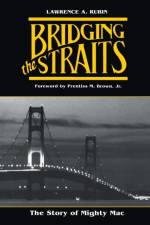
The project-the longest total suspension bridge in the world-would span the Starits of Mackinac where winds exceed eighty miles an hour and ice windrows reach a height of forty feet. It would connect two largely rural communities with a combined population of less than four thousand and would require the largest bond issue ever proposed for the construction of a bridge. Little wonder that some Wall Street investors labeled the proposition as ludicrous. Nonetheless, the Mackinac Bridge became a reality.
Traces the legacy of Krzysztof Kieslowski in films made after his death using his scripts or ideas and in the work of other filmmakers. This title diverges from the typical analysis of Kieslowski's work to focus on his legacy in films made after his death, including those based on his scripts and ideas and those made entirely by other filmmakers.
This anthology examines a number of issues related to violence within the media landscape, using various methodologies to suggest the implications of the increasing obsession with violence for postmodern civilization.
A provocative testimony of the personal and professional development of the roles and responsibilities of a revisionist African American scholar and activist.
Assesses contemporary gospel music as the genre enters the twenty-first century. Suitable for Scholars of music and African American cultural studies, this work offers a comprehensive picture of the history and future of contemporary gospel music. It also includes interviews with contemporary gospel artists, allowing them to explain why they rap.
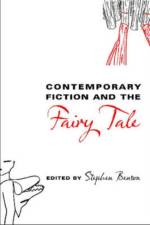
Considers the influence of fairy tales on contemporary fiction, including the work of Margaret Atwood, A S Byatt, Angela Carter, Robert Coover, Salman Rushdie, and Jeanette Winterson. This title argues that fairy tales are one of the key influences on fiction and that they continue to shape literary trends.
Yiddish Hip Hop, a nineteenth-century "Hasidic Slasher," obscure Yiddish writers, and immigrant Jewish newspapers in Buenos Aires, Paris, and New York are just a few of the topics featured in Choosing Yiddish. The editors have gathered a diverse and richly layered collection of essays that demonstrates the currency of Yiddish scholarship in academia today.
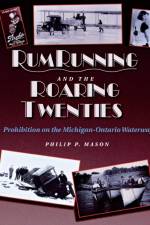
On January 17, 1920, the Eighteenth Amendment took effect in the United States, prohibiting the manufacture, sale, use, or importation of alcoholic beverages except for scientific and medicinal purposes. Church and business leaders, temperance advocates, and state and national officials predicted that a tranquil new era was about to begin-an era when prisons would be empty, police forces could be drastically cut, and workers would be more productive, spending time with their families rather than in saloons.As Rumrunning and the Roaring Twenties illustrates, peace and tranquillity and abstinence never arrived. The Prohibition experiment failed dismally in the United States, and nowhere worse than in Michigan. The state's close proximity and easy access to Canada, where large amounts of liquor were manufactured, made it a major center for the smuggling and sale of illegal alcohol. Although federal, state, and local law enforcement agencies attempted to stop the flow of liquor into Michigan and its widespread sale and use in blind pigs, joints, speakeasies, and exclusive clubs and restaurants, an astounding seventy-five percent of all illegal liquor brought into the United Stateswas transported across the Detroit River from Canada, especially the thirty-mile stretch from Lake Erie to the St. Clair River. In fact, the city's two major industries during most of the 1920s were the manufacture of automobiles and the distribution of Canadian liquor.Using police and court records, newspaper accounts, and interviews with those who lived during the time, Philip P. Mason has constructed a fascinating history of life in Michigan during Prohibition. He regales readers with stories of the bungled efforts by officials at every level to control the smuggling and sale of illegal alcohol. Most entertaining are the hundreds of photos capturing the essence of the era: the creative smuggling efforts undertaken by citizens of all walks of life-the poor, middle class, and affluent, upstanding citizens and organized criminals and gang members.The smugglers concocted both practical and ingenious methods to transport liquor into the state. Boats of all sizes were used, from small rowboats to powerful river crafts that could easily outrun police boats. Jalopies, trucks, airplanes, and railroad freight cars also carried large amounts of alcohol across the border. Clever smugglers rigged electronically controlled torpedoes to cross the river, laid pipes underwater and pumped alcohol into a bottling facility in Detroit, and concealed contraband in every conceivable device-hot water bottles, chest protectors, false breasts, hollowed out eggs and loaves of bread, picnic baskets, shopping bags, and baby carriages.By 1928 Prohibition was so obviously flawed and controversial that it became a major issue in the presidential campaign. In 1933, with the support of President Franklin Roosevelt, Michigan's governor William Comstock, and other leaders, the Twenty-first Amendment was passed, repealing Prohibition. Michigan was the first state to ratify the amendment on April 10, 1933, and soon the Detroit River was returned to pleasure boats and fishing and commercial vessels whose holds no longer carried illegal liquor.
For fifteen years before his untimely death, Andrew Britton produced a body of brilliant film criticism that has been largely ignored within academic circles. This title collects all published film criticism by Andrew Britton, a singular voice in film studies whose promising career was cut short by his untimely death.
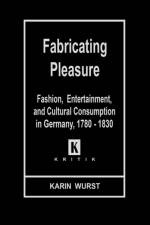
Fabricating Pleasure traces the creation of a unique form of domestic culture, showing how the bourgeoisie of late-18th- and early-19th-century Germany fused consumption with high culture. Author Karin Wurst illuminates the sociohistorical context and the emergence of the modern middle class, its differentiation, and its conception of culture.
Surveys the commercial importance, originality, and cultural relevance of the groundbreaking HBO series The Sopranos.
Presents an examination of young survivors of the Holocaust and their role in the creation of the state of Israel. This book argues that Zionism was successful in filling a positive function for young displaced persons in the aftermath of the Holocaust. It is suitable for scholars of Jewish studies, European history, and Israel studies.
Describes life from a female perspective on the excavation site of Dura-Europos, the site of many remarkable archaeological finds.
Abonner på vårt nyhetsbrev og få rabatter og inspirasjon til din neste leseopplevelse.
Ved å abonnere godtar du vår personvernerklæring.