




Gjør som tusenvis av andre bokelskere
Abonner på vårt nyhetsbrev og få rabatter og inspirasjon til din neste leseopplevelse.
Ved å abonnere godtar du vår personvernerklæring.Du kan når som helst melde deg av våre nyhetsbrev.

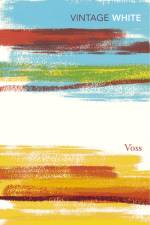
WITH AN INTRODUCTION BY ROBERT MACFARLANESet in nineteenth-century Australia, Voss is the story of the secret passion between an explorer and a naive young woman. Voss sets out to cross the continent, and as hardships, mutiny and betrayal whittle away his power to endure and to lead, his attachment to Laura gradually increases.
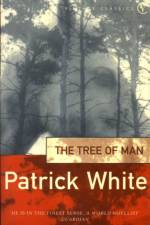
Stan Parker, with only a horse and a dog for company journeys to a remote patch of land he has inherited in the Australian hills. Once the land is cleared and a rudimentary house built, he brings his wife Amy to the wilderness. Together they face lives of joy and sorrow as they struggle against the environment.
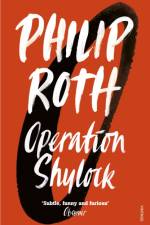
Startlingly, Philip Roth meets a man in Jerusalem called Philip Roth who has been touring Israel - riding high on the author's reputation - preaching a bizarre reverse-exodus of the Jews, encouraging them to return to their ancestral homes in Europe.
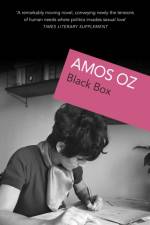
A powerful and tragicomic blend of politics and personal destiny, Black Box records in a series of letters the wrecked marriage of Ilana and Alex. Seven years of silence following their bitter divorce is broken when Ilana writes to Alex for help over their wayward and illiterate son, Boaz, and old emotional scars are reopened.
Byatt's Degrees of Freedom examined the first eight novels of Iris Murdoch, identifying freedom as a central theme in all of them, and looking at Murdoch's interest in the relations between art and goodness, master and slave, and the novel of character in the nineteenth century sense.
A master filmmaker, inimitable, and unrelenting in his assault on bourgeois values. Like Pasolini, his work offers a remarkably sophisticated political analysis, but remains based in the essentially peasant values of storytelling, and the purposefully unsystematic supervisions of laughter.
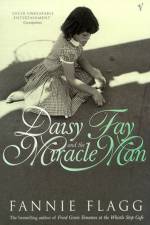
Fannie Flagg takes us on a journey to a South that only Southerners know, to a time when 'Blue Velvet' was played at the Senior Prom, and into the life of Daisy Fay Harper, a sassy, truth-telling heroine who just can't stay out of trouble.
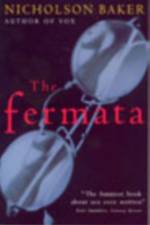
This is the story of Arno Strine, a modest temporary typist, who has perfected the knack of stopping time in its tracks and taking women's clothes off. He is hard at work on his autobiography, The Fermata, which proves in the telling to be a very provocative, very funny and altogether morally confused piece of work.
The Boy Who Saw True is based on the diary entries of a young Victorian boy whose extraordinary supernatural talent reveals itself within these pages.
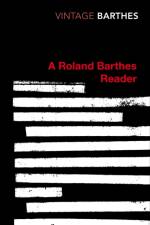
An introduction to the thinking of the French intellectual, Roland Barthes, as applied to such diverse topics as Gide, Garbo, striptease, photography and the Eiffel Tower. The pieces in this collection were written over a period of three decades.
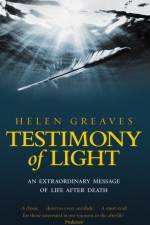
When Frances Banks died her friend Helen Greaves was by her side. 'Never have we read such a spontaneous, simple, direct, happy and instructive series of scripts from "the other side"' Science of Thought Review'A glass of spiritual champagne' - Churches Fellowship News
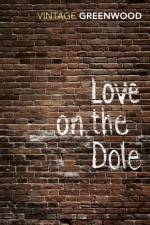
In Hanky Park, near Salford, Harry and Sally Hardcastle grow up in a society preoccupied with grinding poverty, exploited by bookies and pawnbrokers, bullied by petty officials and living in constant fear of the dole queue and the Means Test. Sally, meanwhile, falls in love with Larry Meath, a self-educated Marxist.
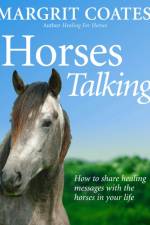
Intended for every horse owner, rider and handler - and the many thousands of people around the world who work with horses including vets, complementary therapists, grooms, stable hands, trainers, instructors and breeders.
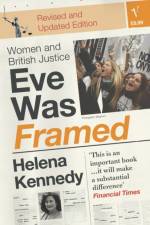
Helena Kennedy focuses on the treatment of women in our courts - at the prejudices of judges, the misconceptions of jurors, the labyrinths of court procedures and the influence of the media.
In The Conjugal Angel, curious individuals - some fictional, others drawn from history - gather to connect with the spirit world. Throughout both, Byatt examines the eccentricities of the Victorian era, weaving fact and fiction, reality and romance, science and faith into a sumptuous, magical tapestry.
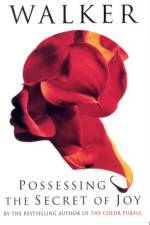
When Alice Walker finished writing The Color Purple she realised that she needed to tell the story of Tashi, a minor character, who had "left Africa but had taken her wound with her to America". This is Tashi's story, told in her words and the voices of the people who loved her.
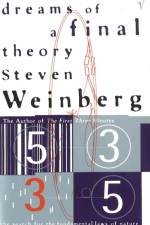
An understanding of nature's final laws may be within our grasp - a way of explaining forces and symmetries and articles that does not require further explanation. In it he discusses beauty, the weakness of philosophy, the best ideas in physics and the honour of accepting a world without god.
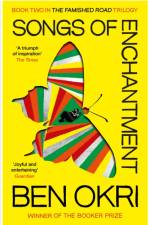
The second book in the trilogy which began with the Booker prize-winning The Famished Road. 'A love story and an account of the conflict between the parties of the Rich and Poor...
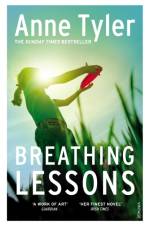
Nearing fifty and married with two children, she and her husband drive from Baltimore to Deer Lick to attend the funeral of a friend one hot summer day. During the course of the journey, Maggie's eternal optimism and her inexhaustible passion for sorting out other people's lives and willing them to fall in love is severely tested...
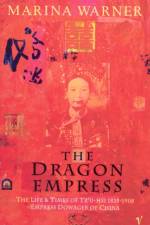
From 1861 to 1908 a woman, the Empress Dowager Tz'u-hsi, born the daughter of a minor mandarin, held the supreme power in China. THE DRAGON EMPRESS also portrays a China in rapid decline as poverty, civil war and foreign exploitation and invasion brought about the fall of the Ch'ing dynasty.
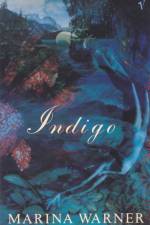
Inspired by The Tempest, Indigo traces the scars of colonialism across continents, family blood-lines and three centuries.
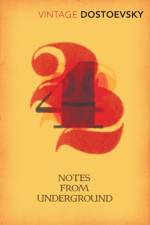
Presenting the apology and confession of a minor mid-19th-century Russian official, this title offers a half-desperate, half-mocking political critique and an account of man's breakaway from society and descent 'underground'.
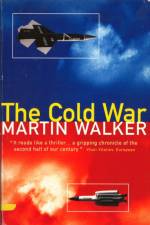
Martin Walker's account of over forty years of global confrontation between the US and Russia is a masterly narrative of the Cold War's twists and turns by a journalist who was a first-hand witness to its close.
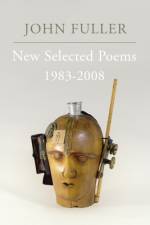
A selection of poems, made by the author himself, is taken from his last eight collections and spans over twenty-five years of work. His poems, brilliant in their dexterity and virtuoso in their use of form, engage with a spectacular range of subjects, revealing a dark, haunted imagination leavened by moments of exuberant levity.
Abonner på vårt nyhetsbrev og få rabatter og inspirasjon til din neste leseopplevelse.
Ved å abonnere godtar du vår personvernerklæring.