













Gjør som tusenvis av andre bokelskere
Abonner på vårt nyhetsbrev og få rabatter og inspirasjon til din neste leseopplevelse.
Ved å abonnere godtar du vår personvernerklæring.Du kan når som helst melde deg av våre nyhetsbrev.

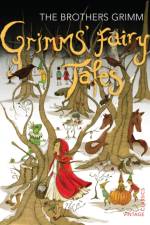
Once upon a time there was a book, and inside the book were princes who had been turned into frogs or ferocious beasts, princesses so beautiful they astonished the sun, faithful sweethearts and evil stepmothers, giants taller than mountains and a boy no bigger than your thumb, houses made of bread and cake and birds made of gold.
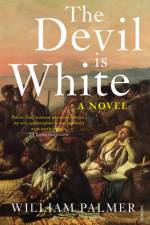
It is 1792 and a group of English gentlemen is recruiting settlers for a new world. Anti-slavers, they foresee the shining vision of a free colony in Africa where all races and classes can live together in harmony. More than a hundred men, women and children set sail from London bound for Muranda, an island off the west coat of Africa.
The moving story of a brother and a sister caught in the tide of the Cold War Kathe is a Jewish sculptor living in East Berlin.
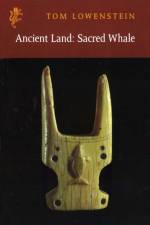
On a tiny peninsula, the Inuit of Tikigaq worshipped the whales they killed, evolving an elaborate system of myths and rituals to accompany the hunt. Lowenstein began to explore these in 1973 and recorded the complex tales of the elders, providing a classic text on the vanishing culture of the North Alaskan wilderness.
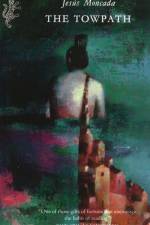
During the Great War, the Spanish town at the centre of this novel turned into a boom-town, due to the demand for coal. After that, the downhill slide began, hastened on by Anarchists and left-wingers; then the Civil War and Franco's depression. Then came the March of Progress.
Irene is 37 years old and just out of prison after serving time for terrorist activities. Deciding to return home to Bilbao, she takes a bus journey across Spain, striking up conversations with the passengers who include two plainclothes policemen. As the journey progresses, so the tension builds.
Yet this woman, who at the age of 33, after 17 years of unhappy marriage, placed her deposed and murdered husband's crown on her own head, had begun life as an insignificant German princess.
"Will appeal to lovers of the wayward novel game as it is played by Lawrence Sterne or Italo Calvino" - Jackie Wullschlager, Financial TimesProfessor Harry Butler is obsessed with the Mind/Body problem.
The collapse in 1989 of the newly-built church at Perugia, killing the congregation of notables gathered for its consecration, just as they have discovered in themselves the ability to sing in perfect Latin, must surely be ascribed to the miraculous (or devilish) properties of the Madonna and Child altarpiece specially donated by the Vatican.
William Kent (1685-1748) was great without a hint of gravitas, a con man who became one of the artistic geniuses of his age. He was a high camp Yorkshire bachelor, brought back by Lord Burlington from an artistic apprenticeship in Rome where he had painted for a cardinal and won prizes from a pope.
Tracing the political, social and economic cultures of the period, as well as what might have been, this book uncovers how this century of change impacted the British people and their sense of identity.
Thrown out of her long-established office job, Miss Christine Smith takes up a new role as housekeeper for a group of middle-aged artists. Written in the 1960s, surrounded by social and political transitions, the novel focuses on change, or the lack thereof.
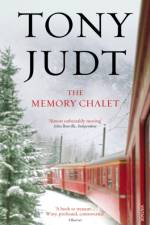
It might be thought the height of poor taste to ascribe good fortune to a healthy man with a young family struck down at the age of sixty by an incurable degenerative disorder from which he must shortly die.
The stories in Julian Barnes' long-awaited third collection are attuned to rhythms and currents: of the body, of love and sex, illness and death, connections and conversations.
Opening on the eve of the millennium, when the world as we know it is still recognisable, we meet the nine-year-old narrator as he flees the city with his parents, just ahead of a Y2K breakdown. Next he is a teenager with a growing criminal record, taking his grandparents for a Sunday drive.
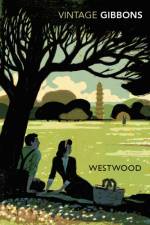
WITH AN INTRODUCTION BY LYNNE TRUSS'Stella Gibbons is the Jane Austen of the twentieth century' The TimesSet in wartime London, Westwood tells the story of Margaret Steggles, a plain bookish girl whose mother has told her that she is not the type that attracts men.
Gladys and Annie Barnes are impoverished sisters who have seen better times. They live in a modest cottage in the backstreets of Highate with Mr Fisher, a mild but eccentric old man living secretively in the attic above them. Their quiet lives are thrown into confusion when a new landlord takes over, a dreaded and unscrupulous 'rackman'.
Robert Poste's child is back at Cold Comfort Farm. Flora finds the farm transformed into a twee haven filled with Toby jugs and peasant pottery, and rooms labelled 'Quiete Retreate' and 'Greate laundrie'.
A young woman is brutally murdered on a remote mountain road. A young construction worker, Yuichi, is on the run - but is he guilty?This is the dark heart of Japan; As the police close in on Yuichi and his new lover, the stories of the victim, the murderer and their families are uncovered.
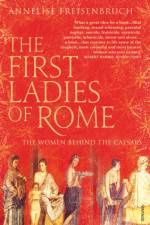
Like their modern counterparts, the 'first ladies' of Rome were moulded to meet the political requirements of their emperors, be they fathers, husbands, brothers or lovers.
Includes a new foreword by the author The story of the death, in sinister circumstances, of the boy-king Edward V and his younger brother Richard, Duke of York, is one of the most fascinating murder mysteries in English history.
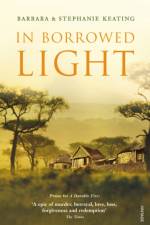
Fourteen years after independence, the enduring childhood friendship of three women has carried them through times of violence and loss in Kenya, their chosen homeland. Hannah Olsen and her husband Lars own Langani Farm and Safari Lodge where they struggle to protect their wildlife and land from poachers and corrupt officials.
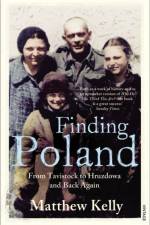
In Finding Poland Matthew Kelly embarks on a journey through his ancestor's footsteps, travelling through places they lived, and landscapes they survived, to provide an account of these extraordinary people and their unique history.
In Phonefun Limited Sadie and Agnes, retired prostitutes hit upon an inventive new way of making someone happy with a phone call, while in My Dear Palestrina' a remarkable music teacher initiates her pupil into the mysteries of art and maturity.
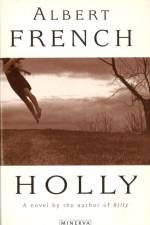
Holly is the story of a poor, white girl in 1944 North Carolina, whose lonely world is transformed by a handsome, educated black soldier from the war - and of the town's savage response to their romance.
As West German society increasingly took on a gloss of economic well-being, Boll's trenchant novesl cut through the sleek outward show to reveal festering fears and suppurating physic states excluding poison into the system.
THE BOOK: The stories in For Solo Voice, Susanna Tamaro's first book, explore the historical and emotional traumas which lie beneath consciousness and threaten to erupt into everyday life. She exposes with analytical clarity, spectres of our past that abide in us as individuals and as a society, disfiguring our humanity.
In 1967, after a ten-year campaign, the laws which treated all homosexual acts between males as crimes in England and Wales were altered to permit such behavior between two consenting men aged over twenty-one in private. This title tells the inside story of the battle for the Wolfenden reforms, told by one of its main protagonists.
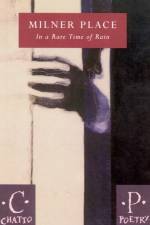
Described in the Telegraph as 'Huddersfield's Melville', Milner Place has spent much of his life sailing the seven seas as a skipper of a trading boat, while also writing beautifully crafted poetry.
When the intrepid Mrs Fay departed from Dover more than two hundred years ago, she embarked on a grueling twelve-month journey through much of Europe, up the Nile, over the deserts of Egypt, and finally across the ocean to India. This title features the letters she wrote from her 1779 voyage across the globe.
Abonner på vårt nyhetsbrev og få rabatter og inspirasjon til din neste leseopplevelse.
Ved å abonnere godtar du vår personvernerklæring.