
Gjør som tusenvis av andre bokelskere
Abonner på vårt nyhetsbrev og få rabatter og inspirasjon til din neste leseopplevelse.
Ved å abonnere godtar du vår personvernerklæring.Du kan når som helst melde deg av våre nyhetsbrev.

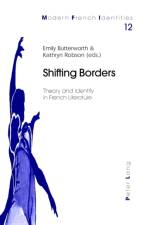
This volume, containing selected papers from a conference held by the Department of French in the University of Cambridge in 1999, addresses the exciting and challenging figure of the shifting border in modern French literature and literary theory. Using a variety of critical approaches, the contributors map the fluctuating borders in specific literary texts and explore how these moving boundaries reflect on their practice of literary analysis. Inspired by the ideas of European and American thinkers, including Giorgio Agamben, Jacques Derrida, Julia Kristeva, Jacques Lacan and Jean-François Lyotard, they consider three major areas of current concern: the construction of identity, the conceptualisation of literary genres and the demarcation of geographical and cultural domains. Applying their insights to a wide-ranging corpus of francophone texts, this volume analyses the work both of canonical figures such as Mallarmé, Proust and Zola and of lesser-known writers such as Aimé Césaire, Assia Djebar and St. John Perse.
This study of Edgar Reitz¿s 1984 film saga Heimat explores the cultural contexts of the Heimat tradition and examines the political debate surrounding the film¿s reception. Responses were largely supportive but some critics were disturbed by an apparent tendency to induce a sense of uncritical nostalgia in viewers. Reitz, by contrast, had wanted to make a film which would help people confront their memories of the Third Reich. The author tests hostile critiques not only against the film¿s elliptical narrative but also against Reitz¿s filmic techniques. She examines the interplay of realism and authenticity, and shows how Reitz dramatizes the confrontation between modernity and rural communities, while consciously alluding to the problematic and much-derided Heimat genre.
Mechthild of Magdeburg¿s singular book Das Fließende Licht der Gottheit (¿The Flowing Light of the Godhead¿) must be accounted one of the most significant texts in German that we have from the thirteenth century. As a piece of first-rate imaginative writing in the vernacular it is a highly rewarding text for those interested in medieval literature and women¿s writing. It is also of considerable interest to historians and theologians as a document of female spirituality. This introduction to Mechthild¿s extraordinary account of her revelations and of her relationship with God and with her contemporaries makes Mechthild¿s book more accessible to the English speaker. It takes as its central focus the multi-voiced nature of Mechthild¿s writings, suggesting ways of reading her work through an analysis of key voices in the text: (i) the social-historical voice of Mechthild as beguine and nun (ii) the authorial voice (iii) the voice of the mystic and prophet with particular reference to the influence of the Psalter and the Song of Songs (iv) the temporal voice of the visionary at the intersection of Mechthild¿s personal story with the master story of Christian salvation.
Contemporary cultural practices have blurred and eroded traditional disciplinary boundaries of art and its discourses, and the ways in which they are taught. They have called into question the ideological premises and cultural assumptions on which traditional academic subjects were founded and which have underwritten the segregation between practice, pragmatic and speculative thought. The Scottish Theoros ¿ Forum for Interdisciplinary Debate was jointly initiated by the Department of Philosophy and the School of Fine Art at the University of Dundee to create a space for dialogue between and across the various disciplines that are concerned with the study of visual arts: practice, aesthetics, theory, history and criticism. Theoros has initiated a series of international conferences bringing together professionals who are engaged in the research and teaching of art from different disciplinary perspectives. This volume contains selected contributions to the first Scottish Theoros conference on ¿Aesthetics, Historicity and Practice¿, held in Dundee in 1998. Historicity marks the temporal nature of our existence and experience. It forms a central aspect in the making of and reflection on art. Here historicity is explored as a common ground for the integration of practice, critical thought and historical enquiry in the spaces of higher education and professional engagement.
Public education has received increasing criticism since the beginning of the nineties. Four major areas of concern can be discerned: the technical backwardness of the schools, the disappearance of political legitimization, financial limitations and the conservative school development. Worldwide, educational systems are being reorganized and developed beyond the traditional forms. These efforts are accompanied by increasingly complicated and complex research which assumes an international form. The international symposium Futures of Education, which took place in Zurich from 28 to 30 March 2000, was dedicated to these questions. The lectures held at the symposium were concerned with the relationship between research and development and above all, encouraged discussion and brought new ideas into play.
This book sets out to examine the internal workings of a colonial settler society drawing on aspects of post-colonial theory and whiteness studies. It focuses on the construction of a hierarchical social order in German Southwest Africa in the period 1884-1914. In doing so it explores the historical creation of categories of race and the construction of a concept of whiteness within white settler society in Germany¿s foremost settler colony. In the colonial environment the presence of some settlers was deemed to be more desirable than others. As a consequence policies of exclusion and racial rhetoric were employed to exclude undesirable settlers from white society. What emerged was a pioneer society in which undesirable settlers were socially, politically and economically excluded whilst desirable settlers sought to forge a racially and culturally exclusive utopia. Based on extensive archival material from the Bundesarchiv in Berlin as well as a wide range of printed sources, the book presents an insight into strategies of social control, power, the establishment of social privilege and constructions of whiteness in a settler society.
Illustrates the significance of margins and the instability of demarcation in the fiction of Kazuo Ishiguro. In this book, the author approaches Ishiguro's writings as a corpus rather than separate units, examining the novels to illuminate their generic, theoretical or stylistic affiliations.
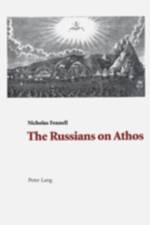
Nationality, however, has rarely counted for much on Athos, and though the Romanians have never secured a monastery for themselves, today they form, after the Greeks, the largest ethnic group. This book tells the story of how these many traditions came to be represented on the Mountain and how their communities have fared over the centuries.
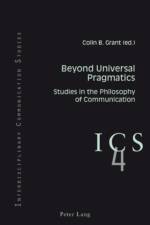
Beyond Universal Pragmatics
Abonner på vårt nyhetsbrev og få rabatter og inspirasjon til din neste leseopplevelse.
Ved å abonnere godtar du vår personvernerklæring.