Gjør som tusenvis av andre bokelskere
Abonner på vårt nyhetsbrev og få rabatter og inspirasjon til din neste leseopplevelse.
Ved å abonnere godtar du vår personvernerklæring.Du kan når som helst melde deg av våre nyhetsbrev.

The ideas underlying Benn¿s Ausdruckswelt not only anticipate and parallel many of the assumptions now current in recent trends in literary criticism; they also disclose their ultimate limitations. Benn¿s poetics were founded on the intellectual crises of the early years of the twentieth century. Following Nietzschean leads, Benn sought to achieve in his person and his work a return to a primitive, archetypal mode of perception which he felt would restore a purer, more natural mentality to modern man, whom he portrayed as being ¿far ahead of his syntax¿. By focusing on Benn¿s early Expressionist prose and what this study calls his ¿fictive self¿, the author traces the relationship between Benn¿s Weltanschauung and later critical theory. Building upon the latest scholarship, she analyses Benn¿s poetics as precursor of certain postmodernist ideas concerning language, meaning and polysemy, aesthetics, personal identity, authorial intention versus reader reception, intertextuality, and the role of art in society. By paying specific attention to the concept of the autonomous self and its relation to language, this study demonstrates that Gottfried Benn¿s aesthetic theories do not represent the end of German Expressionism, but rather the beginning of the present post-modernist period.
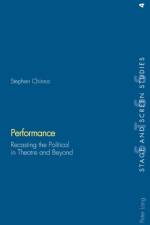
This book is an analysis and study of postmodernism, political theatre, and the politics of representation. Traversing a wide span of twentieth-century political theatre and performance practices in the West, the author analyses and questions the performance practices of the historical and neo-avant-gardes, modernist political theatre, and postmodern performance in order to explore the relationships between politics, performance and postmodernism. Chinna contends that it is the provisional and contingent strategies of performance which set the model for the postmodern. Drawing on the poststructuralist theories of Jean-Francois Lyotard and Jacques Derrida, among others, the postmodern is defined as a performance model ¿ like deconstruction, endlessly deferring unequivocal meaning and final closure. It is argued that historical avant-garde performance practices such as Dada, as well as the neo-avant-gardes from the 1950s onward, were always trapped within a dialectic of representation and the ¿real¿ in their quest for a merging of art and life.
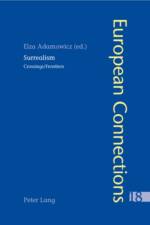
This collection of essays, inspired by André Breton¿s concept of the limites non-frontières of Surrealism, focuses on the crossings, intersections and margins of the surrealist movement rather than its divides and exclusion zones. Some of the essays originated as papers given at the colloquium ¿Surrealism: Crossings/Frontiers¿ held at the Institute of Romance Studies, University of London, in November 2001. Surrealism is foregrounded as a trajectory rather than a fixed body of doctrines, radically challenging the notion of frontiers. The essays explore real and imaginary journeys, as well as the urban dérives of the surrealists and situationists. The concept of crossing, central to a reading of the dynamics at work in Surrealism, is explored in studies of the surrealist object, which eludes or elides genres, and explorations of the shifting sites of identity, as in the work of Joyce Mansour or André Masson. Surrealism¿s engagement with frontiers is further investigated through a number of revealing cases, such as a political reading of 1930s photography, the parodic rewriting of the popular ¿locked room¿ mystery, or the surrealists¿ cavalier redrawing of the map of the world. The essays contribute to our understanding of the diversity and dynamism of Surrealism as an international and interdisciplinary movement.
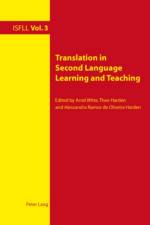
The articles in this volume are the proceedings of a conference on ¿Translation in Second Language Teaching and Learning¿ that took place at the National University of Ireland, Maynooth, in March 2008. The papers delivered at the conference, the subsequent discussions in Maynooth and the articles in this volume have clearly demonstrated that, after some decades of marginalising or even excluding translation from second/foreign language methodologies and classroom practices, the time is ripe for a re-evaluation of the benefits translation can bring to the process of learning a second language and its cultural context. Translation exercises are interpreted as processes of negotiation, as constitutive acts for identities and (inter-)actions, based on increasingly emerging ¿third spaces¿ between the dominant conceptualisations, values, norms, beliefs, rules, traditions and discourses of the languages and cultures involved. The enterprise of translating between languages, cultures, individuals, societies and discourses thus assumes a central place of relevance for anyone involved in the complex project of interculturality, including, and foremost, foreign language learners.
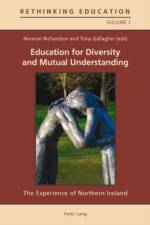
Education for Diversity and Mutual Understanding
William of Orange's invasion destroyed the king's plans, but given the time, could James have nurtured these 'green shoots' of religious pluralism in what was still a fiercely Protestant nation? This title reveals an endorsement of the general concept of religious toleration.
The relationship between different media has emerged as one of the most important areas of research in contemporary cultural and literary studies. But how should we conceive of the relationship between texts and images today? This title investigates the effects of different forms of representation in modern European and American literature.
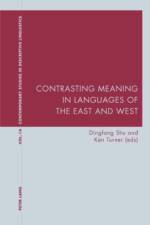
Contrasting Meaning in Languages of the East and West
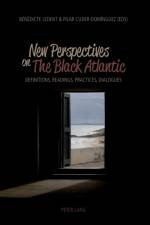
A collection of essays that attempts to expand notion of Black Atlantic beyond its original racial, geographical, linguistic and cultural borders while acknowledging its ability to disturb established historical truths and to go beyond traditional dichotomies, thereby providing an essential tool for cross-cultural understanding.
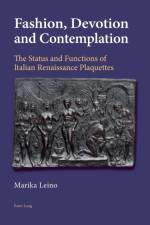
This book examines the use, status and context of Italian Renaissance plaquettes, whether they were articles for personal adornment, liturgical objects, domestic artefacts, or models for architecture and painting.
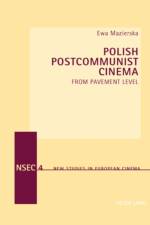
This book covers the history of Polish cinema from 1989 up to the present in a broad political and cultural context, looking at both the film industry and film artistry. It considers the main ideas behind the institutional changes in the Polish film industry after the collapse of communism and assesses how these ideas were implemented. In discussing artistry, the focus is on the genres which dominated the Polish cinematic landscape after 1989 and the most important directors.
Scholars of Italian colonialism have been reluctant to acknowledge the influence that local populations and their culture had on Italians and on the ways in which they settled and administered the territories they occupied. In this title, the essays addresses the gap in Italian colonial/post-colonial studies.
Abonner på vårt nyhetsbrev og få rabatter og inspirasjon til din neste leseopplevelse.
Ved å abonnere godtar du vår personvernerklæring.