










Gjør som tusenvis av andre bokelskere
Abonner på vårt nyhetsbrev og få rabatter og inspirasjon til din neste leseopplevelse.
Ved å abonnere godtar du vår personvernerklæring.Du kan når som helst melde deg av våre nyhetsbrev.

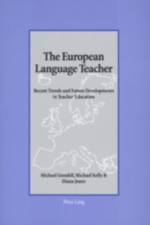
This book presents the European language teacher of tomorrow. It deals with recent trends and future developments in the training of second language teachers in Europe. Based on an EU-commissioned study of thirty-two countries, the book sets out the current provision of language teacher training across the age phases. Both pre-service and in-service teacher training is covered. Fifteen case studies of innovation and good practice are also presented. This detail is used to provide a needs analysis of training, on the basis of which a series of policy-orientated recommendations is developed. Finally, a professional profile of the European language teacher is constructed which lists the likely range of training and experience of tomorrow¿s teachers. These features are described in terms of organisation, content and structure. The book is framed by coverage of the contextual background to the study, both in terms of national priorities and EU policies, and a theoretical consideration of the issues in language teacher training.
The papers comprising this volume are selected from presentations made at the 2001 Conference of the British Association of Lecturers in English for Academic Purposes, which was held at the University of Strathclyde (in Glasgow, Scotland). The role of EAP (English for Academic Purposes) is increasingly important, as higher education institutions consider their linguistic support strategies (both for native and non-native speakers of English), and confront the potential of the world wide web as a scholarly and pedagogic resource. The articles collected consider EAP ¿ as an international profession ¿ from a number of vital and relevant perspectives including practical pedagogy, research, and the impact of new technology.
Explores the multifaceted concepts of otherness, barbarism and exteriority. This book examines some major twentieth-century poetic responses to the violent denial of otherness and difference in modern Europe. It focuses on three twentieth-century poets who experienced barbarism in some way and whose work constitutes a poetic counter-attack.
Awarded the 2007 National Research Prize SAES/AEFA. This study is a reappraisal of John Bunyan in the light of the dissenting religious culture of the late-seventeenth century. Charges of schism and fanaticism were repeatedly levelled against Bunyan, both from within the dissenting community and without, but far from being chastened by these accusations, Bunyan responded with a religious discourse marked by a rhetoric of excess. The focus of this book is therefore upon Bunyan¿s overwhelming spiritual experiences, especially the representation of torment, in his literary and polemical works. The believers¿ suffering was an obsessive concern of dissenting ministers, even to the point where their writings are often remembered today for little else. Hitherto, most scholars have termed all the mental states that they invoke ¿despair¿, but this simplifies the experiences at issue. A wealth of contemporary material helps to restore the nuances of seventeenth-century physical and spiritual conditions, from enthusiasm to melancholy and madness; from fear to desertion and sloth. These chapters explore fresh ways in which this subtle typology of torment and its extreme manifestations form the core of the literary expression of Restoration dissent, challenging Bunyan to represent spiritual equilibrium as the ultimate quest of the earthly pilgrimage.
This book explores the property of co-reference within various texts as a possible means of distinguishing genre types. Based on observed rather than invented material, it supplies empirical data on co-reference as a cohesive mechanism within authentic English texts. Co-referential form and frequency are identified in nine texts representing three genres: academic journals, news magazine articles and fictional narrative texts. This study offers not only quantitative but also qualitative information regarding co-reference in three individual text types, thereby laying the foundation for a comparative study of the three different genres. Focusing on the property of co-reference in this way singles out differences in language use and allows for some pertinent statements to be made regarding modes of co-reference as an indicator of text variety.
This volume synthesizes the work accomplished at the 5 International Security Forum (ISF) in Zurich from 14 to 16 October 2002. It presents a thematic overview of 150 academic presentations distributed over 6 workshop tracks, 30 workshops, 15 side-bar presentations, and 3 plenary sessions. The book contains a timely overview of 21 century international security topics and challenges. Special emphasis is placed on the impact of new information and communications technologies and knowledge management in the conduct of security and defense policy, and on a wide range of issues in the field of security sector reform and the democratic and parliamentary control of armed forces. The contributions also offer a fresh perspective on traditional regional and human security issues in the light of 11 September 2001, notably asymmetric war, Islam, gender, small arms, Russia, and Europe, including NATO, ESDP, and peace support operations. The 5 ISF was organized by the Center for Security Studies and Conflict Research at the ETH Zurich (Swiss Federal Institute of Technology Zurich) in Zurich in cooperation with the Geneva Centre for Security Policy, the Geneva Centre for the Democratic Control of Armed Forces, and the Graduate Institute of International Studies, Geneva.
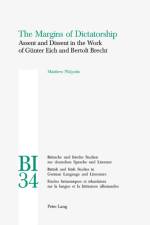
In this study the author elaborates a comparative framework for analysing literary texts from the Third Reich and the GDR in terms of the extent of assent and/or dissent expressed through them towards the National Socialist and SED regimes. The author maps out areas of similarity and difference in the workings of cultural policy in the two dictatorships. In the second part of the study, Günter Eich¿s work for the Nazi radio system and Bertolt Brecht¿s cultural activities in the GDR act as case studies to illuminate the patterns of interdependent assent and dissent generated under the conditions of dictatorship.
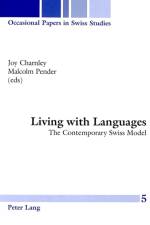
In 2002, Expo. 02 ¿ the Swiss National Exhibition ¿ celebrated the modern identity of the Swiss Confederation and the electorate approved a historic change in relations with other countries by voting to join the United Nations. Yet, despite bilateral agreements regulating areas of common interest between Switzerland and the European Union, there are still strong fears that Swiss identity could be jeopardised by full membership, and that, within a wider framework, her quadrilingual composition could not be sustained. The experience which the Swiss have accumulated in dealing pragmatically and largely peacefully with different languages is detailed in the six essays of this volume. The special contemporary characteristics of German, French and Italian within Switzerland, the pressures on Romansh, the role played by Switzerland in integrating gender-neutral language into standard usage and the dominance of English as a means of communication between different language groups are amongst the topics discussed.
Abonner på vårt nyhetsbrev og få rabatter og inspirasjon til din neste leseopplevelse.
Ved å abonnere godtar du vår personvernerklæring.