
















Gjør som tusenvis av andre bokelskere
Abonner på vårt nyhetsbrev og få rabatter og inspirasjon til din neste leseopplevelse.
Ved å abonnere godtar du vår personvernerklæring.Du kan når som helst melde deg av våre nyhetsbrev.

This is the first book devoted to the writings of Evgeny Popov (born 1946), a major and controversial figure in the late Soviet and post-Soviet literary landscape. The author uses a wide range of primary and secondary sources, many of them in Russian, alongside detailed analysis of the novels and stories themselves.
The Irish folklore of the Otherworld is rich in its many manifestations of supernatural beings and personages. This is represented in many different genres of folklore, such as folktales, legends, ballads, memorates, beliefs and belief statements, and exists within the context of rich literary, historical and imaginative parallels. This book presents a new reading of Irish religious belief and legend in a meaningful socio-historical context, examining popular belief and narratives of sinful women and unbaptised children, as a way of understanding a particular worldview in Irish society. Blending postmodern approaches with traditional methodologies, the author reviews the representation of women, sin and repentance in Irish folklore. The author suggests new ways of seeing this legend material, indicating strong links between the Irish and the French, specifically Breton, religious tradition, and tracing the nature of this inter-relationship through the post-Tridentine Counter Reformation Roman Catholic Church and its teachings. In this way aspects of Ireland¿s popular religious and cultural inheritance are examined.
Based on a variety of close readings, this book analyzes the use of ice and snow motifs in selected literary, scientific, and philosophical texts by a wide range of European authors from Johannes Kepler to Thomas Mann. The focus of the book is on German literature. While the metaphorical significance of cold imagery has been studied by various scholars, the close relationship between figurations of the cold and writing or reading has so far been overlooked. Compared with other instances of «reading the book of nature», stars or stones for example, the unstable status of snow or ice configurations also renders their literary representation problematic. This inherent tension accounts for the attraction snow and ice have exerted on authors to this day. Particular attention is paid to those texts that negotiate the close rapport between the fragile literary object and the fragile status of language and readability, thus exposing the «fragile legibility» of snow and ice motifs. This focus allows us to address more general issues, such as the shifting status of the aesthetic at the intersection of older natural history and the emergence of modern science; the apocalyptic; and the melancholic implications of cold imagery.
This book explores the ways in which intellectual and cultural publics from the early modern period to the postmodern present have actively constructed their cultural identities within the social processes of modernity. It brings together some of the most compelling recent writing on the public sphere by scholars in the fields of literary history, cultural studies and social theory from both sides of the Atlantic. Taken together, the essays in this collection offer a major re-examination of recent scholarship on the theory of the public sphere as developed by Jürgen Habermas. They also stand as a collective effort both to interrogate and to extend this influential model by exploring modern forms of intellectual and cultural activity in all their rich diversity and ideological complexity. Contributions range from the divided inheritance of Shakespeare publishing history to the new forms of mass-mediated cultural experience in contemporary Britain; from attempts at cultural regulation in the literary public sphere of the Romantic period to the postmodern political conflict played out in the American public sphere of the 1990s; and from varieties of religious dissent to modes of postcolonial criticism. The book furthers the dialogue between academic methodologies, fields and periods, and presents readers with a contested narrative of the key cultural and intellectual practices that have made up our modern world.
The urban spaces we inhabit today have been moulded by a combination of historical forces ¿ by social and economic processes, by the specific designs of urban planners, and by the regulatory and ritual practices of earlier times. As arenas of cultural activity they are also imbued with legends, symbolic associations, and historical memories. This second volume of papers arising from the conference ¿Imagining the City¿, held in Cambridge in 2004, examines the physical organization and the imaginative perception of cities from both a historical and a contemporary perspective, and over a geographical range that reaches from Ukraine to Mexico. It includes discussions of the ways in which cities have been envisaged in late antiquity, in the Middle Ages, and in early modern times, as sites of religious, cultural and political rituals; of the uses to which urban spaces have been put by industrial societies and by the political cultures of the twentieth century; and of the implications for the populations of particular cities of the roles these have played in establishing the historical identity of particular communities (whether national, political or religious) and in the delineation of boundaries between cultures.
This volume, composed mainly of papers given at the 1999 conferences of the Forum for German Language Studies (FGLS) at Kent and the Conference of University Teachers of German (CUTG) at Keele, is devoted to differential yet synergetic treatments of the German language. It includes corpus-lexicographical, computational, rigorously phonological, historical/dialectal, comparative, semiotic, acquisitional and pedagogical contributions. In all, a variety of approaches from the rigorously ¿pure¿ and formal to the applied, often feeding off each other to focus on various aspects of the German language.
Building on constructivist approaches to international relations this book develops a narrative theory of identity, action and foreign policy, which is then applied to account for the evolution of Finnish foreign policy. The book adopts an innovative approach by showing how foreign policy orientations need to be seen as grounded in overlapping and competing sets of identity narratives that reappear in different forms through history. By emphasising the dynamism implicit within identity narratives the book not only challenges traditional rationalist materialist approaches to foreign policy analysis, but also the current tendency to depict the story of Finnish foreign policy, identity and history as one of a gradual move towards a Western location. Rather the book emphasises elements of multiplicity and contingency, whilst re-establishing foreign policy as a highly political process concerned with power and the right to define reality and national subjectivity.
Drawing from a range of critical perspectives, in particular postcolonial, this book examines the relationship between perceptions of Russia and of Eastern Europe and the making of a ¿Western¿ identity. It explores the ways in which the perception of certain characteristics of Russia and Eastern Europe, whether real or attributed, was shaped by (and used for) the construction of a liberal narrative of the West, which eventually became dominant. The focus of this inquiry is French culture, from the beginning of the debate about Russia among the philosophes (c.1740) to the consolidation of a professional field of Slavic studies (c.1880). A wide range of writing ¿ literature, travel accounts, histories, political tracts, scientific journals, and parliamentary debates ¿ is examined through the work of major authors (from Montesquieu, Diderot and Rousseau to Tocqueville, de Maistre and Guizot, from Mme. de Staël, Hugo and Balzac to Dumas, Michelet and Comte), as well as that of many less well known figures. The book also explores possible continuities between those first academic accounts of Russia and Eastern Europe and present-day scholarship in Europe and the USA, to show that the liberal ideological accounts constructed in the nineteenth century still to a great extent inform contemporary academic studies.
This book is based on papers originally presented at the international conference ¿Activating Human Rights and Diversity¿ held in Australia in 2003. It advances a powerful and convincing affirmation of the importance of human rights in the twenty-first century and explores the vital connections between the theory and practice of human rights. It asks what kind of vision for humanity is necessary, given the harsh realities and challenges of the twenty-first century. Through a range of perspectives ¿ reconciliation, refugees, women, indigenous issues, same-sex sexualities, conflict resolution, environmental degradation, political freedoms and disability ¿ this collection highlights the fact that the survival of humanity depends on our ability to connect a vision with the reality of activating human rights.
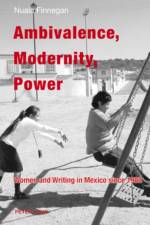
This book takes as its starting point the boom femenino or the explosion in publishing by women in Mexico since the 1980s. Powerful changes in women¿s roles in Mexico over the last three decades have resulted in women occupying a position of profound ambivalence with regard to the processes of modernisation. The boom femenino constitutes an integral part of this process of change. By incorporating a variety of critical approaches within a feminist framework, the author argues that Mexican women writers participate in a crucial project of unsettling dominant discourses as they strive for new ways of capturing the ambivalent position of the Mexican women in their texts. The author offers close readings of work by Silvia Molina, Sara Sefchovich, Susana Págano, Brianda Domecq, Guadalupe Loaeza and Rosamaría Roffiel. She also considers the reactions to and reception of best-selling author, Angeles Mastretta, with an assessment of the different vested interests in the world of literature, including those of critics, writers, readers and publishers.
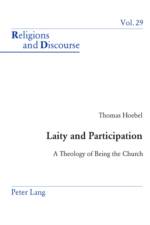
Right across denominational boundaries lay theology is dominated by negatives: the laity simply defined as the non-ordained, the alleged exclusion of the laity from full participation, the sole focus on what they cannot or should not do, and, above all, the total absence of an ecumenical lay theology. In a unique approach, this volume sets out to find ways of overcoming these negatives so predominant in current lay theology. The author explores positions and perspectives put forward in Roman Catholic theology from Vatican II up to the present. These are compared and contrasted with concepts and suggestions of present-day Anglican Theology as well as with those of liberative theologies in Latin America and Asia. Rethinking the content, language, and metaphors of lay theology, in the final part of this volume the author proposes a new image for discussing the Church, a model focusing on the interdependence and collaboration of all the people in the Church. This is then used to sketch out the framework for a new type of lay theology. Imbedded in ecclesiology, in the concept of all believers together being the Church, the author endeavours to suggest a lay theology that is indeed positive, ecumenical and universal.
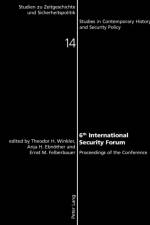
This volume summarises the academic work accomplished at the 6 International Security Forum (ISF), convened by the Geneva Centre for the Democratic Control of Armed Forces from 4 to 6 October 2004 at the Montreux Convention Centre, Switzerland. It presents a thematic overview of 150 presentations given at the 6 ISF, either as full-length keynote speeches in the two plenary sessions or in the form of summaries of all speeches given in the six topic sessions and the 24 workshops. The topics discussed respond to the complex new challenges of the post Cold War world with an integrated, multilateral and interdisciplinary approach. The experts contributing to the success of the ISF covered, among other issues, the need for UN Reform, EU and NATO enlargement, Human Security and International Humanitarian Law, the global War on Terror, the role of Private Military Companies, Combating Violence against Women and Children and Security Sector Governance.
Abonner på vårt nyhetsbrev og få rabatter og inspirasjon til din neste leseopplevelse.
Ved å abonnere godtar du vår personvernerklæring.