


Gjør som tusenvis av andre bokelskere
Abonner på vårt nyhetsbrev og få rabatter og inspirasjon til din neste leseopplevelse.
Ved å abonnere godtar du vår personvernerklæring.Du kan når som helst melde deg av våre nyhetsbrev.

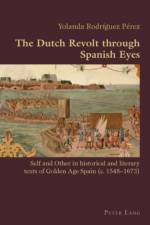
Historical and literary works from the Spanish Golden Age offer a wealth of information about the Spanish view of the conflict in the Netherlands during the Dutch Revolt and the ensuing Eighty Years¿ War (1568-1648). The war in the cold north was to become a fixed component in the lives of the Spaniards of the Golden Age for many years. This book reconstructs the images that the Spanish had of the Netherlands and its inhabitants. These images are inextricably intertwined with the picture that the Spanish constructed of themselves as participants in the conflict. This book follows the developments of these images from the construction of an image of the enemy that reached a climax between 1621 and 1648 and then gradually faded away. Which images and representations circulated the most, and where did they come from? Which rhetoric was used to present them to the public, and in which genres and contexts were they disseminated and preserved? On the basis of a varied collection of sources, war chronicles and plays, as well as pamphlets, poems, historical works and prose writings, the author illustrates the appearance of the Netherlands through Spanish eyes during the course of the Eighty Years¿ War.
This book examines frugality as an ideal and an ¿art de vivre¿ which implies a low level of material consumption and a simple lifestyle, to open the mind for spiritual goods as inner freedom, social peace and justice or the quest for God or ¿ultimate reality¿. By rational choice we can develop a more frugal and sufficient way of life, but material temptations can always overwrite our ecological, social and ethical considerations. But the spiritual case for frugality is strong enough. Spiritually based frugal practices may lead to rational outcomes such as reducing ecological destruction, social disintegration and the exploitation of future generations.
Contributes to an understanding of the aesthetics and economics of female artistic labour in the Victorian period. This title maps out the evolution of Woman Question in a number of areas, including status and suitability of artistic professions for women, their engagement with new forms of work and their changing relationship to public sphere.
This book is concerned with the presence of familiar objects in unfamiliar places. It examines the literary practice of inserting imaginary photographs of art, architecture, and people into novels and short stories. These photographs are fictive objects, although some, especially those of art and architecture, have equivalents in real life. The book examines the presence of invented photographs in the writings of six authors who made extensive use of this practice. The ¿rst part of the book concentrates on E. M. Forster, while also including some discussion of imaginary photographs in Sinclair Lewis¿s novel Main Street. The second part of the book analyses the uses of photographs in the writings of Forster¿s near contemporaries, with separate chapters being devoted to Henry James, Marcel Proust, James Joyce, and Virginia Woolf. An epilogue touches on Christopher Isherwood, a member of the next generation of British writers. The book focuses upon largely unexplored areas in the writings of these authors ¿ what Virginia Woolf in ¿Modern Fiction¿ styled ¿un-expected places¿.
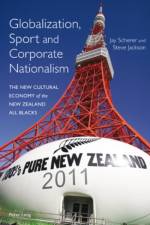
Globalization, Sport and Corporate Nationalism
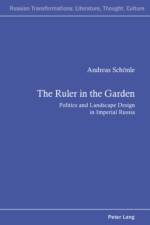
This monograph examines the contributions of landscape design to authority and to organization of public life in imperial Russia. Analyzing how tsars and nobles inscribed their political aspirations in the gardens they designed or inhabited, this study maps out a distinct trajectory in the meaning of landscape design. Based partly on archival documents, it explores the reasons for Catherine the Great¿s keen interest in landscape design. It reconstructs Grigorii Potemkin¿s attempts to transform the Crimea physically and symbolically into the garden of the empire. And it reveals the centrality of the garden for noblemen such as Andrei Bolotov and Alexander Kurakin, who expressed their political philosophy and their anxieties about unstable social relations through landscaping. The book follows the destiny of western aesthetic categories, notably of the picturesque, as they are first adopted, then transformed, and ultimately rejected. It analyzes the historical role and mythological representations of the country estate, along with Leo Tolstoy¿s fraught commitment to Yasnaya Polyana and his critique of estate mythology in War and Peace. Finally, this study exposes how the current fashion for gardening in Russia, in particular among New Russians, alludes to imperial landscaping culture in order to justify a retreat from the public sphere.
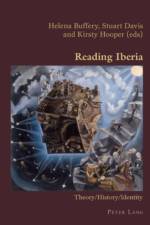
This book is an edited volume of eleven specially-commissioned essays by a range of established and emerging UK-based Hispanists, which assess recent developments in the disciplines falling under the umbrella of ¿Iberian Studies¿. These essays, which cover a wide range of time periods and geographical areas, but are united by the common question of what it means to ¿Read Iberiä, offer an invigorating critique of many of the critical assumptions shaping the study of Iberian languages and literatures. This volume offers a timely intervention into the debate about the current repositioning of language/literature disciplines within the UK university. Its intellectual starting point is the need for a committed and incisive re-evaluation of the role of literature and the way we teach and research it. The contributors address this issue from a diverse range of linguistic, cultural and theoretical backgrounds, drawing on both familiar and not-so-familiar texts and authors to question common reference points and critical assumptions. The volume offers not only a new and invigorating space for reimagining Iberian Studies from within, but also ¿ through its commitment to interdisciplinary debate ¿ an opportunity to raise the profile of Iberian Studies outside the community of academic Hispanists.
In June 2006 delegates from eight countries representing six French, US, and British-based learned societies met at St Catherine's College, Oxford, for a conference on the French long seventeenth century entitled 'Modernités/Modernities'. Twenty of the best papers on religion, ethics and history were selected for this volume, and they present new perspectives on topics as diverse as devotion and pornography, artifice and the pursuit of truth, Bruscambille and Pascal, historiography from the sixteenth century to Voltaire, and, of course, the Querelle des Anciens et des Modernes. En juin 2006 un colloque sur le thème de la modernité pendant l'âge classique a réuni à St Catherine's College, Oxford des spécialistes venus de huit pays pour représenter six sociétés savantes dont quatre françaises, une américaine, et une britannique. Vingt communications choisies parmi les meilleures sont recueillies dans le présent volume, sur des sujets aussi divers que la dévotion et la pornographie, l'artifice et la recherche de la vérité, Bruscambille et Pascal, l'historiographie tant du seizième siècle que de Voltaire et, bien entendu, la Querelle des Anciens et des Modernes.
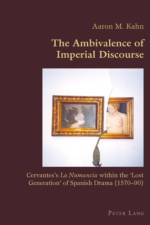
This book offers a new reading of Miguel de Cervantes¿s play La destrucción de Numancia (c.1583), analysing the work in relation to theories of empire in sixteenth-century Spain, in the context of plays written immediately before the rise in popularity of Lope de Vega and the comedia nueva, and the playwright¿s innovative use of dramatic techniques in this transitional period of Spanish drama. Dramatic writers have always used the stage as a medium through which they could comment on current events involving politics, religion, philosophy, and society; Cervantes was no exception. His discourse concerning imperial expansion in La Numancia has resulted in many conflicting interpretations of the play¿s meaning. This book explores the dramäs thematic and generic ambiguities, as well as Cervantes¿s representation and interpretation of the historical record in the creation of his characters and his portrayal of the fall of Numancia in 133 BC to the Roman army of Scipio Aemilianus. Finally, this study addresses the significance of seemingly intentionally unclear discourse in reference to La Numancia and the turbulent political and religious environment of late sixteenth-century Spain.
This volume presents a selection of essays by established Italian and international scholars in the field of Romantic drama. It is divided into four main sections: 1) Dramatic Theory and Practice; 2) On the Romantic Stage: History, Arts, and Acting; 3) Interaction of Genres: from Fiction to Drama; 4) The Romantics¿ Debate on Theatre and Drama: a Selected Anthology. The crucial area of debate these essays address is the way in which the problem of the dramatic representation of the self becomes in Romantic drama the very centre of reflection on the constitution of the modern subject. Each essay explores one or more aspects of the formation of modern subjectivity through dramatic representation of the self and through critical enquiry into the modes of that representation. The first and the fourth sections discuss the complex interaction between the theoretical questions that animated the debate around the Romantic theatre and the multifarious and often unruly performance practices of the time. The other two sections deal with the many and diverse ways in which Romantic drama engaged with and incorporated other artistic genres such as painting, performing arts, music, and the novel.
This monograph details Gutzkow¿s recurring use of performance-within-the-play as a means of encouraging an active, political response by the audience. He incorporates an internal audience viewing a performance on stage in order to model an ideal of dramatic reception for the audiences of his own play. Gutzkow structures the narrative contextualization of these performances as reflections of specific issues in the German states of the Vormärz. Beginning with an overview of theoretical and literary texts from the 1830s, this study traces Gutzkow¿s transferral of self-reflexive structures from his novels of this decade into his first staged play, Richard Savage (1839), and on through Das Urbild des Tartüffe (1844) and Uriel Acosta (1845). It concludes by portraying Der Königsleutnant (1849) as a transitional work that shows Gutzkow¿s decision to return to the novel as a consequence of the failure of his plays to attain the reception he intended. By using the coherency of the communicated message instead of fealty to aesthetic norms as the evaluative criteria for discussing Gutzkow¿s plays, the book exposes an innovative mode of specifically literary social criticism in these works that complements their traditional assessment as documentation of the cultural history of Liberalism in this period.
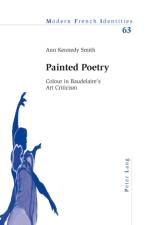
What effect did the new scientific theories of colour harmony, filtered through his conversations with Delacroix and other artists, have on Baudelaire? Why did he see Daumier as a colourist, but not Ingres? What made him turn his back on French art in 1859 and which artist changed his mind? This book deals with these questions.
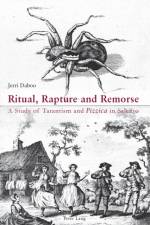
A historical and ethnographic study of tarantism and pizzica, draws upon seven hundred years of writings about the ritual contributed by medical practitioners, scientists, travel writers and others. It investigates the contemporary revival of interest in pizzica music and dance as part of the 'neo-tarantism' movement.
Abonner på vårt nyhetsbrev og få rabatter og inspirasjon til din neste leseopplevelse.
Ved å abonnere godtar du vår personvernerklæring.