














Gjør som tusenvis av andre bokelskere
Abonner på vårt nyhetsbrev og få rabatter og inspirasjon til din neste leseopplevelse.
Ved å abonnere godtar du vår personvernerklæring.Du kan når som helst melde deg av våre nyhetsbrev.

This volume explores intercultural communication in specialist fields and its realisations in language for specific purposes. Special attention is given to legal, commercial, political and institutional discourse used in particular workplaces, analysed from an intercultural perspective. The contributions explore to what extent intercultural pressure leads to particular discourse patternings and lexico-grammatical / phonological realisations, and also the extent to which textual re-encoding and recontextualisation alter the pragmatic value of the texts taken into consideration.
This volume includes fifteen papers focussing on three important aspects of the history of English in Britain and overseas since the eighteenth century: the grammatical tradition of prescriptivism, syntactic developments and sociolinguistic factors affecting language variation. Within these areas, methodological approaches include those relating to corpus linguistics, social network theory, the investigation of specialized discourse in a diachronic perspective, and lexicography. The individual sections are highly cohesive with each other, as the ideological considerations on which the prescriptive tradition was founded are underpinned by sociological factors. Theoretical contributions appear alongside ¿case studies¿ in which instances of specific usage are investigated.
This book provides new insights into the creation and use of written texts in medieval Japan. Drawing upon lawsuits from Ategawa no sh¿ in central Japan between the early eleventh and early fourteenth centuries, the author analyses the use of writing by various social groups ¿ temple priests, warriors and peasants. Though these social groups had different levels of literacy and accordingly followed different communicative traditions, their use of writing had common features. In the semi-literate society of medieval Japan the dissemination and reception of written texts took place primarily through speaking and hearing. Documents of the medieval period therefore had a distinctly oral characteristic. Priests, warriors and peasants all alluded to motifs in their legal pleas that were in essence given by the oral world of tales, legends and gossip. By showing that literacy was not in conflict but interacted with orality, the author uncovers an important aspect of the use of the written word in medieval Japan.
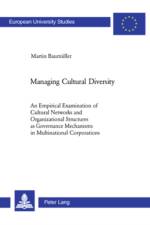
The effects of globalization require that multinational corporations (MNCs) coordinate their differentiated but interdependent organizational parts and align them to a common purpose. This book examines the mechanisms that such organizations use to govern their global subsidiary networks. The book starts with a review of key concepts and theories of multinational organizations and explains the rationale for their existence. Based on this assessment and an empirical study of three globally operating entities, the author develops a framework for examining the cultural and structural governance mechanisms that multinational corporations may employ to coordinate their global operations. This framework identifies different configurations of cultural and structural governance mechanisms and explains what kind of configuration a multinational organization should employ to ensure efficient governance.
Abonner på vårt nyhetsbrev og få rabatter og inspirasjon til din neste leseopplevelse.
Ved å abonnere godtar du vår personvernerklæring.