


Gjør som tusenvis av andre bokelskere
Abonner på vårt nyhetsbrev og få rabatter og inspirasjon til din neste leseopplevelse.
Ved å abonnere godtar du vår personvernerklæring.Du kan når som helst melde deg av våre nyhetsbrev.

The globalisation of culture and the shifting nature of national identities have propelled the stakes of memory and identity to the forefront of current intellectual debates. In recent years, the works of the Algerian francophone author Assia Djebar have reflected a growing preoccupation with the role of memory in forging a sense of individual as well as collective identity. This study traces the interrelated motifs of memory and identity in Djebar¿s novels, arguing the centrality of these themes to her literary project. An interdisciplinary theoretical framework positions Djebar¿s corpus in the wider context of philosophical and psychoanalytical debates on memory and identity. Djebar reveals that much more is at stake in discussions of the interrelationship between memory and identity than concerns of a mere cultural nature. In postcolonial Algeria, repressed memories of Algeriäs colonial past are revealed as instrumental to the genealogy of the current Algerian conflict; in this context, Djebar¿s poetics of memory become a ¿devoir de mémoire¿, an appeal for a revised Algerian historiography in which the individual takes pride of place.
Why is it that Italian children's fantasy has remained such a well-kept secret? How 'international' is the term 'fantasy', and to what extent has its development been influenced by local as well as global factors? This book charts the history and evolution of Italian children's fantasy, from its first appearance in the 1870s to the present day.
This book is the first ever full-length study of the reception of British cinema in post-war France, challenging François Truffaut¿s infamous dismissal of British cinema as ¿a contradiction in terms¿, a comment which has been, and still is, widely reproduced, yet has until now remained critically unexplored. A historical account, the book gathers together well-known episodes (such as Cahiers du cinéma in the 1950s) and critics (André Bazin, François Truffaut, Jean-Luc Godard), along with original new material, and thus throws new light on a topic which, given the influential nature of French film criticism and cinephilia, continues to be at the core of film culture.
Constitutes collection of essays arises from the 2005 Cambridge French Graduate Conference on the theme of threat.
This book demonstrates a number of approaches made by biblical scholars to find a theology of the Christian Scripture. It then considers attempts to bridge the gap between exegesis and dogmatics by appeal to the discipline of ¿fundamental theology¿ and the doctrine of Revelation. It finds that, for all the interesting questions raised, one is forced back to the Bible from where one must form the themes and concepts which have been developed by theologians through the ages, and which with help from biblical historical critics can be made to refresh theology and serve the Church. This is done by examining the role of ¿faith¿ in the two testaments and by considering how the Bible¿s understanding of that which receives revelation is itself useful for the total enterprise of theology.
No century in modern European history has built monuments with more enthusiasm than the 19th. Of the hundreds of monuments erected, those which sprang from a nation-wide initiative and addressed themselves to a nation, rather than part of a nation, we may call national monuments. Nelson¿s Column in London or the Arc de Triomphe in Paris are obvious examples. In Germany the 19th century witnessed a veritable flood of monuments, many of which rank as national monuments. These reflected and contributed to a developing sense of national identity and the search for national unity; they also document an unsuccessful effort to create a «genuinely German» style. They constitute a historical record, quite apart from aesthetic appeal or ideological message. As this historical record is examined, German national monuments of the 19th century are described and interpreted against the background of the nationalism which gave birth to them.
Lydia Ginzburg (1902-1990) acted as a chronicler of the Soviet intelligentsia, and a philosopher-cum-ethnographer of the Leningrad Blockade. This collection of essays sheds new light on Ginzburg's contributions to Russian literature and literary studies, life-writing, subjectivity, ethics, the history of the novel and trauma studies.
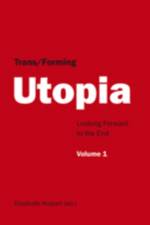
Is the utopian project dead? Is it possible to imagine a utopian society or a utopian world in the aftermath of the collapse of ideologies? This book contains eighteen essays which are the result of the 7th International Conference of Utopian Studies held in Spain in 2006, either debating the subject, or suggesting alternative readings to some of the theoretical ideas raised within utopian studies. This volume focuses on the importance of narratives in utopian literature. They define the world we live in and the world we wish to live in. Through narratives of confession, and indeed through silence itself, the unconscious emerges and desire is articulated. The articles in this volume question and challenge the power of the word, the stability of meaning, and the relationship between thought and action in the construction of utopia and dystopia. They also point to the various literary frameworks of utopian and dystopian narratives, thus connecting stories from the past, present and future of both real and imaginary and communities.
Is the utopian project dead? Is it possible to imagine a utopian society or a utopian world in the aftermath of the collapse of ideologies? This book contains fifteen essays which are the result of the 7th International Conference of Utopian Studies held in Spain in 2006, either debating the subject, or suggesting alternative readings to some of the theoretical ideas raised within utopian studies. The title of the volume suggests that the idea or dream of utopia is indeed very important, but that the framework and boundaries of the concept are fast changing. The contributors to this first volume of essays write from different countries and represent different standpoints. Their discussions focus on the analysis of films, political theories, utopian projects of the past and present, and an insight into the dialectics of global movements.
The author links Chaucer¿s writings with the medieval optical tradition in its various forms (scholastic texts, encyclopedias, exempla, vernacular poetry) both in general cultural terms and through the discussion of specific examples. He shows how the science of optics, or perspectiva, provides an account of spatial perception, including visual error, and demonstrates how these aspects of optical theory impact on Chaucer¿s poetry. He provides detailed and sustained analysis of the spatial content of narratives across the range of Chaucer¿s works, relating them to optical ideas and making use of Lefebvre¿s theory of the production of space. The texts discussed include the Book of the Duchess, House of Fame, Knight¿s Tale, Miller¿s Tale, Reeve¿s Tale, Merchant¿s Tale, Squire¿s Tale and Troilus and Criseyde.
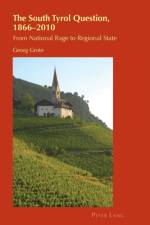
South Tyrol is a small, mountainous area located in the central Alps. This book provides a fresh analysis of this dynamic and turbulent period of South Tyrolean and European history. It also provides insights into the political and cultural evolution of the understanding of the region and the definition of its role within the European framework.
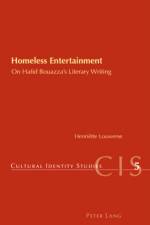
Häd Bouazza is a highly in¿uential and celebrated author in the Netherlands today. In the context of contemporary Dutch literature, Bouazzäs Moroccan background still marks a divergence from the born-and-bred Dutch norm. Authors with a bi- or multicultural background are still often cast in the role of ¿exotic outsider¿. Bouazza both challenges and uses this position to the full. His writing demonstrates that the perceived us-them or self-other positions are questionable ideological constructs. He undermines the concept of a uni¿ed culture and the wholeness of the self. He explores and exploits stereotypical beliefs held on both sides of the East¿West divide. The result is a magical realist setting that both puzzles and enchants. This book offers a reading of Bouazzäs literary prose that responds to the interpretative opportunities offered by an author who skilfully and creatively explores his peculiar freedom in his Homeless Entertainment.
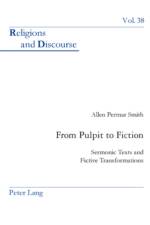
This book examines the authority and power of a «sermonic text» through its ¿ctive qualities. The author argues that a sermonic text functions in the manner of a work of ¿ction and creates an event and space that forces a decision upon the reader. The text creates a place where the Kingdom of God is about to happen and is happening. Consequently, the reader is forced to make a decision. Will he or she «go and do likewise», or reject the Kingdom of God? In this way, a sermonic text acts like a work of ¿ction and invites a reader into its space and event. If the reader of the sermonic text chooses temporally to enter the event of the text, the reader has the potential to participate in its dynamics and is forced to make a decision either to believe or not believe. Like a work of ¿ction, it does not require those external guarantees of authority that are found in the community of faith: its doctrines, creeds and ecclesiology. Rather, the authority of the sermonic text is intrinsic as in a work of fiction and stands on its own. The discussion is interdisciplinary, drawing upon literary theory, cultural theory and theology.
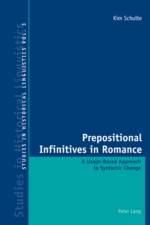
This book examines the present-day distribution and diachronic evolution of a set of infinitival structures in Spanish, Portuguese and Romanian, making use of extensive corpus data and investigating how pragmatic factors and usage patterns interact with syntax. After a contrastive account of the patterns of clausal subordination in Latin and Romance, the rise of prepositional infinitives is traced through the documented history of the three languages, revealing astonishing parallels in their development. The analysis of the data shows how cognitive principles such as reanalysis and entrenchment combine with parameters such as relevance and usage frequency to cause syntactic change. Beyond providing a genuine explanation for the observed processes in the Romance languages, this study offers new evidence for the existence of language-independent, cross-linguistically applicable principles and mechanisms in language change.
This collection of essays looks at the most recent work of Juan Goytisolo from a variety of perspectives and critical stances. The contributors, all specialists in the work of the Spanish author, employ theories of intertextuality, postmodernist irony, queer ethics and even the esoteric science of Huru¿sm to uncover the complexities of Goytisolös creative practice, in particular his radical blurring of the generic boundaries between fiction, autobiography and literary criticism. Such challenging of genre conventions is seen as both integral to the author¿s own questioning of his identity as an expression of his radical dissidence and essential to the response his work evokes in the reader. Life and writing, autobiography and ¿ction, constitute the interconnecting poles of Goytisolös artistic universe. The essays included in this volume explore the varying patterns of con¿uence of these twin strands in the writer¿s later work as a whole, but particularly in novels such as Las semanas del jardín (1997) and Carajicomedia (2000). The essays are set in context by a contribution from Juan Goytisolo himself in which he sums up his philosophy of life and writing as a pursuit of ¿non-prötable knowledge¿.
What does an Australian look like? Many Australians assume that there is such a thing as an ¿ethnic¿ face, and that it indicates recent arrival or refugee status. This volume contains nine life narratives by Australians who reflect on the experience of being categorised on the basis of their facial appearance. The problem of who is ¿us¿ and who is ¿them¿ is at the heart of some of the most important challenges facing the contemporary world. Assuming that facial appearance and identity are inextricably linked makes this challenge even harder. The introduction by the editor provides the theoretical framework to these narratives. It discusses the relevance to notions of belonging and identity of the term ¿mixed race¿, and concludes that we are all mixed race, whether we look white, black or ¿ethnic¿.
This empirical study examines the learning problem of the argument structure of psych predicates such as «The dog frightens John» and the related V-ing adjectives such as «The dog is frightening to John». The problem is theoretically interesting because of the marked nature of the thematic role mapping of these sentences in relation to the principle of the Uniformity of Theta Assignment Hypothesis (UTAH). The problem is highly relevant to our understanding of second language acquisition, as this is known to be a prevalent difficulty among language learners. The author has framed the learning problem within a coherent parametric framework drawing on a sophisticated critical review of the syntax/semantics literature and theories of L2 development. The author has specifically developed a theory, the «Semantic Salience Hierarchy Model» (SSHM), to explain the learning process. The significance of the model is not confined only to this particular study, as the issues related to the L2 acquisition of other causative verbs can also be examined within this model. The findings of this study also bear implications to TESOL.
Abonner på vårt nyhetsbrev og få rabatter og inspirasjon til din neste leseopplevelse.
Ved å abonnere godtar du vår personvernerklæring.