





Gjør som tusenvis av andre bokelskere
Abonner på vårt nyhetsbrev og få rabatter og inspirasjon til din neste leseopplevelse.
Ved å abonnere godtar du vår personvernerklæring.Du kan når som helst melde deg av våre nyhetsbrev.

The papers in this volume are devoted to new in-depth treatments of distinctive aspects of Chinese and Japanese syntax, semantics and pragmatics, informed by influential theoretical concepts of the day, including cognitive grammar, construction grammar, information structure, grammaticalization and linguistic typology.
This book argues that unreasonable dogmatic beliefs are expressions of socially structured patterns of prejudice. Specifically, prejudice is explained as being produced and dispersed within the confines of the political structures governing the manner in which material human needs are created and met. Classifying various dimensions of prejudice (philosophical, epistemological, psychological, sociological, political, and cultural), the book conceptualises the relation between dogmatic thinking and these facets of human existence. Criticising and comparing a wide range of theories and factual data relating to the growth and expression of prejudice, the book is a theoretical discussion of problems surrounding the production of cultural norms, the psychological effects of filial systems and relations between the sexes, the constitution of modern capitalist society, and elementary principles of political democracy. Drawing on feminism, whiteness studies, Marxist theories of racism and imperialism, psychoanalysis, critical theory, and cultural studies, the author examines the constraints placed upon individuals¿, groups¿, and nations¿ propensity for scientific and rational thinking.
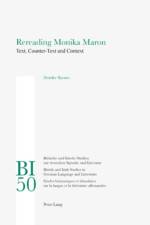
Provides a comprehensive analysis of the writing of Monika Maron. Situating its reflections on her work against the backdrop of a changing critical landscape, this analysis takes account of the re-contextualisation of her writing necessitated by the collapse of the GDR.
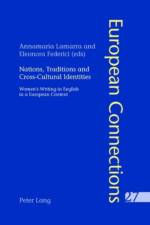
The notion of citizenship is part of national collective memory and a memory of individuals belonging to a specific historical and cultural context. This book seeks to investigate the importance of women's relationship with citizenship and nationality from a diachronic perspective analysing different forms of writing in various European contexts.
This book is a comprehensive study of the work of the American author Norman Mailer, charting his response to critical events in his country¿s development since 1945. Focusing on Mailer¿s descriptions of World War II, 1960s counter-culture, the Vietnam War, the Apollo 11 mission and the execution of Gary Gilmore in Utah in 1977, the book analyses the native vernaculars in ten of his most critically acclaimed works. Moving beyond politically orientated scholarship, the author outlines Mailer¿s New York, American GI, Mid-West and Southern styles, contextualising his prose against earlier American authors, including Henry Adams, Ernest Hemingway and John Dos Passos, and positioning his writing alongside contemporary notables such as Joan Didion, William Burroughs and Truman Capote. Incorporating over forty years of scholarship in the form of articles, reviews and interviews, this book pinpoints the American attributes in Mailer¿s writing with a view to identifying trends in post-war American literary movements, the Beat Generation, New Journalism and Pop Art among others.
In this study of emotions and moods the author discusses both analytic and continental traditions of philosophy. He starts by examining critically the influential hybrid cognitive theory (in particular William Lyons¿s causal-evaluative theory), describing its merits but also elucidating a number of fundamental defects that exist in this account. He goes on to detail Martin Heidegger¿s description of mood in Being and Time as pre-cognitive and pre-moral, defending it from those who attempt to attribute a cognitive dimension to it. The book highlights the significance of connections or bonds in our affective lives, at the ontic as well as ontological levels, by examining three specific emotions; grief, guilt and objectless fear. One of the study¿s principal achievements is the demonstration that there is much to be gained from both the analytic and continental traditions of philosophy in furthering our understanding of emotion and mood analysis. In particular, it shows how our understanding of guilt and objectless fear can be deepened when assessed in Heideggerian terms.
Defined by a Hollow
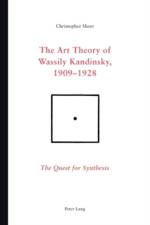
Drawing on the diverse literature that has been written on Kandinsky's art and theory, the author demonstrates that while many different perspectives on his work have been identified, none holds the 'key' to that work.
This book spans the most significant phases of Ford¿s literary production, from his art criticism to his main modernist novels: The Good Soldier, Parade¿s End, The Rash Act and Henry for Hugh. The aim is to explore the uncharted territory of Ford¿s interest in the scopic field, claiming that his investigation of the optical unconscious is his most original contribution to the modernist concern for the stream of consciousness. This is the first in-depth study of Ford¿s interest in the gaze and how it is related to writing, painting, music, sculpture, visual technologies and forms of popular entertainment. Undermining the clichéd critical vision of Ford as the last Pre-Raphaelite or proto-Futurist, this study analyses Ford¿s fascination with the visual avant-garde and his response to the revolution of photography and (proto-) cinematographic forms from the specific angle of the scopic drive. Part history, part theoretical discussion embedded in the close reading of the texts, this book is also concerned with Ford as a great stylist whose writing strives to project an image of itself and its structures in the reader¿s eye. Drawing inspiration from psychoanalysis and art criticism, the author capitalises on the theories of Jacques Lacan, Rosalind Krauss, Hal Foster, Jonathan Crary, and Norman Bryson to disclose the fascinating and baffling universe of Ford¿s gaze. This is a revised and extended English translation of the original book Ford Madox Ford: Visione/visualità e scrittura.
Born into a German-French bilingual environment, the once renowned German-language author Rene Schickele (1883-1940) grew up in the Alsace region - today located in eastern France - during its annexation to the German Empire when links to French culture were frowned upon. This book deals with this issue.
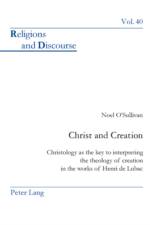
This is a book for anyone seeking a way out of deadlock in Church conflict situations. In employing a contemplative approach to the conflict in the Anglican Communion, it shows how relationships can be rebuilt with affection leading to trust. The author argues for reconciliation which comes with a renewed awareness of the dynamic activity of the Holy Spirit in the Church¿s life of communion. The present conflict has blocked this activity, stifling the Church¿s intellectual life by reducing it to a matter of issue-driven politics which have seriously undermined its relationships. The book offers the Anglican Communion the possibility of renewing its life together in a deeper and more apophatic encounter with God in which the certainties which divide it are set aside while the Church rediscovers the genuine bonds of affection which, until now, have held it together. This, it argues, is the work which needs to be undertaken before a Covenant is put in place if the Anglican Communion is to continue to reveal the Gospel in ways which are meaningful for a constantly changing and fragmented world.
Few full-length studies exist in English on French-speaking authors from Belgium. What, if any, are the particular features of francophone Belgian writing? This book explores questions of cultural and literary identity, and offers an overview of currents in critical debate regarding the place of francophone Belgian writing and its relationship to its larger neighbour, but also engages with broader questions concerning the classification of ¿francophone¿ literature. The study brings together well-known and less well-known modern and contemporary writers (Suzanne Lilar, Neel Doff, Dominique Rolin, Jacqueline Harpman, Françoise Mallet-Joris, Jean Muno, Nicole Malinconi, and Amélie Nothomb) whose works share a number of recurring themes and features, notably a preoccupation with questions of identity and alterity. Overall, the study highlights the diverse ways in which these questions of cultural identity and alterity emerge as a dominant theme throughout the corpus, viewed through a series of literary and cultural frameworks which bring together perspectives both local and global.
The Roman Catholic Church has always been concerned with the quality of the music used in the liturgy. This volume includes essays that traces the church's efforts, during the nineteenth century and the first half of the twentieth, to cultivate a more appropriate liturgical music for its Latin Rite.
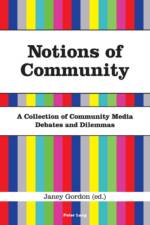
This volume gets beyond simple descriptions of the values and processes involved in community media and is deliberately seeking argument and structured debate around the issues of this vibrant sector of the media. The contributors examine the dilemmas that have emerged within this sector and provide an incisive overview. The chapters use case studies and data research to illustrate the major debates facing community media, along with a sideways look at the dilemmas that community media practitioners and their audiences must engage with. This collection provides an international perspective and covers the traditional formats as well as newer media technologies. It also gives some intriguing examples of community media, which get beyond simple good practices.
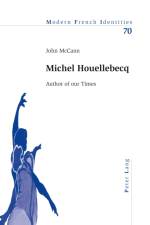
Shows a world of violence and tension, a world where people find it hard to be at ease, so that life becomes a process of disease. This book foregrounds Houellebecq's scrutiny of our various attempts to confront and transcend the fundamental reality of the human condition, in particular the horror of death.
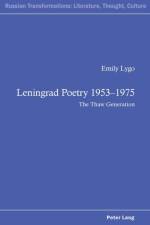
Brings together memoirs, interviews, and archival research to construct an account of the world of poetry in Leningrad, in which famous figures began writing. This title describes the institutions, official events, and informal activities that were attended by young poets, including the pre-eminent poet of this generation, Iosif Brodsky.
Abonner på vårt nyhetsbrev og få rabatter og inspirasjon til din neste leseopplevelse.
Ved å abonnere godtar du vår personvernerklæring.