





Gjør som tusenvis av andre bokelskere
Abonner på vårt nyhetsbrev og få rabatter og inspirasjon til din neste leseopplevelse.
Ved å abonnere godtar du vår personvernerklæring.Du kan når som helst melde deg av våre nyhetsbrev.

Enlightened Reactions
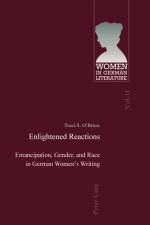
Offers nine essays that deal with major achievements that ranges from the well known, such as Brussig's Helden wie wir, an extravagant treatment of life under the Stasi and the fall of the Berlin Wall, to the recondite, such as Hubert Fichte's Detlevs Imitationen Gruenspan, important products of the abolition of the discrimination against gays.
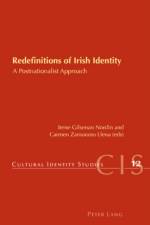
Analyses the concepts of the postnational and the postnationalist in relation to globalisation, as well as the debate that postnationalist discourse has opened in various fields of knowledge, and its definitions and implications in the contemporary Irish historical and literary context.
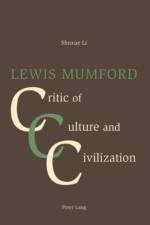
Lewis Mumford¿s achievements as an architectural critic, literary critic and urbanist are well known. However, his contribution to the American studies movement and to cultural studies in general has almost been forgotten in recent years. By situating Mumford¿s work in its contemporary intellectual context and by considering some of its legacies for the study of ¿culture and civilization¿ ¿ especially in the nascent field of American studies ¿ this book considers Mumford as an ¿author¿, drawing out some of the expressive, political and methodological significance of this term. In an attempt to counter frequent arguments that Mumford¿s works are inconsistent, repetitive and derivative, the author argues that, taken as a whole, they demonstrate a consistent inter-disciplinary or trans-disciplinary critical project, and that Mumford¿s thought is comparable with that of Marx and Weber. The book traces this critical project through Mumford¿s works from the early twentieth century and also through his formal process of writing. The author aims to show that Mumford¿s project was neither provincial nor reactionary, as some have argued, but was instead a dynamic juxtaposition of past and present that enabled him to imagine a future where humans might fulfil their potential in a more perfectly republican, even utopian, urban space.
These new essays examine the anthology in Portugal, exploring issues of reception, translation and canonicity. The book includes the role of the anthology in international literary exchange, the relationship between the literary canon and literature at the margins, and the importance of cover art in conditioning reader expectations.
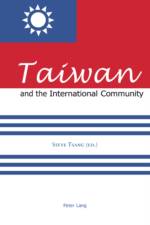
This book unravels Taiwan¿s anomalous place in the international community. While it is for all intents and purposes treated as a sovereign state by most members of the international community, it is recognized by only twenty-three of them. The book explains how Taiwan¿s handling of its foreign relations is affected by the yearning of its people to express their own sense of national identity and to see Taiwan being accepted by the international community as a normal state. The book further examines how Taiwan¿s diplomatic isolation has caused it to focus on developing soft power based on its democratic credentials and economic vibrancy, and how its government under President Chen Shui-bian nevertheless failed to project soft power effectively. In addition to surveying Taiwan¿s relations with the international community, the book examines Taiwan¿s relations with the United States, Japan, the European Union, South East Asia, and its remaining twenty-three diplomatic allies, and discusses how Taiwan can manage its foreign policy more effectively.
Translations of Cervantes' "Don Quijote" (1605) take pride of place among foreign literature in China. In this book, a corpus-based stylistic study is used to explore two contemporary Mandarin Chinese translations of "Don Quijote": those by Yang Jiang (1978) and Liu Jingsheng (1995).
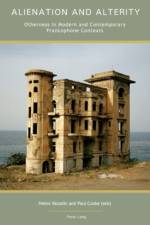
Discussions of French ¿identity¿ have frequently emphasised the importance of a highly centralised Republican model inherited from the Revolution. In reality, however, France also has a rich heritage of diversity that has often found expression in contingent sub-cultures marked by marginalisation and otherness ¿ whether social, religious, gendered, sexual, linguistic or ethnic. This range of sub-cultures and variety of ways of thinking the ¿other¿ underlines the fact that ¿norms¿ can only exist by the concomitant existence of difference(s). The essays in this collection, which derive from the conference ¿Alienation and Alterity: Otherness in Modern and Contemporary Francophone Contexts¿, held at the University of Exeter in September 2007, explore various aspects of this diversity in French and Francophone literature, culture, and cinema from the nineteenth to the twenty-first century. The contributions demonstrate that while alienation (from a cultural ¿norm¿ and also from oneself) can certainly be painful and problematic, it is also a privileged position which allows the ¿étranger¿ to consider the world and his/her relationship to it in an ¿other¿ way.
Includes topics that covered are: the reconstruction of the adventurous rescue of the manuscripts from Vienna in 1938 and a description of their current locations; an overview of the author's life, in its historical context, on the basis of such private documents as his diaries and letters.
This book is the outcome of collaboration between medical and theological writers from within the Christian tradition. Its aim is to explore ways in which medicine and theology can be complementary and to counter the frequent examples of the two disciplines being in disagreement. The subjects chosen for discussion are selective and are grouped under three headings: Theological Background, Moral Boundaries, and Regulation and Policy. This enables the discussion to proceed from theology to specifics in medicine with a concluding emphasis on the practicalities of regulation and policy. The book can, therefore, be read as an essay in applied ethics. It seeks to discover how cherished theological beliefs can work themselves out in relation to some of the specific questions raised by modern medical technologies. The argument throughout shows why theology has to listen carefully to medicine and how theology can then be of practical benefit, in enabling medicine to exercise its social responsibilities.
Contrasts the portrayal of kings and kingship in the drama of William Shakespeare and Spanish playwright Pedro Calderon de la Barca, concentrating on the ways in which both dramatists use the individual complexities of their kingly characters to address the intellectual and moral dilemmas of the ideological backgrounds that helped to create them.
This book aims to revise the traditional interpretation of William Golding's fiction. The author investigates Golding's complicated metaphors which fluctuate so widely as to make consistent readings almost impossible. The study reveals that these fluctuating metaphors are created around a void, which is depicted not only as a gap but also as an impenetrable dark spot, or a counter-gaze. The characters in Golding's fiction endeavour to symbolise the void, but it ultimately resists symbolisation. Mainly from the perspective of semiotics, psychoanalysis, and philosophy, the book looks at the way in which the elements excluded from the symbolic system react against it and leave this void. The author then focuses on the void's significance in the creation of unique metaphors.
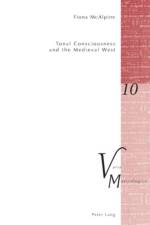
Tonal consciousness, in the sense of a clear intuition about which note or chord a piece of music will finish on, is as much a part of our everyday experience of music as it is of contemporary music theory. This book asks to what extent such tonal consciousness might have operated in the minds of musicians of the Middle Ages, given the different tone world found in the modes of Gregorian chant, in troubadour and trouvère music, in Minnesang and in the early polyphony based upon chant. The author¿s approach is analytical, focusing on modality and balancing up-to-date concepts and methods of music analysis with those insights into their own compositional needs and processes that the people of the Middle Ages provided themselves through their writings about music. The book examines a range of both music sources and theoretical sources from the ninth to the thirteenth centuries. This is a ground-breaking contribution both to the study of medieval music and to music analysis.
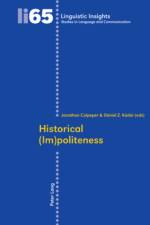
Provides insights into historical aspects of language, particularly items regularly deployed for politeness functions, and the social, particularly interpersonal, contexts with which it interacts. This title also sheds light on how meanings are dynamically constructed in situ, and probes various theoretical aspects of politeness.
Abonner på vårt nyhetsbrev og få rabatter og inspirasjon til din neste leseopplevelse.
Ved å abonnere godtar du vår personvernerklæring.