
Gjør som tusenvis av andre bokelskere
Abonner på vårt nyhetsbrev og få rabatter og inspirasjon til din neste leseopplevelse.
Ved å abonnere godtar du vår personvernerklæring.Du kan når som helst melde deg av våre nyhetsbrev.

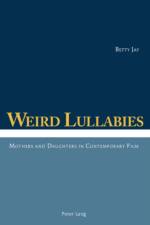
This book focuses on the mother-daughter relationship as it features in a number of films from the 1990s onwards. Bringing the insights of psychoanalysis and feminism to bear on a diverse and compelling range of representations of the mother-daughter dynamic, the author addresses a range of questions relating to the social, historical and cultural conditions which go to inform the female experience. These include, in relation to Dolores Claiborne, Heavenly Creatures and The Others, an exploration of different forms of familial violence and resistance to it and in One True Thing, Stepmom and Pieces of April, questions about the construction of the ideal mother and her loss. From The Pianös engagement with French feminism and Losing Chase¿s reworking of the life and work of Virginia Woolf to the depiction of cross-racial relationships during apartheid in Friends, the films that go to make up this study all share a central concern with both the literal and symbolic forms that the mother-daughter relationship encompasses.
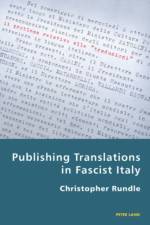
Shows how translations appeared to challenge official claims about the birth of a Fascist culture and cast Italy in a receptive role that did not tally with Fascist notions of a dominant culture extending its influence abroad. This book examines the aggressive campaign that was conducted against the Italian Publishers Federation.
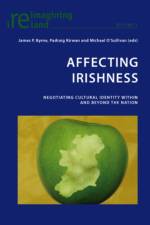
This collection of new essays addresses a key debate in Irish studies. While it is important that new research endeavours to accommodate the new and powerful manifestations of Irishness that are evident today in our globalised economy, these considerations are often overlooked. The writers in this book seek to reconcile the established critical perspectives of Irish studies with a forward-looking critical momentum that incorporates the realities of globalisation and economic migration. The book initiates this vital discussion by bringing together a series of provocative and thoughtful essays, from both renowned and rising international scholars, on the vicissitudes of cultural identity in a post-modern, post-colonial and post-national Ireland. By including work by leading scholars in the fields of film studies, migration and Diaspora studies, travel literature and gender studies, this collection offers a thorough twenty-first-century interrogation of Irishness and provides a timely fusion of international perspectives on Irish cultural identity.
This book addresses the influence of the imperial cult in first-century AD Asia Minor and its subsequent relevance to the reading of the New Testament. In particular, this work argues, through a contrapuntal reading of 1 Timothy 2:1-7, that the early Christian community strongly resisted the Emperor¿s claim to be the «mediator» between the gods and humanity. In contrast to this claim, the author shows that 1 Timothy 2:1-7 can be read as a polemic from a minority community, the Christian church in Ephesus, against the powerful voice of the Roman Empire in regard to divine mediation.
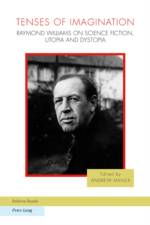
Raymond Williams was an enormously influential figure in late twentieth-century intellectual life as a novelist, playwright and critic, British Sartre, as "The Times" put it. This volume brings together a complete collection of Williams' critical essays on science fiction and futurology, utopia, and dystopia, in literature, film, and politics.
This book examines the role of Samuel Beckett in contemporary philosophical aesthetics, primarily through analysis of both his own essays and the various interpretations that philosophers (especially Adorno, Blanchot, Deleuze, and Badiou) have given to his works. The study centres around the fundamental question of the relationship between art and truth, where art, as a negative truth, comes to its complete exhaustion (as Deleuze terms it) by means of a series of ¿endgames¿ that progressively involve philosophy, writing, language and every individual and minimal form of expression. The major thesis of the book is that, at the heart of Beckett¿s philosophical project, this ¿aesthetics of truth¿ turns out to be nothing other than the real subject itself, within a contradictory and tragic relationship that ties the Self/Voice to the Object/Body. Yet a number of questions remain open. ¿What¿ or ¿whö lies behind this process? What is left of the endgame of art and subjectivity? Finally, what sustains and renders possible Beckett¿s paradoxical axiom of the ¿impossibility to express¿ alongside the ¿obligation to express¿? By means of a thorough overview of the most recent criticism of Beckett, this book will try to answer these questions.
Fascist and colonial legacies have been determinant in shaping how Italian colonialism has been narrated in Italy till the late 1960s. This book deals with the complex problem of public memory and discursive amnesia. It shows that colonial discourse persisted in historiography, newspapers, newsreels and film.
This volume brings together the latest work in Russian labour history, based on exciting materials from previously closed archives and collections. Sixteen essays, focusing on peasants and workers, explore the lives and struggles of working people. Ranging over a century of dramatic upheaval, from the late 1800s to the present, the essays are organized around three broad themes: workers¿ politics, incentives and coercion within industrial and rural workplaces, and household strategies. The volume explores the relationship between the peasantry and the working class, a nexus that has been central to state policy, oppositional politics, economic development, and household configuration. It profiles a working class rent by divisions and defined not only by its relationship to the workplace or the state, but also by its household strategies for daily survival. The essays explore many topics accessible for the first time, including the motivations of women workers, roots of revolutionary activism, the revolutionary movement outside the great cities, socialist opposition to the Soviet regime, reactions of workers to Stalinist terror, socialist tourism, peasant families in forced exile, and work discipline on the collective farms.
This book reconstructs the legacy of Korean minjung theology by reformulating its essential ideas in a dialogue with process thought. In a minimal sense, this study is a theological reinterpretation of the doctrine of the minjung messiah, an idea which historically suffered from a misunderstanding that minjung theology created a ¿messianic confusion¿ while replacing christology and soteriology by a radical anthropology. This erroneous conception occurred when the idea was placed within the philosophically dualistic framework of traditional doctrines in which the work of minjung is totally separated from the work of Christ. In order to avoid such a dualistic understanding, the author critically adopts process panentheism and makes minjung ideas more communicable and more comprehensive in current theological, religious, and philosophical debates. Beyond defending the idea of the minjung messiah, he also argues for an inclusive minjung hermeneutics that promotes the fundamental insight of minjung theology, in philosophical clarity. Through minjung hermeneutics, minjung theology expands its practical concern and overcomes the theoretical nihilism in postmodern studies.
Has the internet changed the nature of conducting controversies? This question cannot be answered easily as different forms of human interaction in an online environment exist and controversies in an online environment have not been analyzed from a linguistic point of view so far. On the other hand, there are many linguistic analyses of controversies in the Early Modern Period. First, this volume describes the communicative background of two online discussion forums dedicated to the study of historical arms and armor. Then, the volume analyzes the similarities and differences between Early Modern controversies and controversies in online internet discussion forums. Further, this book offers an accurate analysis of the strategies used in online discussion forums, analyzing two controversial threads taken from two online discussion forums and provides insights into the individual tactics and strategies applied in online controversies and highlights the similarities and differences of applied principles, norms, and rules. The book finally comments on stylistic choices used by participants in the controversies.
The full story of modernism is yet to be written. This collection of essays provides an important page in this complex and inconclusive story of fluidities and hybridities by rendering problematical the linear sequence from modernism to postmodernism. This book explores the many facets of modernism in a variety of essays written by an international group of scholars. It deals with and puts in question the western literary tradition in many of its transcontinental and trans-hemispheric encounters. Criticism of ¿high modernism¿ is put in perspective by discussions of German ¿reactionary modernism¿, American ¿social modernism¿ and ¿minor arts¿, mid-twentieth-century ¿Baudelairean modernity¿ and unprecedented expansions of the concepts of modernity and modernism themselves. Engaging in dialogue with the newest geographical, transnational, and global enlargements of the concept of modernism in time and space (from the ¿Middle Passage¿ to emergent cultures of the twenty-first century, from Europe to America, Africa and Asia), the volume covers a wide range of translocal and transtemporal literary, artistic, cultural, and social fields and perspectives.
Abonner på vårt nyhetsbrev og få rabatter og inspirasjon til din neste leseopplevelse.
Ved å abonnere godtar du vår personvernerklæring.