
















Gjør som tusenvis av andre bokelskere
Abonner på vårt nyhetsbrev og få rabatter og inspirasjon til din neste leseopplevelse.
Ved å abonnere godtar du vår personvernerklæring.Du kan når som helst melde deg av våre nyhetsbrev.

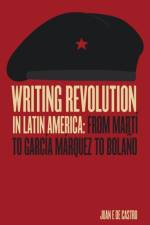
In the politically volatile period from the 1960s through the end of the twentieth century, Latin American authors were in direct dialogue with the violent realities of their time and place. This volume is a chronological study of the way revolution and revolutionary thinking is depicted in the fiction composed from the eye of the storm.
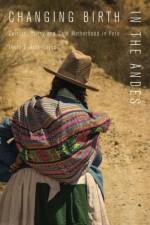
In 1997, when the author began research in Peru, she observed a profound disconnect between the birth care desires of health personnel and those of indigenous women. Midwives and doctors would plead with her as the anthropologist to "educate women about the dangerous inadequacy of their traditions".
Profiles different types of wife killers, and examines the courtship patterns of abusive men. This work shows that wife murders are not ""crimes of passion,"" but culminations of lifelong predisposing factors of the men who murder, and that many elements of their crimes are foretold by their past behavior in intimate relationships.
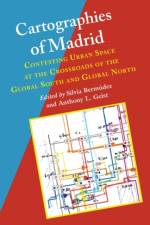
Evaluates the complex ways that Madrid has served as the political, economic, and cultural capital of the Global South from the end of the Franco dictatorship to the present. The book also examines the city as lived experience, where citizens contest capital's push to shape urban space in its own image through activities of the imagination.
Broadens the base of research on Indigenous media in Latin America through thirteen chapters that explore groups such as the Kayapo of Brazil, the Mapuche of Chile, the Kichwa of Ecuador, and the Ayuuk of Mexico, among others, as they engage video, DVDs, photography, television, radio, and the Internet.
A provocative history of criminal procedure, focusing on our perplexing overregulation of searches and seizures and underregulation of confessions and eyewitness accounts
"Ethnographically explores the construction of motherhood in indigenous Mexico. Adds to anthropological literature on reproduction, economic development, and motherhood. Explores how indigenous mothers are viewed and managed by welfare programs as well as how humor becomes a way for the women to cope with their own marginality"--Provided by publisher.
Shows how queer activists are learning from the corporate model to leverage their differences to compete with other non-profit groups, enhance their public reputation or moral standing, and establish their diversity-related expertise.
Provides a comprehensive and reasoned examination of almost the entire topic of abortion, from the medical to the religious and ethical and from the psychological to the legal, in plain language understandable by non-specialists. The first part of this book reviews why women have abortions, as well as the magnitude and consequences.
Illustrates the contribution of ethnographic research methodology in facilitating dialogue between different ways of knowing. As a contemporary perspective on Malinowski's classic accounts of Trobriand sexuality, the book reaffirms the Trobriands' central place in the study of anthropology.
In these hard times of global financial peril and growing social inequality, injuries to dignity are pervasive. "e;Indignity has many faces,"e; one man told Nora Jacobson as she conducted interviews for this book. Its expressions range from rudeness, indifference, and condescension to objectification, discrimination, and exploitation. Yet dignity can also be promoted. Another man described it as "e;common respect,"e; suggesting dignity's ordinariness, and the ways we can create and share it through practices like courtesy, leveling, and contribution.Dignity and Health examines the processes and structures of dignity violation and promotion, traces their consequences for individual and collective health, and uses the model developed to imagine how we might reform our systems of health and social care.With its focus on the dignity experiences of those often excluded from the mainstream--people who are poor, or homeless, or dealing with mental health problems--as well as on vulnerabilities like age or sickness or unemployment that threaten to make us all feel "e;less than,"e; Dignity and Health recognizes dignity as a moral matter embedded in the choices we make every day.
Philip Muehlenbeck assembles an international team of specialists to explore how religion informed the ideological and military clashes across the globe in the second half of the twentieth century.
As Race, Ethnicity, and the Cold War reveals, during the Cold War era there were no 'isolated incidents'. Like the butterfly flapping its wings and changing the weather on the other side of the globe, an instance of racial or ethnic hostility had ripple effects across a Cold War world of brinksmanship between bitter national rivals and ideological opponents.
Sheds new light on a troubling core aspect of medicalization processes, which simultaneously render pregnant women more docile subjects even as they are impelled to actively engage with biomedicalised prenatal care regimes.
Abonner på vårt nyhetsbrev og få rabatter og inspirasjon til din neste leseopplevelse.
Ved å abonnere godtar du vår personvernerklæring.