
















Gjør som tusenvis av andre bokelskere
Abonner på vårt nyhetsbrev og få rabatter og inspirasjon til din neste leseopplevelse.
Ved å abonnere godtar du vår personvernerklæring.Du kan når som helst melde deg av våre nyhetsbrev.

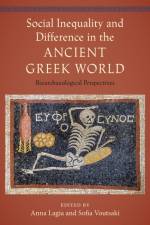
In this volume, bioarchaeologists, osteologists, archaeologists, and paleopathologists examine the ways social inequalities and differences affected health and wellbeing in ancient Greece.
This book illuminates the role of the law in the protection and preservation of urban cemetery spaces, providing a history and analysis of cemetery site protections in the United States and discussing how to prevent future damage and development in these landscapes of grieving and cultural memory.
This book tells the stories of nine southern Methodist women, who, inspired by their faith, advocated for progressive reform by fighting for racial equality, challenging white male supremacy, and addressing class oppression.
This collection examines the important work of Black men and women to shape, expand, and preserve a multiracial American democracy from the mid-twentieth century to the present.
The Wild East explores the social, political, and environmental changes in the Great Smoky Mountains during the nineteenth and twentieth centuries. This revised edition is updated with information about new research and initiatives that are restoring native plants and wildlife populations in the twenty-first century.
Zephaniah Kingsley is best known for his Fort George Island plantation in Duval County, Florida, now a National Park Service site, and for his 1828 pamphlet, A Treatise on the Patriarchal System of Society, that advocated just and human treatment of slaves, liberal emancipation policies, and granting rights to free persons of color. Paradoxically, his fortune came from the purchase, sale, and labor of enslaved Africans.In this penetrating biography, Daniel Schafer vividly chronicles Kingsley's evolving thoughts on race and slavery, exploring his business practices and his private life. Kingsley fathered children by several enslaved women, then freed and lived with them in a unique mixed-race family. One of the women--the only one he acknowledged as his "e;wife"e; though they were never formally married--was Anta Madgigine Ndiaye (Anna Kingsley), a member of the Senegalese royal family, who was captured in a slave raid and purchased by Kingsley in Havana, Cuba.A ship captain, Caribbean merchant, and Atlantic slave trader during the perilous years of international warfare following the French Revolution, Kingsley sought protection under neutral flags, changing allegiance from Britain to the United States, Denmark, and Spain. Later, when the American acquisition of Florida brought rigid race and slavery policies that endangered the freedom of Kingsley's mixed-race family, he responded by moving his "e;wives"e; and children to a settlement in Haiti he established for free persons of color.Kingsley's assertion that color should not be a "e;badge of degradation"e; made him unusual in the early Republic; his unique life is revealed in this fascinating reminder of the deep connections between Europe, the Caribbean, and the young United States.
Decolonizing contemporary jazz dance practice, this book examines the state of jazz dance theory, pedagogy, and choreography in the twenty-first century, recovering and affirming the lifeblood of jazz in Africanist aesthetics and Black American culture.
A newly discovered manuscript believed to be the first known novella written by a woman in Florida In 2015, an unsigned and undated 98-page manuscript was donated to the University of Florida. This work, titled The Storm, is published here for the first time, transcribed and annotated by Keith Huneycutt. Huneycutt presents evidence attributing its authorship to Ellen Brown Anderson, a writer who came to Florida and lived with family members before the Civil War. This book makes widely available what may be the first novella written by a woman in the state.Likely written between 1854 and 1862, The Storm is set in Key West during the hurricane year of 1846. It is narrated by a young bride who tells the story of her first marriage, her struggle to make sense of a loveless and hopeless domestic situation, and the restrictions placed on women in her society. The story also presents a woman's viewpoint on mid-nineteenth-century Key West, including the island's shipwreck salvage industry and the town's get-rich-quick economy, constituting one of the first fictional treatments of the Keys' wrecking business.Huneycutt's introduction compares the text with other examples of women's literature and works by Florida authors from the period. The appendixes include essays on the writings of Anderson and her sister Corrina Brown Aldrich, who may have also played a role in the tale's creation. Huneycutt argues that The Storm is groundbreaking in many ways and that it deserves serious consideration as part of antebellum American literature.
A bilingual edition of poetry that provides a unique window into Cuban émigré life A rare glimpse into the history of the Cuban community in Key West in the early twentieth century, this book makes the poetry of Feliciano Castro available in English for the first time. A Galician Cuban who lived for decades in the southernmost city of the United States, Castro worked as a lector reading to cigar factory employees, a newspaper editor, a printer, and a writer. He published Lágrimas y flores, a collection of his poetry, in 1918. Translated here by Rhi Johnson, Castro's poems provide a window into an overlooked literary culture.Johnson and Joy Castro open this bilingual edition with an introduction detailing the writer's biography, literary context, and cultural milieu. Tears and Flowers highlights questions of national identity, migration, belonging, and courtship in Cuban émigré society, connects Florida to the Spanish-speaking communities of the Caribbean and Spain, and recovers the literary archive of a rich moment in US and Latinx history for a contemporary audience. Publication of this work made possible by a Sustaining the Humanities through the American Rescue Plan grant from the National Endowment for the Humanities.
This book offers the first critical edition of the forty short texts James Joyce called "epiphanies." Presenting the texts with background information and thorough annotations, this edition provides a vivid insight into Joyce's art.
Explaining why the state is more than the "Florida Man" stories and other stereotypes, this book celebrates what makes Florida worth a deeper understanding in a lively trip through the state's natural beauty and fascinating history.
Since its early days as a boomtown on the Florida frontier, Tampa has had a lively history rich with commerce, cuisine, and working-class communities. In From Saloons to Steak Houses, Andrew Huse takes readers on a journey into historic bars, theaters, gambling halls, soup kitchens, clubs, and restaurants, telling the story of Tampa's past through these fascinating social spaces--many of which can't be found in official histories.Beginning with the founding of modern Tampa in 1887 and spanning a century, Huse delves into the culture of the city and traces the struggles that have played out in public spaces. He describes temperance advocates who crusaded against saloons and breweries, cigar workers on strike who depended on soup houses for survival, and civil rights activists who staged sit-ins at lunch counters. These stories are set amid themes such as the emergence of Tampa's criminal underworld, the rise of anti-German fear during World War I, and the heady power of prosperity and tourism in the 1950s.Huse draws from local newspaper stories and firsthand accounts to show what authorities and city residents saw and believed about these establishments and the people who frequented them. This unique take on Tampa history reveals a spirited city at work and play, an important cultural hub that continues to both celebrate and come to terms with its many legacies.
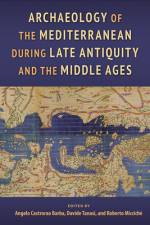
Varied approaches to an overlooked timeperiod in the history and archaeology of the Mediterranean Thisbook presents multidisciplinary perspectives on Greece, Corsica, Malta, andSicily from the fourth to the thirteenth centuries, an often-overlooked time inthe history of the central Mediterranean. The research approaches and areas ofspecialization collected here range from material culture to landscapesettlement patterns, from epigraphy to architecture and architecturaldecoration, and from funerary archaeology to urban fabric and cityscapes. Topicscovered in these chapters include late Roman villas; the formation of Byzantineand Islamic settlements in western Sicily; reuse of protohistoric sites inlate antiquity and the middle ages in eastern Sicily; early Christianlandscapes and settlements in Corsica; the transition from late antiquitythrough Byzantine rule to Muslim conquest in Malta; trade network trajectoriesof the Aegean islands and Crete; and crosscultural interactions in medievalGreece. Together, these essays show the potential of post-Ancient andpost-Classical archaeology, highlighting missing links between the Roman worldand medieval Byzantium and broadening the horizons of new generations ofarchaeologists.Contributors: Carla Aleo Nero Effie F. Athanassopoulos Giuseppe Bazan AmeliaR. Brown Gabriele Castiglia Angelo Castrorao Barba David Cardona SantinoAlessandro Cugno Michael J. Decker Franco Dell'Aquila Scott Gallimore MattKing Rosa Lanteri Pasquale Marino Roberto Miccichè Philippe Pergola FilippoPisciotta Natalia Poulou Grant Schrama Claudia Speciale Davide Tanasi
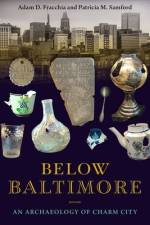
The first synthesis of the archaeologicalheritage of Baltimore Below Baltimore provides the first detailed overview of the rich archaeologicalheritage of the people and city of Baltimore. Drawing on a combined fivedecades of experience in the Chesapeake region and compiling 70 years of publishedand unpublished records, Adam Fracchia and Patricia Samford explore the layersof the city's material record from the late seventeenth century to the recent past. Fracchiaand Samford focus on major themes and movements such as Baltimore's growth intoa mercantile port city, the city's diverse immigrant populations and thehistory of their foodways, and the ways industries--including railroads, glass factories, sugar refineries, and breweries--structured the city's landscape. Using insightsfrom artifacts and the built environment, they detail individual lives andexperiences within different historical periods and show how the city haschanged over time. Synthesizinga large amount of information that has never before been gathered in one place, Below Baltimore demonstrates howurban archaeology can approach cities as larger collective artifacts of thepast, where excavations can uncover patterns of inequality in urbanization andindustrialization that connect to social and economic processes still at worktoday.
Examining a century of dance criticism in the United States and its influence on aesthetics and inclusionDance criticism has long been integral to dance as an art form, serving as documentation and validation of dance performances, yet few studies have taken a close look at the impact of key critics and approaches to criticism over time. The first book to examine dance criticism in the United States across 100 years, from the late 1920s to the early twenty-first century, Shaping Dance Canons argues that critics in the popular press have influenced how dance has been defined and valued, as well as which artists and dance forms have been taken most seriously. Kate Mattingly likens the effect of dance writing to that of a flashlight, illuminating certain aesthetics at the expense of others. Mattingly shows how criticism can preserve and reproduce criteria for what qualifies as high art through generations of writers and in dance history courses, textbooks, and curricular design. She examines the gatekeeping role of prominent critics such as John Martin and Yvonne Rainer while highlighting the often-overlooked perspectives of writers from minoritized backgrounds and dance traditions. The book also includes an analysis of digital platforms and current dance projects--On the Boards TV, thINKingDANCE, Black Dance Stories, and amara tabor-smith's House/Full of BlackWomen--that challenge systemic exclusions. In doing so, the book calls for ongoing dialogue and action to make dance criticism more equitable and inclusive.
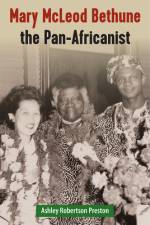
Highlighting Bethune's global activism and her connections throughout the African diaspora This book examines the Pan-Africanism of Mary McLeod Bethune through her work, which internationalized the scope of Black women's organizations to create solidarity among Africans throughout the diaspora. Broadening the familiar view of Bethune as an advocate for racial and gender equality within the United States, Ashley Preston argues that Bethune consistently sought to unify African descendants around the world with her writings, through travel, and as an advisor.Preston shows how Bethune's early involvement with Black women's organizations created personal connections across Cuba, Haiti, India, and Africa and shaped her global vision. Bethune founded and led the National Council of Negro Women, which strengthened coalitions with women across the diaspora to address issues in their local communities. Bethune served as director of the Division of Negro Affairs for the Franklin D. Roosevelt administration and later as associate consultant for the United Nations alongside W.E.B. DuBois and Walter White, using her influence to address diversity in the military, decolonization, suffrage, and imperialism. Mary McLeod Bethune the Pan-Africanist provides a fuller, more accurate understanding of Bethune's work, illustrating the perspective and activism behind Bethune's much-quoted words: "For I am my mother's daughter, and the drums of Africa still beat in my heart." Publication of this work made possible by a Sustaining the Humanities through the American Rescue Plan grant from the National Endowment for the Humanities.
"An exceptional piece of scholarship. Rossano clearly points out that military organizations in general, and a naval air force in particular, are built from the ground up and not the other way around. While we celebrate the exploits of the pilots, Rossano reminds us that there were myriad mechanics, constructors, paymasters, and even some ship drivers who played a vital role in naval aviation during WWI."--Craig C. Felker, U.S. Naval Academy "A fine book that will stand for many years as the definitive study of U.S. naval aviation in Europe. Well-researched and written, the book ranges widely, from the high-level planning in Washington for a naval air war to moving thousands of men and hundreds of aircraft across the ocean to the routine but dangerous training, patrol, and bombing flights that constituted the navy's air mission in World War I."--William F. Trimble, author of Attack from the Sea Stalking the U-Boatis the first and only comprehensive study of U.S. naval aviation operations in Europe during WWI. The navy's experiences in this conflict laid the foundations for the later emergence of aviation as a crucial--sometimes dominant--element of fleet operations, yet those origins have been previously poorly understood and documented.Begun as antisubmarine operations, naval aviation posed enormous logistical, administrative, personnel, and operational problems. How the USN developed this capability--on foreign soil in the midst of desperate conflict--makes a fascinating tale sure to appeal to all military and naval historians.
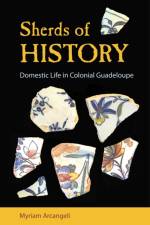
Ceramics serve as one of the best-known artifacts excavated by archaeologists. They are carefully described, classified, and dated, but rarely do scholars consider their many and varied uses. Breaking from this convention, Myriam Arcangeli examines potsherds from four colonial sites in the Antillean island of Guadeloupe to discover what these everyday items tell us about the people who used them. In the process, she reveals a wealth of information about the lives of the elite planters, the middle and lower classes, and enslaved Africans.By analyzing how the people of Guadeloupe used ceramics-whether jugs for transporting and purifying water, pots for cooking, or pearlware for eating-Arcangeli spotlights the larger social history of Creole life. What emerges is a detail rich picture of water consumption habits, changing foodways, and concepts of health. Sherds of History offers a compelling and novel study of the material record and the "e;ceramic culture"e; it represents to broaden our understanding of race, class, and gender in French-colonial societies in the Caribbean and the United States.Arcangeli's innovative interpretation of the material record will challenge the ways archaeologists analyze ceramics.
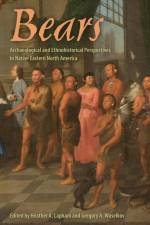
Although scholars have long recognized the mythic status of bears in indigenous North American societies of the past, this is the first volume to synthesize the vast amount of archaeological and historical research on the topic. Bears charts the special relationship between the American black bear and humans in eastern Native American cultures across thousands of years.
Abonner på vårt nyhetsbrev og få rabatter og inspirasjon til din neste leseopplevelse.
Ved å abonnere godtar du vår personvernerklæring.