











Gjør som tusenvis av andre bokelskere
Abonner på vårt nyhetsbrev og få rabatter og inspirasjon til din neste leseopplevelse.
Ved å abonnere godtar du vår personvernerklæring.Du kan når som helst melde deg av våre nyhetsbrev.

Written anonymously around 1460 for the Burgundian court of Philippe le Bon, the Cent nouvelles nouvelles fits loosely within the traditions of Boccaccio and Chaucer, but also reflects, in subtle ways, the tastes, preoccupations, and fascinations of the fifteenth-century audience for whom it was intended. Seven of the most interesting and problematic nouvelles have been selected for this study. All represent some measure of manipulation and/or deceit, involving either an attempt to subvert authority, to reestablish control, or to create a new alliance, and thus all carry a certain political resonance. The intent of the study is to provide an open-ended and open-minded reading for each of the seven nouvelles. The conclusion seeks to identify several of the most prominent unifying patterns.
This book describes actual experiences the author had with students during his extended career as a college administrator. It is intended to illustrate the importance of engaging students personally in campus life to enhance their education.
This book is concerned with certain aspects of liberal analytic intellectual traditions as seen through the eyes of a learner intellectually domiciled in 'the north' but existentially situated in 'the south.' It divides liberal analytic traditions into two: old and modern.
Ever think about turning a hobby into a commercial venture? Or working full time as an independent contractor? Or simply wondering if textbook economic principles are relevant in real life? Through a sequence of short cases, this book shows you how to use the basic tools of economic and financial analysis to answer common business questions.
This book provides a working solution to the challenge of helping hurting people. A theological foundation for a Reconciliation-Focused Counseling (RFC) model is followed by a description of the procedure for facilitating corrective relational experiences in the lives of clients. Accompanying the model are applications of reconciliation-focused interactions in counseling and preaching situations in which ministers are typically engaged.
In narrative style, Plato and the Founding of the Academy illustrates how the dialogue usually known as the Republic (but which Plato called the Polity) is constructed on the basis of simple but technical mathematical and harmonical principles, or numbers.
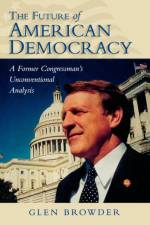
Can the United States ¿ a nation of growing cultural diversity, with increasingly divergent ideals, values, and principles of governance¿ continue its collective pursuit of freedom, equality, and justice within the traditional framework of limited, representative government? Veteran public official and political scientist Glen Browder addresses this question in The Future of American Democracy.
This book, written in the form of a dialogue, is an introduction to several ethical theories and to four major contemporary moral issues: euthanasia, abortion, animal rights, and capital punishment.
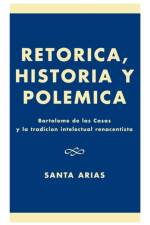
Retorica, historia y polemica is a study of Bartolome de las Casas' writings, within the context of the European Renaissance intellectual tradition. (TEXT IN SPANISH)
Franz Kafka, the Jewish writer from Prague, who wrote in German, grew up after the Emancipation at a time when most Jews in Central and Western Europe suffered from an identity crisis. The most prominent characteristic of the experience of this generation of young people was "hybridism," a kind of partial assimilation that brought them to a dead-end. In Franz Kafka: A Question of Jewish Identity, Sara Loeb examines this complex dialectic, focusing on the question of if, how, and to what extent Kafka's works reflect the identity crisis he suffered. She offers a new perspective of his life through an encounter between the points of view of two well-known critics: Max Brod, Kafka's close friend, and Marthe Rober, a literary critic who translated Kafka's works into French. Each seeks to examine, in a different way, the source of Kafka's link to his Jewishness. Loeb opens a window to Kafka's inner world, and examines the man and his work from a new perspective.
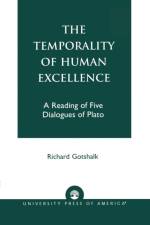
Why does Plato write dialogues? Why more than one? The Temporality of Human Excellence begins with a brief introductory consideration of these questions, and concludes with a suggestion about two things: the intent of his use of this form, and the manner of its concrete realization in a set of two dozen or so dialogues. Taking up each dialogue as a separate drama, the reading seeks to focus attention on how each, by its characters, their interplay and conversation, and the apparent lack of positive issue to the discussion they engage in, contributes to a sketch of human excellence as a complex power developed and grown into as consummation in the maturing, over time, of a human being.
Each day, a new set of programs and technologies is created to help solve the social, economic, and political problems we face in our immediate and global communities. To successfully overcome these problems, it is essential that we comprehend the extent to which the human quality impacts the performance effectiveness of the social institutions, cultural activities, governance structures, economic, and political systems. In Portraits of Human Behavior and Performance, Senyo B-S.K. Adjibolosoo discusses the various portraits of human behavior and their impact on performance effectiveness. Adjibolosoo argues that due to the relationship between human behavior and performance, institutions and programs that fail are human failures.
Disease and Healing in the New Testament is a comprehensive and critical examination of New Testament data relating to disease and healing from scientific and medical perspectives as well as theological perspectives. Particular attention is given to the recorded healings by Jesus in the Gospels and by the Apostles in Acts, relating them to modern medical concepts, particularly diagnostic categories. This book argues that the healings undertaken by Jesus and the Apostles show the consistent and coherent pattern of conditions amenable to 'folk medicine.'
This is the first book that looks at how the U.S. House of Representatives really works, by drawing on the insights and experiences of former members. Chapters address every aspect of life in the House, from running for Congress to the impact on family life.
For those participating in the ever-developing discussion in modern society about the role of traditional morality, The Ethical Navigator is a much-needed guide to the central concepts of ethics. William H. Capitan, through examples taken from pop culture, religious scriptures, and historical documents, provides easily grasped discussions of moral authority. The book demonstrates how today's emphasis on individual freedoms has stripped us of the morality to protect the freedom of society. A highly accessible work, The Ethical Navigator concludes with practical ways to re-invest ethics into daily life.
Ecclesiastical changes resulting from the Second Vatican Council inspired a revised approach to the issue of sharing the Eucharist with those who are not in full communion with the Catholic Church. In Sharing the Eucharist, Myriam Wijlen offers a detailed analysis of the Council's schemata, interventions, and texts in an effort to determine the theological values that inspired subsequent policies on the issue of communion. Wijlen bases her work on the notion that there ought to be an organic relationship between theological insights and the norms that govern the life of the Catholic community. Her rigorous approach allows her to identify areas where there is already organic unity between the insights of Vatican II and Church legislation. In the process, she also reveals several matters where additional work is needed and offers suggestions for the continued implementation of the Council's vision and intent. An unprecedented work that makes a genuine contribution to the ecumenical movement, Sharing the Eucharist has great significance for religious scholars and clergy who are concerned with the unity of Christian churches.Text also includes a foreword by Johannes Cardinal Willebrands, the former President of the Secretariat for Christian Unity of the Vatican.
In this provocative study, Zimmerman examines the creation myths of traditional cultures and compares them to Genesis in terms of symbolic content. While the Old Testament in general has only vague references to life in heaven, the myths discuss the notion of an after-life in a more vivid manner. Zimmerman makes the novel claim that Genesis and the creation myths of hunter-gatherers have a common source in the primeval revelation made by God. In this sense, Genesis owes much of its content to a revelation that has been kept alive by hunter-gatherers. Zimmerman also revisits the debate between fundamental creationists and evolutionists, contending that the Bible does not teach science but sacred doctrine.
This timely volume provides an in-depth analysis of recent events surrounding the conflict between Taiwan and China over Taiwan's sovereignty. After a thoughtful discussion of the origins of the dispute, Copper examines the hallmark 1996 election in Taiwan that brought to power the first direct elected Chinese chief executive in over 5,000 years. He then discusses the ruling Nationalist Party's congress and explores how the party is changing in light of democratization and increasing public concerns about political corruption and crime. Finally, Copper addresses the U.S. role in the conflict and examines why Washington has changed its policy concerning Taiwan in recent years.
This book is a historical-theological treatment of five aspects of the kingdom of God in the Old Testament. It views these aspects under the following rubrics: kingdom politics, pilgrims, presence, profile and progress.
To learn more about Rowman & Littlefield titles please visit us at www.rowmanlittlefield.com.
This book, with over 1500 clinical and psychotherapeutic references, is a thorough, comprehensive, clinically analytic, and multi-theoretical/disciplinary discussion of all aspects of the self-evaluative process in providing casework and counseling services.
Wild Socialism examines the rise, development, and decline of revolutionary councils of industrial workers in Berlin at the end of the First World War. This popular movement spread throughout Germany, and was without precedent in either the theory or practice of the Social Democratic party and allied trade unions.
This book uniquely approaches the history of human psychology by weaving together the psychological elements of ancient Egyptians. The psychological contents of the medieval and contemporary sub-Saharan Africans and the psychological experiences of Diasporan Africans were woven into the annals and systems of human psychology.
Life of Christ bridges the gap between commentaries and devotional accounts of Christ's ministry. Applying the requisite analytical tools, it addresses the question, is His life worth studying?
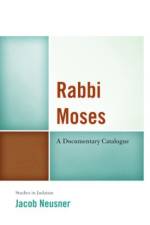
This book is an exercise in the systematic recourse to anachronism as a theological-exegetical mode of apologetics. Jacob Neusner surveys the presentation of the prophets by the rabbis, beginning with Moses.
Time is not normally visible. While we often sense the events in time, we overlook what Marcel Proust calls "time in a pure state." That''s why, in The Force of Time, Keith W. Faulkner shows how Gilles Deleuze extracts his "ontology of the virtual" from Proust''s psychological time. To prove this, he examines the ways these writers say we occupy time without counting it. In the end, he reveals not only how Proust influences Deleuze, but how we sense time as a force as well.
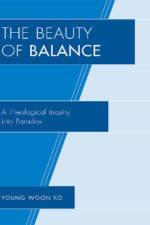
This book examines the significance of balance between the opposites in order to understand God and the world. The author argues that opposites-the subject and object, mind and nature, good and evil, truth and falsehood-are not separated from each other but interdependent in the relational paradigm.
The Pseudo-Science of B.F. Skinner was Professor Tibor Machan's first book. Now, nearly forty years after its initial publication and after three dozen additional books published by Machan, it is available again through University Press of America. This study is still alive with its initial inquiry into the work of B.F. Skinner, and it is just as influential upon young students today as it was forty years ago.Was Skinner a bona fide scientist or an amateur metaphysician? Was Skinner correct to hold that only what can be observed matters when it comes to understanding ourselves? Was he correct that free will is fictional and morality is pre-scientific? Professor Machan's fascinating inquiry into Skinner's radical studies is a salute and a challenge to the corpus of his work.
Abonner på vårt nyhetsbrev og få rabatter og inspirasjon til din neste leseopplevelse.
Ved å abonnere godtar du vår personvernerklæring.