














Gjør som tusenvis av andre bokelskere
Abonner på vårt nyhetsbrev og få rabatter og inspirasjon til din neste leseopplevelse.
Ved å abonnere godtar du vår personvernerklæring.Du kan når som helst melde deg av våre nyhetsbrev.

This work touches upon the origins and central teachings of the Islamic religion and discusses the commonalties and differences between Islam and Christianity. The purpose of this book is to help alleviate the misinformation surrounding Islam and to inspire a dialogue between the two religions.
Quotations on Jewish Sacred Music is a collection of over 700 quotations culled from an array of sources, including rabbinic and theological texts, sociological and anthropological studies, and historical and musicological examinations. The book is divided into five chapters: What Is Jewish Music?; Spirituality and Prayer; Hazzan-Cantor; Cantillation-Biblical Chant; and Nusach ha-Tefillah-Liturgical Chant. Taken as a whole, these quotations demonstrate both the centrality of music in Jewish religious life and the diversity of thought on the subject. They can be used with profit in sermons, speeches, and papers, and may be read in order or selectively. This is a valuable and easy-to-use reference book for scholars, musicians, synagogue staff, and anyone else seeking concise thoughts on major aspects of Jewish sacred music.
To penetrate the United States and Britain's markets with illicit drugs, Jamaican traffickers employed diverse and novel transportation methods and techniques in the post-1990 era that were more sophisticated than the trafficking of the 1980's. This transformation was particularly due to traffickers exploiting global processes to enhance their illegal drug industry. In response, Jamaica, America, and Britain have continuously established state-oriented actions aimed at curtailing the cross-border drug trade, thereby reflecting their resilience in combating this problem. This book explores past and present drug trafficking within the context of globalisation and examines state instituted responses to curb this problem. It demystifies the Jamaican, British, and American states' roles in the face of global security threats, such as drug trafficking, arguing that both developed and developing states pursue their national interests and maximize their goals through the exercise of state-power in controlling their territories and protecting their nationals from harm posed by traffickers.
This book tells the story of the courageous and compassionate Dutch citizens who helped two young Austrian sisters avoid deportation to the death camps where they almost certainly would have perished. Their story serves as a reminder that the best of humanity can still be discovered in the darkest times.
This book describes the current state of the education system in the United States, where schools allocate funding to test preparation and transfer students with poor grades to win the Race to the Top. By the end of the book, readers will ask who is really winning the race.
The Making of an African King examines the source of the kingship struggle in Winneba, Ghana as seen by colonial administrators, and the final court ruling in June 2013 between the patrilineal Otuano Royal Family against the non-royal Acquah faction that favors matrilineal system of succession practiced by the Akan.
Deconstructing Prehumanity is an investigation into the role of archaeological perception in the construction of race. It explores how social knowledge and disciplinary subjectivity have shaped our organization of the human past and how this organization and its lexicon have fueled racialism.
Because the tragedy of the Armenians is not deemed, by consensus, a genocide, many have long sought to connect it to the single event that is most clearly associated with the word genocide-the Holocaust. This book attempts to make this comparison in several distinct ways.
The collective security system has been a problem in developing regions, particularly Africa. Western powers have less interest in sharing responsibility and there seems to be no alternative but that collective security should rely heavily on Africans themselves under the auspices of the newly established African Union (AU).
This book provides an in-depth analysis of global political relations that exist between the most powerful countries of the world such as United States, Russia, England, China and others. It also describes the rationale behind the current and future political alignments amongst different countries.
This fascinating biographical account of Akbar the Great, the third Moghul emperor of India, superbly blends historical fact with fiction to explore his life and reign. Akbar was a spiritual playwright on the stage of Mother India who enchanted the audience not with words, but with powerful actions.
The Spanish-Speakers in the United States covers the history, politics and culture of the major groups of the fastest growing minority in the United States, beginning with the Spanish legacy of the Southwest, and moving on to the beginnings of large-scale Mexican immigration after the turn of the century, socioeconomic changes brought about by World War I, and changes in the demographic composition of the nation as a result of later immigration.
This book examines public policy in physical education and sport and provides insights into practices of school curriculum and after-school sport programs from a global context. The authors reflect on the continuously shifting understanding of the field of physical education and suggest a new direction for the profession.
The Progressive Revolution (Vols. I & II) chronicles both the historical significance and political deconstruction that the Progressive Revolution, or the Progressive Age, (circa 1870ΓÇôpresent) has continuously perpetrated against society, even to this day. These volumes are a collection of selected essays, articles, and Socratic dialogues from the weekly columns written by the author for WorldNetDaily.com, an independent news website of primarily conservative thought and ideas. This opus is divided into two volumes: Vol. I (2007-08 articles) and Vol. II (2009 articles) that are organized topically according to their subject matter of twelve intellectual disciplines including law, politics, foreign policy, philosophy, aesthetics, the academy, religion, economics, science, culture, society, and history.
The Progressive Revolution (Vols. I & II) chronicles both the historical significance and political deconstruction that the Progressive Revolution, or the Progressive Age, (circa 1870ΓÇôpresent) has continuously perpetrated against society, even to this day. These volumes are a collection of selected essays, articles, and Socratic dialogues from the weekly columns written by the author for WorldNetDaily.com, an independent news website of primarily conservative thought and ideas. This opus is divided into two volumes: Vol. I (2007-08 articles) and Vol. II (2009 articles) that are organized topically according to their subject matter of twelve intellectual disciplines including law, politics, foreign policy, philosophy, aesthetics, the academy, religion, economics, science, culture, society, and history.
This book seeks to empower you to manage your ongoing challenges in an ever-changing world. It is an invaluable tool that will help you travel in the paths leading to your well-being and the development of your capacity for service.
This book adds a social psychological component to the analysis of why nations, sections, or states enter into armed conflict. The Disequilibrium, Polarization, and Crisis Model is introduced, drawing from prospect theory, realism, liberalism, and constructivism. Three case studies are included, demonstrating this model and its six process stages.
Wennemann argues that the traditional concept of personhood may be fruitfully applied to the ethical challenge we face in a posthuman age. The book posits that biologically non-human persons like robots, computers, or aliens are a theoretical possibility but that we do not know if they are a real possibility.
Socrates' Criteria: A Libertarian Interpretation argues that Socrates requires definitions for freedom or rational agency. Socrates is freedom's advocate; he is not an early epistemologist or semanticist. Due to this, he is still relevant to current philosophy.
An Introduction to Political Science in Nigeria attempts to fill the void in the literature for undergraduate and graduate students in the Third World, particularly Nigeria, that are studying the arts, humanities, social sciences, education, and law. Primarily intended for introductory courses in political science and, specifically, Nigerian government, the material covers such areas as the foundations of political science, key concepts of political thought, political systems, citizenship, world order, and politics.
This book recapitulates chapters in The Theology of the Oral Torah: Revealing the Justice of God (1999) and The Theology of the Halakhah (2001) to convey, as a single continuous narrative, the tale that the Halakhah and the Aggadah as theological constructions jointly tell.
What does place mean for human beings? What does it mean to exist in space? How do we place ourselves not only in physical space, but within the interior landscape of consciousness? Place Meant explores these and related questions through the lenses of psychoanalysis, sociology, geography, folklore, and history.
In the 1970s, Frankel interviewed a number of individuals shortly after they had left the Soviet Union for Israel and the United States. Twenty-five years later, Frankel interviews them again. Their experiences illuminate the complex history of Soviet immigrants and symbolize the universal tale of anyone who has ever emigrated.
This is a comprehensive study of state and national elections held in the Federal Republic of Germany between 1946 and 2011, tracing the initial creation of the state and federal governments after World War II, the elections held, electoral arrangements instituted, and the party system and governments that have evolved.
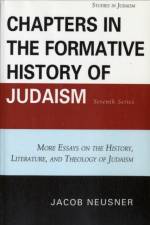
This collection of essays draws on work done in 2010-2011. The author takes up several topics in the systemic analysis of Judaism, its literature, and its theology.
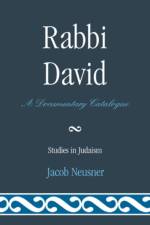
Rabbinic documents about David, progenitor of the Messiah, relay the scriptural narrative of David the king. But, he is also transformed into a sage by Rabbinic writings of late antiquity: the Mishnah, the Yerushalmi, and the Bavli. Consequently, the Rabbis' Messiah becomes a rabbi. Neusner explores this transformation in depth.
Peter D. Beaulieu examines the challenges to secular modernity and Islam as they encounter one another. By restoring a place at the table for Trinitarian Christianity alongside the monotheism of Islam and the skeptical indifference of Western rationalism, Beaulieu broadens the pallet of inter-religious and intercultural contact points.
This academic text features articles regarding paranormal, extraordinary, or fringe-science claims. It logically examines the claims of astrology; psychic ability; alternative medicine and health claims; after-death communication; cryptozoology; and faith healing, all from a skeptical perspective. Paranormal Claims is a compilation of some of the most eye-opening articles about pseudoscience and extraordinary claims that often reveal logical, scientific explanations, or an outright scam. These articles, steeped in skepticism, teach critical thinking when approaching courses in psychology, sociology, philosophy, education, or science.
This book discusses the relationship between religion and politics in the Middle East and the future of political Christianity. The emergence of political Islam and the recent changes in political Christianity in the region have both contributed to a new perception of the role of Arab Christians.
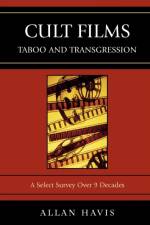
Cult Films: Taboo and Transgression looks at nine decades of cult films history within American culture. By highlighting three films per decade including a brief summary of the decade's identity and sensibility, the book investigates the quality, ironies, and spirit of cult film evolution. The twenty-seven films selected for this study are analyzed for story content and in their respective transgressions regarding social, aesthetic, and political codes. Characteristic of this book is the notion that many exciting genres make up cult films-including horror, sci-fi, fantasy, film noir, and black comedy. Further, the book reaches out to several foreign film directors over the decades in order to view cult films as an intentional art form. Political and ideological controversies are covered; arresting back-story details that lend perspective on a film fill out the analysis and the historic framework for many film titles. The book, by emphasizing the condensed survey over decades and by choosing outstanding titles, differs from other general studies on cult films.
Abonner på vårt nyhetsbrev og få rabatter og inspirasjon til din neste leseopplevelse.
Ved å abonnere godtar du vår personvernerklæring.