


Gjør som tusenvis av andre bokelskere
Abonner på vårt nyhetsbrev og få rabatter og inspirasjon til din neste leseopplevelse.
Ved å abonnere godtar du vår personvernerklæring.Du kan når som helst melde deg av våre nyhetsbrev.

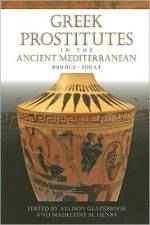
Challenges the often-romanticised view of the prostitute as an urbane and liberated courtesan by examining the social and economic realities of the sex industry in Greco-Roman culture. Departing from the conventional focus on elite society, these essays consider the Greek prostitute as displaced foreigner, slave, and member of an urban underclass.
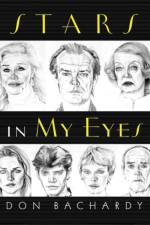
A revealing and entertaining collection of celebrity portraits, rendered both in acute drawings and in finely observed prose. In the 1970s and 1980s, internationally known artist Don Bachardy made portraits from life, depicting the actors, writers, artists, composers, directors, and Hollywood elite that he and his partner Christopher Isherwood knew.
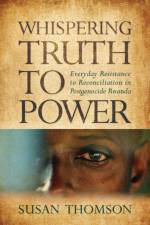
For 100 days in 1994, genocide engulfed Rwanda. Since then, many in the international community have praised the country's postgenocide government for its efforts to foster national unity and reconciliation by downplaying ethnic differences and promoting "one Rwanda for all Rwandans." Examining how ordinary rural Rwandans experience and view these policies, Whispering Truth to Power challenges the conventional wisdom on postgenocide Rwanda. Susan Thomson finds that many of Rwanda's poorest citizens distrust the local officials charged with implementing the state program and believe that it ignores the deepest problems of the countryside: lack of land, jobs, and a voice in policies that affect lives and livelihoods. Based on interviews with dozens of Rwandan peasants and government officials, this book reveals how the nation's disenfranchised poor have been engaging in everyday resistance, cautiously and carefully--"whispering" their truth to the powers that be. This quiet opposition, Thomson argues, suggests that some of the nation's most celebrated postgenocide policies have failed to garner the grassroots support needed to sustain peace.
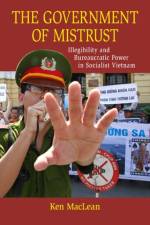
Focusing on the creation and misuse of government documents in Vietnam since the 1920s, The Government of Mistrust reveals how profoundly the dynamics of bureaucracy have affected Vietnamese efforts to build a socialist society. In examining the flurries of paperwork and directives that moved back and forth between high- and low-level officials, Ken MacLean underscores a paradox: in trying to gather accurate information about the realities of life in rural areas, and thus better govern from Hanoi, the Vietnamese central government employed strategies that actually made the state increasingly illegible to itself. MacLean exposes a falsified world existing largely on paper. As high-level officials attempted to execute centralized planning via decrees, procedures, questionnaires, and audits, low-level officials and peasants used their own strategies to solve local problems. To obtain hoped-for aid from the central government, locals overstated their needs and underreported the resources they actually possessed. Higher-ups attempted to re-establish centralized control and legibility by creating yet more bureaucratic procedures. Amidst the resulting mistrust and ambiguity, many low-level officials were able to engage in strategic action and tactical maneuvering that have shaped socialism in Vietnam in surprising ways.
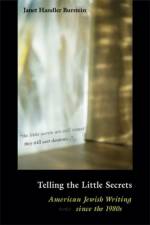
Argues that American Jewish writers since the 1980s have created a significant literature by wrestling with the troubled legacy of trauma, loss, and exile. Their ranks in this book include Cynthia Ozick, Todd Gitlin, Art Spiegelman, Pearl Abraham, Aryeh Lev Stollman, Jonathan Rosen, and Gerda Lerner.
From essays about the Salem witch trials to literary uses of ghosts by Twain, Wharton, and Bierce to the cinematic blockbuster The Sixth Sense, this book is the first to survey the importance of ghosts and hauntings in American culture across time.
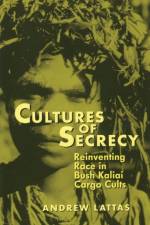
This volume offers information on how, for 50 years, the bush Kaliai in Melanesia have worked the deserted cargo left by US Marines during World War II into their indigenous culture. The author seeks to show how cargo cults in general bring together past, present and future.
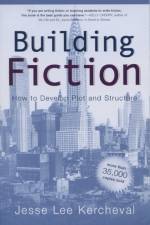
Even with the most dynamic language, images and characters, no piece of fiction will work without a strong infrastructure. Kercheval shows how to build that structure using such tools as point of view, characterization, pacing and flashbacks.
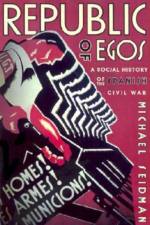
Most histories of the Spanish Civil War (1936-1939) have examined major leaders or well-established political and social groups to explore class, gender, and ideological struggles. The war in Spain was marked by momentous conflicts between democracy and dictatorship, Communism and fascism, anarchism and authoritarianism, and Catholicism and anticlericalism that still provoke our fascination. In Republic of Egos, Michael Seidman focuses instead on the personal and individual experiences of the common men and women who were actors in a struggle that defined a generation and helped to shape our world. By examining the roles of anonymous individuals, families, and small groups who fought for their own interests and survival--and not necessarily for an abstract or revolutionary cause--Seidman reveals a powerful but rarely considered pressure on the outcome of history. He shows how price controls and inflation in the Republican zone encouraged peasant hoarding, black marketing, and unrest among urban workers. Soldiers of the Republican Army responded to material shortages by looting, deserting, and fraternizing with the enemy. Seidman's focus on average, seemingly nonpolitical individuals provides a new vision of both the experience and outcome of the war.
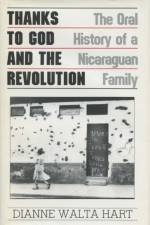
History of a Nicaraguan family based on conversations with its members over a four-year period. The author traces their story from the years of repression and guerilla activity under Somoza, through to an era of personal and political revolution in the 1970s and 1980s.
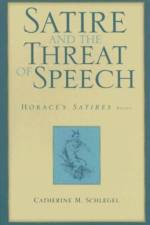
In his first book of Satires, written in the late, violent days of the Roman republic, Horace exposed satiric speech as a tool of power and domination. Catherine Schlegel argues that Horace's acute poetic observation of hostile speech provides insights into the operations of verbal control that are relevant to his time and to ours.
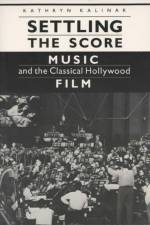
Situates the classical Hollywood film score and its practice in historical, theoretical and musical context, examining the conventions and strategies underpinning film scoring in Hollywood, and investigating the influential and powerful relationship between music and film.
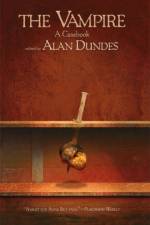
This volume gives accounts of the vampire and how its tradition developed in different cultures. The text examines the nature of the vampire from its birth in graveyard lore to the modern-day psychiatric patient with a penchant for drinking blood.
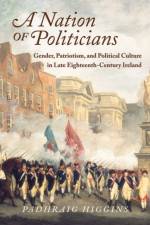
The politicization of non-elites was driven by the Volunteers, a militia force that emerged in Ireland as British troops were called away to the American War of Independence. This book argues that the development of Volunteer-initiated activities - associating, petitioning, subscribing, and shopping - expanded the scope of political participation.
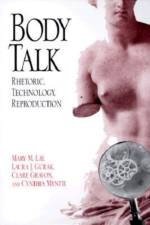
This text explores the rhetoric of reproductive technology throughout the 20th century, examining the ways discourse about these technologies has shaped thinking about reproduction and women's bodies, framed public policy and empowered or marginalized points of view.
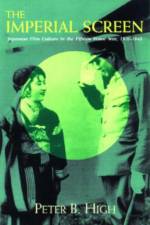
From the 1920s to World War II, film became a crucial tool in Japan. Detailing the way Japanese directors, scriptwriters, company officials and bureaucrats colluded to produce films that supported the war effort, "Imperial Screen" is an account of the realities of cultural life in wartime Japan.
Examining medical pluralism in the USA over the last 200 years, the author provides a wide-ranging synthesis of the history of alternative medicine from acupuncture to Navajo healing. Its relationship with conventional medicine and the influence of class, race and gender is also assessed.
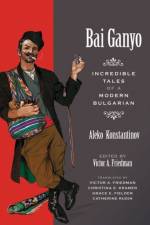
A comic classic of world literature, Aleko Konstantinov's 1895 novel follows the misadventures of rose-oil salesman Ganyo as he travels in Europe. Translated into English for the first time, it is accompanied by an introduction, glossary, and notes.
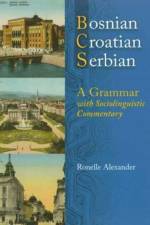
Analyzes and clarifies the complex, dynamic language situation in the former Yugoslavia. Addressing the issues connected with the splintering of Serbo-Croatian into component languages, this book provides teachers and learners with practical solutions and presents the differences among the languages and the communicative core that they share.
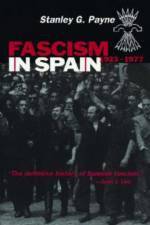
This study analyzes all the major doctrines, personalities and defining features of the Spanish fascist movement, from its beginnings until the death of General Francisco Franco. It also seeks to explain why Franco was able to hold onto power long after Fascism was a spent force in politics.
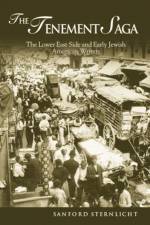
Nearly two million Jewish men, women, and children emigrated from Eastern Europe between 1882 and 1924 and settled in, or passed through, the Lower East Side of New York City. Sanford Sternlicht tells the story of his own childhood in this vibrant neighborhood and puts it within the context of fourteen early twentieth-century East Side writers. Anzia Yezierska, Abraham Cahan, Michael Gold, and Henry Roth, and others defined this new "Jewish homeland" and paved the way for the later great Jewish American novelists. Sternlicht discusses the role of women, the Yiddish Theater, secular values, the struggle between generations, street crime, politics, labor unions, and the importance of newspapers and periodicals. He documents the decline of Yiddish culture as these immigrants blended into what they called "The Golden Land."
A biography of Ole Bull - composer, virtuoso violinist, child prodigy, friend of Schumann and Liszt and tireless promotor of Norwegian art and culture. It provides a comprehensive listing of his works, analyses of his compositions and their influences, and reviews of his performances.
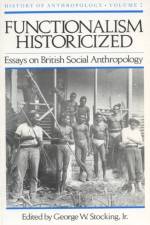
'This volume is likely to prove indispensable to historians of anthropology in general and of British anthropology in particular. A wide range of historical skills are on display, from traditional textual analysis to historical sociology of the most sophisticated sort, and the more or less through chronological coverage extends from the era of classical evolutionism virtually up to the present.' --Journal of the History of the Behavioral Sciences
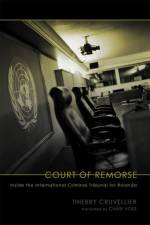
A first hand account of the International Criminal Tribunal for Rwanda, created in 1994 by the United Nations Security Council to seek accountability for some of the worst atrocities since World War II. Drawing on interviews with these protagonists and hi
This is a guide to the field of women's autobiography. The 39 essays explore narratives across the centuries, including testimonies, diaries, memoirs, letters, trauma accounts, prison narratives, coming out stories, coming of age stories and spiritual autobiographies.
Merrill Joan Gerber opens to us her life as a writer. She reveals the truths and inventions of a writer's vision and the use of life as the raw material of art. Her personal essays range widely, from the mysteries of love and marriage to painful encounters with suicides and family deaths.
Abonner på vårt nyhetsbrev og få rabatter og inspirasjon til din neste leseopplevelse.
Ved å abonnere godtar du vår personvernerklæring.