




















Gjør som tusenvis av andre bokelskere
Abonner på vårt nyhetsbrev og få rabatter og inspirasjon til din neste leseopplevelse.
Ved å abonnere godtar du vår personvernerklæring.Du kan når som helst melde deg av våre nyhetsbrev.

When Wisconsin became the first state in the nation in 1959 to let public employees bargain with their employers, the legislation catalyzed changes to labour laws across the US. In March 2011, when newly elected governor Scott Walker repealed most of that labour law and subsequent ones it sent a different message. Both times, Wisconsin took the lead, first empowering public unions and then weakening them. This book recounts the battle between the Republican governor and the unions.
In the late 1970s, the New Christian Right emerged as a formidable political force, boldly announcing itself as a unified movement representing the views of a "moral majority." But that movement did not spring fully formed from its predecessors. American Evangelicals and the 1960s refutes the thesis that evangelical politics were a purely inflammatory backlash against the cultural and political upheaval of the decade. Bringing together fresh research and innovative interpretations, this book demonstrates that evangelicals actually participated in broader American developments during "the long 1960s," that the evangelical constituency was more diverse than often noted, and that the notion of right-wing evangelical politics as a backlash was a later creation serving the interests of both Republican-conservative alliances and their critics. Evangelicalism's involvement with--rather than its reaction against--the main social movements, public policy initiatives, and cultural transformations of the 1960s proved significant in its 1970s political ascendance. Twelve essays that range thematically from the oil industry to prison ministry and from American counterculture to the Second Vatican Council depict modern evangelicalism both as a religious movement with its own internal dynamics and as one fully integrated into general American history.
Brazil, a country that has always received immigrants, only rarely saw its own citizens move abroad. Beginning in the late 1980s, however, thousands of Brazilians left for the United States, Japan, Portugal, Italy, and other nations, propelled by a series of intense economic crises. By 2009 an estimated three million Brazilians were living abroad--about 40 percent of them in the United States. Goodbye, Brazil is the first book to provide a global perspective on Brazilian emigration. Drawing and synthesizing data from a host of sociological and anthropological studies, preeminent Brazilian immigration scholar Maxine L. Margolis surveys and analyzes this greatly expanded Brazilian diaspora, asking who these immigrants are, why they left home, how they traveled abroad, how the Brazilian government responded to their exodus, and how their host countries received them. Margolis shows how Brazilian immigrants, largely from the middle rungs of Brazilian society, have negotiated their ethnic identity abroad. She argues that Brazilian society abroad is characterized by the absence of well-developed, community-based institutions--with the exception of thriving, largely evangelical Brazilian churches. Margolis looks to the future as well, asking what prospects at home and abroad await the new generation, children of Brazilian immigrants with little or no familiarity with their parents' country of origin. Do Brazilian immigrants develop such deep roots in their host societies that they hesitate to return home despite Brazil's recent economic boom--or have they become true transnationals, traveling between Brazil and their adopted lands but feeling not quite at home in either one?
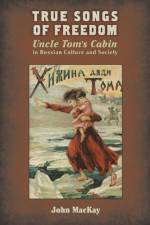
Harriet Beecher Stowe's 1852 antislavery novel Uncle Tom's Cabin was the nineteenth century's best-selling novel worldwide; only the Bible outsold it. It was known not only as a book but through stage productions, films, music, and commercial advertising as well. But how was Stowe's novel--one of the watershed works of world literature--actually received outside of the American context? True Songs of Freedom explores one vital sphere of Stowe's influence: Russia and the Soviet Union, from the 1850s to the present day. Due to Russia's own tradition of rural slavery, the vexed entwining of authoritarianism and political radicalism throughout its history, and (especially after 1945) its prominence as the superpower rival of the United States, Russia developed a special relationship to Stowe's novel during this period of rapid societal change. Uncle Tom's Cabin prompted widespread reflections on the relationship of Russian serfdom to American slavery, on the issue of race in the United States and at home, on the kinds of writing appropriate for children and peasants learning to read, on the political function of writing, and on the values of Russian educated elites who promoted, discussed, and fought over the book for more than a century. By the time of the Soviet Union's collapse in 1991, Stowe's novel was probably better known by Russians than by readers in any other country. John MacKay examines many translations and rewritings of Stowe's novel; plays, illustrations, and films based upon it; and a wide range of reactions to it by figures famous (Leo Tolstoy, Ivan Turgenev, Marina Tsvetaeva) and unknown. In tracking the reception of Uncle Tom's Cabin across 150 years, he engages with debates over serf emancipation and peasant education, early Soviet efforts to adapt Stowe's deeply religious work of protest to an atheistic revolutionary value system, the novel's exploitation during the years of Stalinist despotism, Cold War anti-Americanism and antiracism, and the postsocialist consumerist ethos.
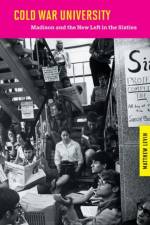
As the Cold War between the United States and the Soviet Union escalated in the 1950s and 1960s, the federal government directed billions of dollars to American universities to promote higher enrollments, studies of foreign languages and cultures, and, especially, scientific research. In Cold War University, Matthew Levin traces the paradox that developed: higher education became increasingly enmeshed in the Cold War struggle even as university campuses became centers of opposition to Cold War policies. The partnerships between the federal government and major research universities sparked a campus backlash that provided the foundation, Levin argues, for much of the student dissent that followed. At the University of Wisconsin in Madison, one of the hubs of student political activism in the 1950s and 1960s, the protests reached their flashpoint with the 1967 demonstrations against campus recruiters from Dow Chemical, the manufacturers of napalm. Levin documents the development of student political organizations in Madison in the 1950s and the emergence of a mass movement in the decade that followed, adding texture to the history of national youth protests of the time. He shows how the University of Wisconsin tolerated political dissent even at the height of McCarthyism, an era named for Wisconsin's own virulently anti-Communist senator, and charts the emergence of an intellectual community of students and professors that encouraged new directions in radical politics. Some of the events in Madison--especially the 1966 draft protests, the 1967 sit-in against Dow Chemical, and the 1970 Sterling Hall bombing--have become part of the fabric of "The Sixties," touchstones in an era that continues to resonate in contemporary culture and politics.
With its charming heirloom gardens, historic livestock breeds, and faithfully recreated farmsteads and villages that span nearly 600 acres, Old World Wisconsin is the largest outdoor museum of rural life in the United States. Creating Old World Wisconsin chronicles the fascinating and complex origins of this outdoor museum, highlighting the struggles that faced its creators as they worked to achieve their vision.
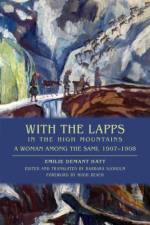
With the Lapps in the High Mountains is an entrancing true account, a classic of travel literature, and a work that deserves wider recognition as an early contribution to ethnographic writing. Published in 1913 and available here in its first English translation, it is the narrative of Emilie Demant Hatt's nine-month stay in the tent of a Sami family in northern Sweden in 1907-8 and her participation in a dramatic reindeer migration over snow-packed mountains to Norway with another Sami community in 1908. A single woman in her thirties, Demant Hatt immersed herself in the Sami language and culture. She writes vividly of daily life, women's work, children's play, and the care of reindeer herds in Lapland a century ago. While still an art student in Copenhagen in 1904, Demant Hatt had taken a vacation trip to northern Sweden, where she chanced to meet Sami wolf hunter Johan Turi. His dream of writing a book about his people sparked her interest in the culture, and she began to study the Sami language at the University of Copenhagen. Though not formally trained as an ethnographer, she had an eye for detail. The journals, photographs, sketches, and paintings she made during her travels with the Sami enriched her eventual book, and in With the Lapps in the High Mountains she memorably portrays people, dogs, reindeer, and the beauty of the landscape above the Arctic Circle. This English-language edition also includes photographs by Demant Hatt, an introduction by translator Barbara Sjoholm, and a foreword by Hugh Beach, author of A Year in Lapland: Guest of the Reindeer Herders.
During the Vietnam War the United States government waged a massive, secret air war in neighbouring Laos. Fred Branfman, an educational advisor living in Laos at the time, interviewed over 1,000 Laotian survivors. Shocked by what he heard and saw, he urged them to record their experiences in essays, poems, and pictures. Voices from the Plain of Jars was the result of that effort.
Provides a seasonal guide to genuine wildlife encounters with an amazing array of birds, mammals, fish, and insects in Wisconsin's most beautiful natural settings: state wildlife areas, rivers, lakes, flowages, and preserves as well as national wildlife refuges and forests. Wisconsin native Candice Gaukel Andrews shares natural history and lore, accounts of her own experiences with Wisconsin wildlife, and insights from biologists, environmental educators, and citizen scientists.
Describes ordinary human courtesies, as simple as busing your dishes after eating, that make society functional and livable. This book considers the impact of communal goodness over time.
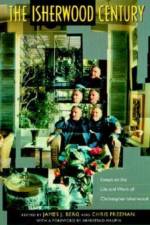
Best known for "Goodbye to Berlin" - the inspiration for "Cabaret" - Christopher Isherwood is considered as both a literary and a gay pioneer. This volume collects 24 essays and interviews on his life and work offering and in-depth view of the author and his literary legacy.
During the German occupation of Norway during World War II, the Norwegians kept spirits high and fostered resistance by humour. The author examines how this seemingly frivolous humour in fact contributed to the development of a resistance mentality in a country stunned by the German invasion.
The Greek Olympic Games went on for more than 1000 years, and there were large and celebrated local athletic contests all over the Greek world. This collection of essays seeks to give an idea of the range of these festivals, and to contribute to sport history, social history and archaeology.
This lively translation accurately captures the wit and uncensored bawdiness of the epigrams of Martial, who satirized Roman society, both high and low, in the first century CE. His pithy little poems amuse, but also offer vivid insight into the world of patrons and clients, doctors and lawyers, prostitutes, slaves, and social climbers in ancient Rome.
Using feminist and psychoanalytic approaches to examine the ""female voice"" in the ""Heroides"", Sara H. Lindheim closely reads these fictive letters. She points out that in Ovid's verse epistles all the women represent themselves in a strikingly similar and disjointed fashion.
Michael Wieck's account of his childhood in Konigsberg recalls a German city obliterated by fire-bombing during World War II. In the midst of privation, savagery and death, there were moments of absurdity.
In one of the first novels to explore the experience of gay men having a child through surrogacy, Michael Lowenthal writes passionately about marriages and mistakes, loyalty and betrayal, and about how our drive to create families can complicate the ones we already have.
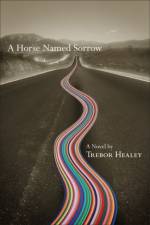
Award-winning novelist Trebor Healey depicts San Francisco in the 1980s and '90s in poetic prose that is both ribald and poignant, and a crossing into the American West that is dreamy, mythic, and visionary.
A comprehensive textbook teaching English-speakers to read, write and speak contemporary Bulgarian. Volume two, treating more complex issues of grammar and syntax, contains lessons 16-30 and a cumulative Bulgarian-English glossary covering both volumes.
This teacher's guide for intermediate-level students of Norwegian, accompanies an anthology intended primarily to complement ""Norsk, Nordmenn, og Norge"" a widely used Norwegian text. It contains suggestions on a range of classroom communication activities for both pairs and small groups.
Samuel Coale examines the works of four American mystery writers who have contributed new dimensions to the mystery form: Tony Hillerman's Navajos; Amanda Cross's (Carolyn Heilbrun's) feminist academics; James Lee Burke's Southern Louisiana Cajuns; and Walter Mosley's urban blacks.
A collection of twenty-seven stories by women writers of colour whose short fiction has earned them a range of honors. The prose in this multicultural anthology addresses such themes as racial prejudice, media portrayal of beauty, and family relationships and spans genres from the comic and the surreal to startling realism. It demonstrates the power and range of some of the most exciting women writing short fiction today.
Abonner på vårt nyhetsbrev og få rabatter og inspirasjon til din neste leseopplevelse.
Ved å abonnere godtar du vår personvernerklæring.