






Gjør som tusenvis av andre bokelskere
Abonner på vårt nyhetsbrev og få rabatter og inspirasjon til din neste leseopplevelse.
Ved å abonnere godtar du vår personvernerklæring.Du kan når som helst melde deg av våre nyhetsbrev.

April Schueths is assistant professor of sociology at Georgia Southern University and a licensed social worker. Jodie Lawston is associate professor of women's studies at California State University, San Marcos. She is the author of Sisters Outside: Radical Activists Working for Women Prisoners and coeditor of Razor Wire Women: Prisoners, Activists, Scholars and Artists.
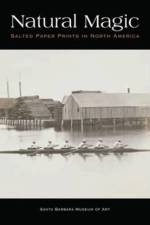
The salted paper print process and the daguerreotype were invented, for all practical purposes, simultaneously. Though using different materials and methods (the salted paper print was patented, while daguerreotype was not) still both achieved the miracle of fixing an image from life within a substrate¿in other words, they ushered in the medium of photography.The uses of each form of photography varied greatly. In Europe the salted paper print was valued for its aesthetic qualities-the massing of light and the softening of detail¿while in North America, the salted paper print was valued for its portability and reproducibility. At the same time, the three evolving regions that comprised North AmericäCanada, the United States and Mexico¿faced quite different realities and challenges than those in Europe (primarily France and Britain). In North America artistic merit was less of a priority, as each emerging nation faced vast, untamed territories, as well as social and political tumult. These were countries in the making¿defining borders, struggling to create identities, and establishing metropolitan areas and transportation networks, while the scions on the other side of the Atlantic cast a leisurely eye to their artistic, architectural, and colonial heritage for subject matter. Scant research has been done on the use of the salted paper print in North America during its brief period of use (approximately 1847¿1865); physical prints are often found in obscure collections and locations, and they are, as is true for most works on paper from that period, exceedingly fragile. This volume, with essays by three up and coming 19th-century scholars, offers new views on the use and employment of the salted paper print in North America. The hope is that this publication will encourage investigation, for the history of photography has many areas of terra incognita yet to discover.
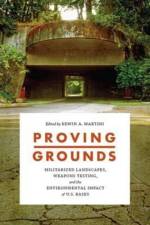
Edwin A. Martini is professor of history at Western Michigan University. He is the author of Agent Orange: History, Science, and the Politics of Uncertainty and Invisible Enemies: The American War on Vietnam, 1975¿2000. The contributors are Yooil Bae, Leisl Carr Childers, Brandon C. Davis, Heejin Han, David G. Havlick, Katherine M. Keirns, Neil Oatsvall, Jennifer Liss Ohayon, and Daniel Weimer.
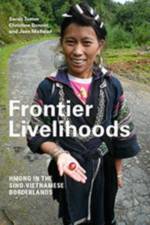
Sarah Turner is professor of geography at McGill University. She is the author of Indonesia¿s Small Entrepreneurs: Trading on the Margins and editor of Red Stamps and Gold Stars: Fieldwork Dilemmas in Upland Socialist Asia. Christine Bonnin is lecturer in geography at University College Dublin. Jean Michaud is professor of social anthropology at Universit¿aval. He is the author of The A to Z of the People of the Southeast Asian Massif and coeditor of Moving Mountains: Ethnicity and Livelihoods in Highland China, Vietnam, and Laos.
Klallam is the language of the Lower Elwha Klallam, Port Gamble S¿Klallam, and Jamestown S¿Klallam Tribes. It is spoken on the north shore of Washington¿s Olympic Peninsula from the Strait of Juan de Fuca inland into the mountains, Vancouver Island¿s Becher Bay, and other small adjacent islands. An endangered language, Klallam is being revived through the Klallam Language Program. Together with the comprehensive Klallam Dictionary, this pedagogically oriented reference grammar thoroughly documents the Klallam language, providing a resource to linguistic scholars as well as to the Klallam people that will ensure their language survives. A multi-decade collaboration between linguist Timothy Montler and elders, educators, and tribal councils, the grammar progressively covers all the major grammatical constructions and processes of word formation. The Klallam Grammar significantly enriches our understanding of the Klallam language and culture.
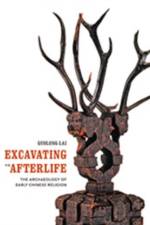
"This pioneering study examines art objects and texts excavated from tombs in what was once the state of Chu, in south China, dating from the Warring States period (ca. 480-221 BCE) to the beginning of the imperial era (3rd century BCE to 1st century CE) to explore critical changes in religious beliefs and practices concerning the dead and the afterlife."
Documents the language of the Umatilla people east of the Cascade Mountains in Oregon and Washington.
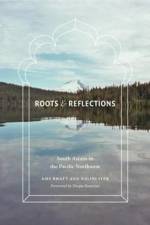
Uses oral history to show how South Asian immigrant experiences were shaped by the region and how they differed over time and across generations. This book includes the stories of immigrants from India, Pakistan, Bangladesh, and Sri Lanka who arrived from the end of World War II through the 1980s.
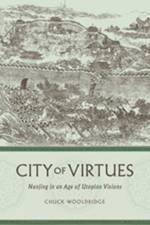
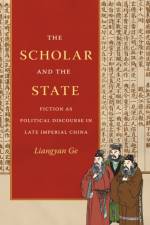
In imperial China, intellectuals devoted years of their lives to passing rigorous examinations in order to obtain a civil service position in the state bureaucracy. This book deals with this topic.
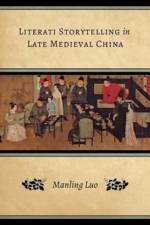
Scholar-officials of late medieval China were not only enthusiastic in amateur storytelling, but also showed unprecedented interest in recording stories on different aspects of literati life. This book shows how these writings that offer crucial insights into the reconfiguration of the Chinese elite.
Describing the developments in science and philosophy in the sacred language of Hebrew, the author argued that an intellectual understanding of the cosmos was not at odds with but actually key to achieving spiritual attainment.
Introduces readers to developers, homeowners, and government regulators, all of whom have faced unexpected environmental problems in designing and building wilderburb communities, including unpredictable water supplies, threats from wildfires, and encounters with wildlife.
Examines all known surviving examples of the Qing court phenomenon of "scenic illusion paintings" ( tongjinghua), which today remain inaccessible inside the Forbidden City.
Investigates that trend, drawing on fieldwork in a rural high school in Zhejiang where students, teachers, and officials of different generations, genders, and social backgrounds form what is essentially a miniature version of Chinese society.
One of the most violent episodes of China's Boxer Uprising was the Taiyuan Massacre of 1900, in which rebels killed foreign missionaries and thousands of Chinese Christians. This book focuses on Shanxi Province that illuminates the religious and cultural beliefs on both sides of the conflict and shows how they came to clash.
Abonner på vårt nyhetsbrev og få rabatter og inspirasjon til din neste leseopplevelse.
Ved å abonnere godtar du vår personvernerklæring.